Attractions and Places To See around Bragança (Santa Maria) - Top 18
Best attractions and places to see around Bragança (Santa Maria) include a rich array of historical landmarks, cultural sites, and natural features. This region in northeastern Portugal is characterized by its medieval fortress, unique civic architecture, and proximity to vast natural parks. Visitors can explore well-preserved historical structures and diverse natural landscapes.
Best attractions and places to see around Bragança (Santa Maria)
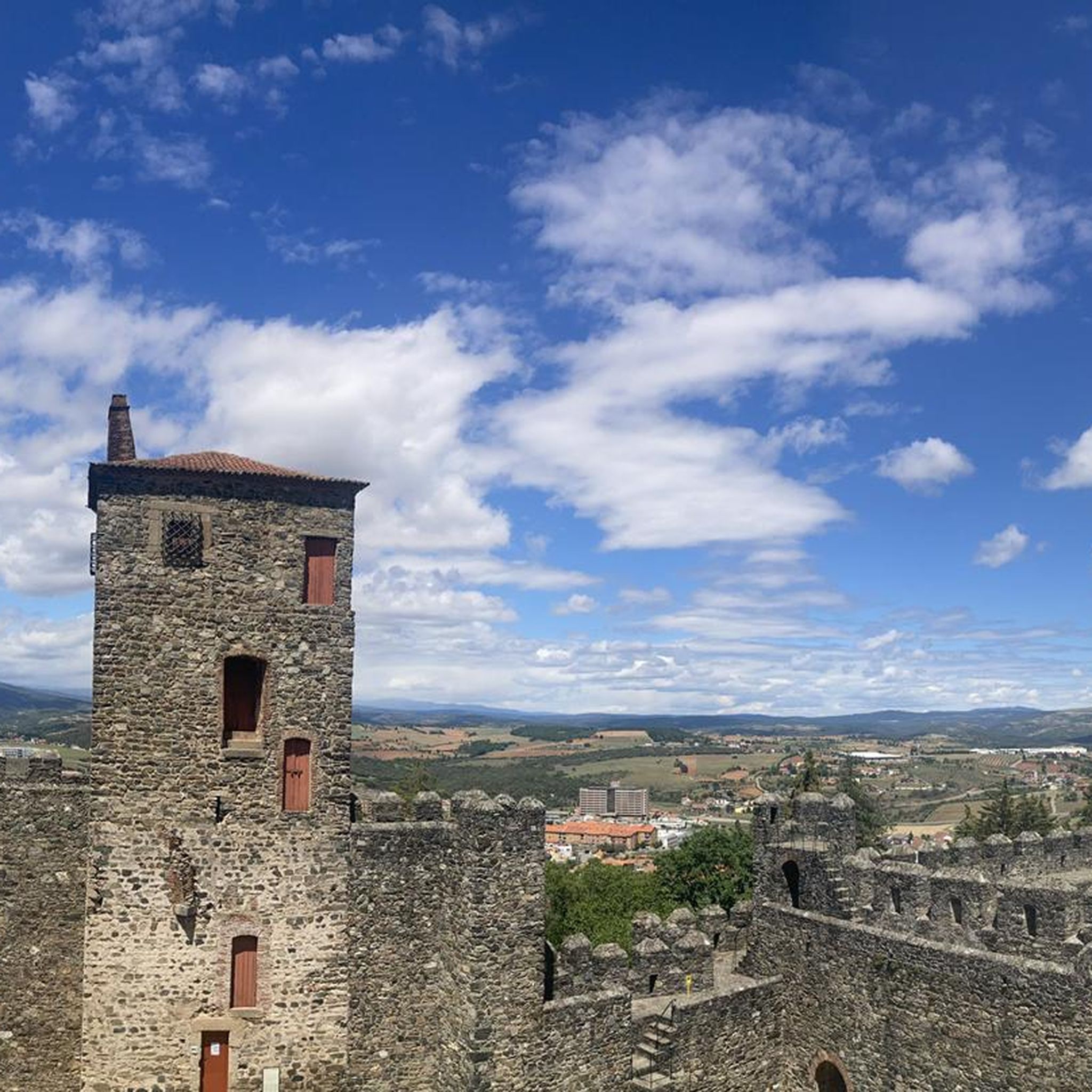
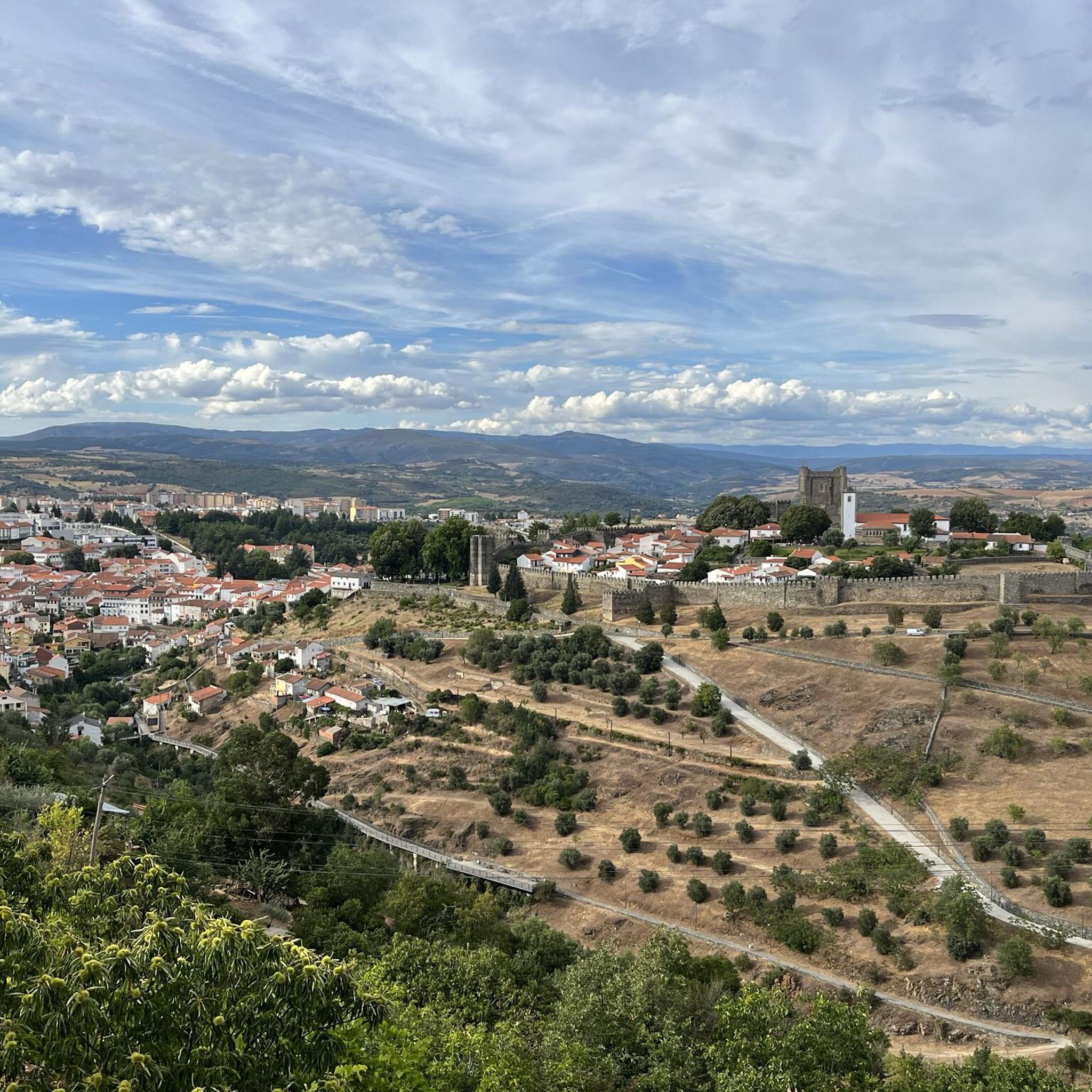
- The most popular attractions is Bragança Castle, a castle that is a medieval fortress and National Monument. It features well-preserved walls, towers, and a 33-meter-high keep, offering panoramic views.
- Another must-see spot is Domus Municipalis de Bragança, a historical site known as the only example of Romanesque civil architecture in the Iberian Peninsula. This 12th-century octagonal building served as the municipal council headquarters.
- Visitors also love European chestnut (Castanea sativa), a natural monument. This deciduous tree can grow up to 35 meters in height and is considered a long-lived, native species of the region.
- Bragança (Santa Maria) is known for its historical sites, natural monuments, and cultural points of interest. The region offers a variety of attractions to see and explore, from ancient castles to unique natural features.
- The attractions around Bragança (Santa Maria) are appreciated by the komoot community, with 43 upvotes and 94 photos shared across 8 highlights.
Last updated: May 5, 2026
Bragança Castle
Highlight • Castle
Currently, access to the Keep is via the north-facing side, through an external staircase made of schist masonry, attached to the tower's outer structure.
This is flanked by seven magnificent vaulted brick turrets (three to the east, three to the west, and one to the south), which join the wall section on the northern slope of the fortification.
Inside, the Military Museum, officially founded in 1983, occupies the four floors, sixteen rooms, terrace, and crypt of the Keep, as well as the entire exterior space bordered by the turrets, including the Princess Tower. This museum possesses a collection of great historical value, allowing visitors to follow the evolution of light weaponry from the 16th century to the mid-20th century. It seeks to promote the appreciation, enrichment, and exhibition of the historical-military heritage attributed to it and to disseminate the cultural values linked to military history. Visitors can also climb to the crenellated terrace to contemplate the marvelous landscapes, overlooking the Nogueira, Montesinho, and Coroa mountain ranges, the peaks of Sanábria, and the Leonese lands.
Translated by Google •
Tip by

European chestnut (Castanea sativa)
Highlight • Natural Monument
The European chestnut tree (Castanea sativa Miller) belongs to the Castanea genus and the Fagaceae family, the same family that includes cork oaks and oaks in general. The genus includes 12 to 13 species, five of which are of Asian origin and seven of which are North American. The common chestnut tree is the only one native to Europe. This is a tree that managed to survive the last glacial period (Würms glaciation) in some parts of central and Mediterranean Europe and is currently found all over the world, including North and South America and Australia.
Several studies indicate that the natural distribution of the European chestnut tree corresponds to these refuge zones, where it remained during the glacial events. These areas later served as starting points for the colonization of other regions, before humanity dedicated itself to cultivating the species. One of these refuges is located in the Picos de Europa region and another between the south of Galicia and the north of Portugal, which is why the chestnut tree is considered an indigenous or native species of our country.
The chestnut tree grows well in temperate climates and the ideal conditions for its development are found in places with average temperature and humidity, where rainfall reaches at least 600 mm per year – more than 100 mm in the summer. It is, however, sensitive to late frosts and very low temperatures. It prefers soils at least 50 cm deep, loose and rich in nutrients, slightly acidic (pH between 4.5 and 6.5) and not calcareous.
Although it can grow in less suitable conditions, it develops and produces best in coastal or mountainous areas, at medium altitude, with hot and humid summers and mild winters.
Translated by Google •
Tip by
Sign up now to discover places like this
Get recommendations on the best single tracks, peaks, & plenty of other exciting outdoor places.
Sign up for free
Domus Municipalis de Bragança
Highlight • Historical Site
Translated by Google •
Tip by

Miniature Park of Bragança
Highlight • Structure
Translated by Google •
Tip by
Bragança Cathedral
Highlight • Religious Site
Translated by Google •
Tip by
Sign up for free to discover even more attractions around Bragança (Santa Maria).
Sign up for free
Already have an account?
Start today with a free account
Your next adventure awaits.
Login or Signup

Tips from the Community

The Domus Municipalis of Bragança is one of those unparalleled treasures. It's worth visiting not only because it's a national monument, but because it's a true relic: the only example of Romanesque civil architecture in the entire Iberian Peninsula. If you enjoy history or architecture, you'll quickly understand why this building is so special: 1. An Architectural Rarity (Unique Form) While most Romanesque buildings that have survived to this day are churches or monasteries, this is a civil (non-religious) building. Even more curious is its shape: an irregular pentagon. This is not something you see every day in medieval architecture. 2. The Mysterious Dual Function Upon entering, you'll realize that the building is "two in one". This clever engineering tells a story of the city's survival: The Lower Floor (The Cistern): The building's base is a huge vaulted cistern that collected rainwater and spring water. Since Bragança (and its Citadel) is located on a hill, water was a scarce and vital resource for resisting military sieges. The Upper Floor (The "Town Hall"): Above the cistern, there is a large room with windows all around (letting in plenty of light and air). It is believed that this was where the "good men" of the council met to discuss city affairs. Imagine a medieval town hall, outdoors but covered. 3. Details Not to Be Missed The Light and the Views: As it is an open space with a gallery of arched windows all around, the light enters in a very special way, creating a photogenic environment and allowing you to see the Citadel from various angles. The Modillions (Corners): If you look closely at the cornice (the top of the walls, both inside and out), you'll see small stone sculptures called modillions or corbels. They have curious shapes, ranging from human faces to animals and geometric figures, typical of medieval imagery. It's a quick visit (you can see it in 15-20 minutes), it's free (usually), and it's literally next to the Church of Santa Maria and the Castle. In other words, there's no reason not to go in!
0
0
The modern Sé Nova (Cathedral of Our Lady Queen) was inaugurated in 2001. It is located on Avenida Eng. Amaro da Costa, slightly outside the old town center (but only 1 km from the Sé Velha). It is the first cathedral built in Portugal in the 21st century. It has a contemporary and bold architecture (designed by the architect Vassalo Rosa), with a polygonal shape and a very spacious and bright interior. Behind the altar, there is a huge ceramic panel by the artist Mário Silva that is worth admiring.
2
0
It's interesting and unusual to find yourself in that place.
1
0
Bragança Castle, located in northeastern Portugal, is one of the most impressive and well-preserved medieval castles in the country. Keep: At 33 meters high, it is one of the most imposing in Portugal. Inside, it houses the Bragança Military Museum, where you can see a vast collection of light weaponry, from the 12th century to the First World War. From the top of the tower, there is a breathtaking view over the old city, the new part of Bragança, and the surrounding mountains (Montesinho, Sanábria). The Princess Tower is an old residential outbuilding (Alcáçova Tower) famous for a tragic love legend. In the citadel, you can stroll through the streets within the walls, where the medieval atmosphere remains almost intact.
3
0

The Bragança Cathedral was designed by the architect Vassalo Rosa and was inaugurated in 2001, being the first cathedral built in the 21st century. It is a 10,000 square meter space, with seating arranged in an amphitheatre and a pentagonal design of the surrounding area, which distinguishes the contemporary architecture of the monument. Dedicated to Our Lady Queen, it reflects the region in which it is located, from the construction materials, the vegetation of the gardens and even the orientation of the doors. Inside, the tabernacle has the geographical shape of the district and the expression lines of Christ drawn on the ceramic panel by Mário Silva, behind the main altar, reveal a Northeastern style.
7
0
Considered the “bread tree” in the regions north of the Tagus, the chestnut tree was the staple food before the arrival of the potato and the main source of carbohydrates in the north of the Iberian Peninsula. This deciduous tree can grow up to 30 to 35 metres in height and reach diameters of up to 12 metres, although the trunk becomes hollow as the tree ages. It is very long-lived and can live for over a thousand years. The European chestnut tree (Castanea sativa Miller) belongs to the Castanea genus and the Fagaceae family, the same family that includes cork oaks and oaks in general. The genus includes 12 to 13 species, five of which are of Asian origin and seven of which are North American. The common chestnut tree is the only one native to Europe. This is a tree that managed to survive the last glacial period (Würms glaciation) in some parts of central and Mediterranean Europe and is currently found all over the world, including North and South America and Australia. Several studies indicate that the natural distribution of the European chestnut tree corresponds to these refuge zones, where it remained during the glacial events. These areas later served as starting points for the colonization of other regions, before humanity dedicated itself to cultivating the species. One of these refuges is located in the Picos de Europa region and another between the south of Galicia and the north of Portugal, which is why the chestnut tree is considered an indigenous or native species of our country. The chestnut tree grows well in temperate climates and the ideal conditions for its development are found in places with average temperature and humidity, where rainfall reaches at least 600 mm per year – more than 100 mm in the summer. It is, however, sensitive to late frosts and very low temperatures. It prefers soils at least 50 cm deep, loose and rich in nutrients, slightly acidic (pH between 4.5 and 6.5) and not calcareous. Although it can grow in less suitable conditions, it develops and produces best in coastal or mountainous areas, at medium altitude, with hot and humid summers and mild winters.
2
0
A small private space where a local resident has given free rein to his imagination and built small replicas of famous monuments from around the world. This is a magnificent work of art and don't forget to leave a small donation so that this space can continue to grow and amaze visitors who pass by...
5
0
Classified as a National Monument in 1910, the castle that stands before our eyes today occupies an area of 3.2 hectares and has an approximate perimeter of 670 meters. Its walled section, with an irregular oval layout, is punctuated by pyramidal battlements and highlighted by 23 towers, of which 10 are turrets, 2 have a hexagonal plan, and 11 are quadrangular. Currently, access to the Keep is via the north-facing side, through an external staircase made of schist masonry, attached to the tower's outer structure. This is flanked by seven magnificent vaulted brick turrets (three to the east, three to the west, and one to the south), which join the wall section on the northern slope of the fortification. Inside, the Military Museum, officially founded in 1983, occupies the four floors, sixteen rooms, terrace, and crypt of the Keep, as well as the entire exterior space bordered by the turrets, including the Princess Tower. This museum possesses a collection of great historical value, allowing visitors to follow the evolution of light weaponry from the 16th century to the mid-20th century. It seeks to promote the appreciation, enrichment, and exhibition of the historical-military heritage attributed to it and to disseminate the cultural values linked to military history. Visitors can also climb to the crenellated terrace to contemplate the marvelous landscapes, overlooking the Nogueira, Montesinho, and Coroa mountain ranges, the peaks of Sanábria, and the Leonese lands.
7
0
Frequently Asked Questions
What historical landmarks can I explore in Bragança (Santa Maria)?
Bragança is rich in history. You can explore the impressive Bragança Castle, a medieval fortress with panoramic views and a Military Museum. Don't miss the Domus Municipalis de Bragança, a unique 12th-century Romanesque civic building. Within the Cidadela, you'll also find the Igreja de Santa Maria and the Pelourinho de Bragança. Further afield, the remains of the 12th-century Mosteiro de Castro de Avelãs offer a glimpse into the region's past.
Are there any natural attractions or parks to visit near Bragança (Santa Maria)?
Absolutely! Just north of Bragança lies the vast Montesinho Natural Park, a haven for nature lovers with diverse flora and fauna, perfect for hiking and birdwatching. You can also visit the Albufeira do Azibo, a relaxing natural area ideal for outdoor activities. The Rio Fervença flows through the city, and the Corredor Verde do Fervença offers a pleasant walking trail alongside it. Keep an eye out for the ancient European chestnut (Castanea sativa) trees, a native and long-lived species of the region.
What cultural sites and museums are available in Bragança (Santa Maria)?
Bragança offers several cultural insights. The Museu do Abade de Baçal showcases the region's archaeology, art, and ethnography. For a unique experience, visit the Museu Ibérico da Máscara e do Traje, dedicated to traditional masks and costumes, especially those related to carnival. The Interpretation Center of the Sephardic Culture explores Bragança's Jewish heritage, and the Centro de Arte Contemporânea Graça Morais features contemporary art. You can also learn about traditional silk production at the Centro Ciência Viva de Bragança.
What outdoor activities can I do near Bragança (Santa Maria)?
The region around Bragança (Santa Maria) is excellent for outdoor activities. You can find numerous routes for cycling and hiking. For cycling, explore options like the 'Bogani Bicycle Parking loop' or the 'França – França River Beach loop'. If you prefer hiking, there are easy trails such as the 'Domus Municipalis de Bragança – Bragança Castle loop' or more challenging ones like the 'Miniature Park of Bragança – Old Mill loop'. You can find more details on these and other routes in the Cycling around Bragança (Santa Maria) and Hiking around Bragança (Santa Maria) guides.
Are there family-friendly attractions in Bragança (Santa Maria)?
Yes, Bragança offers several family-friendly options. The Domus Municipalis de Bragança is a historical site that can be interesting for families. The Miniature Park of Bragança is a charming private space with replicas of famous monuments, often enjoyed by children. Additionally, the Corredor Verde do Fervença, a path along the Fervença River, offers an easy and relaxing walk suitable for families. The interactive Centro Ciência Viva de Bragança is also a great option for curious minds.
Where can I find the best panoramic views in Bragança (Santa Maria)?
For breathtaking panoramic views, head to the Bragança Castle. Ascending its 33-meter-high keep (Torre de Menagem) offers spectacular vistas of the city and the surrounding Montesinho, Nogueira, and Coroa mountain ranges. Other viewpoints (Miradouros) within the Citadel also provide excellent perspectives of the landscapes.
What is the Old Mill and why is it worth visiting?
The Old Mill, located within the Fervença Urban Park (Green Corridor), is a picturesque restored mill. It's worth visiting for its scenic beauty, combining an old stone structure with nature and flowing water. It's a highlight of an easy, flat walk along the Fervença River, offering unique angles to view the Castle high above, making it a relaxing spot even within the city.
What is the best time to visit Bragança (Santa Maria) for outdoor activities?
The region experiences temperate climates. For hiking and other outdoor activities, spring (April to June) and autumn (September to October) generally offer pleasant temperatures and beautiful scenery. Summers can be hot, while winters can be mild but sensitive to very low temperatures and late frosts. The chestnut trees, for example, thrive in conditions with average temperature and humidity, and rainfall reaching at least 600 mm per year.
Are there easy walking routes available in Bragança (Santa Maria)?
Yes, there are several easy walking routes. Within the city, the Corredor Verde do Fervença offers a pleasant and flat walk along the river. You can also find easy hiking loops like the 'Domus Municipalis de Bragança – Bragança Castle loop' which is just over 3 km, or the 'Miniature Park of Bragança – Bragança Castle loop' which is around 4 km. These are great for a relaxed exploration of the city's historical core.
What is the significance of the European chestnut in the Bragança region?
The European chestnut (Castanea sativa) is highly significant to the region. Historically, it was considered the 'bread tree' in northern Portugal, serving as a staple food and main source of carbohydrates before the arrival of the potato. This long-lived deciduous tree, which can grow up to 35 meters, is native to Europe and thrives in the region's climate, contributing to its natural landscape and cultural heritage, including the local chestnut industry.
What makes the Domus Municipalis de Bragança unique?
The Domus Municipalis de Bragança is unique as it is the only known example of Romanesque civic architecture in the entire Iberian Peninsula. This 12th-century octagonal building originally served as a cistern for water collection, crucial during sieges, with an upper floor that functioned as the municipal council headquarters. Its unusual shape and dual function make it a fascinating historical and architectural relic.
Can I find any information about Bragança's Jewish heritage?
Yes, Bragança has a significant Jewish history. You can learn more about it at the Interpretation Center of the Sephardic Culture of Northeast Trás-os-Montes. This center explores Bragança's Jewish presence throughout history, including the period of Crypto-Judaism following the expulsions from Spain and Portugal, offering insights into this important cultural aspect of the region.
Most popular routes around Bragança (Santa Maria)

Get inspired with the komoot mobile app


Explore more
Still not found the Highlight you’re looking for? See guides of the top attractions in other regions:
