Attractions and Places To See around Arnoso (Santa Eulália) - Top 6
Best attractions and places to see around Arnoso (Santa Eulália) include historical sites and cycling routes. Located in the municipality of Vila Nova de Famalicão, Portugal, this area is known for its cultural significance, particularly the Church of Santa Eulália do Mosteiro de Arnoso. Visitors can explore both historical landmarks and natural features like the local river beach. The region offers a mix of cultural exploration and outdoor activities.
Best attractions and places to see around Arnoso (Santa Eulália)
- The…
Last updated: May 5, 2026
Famalicão–Póvoa de Varzim Cycle Path
Highlight (Segment) • Cycleway
Translated by Google •
Tip by

Póvoa de Varzim–Vila Nova de Famalicão Cycle Path
Highlight (Segment) • Cycleway
Tip by

Sign up now to discover places like this
Get recommendations on the best single tracks, peaks, & plenty of other exciting outdoor places.
Sign up for free
Balazar Station – Linha da Póvoa
Highlight (Segment) • Cycleway
de.m.wikipedia.org/wiki/Linha_da_P%C3%B3voa?wprov=sfla1
Translated by Google •
Tip by

Castro da Ermida
Highlight • Historical Site
Northeast-Southwest, with a central enclosure delimited by a wall and, in connection with the spur, a defensive reinforcement …
Translated by Google •
Tip by

Arnoso Monastery
Highlight • Religious Site
Amoso dates from 1077, confirming the existence of the parish of Santa Eulália.
Implanted in a low and marshy place, the Church of the …
Translated by Google •
Tip by
Sign up for free to discover even more attractions around Arnoso (Santa Eulália).
Sign up for free
Already have an account?
Start today with a free account
Your next adventure awaits.
Login or Signup
Tips from the Community

Highlights and Route Landscape: The route crosses rural areas, small population centers, agricultural fields, and forest areas, offering a calm and pleasant environment. Localities: The ecotrail passes through several localities, including Amorim, Terroso, Laundos, Rates, Balazar, Gondifelos, Louro, and Brufe. Intermodality: A great advantage is the direct connection to the Vila Nova de Famalicão train station and the Porto Metro station in Póvoa de Varzim, facilitating access to the beginning and end of the route. Interconnection: The cycle path connects to the Formiga Ecotrail, allowing the ride to be extended.
1
0
Route Characteristics Length: The route is approximately 28 to 30 kilometers in total, connecting the rural interior (Famalicão) to the Atlantic coast (Póvoa de Varzim). Difficulty: It is a flat route, without major slopes or sharp curves, making it an easy and accessible route for everyone, including families with children. Surface: The surface is a mixture of macadam and, in some sections, asphalt, suitable for walking, running and cycling. Accessibility: The ecotrail is wheelchair accessible and has approximately 12 rest areas along the route.
1
0
The Famalicão–Póvoa de Varzim cycle path is, in fact, the Famalicão branch line cycle path. This route was built using the canal of the old railway branch line that connected Vila Nova de Famalicão and Póvoa de Varzim, and which ceased train service in 1995.
1
0

Protohistoric settlement with Roman and Medieval occupation. It has an elongated shape Northeast-Southwest, with a central enclosure delimited by a wall and, in connection with the spur, a defensive reinforcement consisting of two ditches and a slope. Towards the Northwest and Southeast, there are some platforms. Archaeological excavations carried out between 1983 and 1987 reveal a continuous occupation between the 19th and 19th centuries. 5 . IV BC. and the sec. I of our Era. The walls and the various excavated domestic structures, as well as the abundant ceramic and metal loot attributable to the end of the 17th century. I BC / beginning of the century. I AD are revealing of the great dynamism that Castro das Ermidas achieved in the final phase of Castro culture. (Other names: Palhares, Ermidas, Monte de Palhares, Hermitages)
1
0
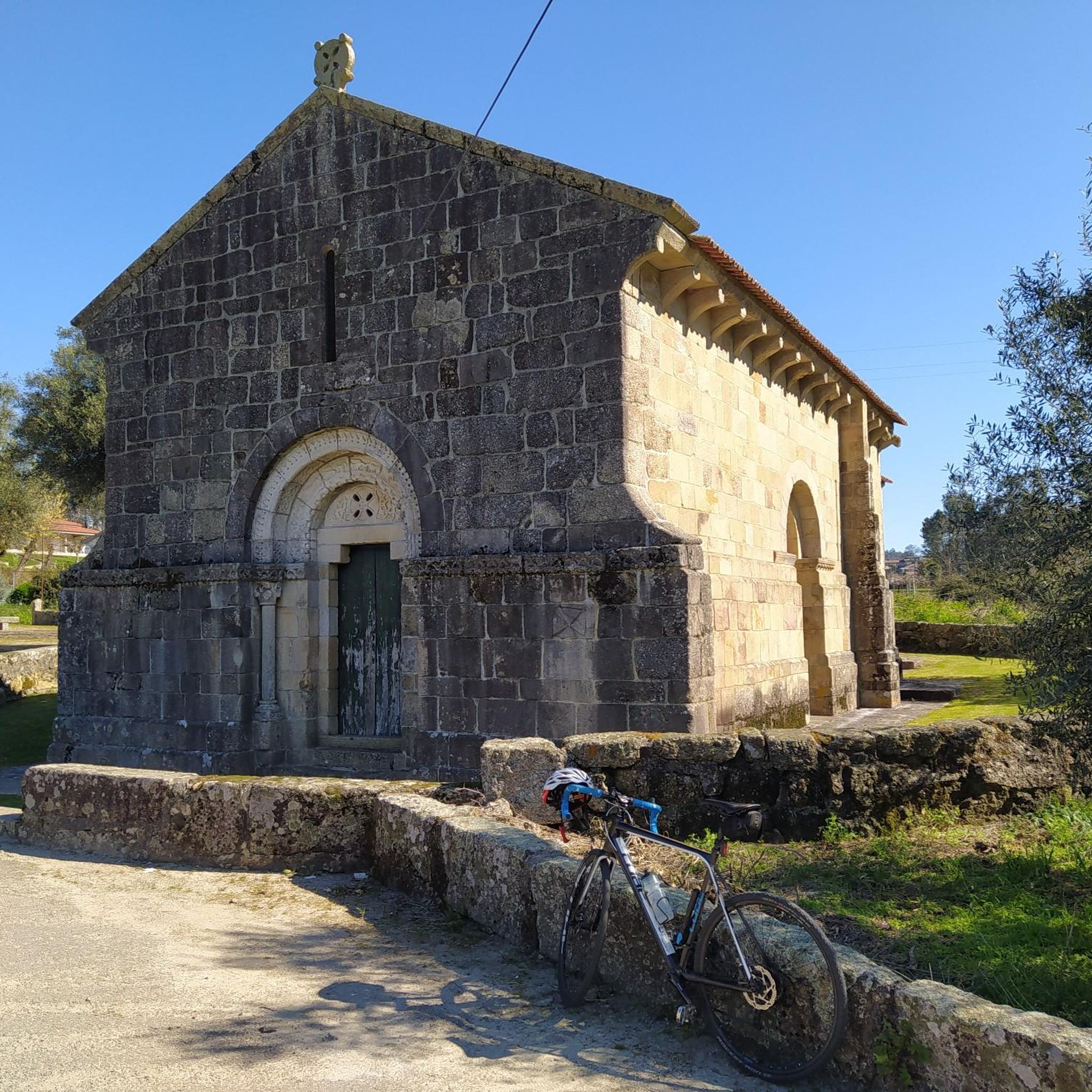
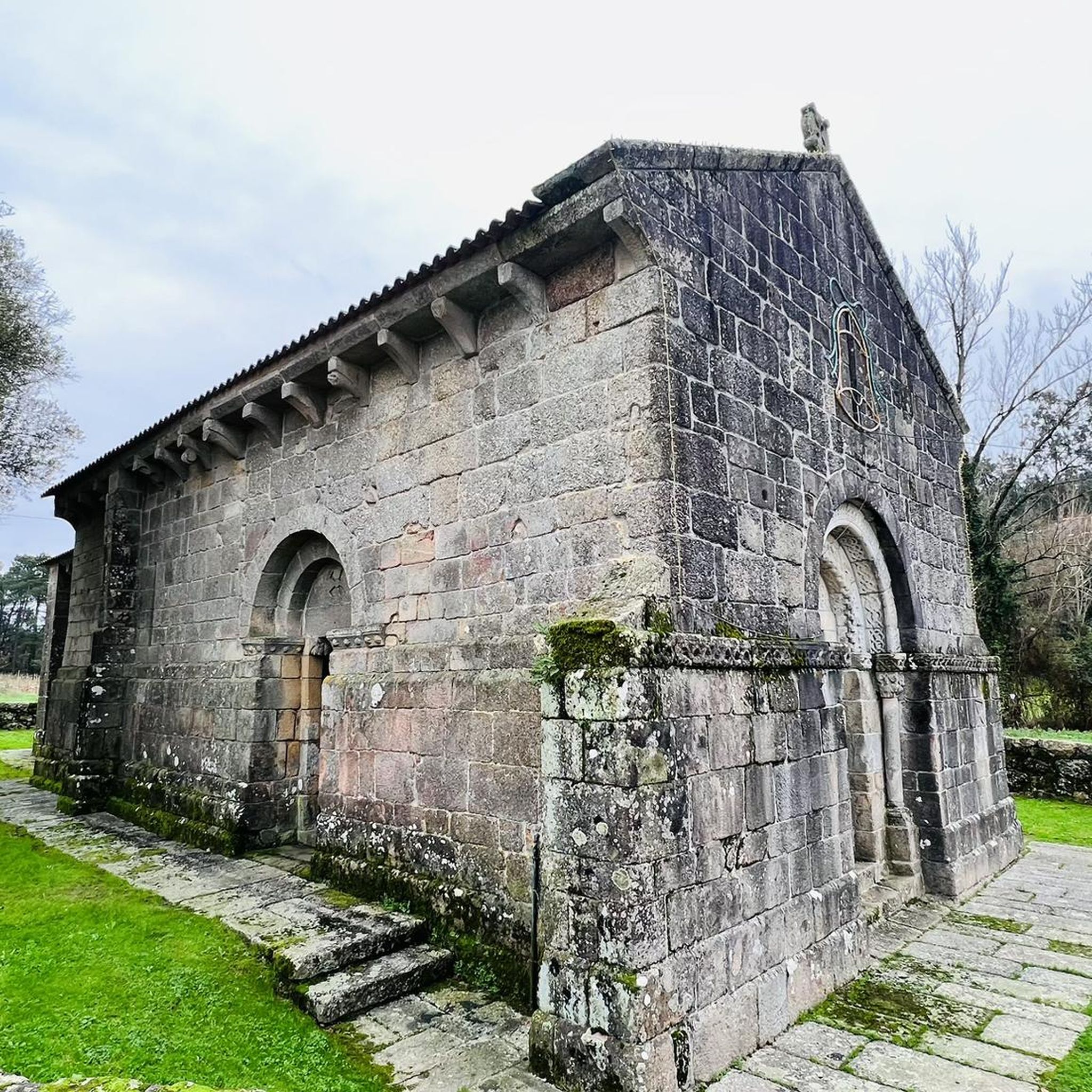
One of the first news concerning Amoso dates from 1077, confirming the existence of the parish of Santa Eulália. Implanted in a low and marshy place, the Church of the former monastery of Arnoso has a location that is not common in the Portuguese Romanesque and that could have been one of the causes of the reduction of the its constructive program. Although it is not possible to confirm its place of origin, the date of 1156 is inscribed on the tympanum of the south portal. Another epigraph, now detached, was removed during the restoration work carried out by the DGEMN from the outer face of the north wall. of the nave, next to the first buttress. Its original position seems to confirm the date of one of the phases of the Romanesque construction: | 124. The walls of the most eastern portion of the nave are lined with blind arcades, as they were initially intended for the transept, indicating a program designed for the construction of a temple on a larger scale. At the head, the figurative sculpture stands out, whose meaning seems to be that of struggle, tension and threat, pointing to the presence of evil forces and to the permanent struggle between man and evil entities.
1
0

A fabulous cycle path from Vila Nova de Famalicão to Póvoa de Varzim. It has a brand new perfect tarmac, so you can go as fast, as your legs allow you. With almost no incline you can let it roll and contemplate the surroundings. It is one of the most enjoyable and picturesque roads I have ever ridden on.
7
0

Very beautiful bike path, when it is over it will be excellent!
1
0

The bike path from Famalicão to Povòa do Varzim runs along the route of the old railway line. Very interesting part of Balazar with broken shelters and station sign (or better -stein). The past can be guessed here. https://de.m.wikipedia.org/wiki/Linha_da_P%C3%B3voa?wprov=sfla1
0
0
Frequently Asked Questions
What historical sites can I visit in Arnoso (Santa Eulália)?
The primary historical attraction is the Arnoso Monastery, also known as the Church of Santa Eulália do Mosteiro de Arnoso. This national monument dates back to the 7th century and features early Romanesque architecture and unique 16th-century frescoes. Another significant historical site is Castro da Ermida, a protohistoric settlement with continuous occupation between the 5th century BC and the 1st century AD.
Are there any natural attractions or outdoor spots in Arnoso (Santa Eulália)?
Yes, in the vicinity of the Church of Santa Eulália do Mosteiro de Arnoso, you can find a tranquil river beach along the banks of the Guisande River, offering a natural spot for relaxation. For more active outdoor pursuits, the region is known for its cycling routes.
What cycling opportunities are available in the area?
The most popular cycling route is the Famalicão–Póvoa de Varzim Cycle Path. This route follows an old railway line, stretching approximately 28 to 30 kilometers, connecting Famalicão to the Atlantic coast at Póvoa de Varzim. It's known for its flat terrain, making it accessible for various skill levels. You can find more cycling routes in the area, including road cycling and touring bicycle options, by visiting the Cycling around Arnoso (Santa Eulália) guide.
Is the Famalicão–Póvoa de Varzim Cycle Path suitable for families or those with limited mobility?
Yes, the Famalicão–Póvoa de Varzim Cycle Path is an easy and accessible route, suitable for everyone, including families with children. It is a flat route without major slopes and is also wheelchair accessible, featuring approximately 12 rest areas along its length.
Are there hiking trails near Arnoso (Santa Eulália)?
Yes, there are several hiking opportunities. For example, you can explore a moderate 15 km loop connecting Arnoso Monastery and Castro da Ermida from Nine. You can find more hiking routes, including easy and moderate options, in the Hiking around Arnoso (Santa Eulália) guide.
What is the significance of the Arnoso Monastery?
The Arnoso Monastery, or Church of Santa Eulália do Mosteiro de Arnoso, is a National Monument with a rich history dating back to the 7th century. It showcases exemplary early Romanesque architecture, including a simple design with a single nave and a rectangular apse. Inside, you can admire precious 16th-century frescoes depicting episodes from the life of Our Lady, which are unique to the municipality. An inscription on the south portal dates to 1156, marking a significant period in its construction. For more detailed historical information, you can visit the official monument page: monumentos.gov.pt.
What is Castro da Ermida?
Castro da Ermida is a protohistoric settlement that was continuously occupied between the 5th century BC and the 1st century AD. Archaeological excavations have revealed a central enclosure delimited by a wall and defensive reinforcements, along with various domestic structures. It offers insight into the Castro culture's dynamism in its final phase.
What do visitors enjoy most about the attractions in Arnoso (Santa Eulália)?
Visitors particularly appreciate the historical depth of sites like the Arnoso Monastery and the scenic beauty and accessibility of the Famalicão–Póvoa de Varzim Cycle Path. The cycle path is often praised for its perfect tarmac, lack of incline, and picturesque surroundings, making it a very enjoyable experience.
Is there parking available at the Arnoso Monastery?
While specific parking facilities are not detailed, the Arnoso Monastery is a significant historical site, and typically, some form of local parking would be available nearby for visitors. It's advisable to check local signage upon arrival.
What is the best time of year to visit Arnoso (Santa Eulália) for outdoor activities?
For outdoor activities like cycling and hiking, spring (April to June) and autumn (September to October) generally offer the most pleasant weather conditions in the region, with milder temperatures and less rainfall compared to summer or winter.
Are there any other notable points of interest related to the old railway line?
Yes, along the Famalicão–Póvoa de Varzim Cycle Path, which follows the route of the old railway line, you can find interesting historical remnants. For instance, Balazar Station – Linha da Póvoa offers a glimpse into the past with broken shelters and station signs, providing a unique historical context to your ride.

Get inspired with the komoot mobile app


Explore more
Still not found the Highlight you’re looking for? See guides of the top attractions in other regions:
