Attractions and Places To See around Góios - Top 20
Best attractions and places to see around Góios offer a blend of historical heritage and natural landscapes in Central Portugal's Coimbra District. This municipality is situated in a deep valley, surrounded by the Lousã and Açor hill ranges, and bisected by the Ceira River. Visitors can explore historical landmarks, picturesque schist villages, and numerous river beaches. The region provides opportunities for hiking, cycling, and experiencing traditional Portuguese life.
Best attractions and places to see around Góios
- The most popular attractions…
Last updated: July 1, 2026
Barcelos Medieval Bridge
Highlight • Viewpoint
Translated by Google •
Tip by

Barcelos city centre
Highlight • Settlement
Translated by Google •
Tip by

Sign up now to discover places like this
Get recommendations on the best single tracks, peaks, & plenty of other exciting outdoor places.
Sign up for free
Barcelos Rooster statue
Highlight • Monument
Translated by Google •
Tip by

Famalicão–Póvoa de Varzim Cycle Path
Highlight (Segment) • Cycleway
Translated by Google •
Tip by

Main Church of Santa Maria de Barcelos
Highlight • Religious Site
Translated by Google •
Tip by

Sign up for free to discover even more attractions around Góios.
Sign up for free
Already have an account?
Start today with a free account
Your next adventure awaits.
Login or Signup

Tips from the Community

The church is open for visitation and prayer most days, with specific times for Masses. Opening Hours: Monday to Sunday: 10:00–12:00 and 15:00–19:30. Mass Times (subject to change, please check the official website): Tuesday: 7:00 PM. Thursday: 7:00 PM. Saturday: 5:30 PM. Sunday: 11:00 AM.
1
0
The church was built in the 14th century in a transitional style between Romanesque and Gothic, on the foundations of an earlier 11th-century church. Main Features: Style: Transitional Gothic and Romanesque, with Renaissance and Baroque additions throughout the centuries. Interior: It has three naves, notably featuring 14 blue and white tile panels that cover much of the walls, dating from the 17th and 18th centuries. Notable Elements: The chancel vault is a Manueline work (early 16th century), and the main façade features a Neo-Gothic rose window, the result of a 20th-century restoration. Heritage: The church houses notable altarpieces and funerary monuments of important families, such as the Pinheiro family. The Parish Church of Santa Maria de Barcelos is a point of historical and architectural interest for tourists and pilgrims traveling the Camino de Santiago.
1
0
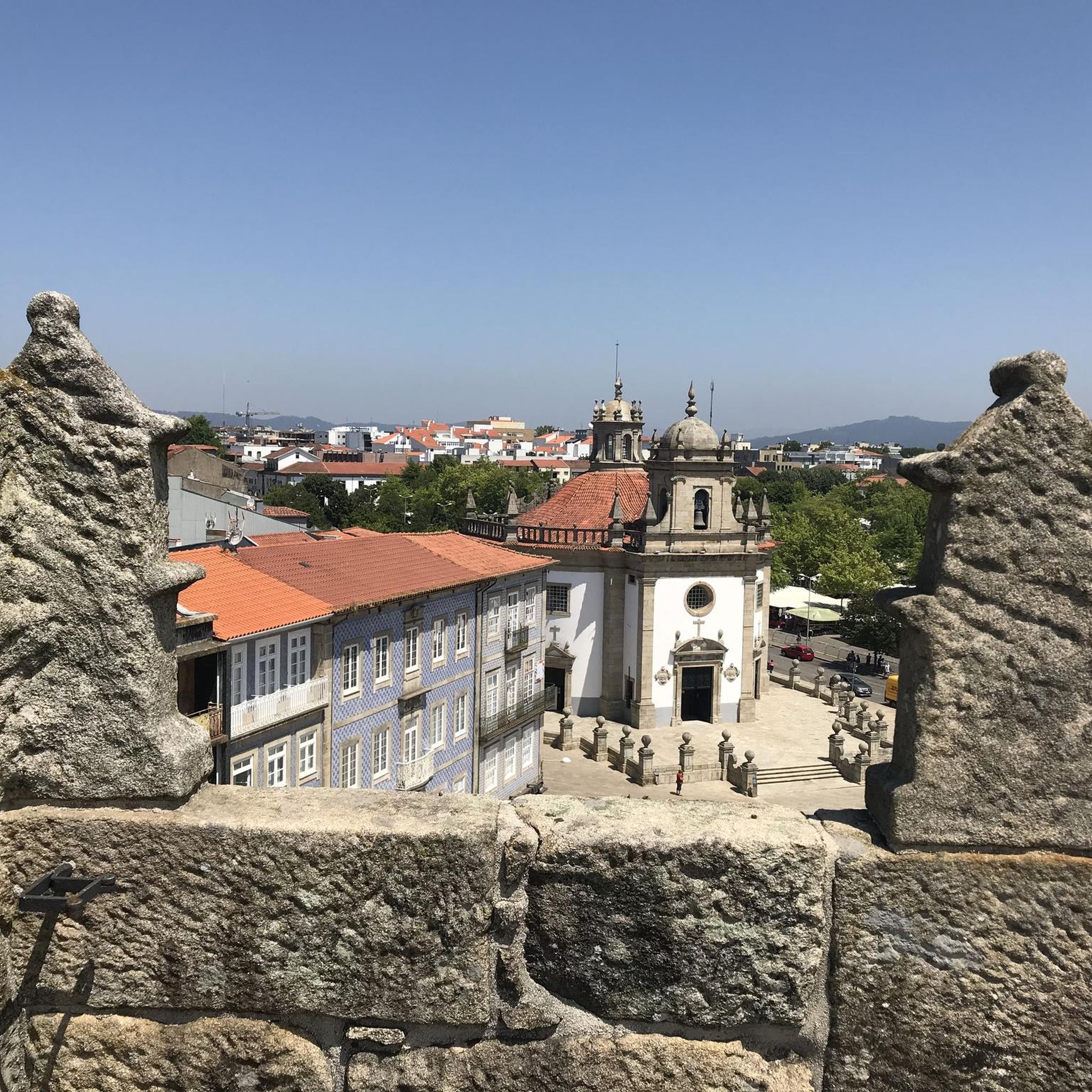
The Parish Church of Santa Maria de Barcelos, also known as the Collegiate Church, is the main religious temple in the city of Barcelos and a National Monument of Portugal.
1
0
Highlights and Route Landscape: The route crosses rural areas, small population centers, agricultural fields, and forest areas, offering a calm and pleasant environment. Localities: The ecotrail passes through several localities, including Amorim, Terroso, Laundos, Rates, Balazar, Gondifelos, Louro, and Brufe. Intermodality: A great advantage is the direct connection to the Vila Nova de Famalicão train station and the Porto Metro station in Póvoa de Varzim, facilitating access to the beginning and end of the route. Interconnection: The cycle path connects to the Formiga Ecotrail, allowing the ride to be extended.
1
0
Route Characteristics Length: The route is approximately 28 to 30 kilometers in total, connecting the rural interior (Famalicão) to the Atlantic coast (Póvoa de Varzim). Difficulty: It is a flat route, without major slopes or sharp curves, making it an easy and accessible route for everyone, including families with children. Surface: The surface is a mixture of macadam and, in some sections, asphalt, suitable for walking, running and cycling. Accessibility: The ecotrail is wheelchair accessible and has approximately 12 rest areas along the route.
1
0
The Famalicão–Póvoa de Varzim cycle path is, in fact, the Famalicão branch line cycle path. This route was built using the canal of the old railway branch line that connected Vila Nova de Famalicão and Póvoa de Varzim, and which ceased train service in 1995.
1
0

The Barcelos Bridge is more than just an entrance to the city. It's a gateway to its legends, like that of the rooster. Over the Cávado River, this Gothic stone bridge, commissioned by Count Pedro between 1325 and 1330, connects Barcelos to Barcelinhos and has been classified as a National Monument since 1910. And if the heat gets too much, right next door awaits a river beach perfect for a refreshing dip.
3
0

Beautiful view from the ruins of the castle
9
2
Frequently Asked Questions
What natural attractions can I explore in Góis?
Góis is rich in natural beauty. You can explore the impressive Penedos de Góis, popular for climbing and scenic trails, or enjoy the breathtaking landscapes of the Serra da Lousã and Serra do Açor. The Ceira River is central to the area, offering pleasant leisure areas and boardwalks.
Are there historical sites to visit in Góis?
Yes, Góis boasts several historical landmarks. Don't miss the iconic Ponte Real, a bridge built in 1533, or the 16th-century Góis Mother Church with its notable Renaissance sculpture. The Historic Center itself offers charming streets and buildings like the former hospital from 1560 and the Town Hall in a 17th-century manor. You can also find the Chapel of São Sebastião near Ponte Real.
What kind of outdoor activities are available in Góis?
Góis offers a variety of outdoor activities. You can enjoy numerous official hiking and walking trails through the diverse natural landscapes. The Ceira River and nearby Mondego River provide opportunities for canyoning and canoeing. For a unique experience, consider 4x4 Jeep tours to explore the Serra da Lousã and its schist villages. For more specific hiking routes, check out the Hiking around Góios guide.
Where can I find river beaches for swimming in Góis?
Góis is famous for its crystal-clear river waters and several popular river beaches. The closest to Ponte Real is Peneda River Beach (Praia Fluvial da Peneda), also known as White Island Beach. Other options include Pego Escuro River Beach, Ponte de Sotão River Beach, Cabril River Beach, and Canaveiras River Beach in Vila Nova do Ceira, as well as bathing areas in Comeal and Alvares.
Can I visit the traditional Schist Villages near Góis?
Absolutely. Góis is an excellent starting point for exploring the picturesque Schist Villages (Aldeias do Xisto). Notable villages include Pena, known for its slopes and waterfalls; Aigra Nova, home to the Schist Traditions Ecomuseum; Aigra Velha; and Comareira, an ideal strategic point for visitors to the schist villages.
Are there family-friendly activities in Góis?
Góis is a great destination for families. The numerous river beaches offer safe and refreshing spots for children to play and swim. Exploring the charming Schist Villages can be an educational and engaging experience. Additionally, the Cerejal Picnic Area on the banks of the Ceira River provides a pleasant park setting for relaxation and family outings. Many of the walking trails are also suitable for families.
What are the best hiking opportunities around Góis?
The region around Góis offers diverse hiking opportunities, from easy walks along the river to more challenging trails in the mountains. You can explore trails around the Penedos de Góis or venture into the Serra da Lousã and Serra do Açor for breathtaking views. For a comprehensive list of trails, including easy and moderate options, refer to the Hiking around Góios guide and the Easy hikes around Góios guide.
What is the best time of year to visit Góis?
Góis is beautiful year-round, but the best time depends on your preferred activities. For swimming in the river beaches and enjoying water sports, the summer months (June to August) are ideal. For hiking and exploring the natural landscapes, spring (April to May) and autumn (September to October) offer milder temperatures and vibrant scenery. Winter can be peaceful for those seeking quiet walks, though some higher trails might be more challenging.
Are there any unique viewpoints or photo opportunities in Góis?
Yes, for a fantastic photo opportunity, visit the Góis Swing located at a viewpoint within the Castle gardens. It offers one of the best panoramic views of the town, framed by the surrounding mountains and the Ceira River. The Penedos de Góis also provide stunning vistas for photographers and nature lovers.
What cultural insights can I gain in Góis?
To delve into the local culture, visit the Schist Traditions Ecomuseum in Aigra Nova. This museum provides valuable insight into the traditions and daily life of the people in the schist villages. Exploring the historic center of Góis and its ancient buildings also offers a glimpse into the region's rich past.
Are there any prehistoric sites in the area?
Yes, Góis has evidence of prehistoric habitation. You can find the Pedra Letreira, a large slab of schist featuring Bronze Age engravings, which indicates the area's ancient history.
What is the significance of the Ceira River to Góis?
The Ceira River is incredibly significant to Góis, so much so that the municipality is known as the 'capital of Ceira.' The river bisects the valley where Góis is situated, providing numerous leisure areas, boardwalks, and, most notably, the crystal-clear waters for the region's popular river beaches. It's central to both the natural beauty and recreational activities of the area.

Get inspired with the komoot mobile app


Explore more
Still not found the Highlight you’re looking for? See guides of the top attractions in other regions:
