Attractions and Places To See around Mieścisko - Top 20
Best attractions and places to see around Mieścisko, a town in west-central Poland, offer a blend of historical sites and natural features. Situated on the Wełna River in the Greater Poland Voivodeship, the area has a recorded history dating back to the 14th century. Archaeological findings indicate human presence for approximately 12,000 years. The region features historic churches, manor houses, and unique natural monuments.
Best attractions and places to see around Mieścisko
- The most popular attractions is Zakrzewo Palace,…
Last updated: May 4, 2026
Zakrzewo Palace
Highlight • Castle
Translated by Google •
Tip by

Church of the Annunciation of the Blessed Virgin Mary in Popowo Kościelne
Highlight • Religious Site
Translated by Google •
Tip by

Sign up now to discover places like this
Get recommendations on the best single tracks, peaks, & plenty of other exciting outdoor places.
Sign up for free
Confluence of the Wełna and Nielba Rivers
Highlight • River
Translated by Google •
Tip by

St. Michael the Archangel Wooden Church in Jabłkowo
Highlight • Religious Site
Translated by Google •
Tip by
Abandoned Evangelical Church in Zrazim
Highlight • Religious Site
Translated by Google •
Tip by

Sign up for free to discover even more attractions around Mieścisko.
Sign up for free
Already have an account?
Start today with a free account
Your next adventure awaits.
Login or Signup

Tips from the Community

The church is impressive; I wouldn't go inside it alone at night. There's another church nearby, so this one is probably in its current state of decay.
0
0

The abandoned church is a cool thing to see on the route
0
0

An unusual monument: a church on a small hill - poor condition, e.g. due to damp and slowly falling plaster, but the church makes an impression and is worth stopping here. Although its time has passed, many details have been preserved, and you can give scope for imagination!
0
0

The ceremonial consecration of the neo-Gothic church took place on September 7, 1892. The Evangelical parish in Zrazim operated until early 1945, later being taken over by the State Treasury. After World War II, in the 1960s and 1970s, the church was periodically used as a warehouse. On December 30, 1996, the building was entered into the register of historical monuments. There are no windows in the church, which means that atmospheric factors systematically and negatively affect the temple. One can see the progressive processes of rotting and fungus. Despite this, the church tower, winding stairs leading to the belfry located at the top, the wooden vault and its decorations, fragments of the floors, and the altar have still been preserved. (pojezierze24.pl)
0
0
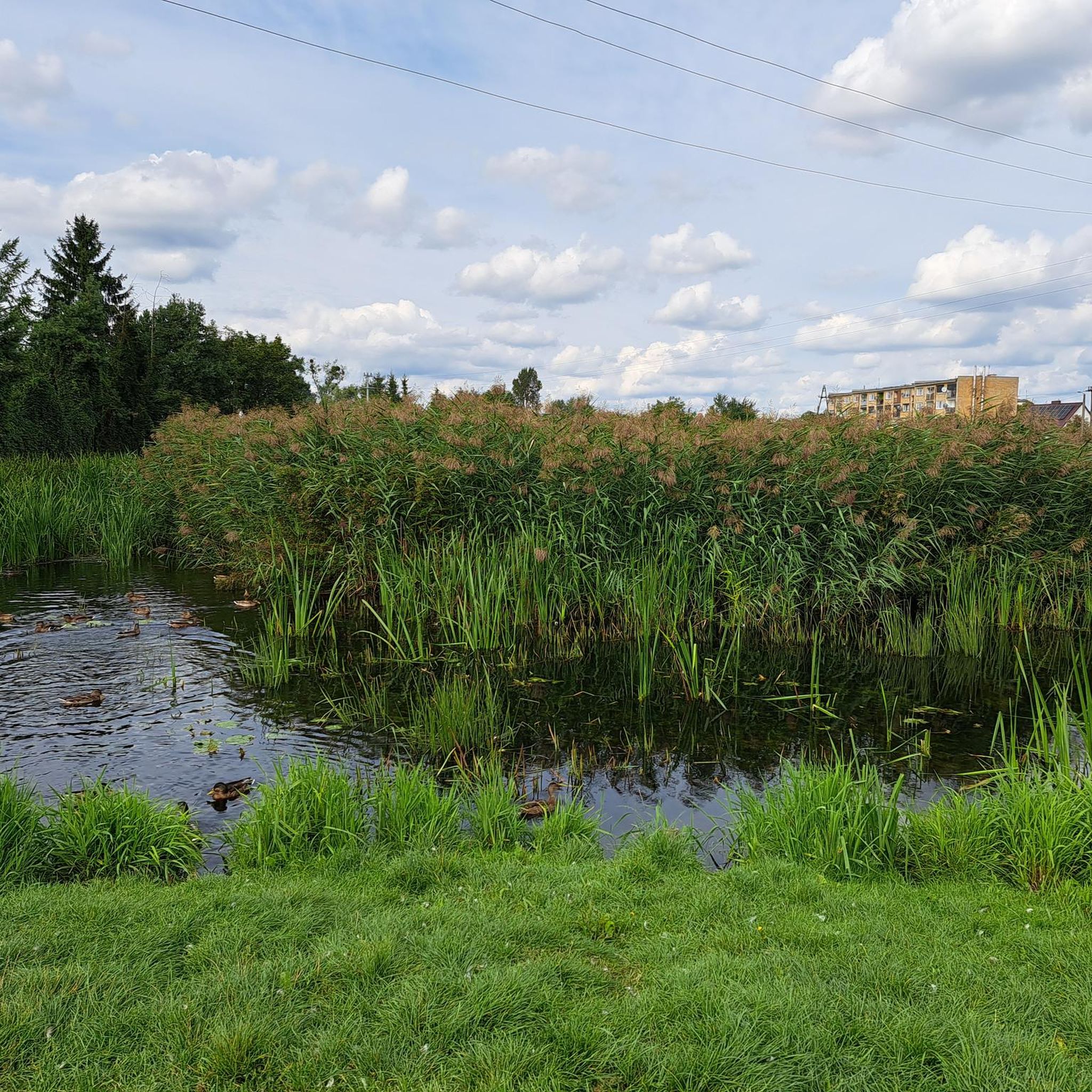
The only river crossing in Poland, the second in Europe in Wągrowiec, although very impressive, is not a natural phenomenon. It was created during drainage works in 1830. They changed the place where the Nielba flows into the Wełna, so that it falls exactly at the point where the Wełna flows apart. This solution was designed by Adalbert Schulemann from Bydgoszcz in order to protect Wągrowiec (then called Wongrowitz) from being flooded by flood waters of both rivers. Drainage works were also intended to ensure that the Wełna waters were adequately dammed during droughts, so that a water mill could operate on it. (wagrowiec.pl)
0
0
The palace was built in the years 1870 (or 1871)-1872. Count Albin Belina Węsierski (owner of Zakrzewo) together with the builder from Gniezno Ludwik Ballenstaedt went to an exhibition in Paris and after returning, they built the current palace on the site of the old manor. During the occupation, the Germans threw the owners, the Chełmicki family, out of the palace. In 1945, the building was plundered and then adapted to serve the summer camps of children from the Cegielski Plants. In 1978, it was taken over by the PGR Rybno Wielkie. In 1990, the ruined building was taken over by the Wielkopolski Bank Kredytowy. In June 1991, a training center was opened here. In 1992, the gold medal of the Minister of Culture and Art was awarded for the careful renovation of the monument. Currently, since 2021, the palace has been in private hands. /Wikipedia/
0
0

Nice old wooden church. Visible from the route
0
0

The building dates from 1629, erected on the site of an earlier church from before 1423. It was rebuilt after the destruction in 1730 by the parish priest Stanisław Łepkowski. In 1863 the church was renovated and covered with slate. Noteworthy is the interior (17th-18th century) and a number of chapels (from 1926) with figures around the church. In the church itself, 17th-century coffin portraits, including a portrait of the founder, Stanisław Zagórski from Zagorzyce, have been preserved on the side walls. An interesting puzzle is the matter of the family coat of arms - the coat of arms of Grzymała appears on Stanisław's coffin cartouche. However, in the upper part and in the frontage of the Baroque side altar, there is Ostoja, the coat of arms of the Zagórski family. One of the portraits hanging on the right side wall comes from the 18th century and shows a priest, most probably Stanisław Łepkowski.
1
0
Frequently Asked Questions
What historical sites can I explore in Mieścisko?
Mieścisko and its surroundings are rich in history. You can visit the historic Church of the Annunciation of the Blessed Virgin Mary in Popowo Kościelne, dating back to 1629, or the charming St. Michael the Archangel Wooden Church in Jabłkowo from 1754. Other notable religious buildings include the St. Nicholas Roman Catholic Church in Skoki. While Zakrzewo Palace is a significant historical landmark, it is privately owned and not publicly accessible.
Are there any unique natural landmarks in the Mieścisko area?
Yes, the region boasts several unique natural features. A prominent one is the Stone of St. Adalbert (Kamień Świętego Wojciecha) in Budziejewko, an impressive red granite boulder and a protected natural monument. You can also observe the unusual Confluence of the Wełna and Nielba Rivers, where the rivers cross at a right angle, a phenomenon created by human intervention in the 19th century.
What outdoor activities can I do near these attractions?
The Mieścisko area offers various outdoor activities. You can explore numerous cycling routes, including designated red, green, and blue trails that crisscross the gmina. For more specific routes, consider the Road Cycling Routes around Mieścisko or general Cycling around Mieścisko guides. There are also several Running Trails around Mieścisko for those looking for a jog.
Are there any family-friendly attractions in Mieścisko?
Families can enjoy exploring the natural beauty of the region, such as the monumental trees found in Jaworówko and Kłodzin, or the picturesque Wełna River. The Confluence of the Wełna and Nielba Rivers is also an interesting spot for all ages to learn about a unique hydrological feature. Additionally, the Park Pamięci (Memorial Park) in Budziejewko offers a reflective outdoor space.
Where can I find examples of traditional architecture?
The region is home to several historic churches and manor houses. Beyond the highlighted churches, you can find other historic churches like St. Michael the Archangel in Mieścisko, St. Wojciech in Budziejewko, and St. Anna in Podlesie Kościelne. Manor houses and palaces are also present in locations such as Budziejewo, Podlesie Kościelne, Żabiczyn, and Jaroszewo Drugie, contributing to the area's architectural heritage.
What is the best time of year to visit Mieścisko attractions?
The best time to visit Mieścisko attractions is generally during the warmer months, from spring to early autumn (May to September). This period offers pleasant weather for exploring outdoor sites, cycling routes, and enjoying the natural landscapes. The annual Michael's Fairs (Targi Michałowskie) also take place during this time, offering a cultural experience.
Are there any archaeological sites or ancient history to discover?
Yes, the area around Mieścisko and Popowo Kościelne is archaeologically significant. Over a thousand archaeological sites have been discovered, with the oldest traces of human presence, including remnants of Mesolithic camps, dating back approximately 12,000 years. While specific sites may require local guidance, the historical depth of the region is remarkable.
What are some of the less-known natural spots or 'hidden gems'?
Beyond the well-known features, you might enjoy exploring the three interesting post-glacial ravines that run parallel to the Wełna River: one from Gołaszewo to Gorzewo, a second from Wiele to Piastowice, and a third from Mieścisko to Miłosławice. These offer unique geological formations and scenic views. St. Hubert's Park is another natural point of interest for quiet contemplation.
Can I find any monumental trees in the area?
Absolutely. The gmina is home to numerous monumental trees. You can find old oaks in Jaworówko and Kłodzin, and beautiful linden trees also in Jaworówko. There are also impressive chestnut avenues along the roads leading from Mieścisko to Wągrowiec and from Mieścisko to Skoki. Two broad-leaved linden trees near the church in Popowo Kościelne are specifically listed in the Provincial Conservator of Monuments register.
What cultural events or traditions are unique to Mieścisko?
Mieścisko is known for its annual Michael's Fairs (Targi Michałowskie). This cultural and commercial event has a long tradition, organized since 1978, and showcases the cultural and sporting achievements of the gmina, often featuring folklore ensembles. It's a great opportunity to experience local traditions and community spirit.
Are there any cycling routes suitable for different skill levels?
Yes, Gmina Mieścisko offers several designated bicycle routes catering to various preferences. There's a red trail (17km), a green trail (22km), and a blue trail (47km), providing options for both shorter, easier rides and longer, more challenging explorations of the region. You can find more detailed routes in the Cycling around Mieścisko guide.
Most popular attractions around Mieścisko

Get inspired with the komoot mobile app


Explore more
Still not found the Highlight you’re looking for? See guides of the top attractions in other regions:
