Attractions and Places To See around gmina Ostrzeszów - Top 20
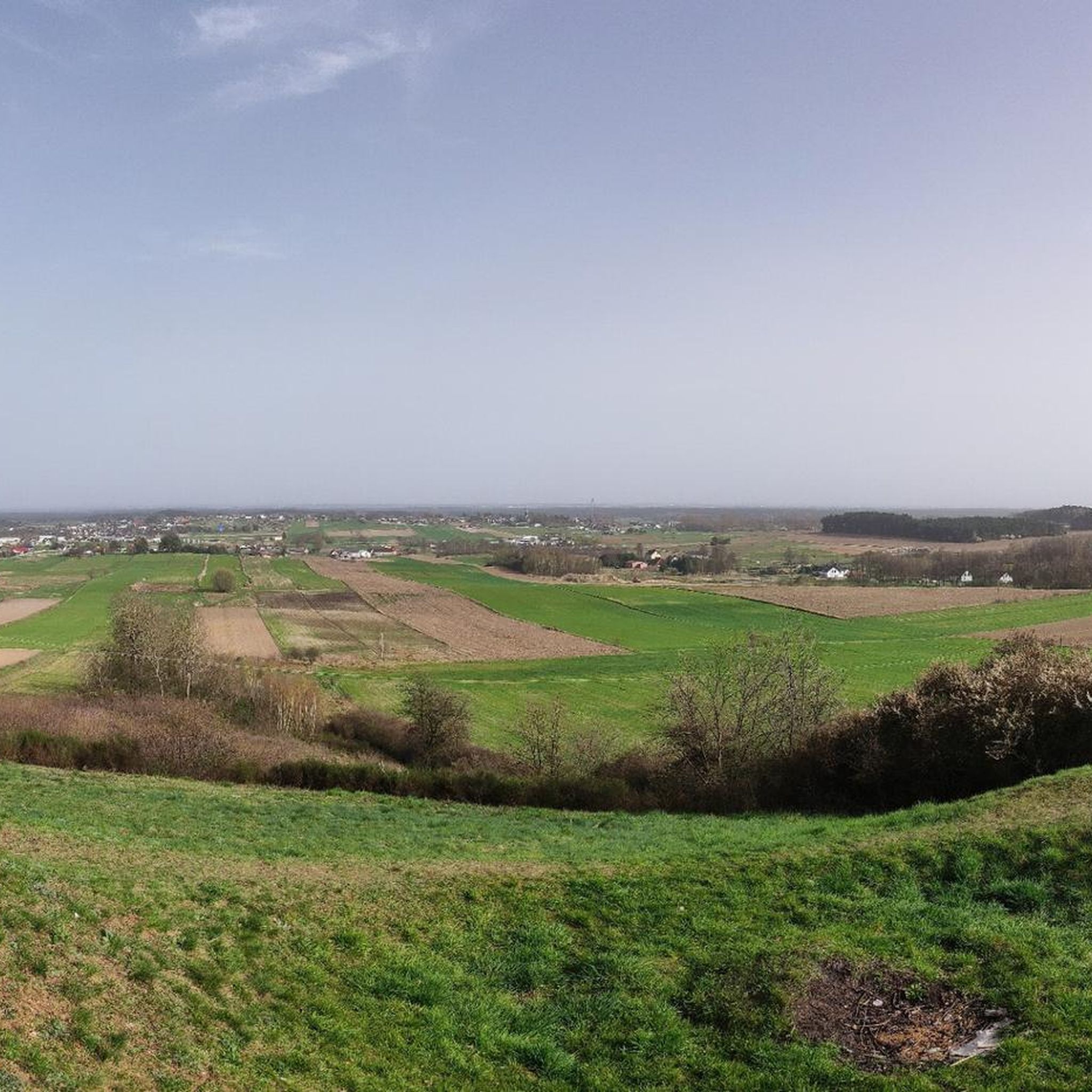
Attractions and places to see around gmina Ostrzeszów include a diverse range of historical landmarks, natural features, and cultural sites. Located in southern Wielkopolska, the region features the Ostrzeszów Hills, which are among the highest elevations in the area. Visitors can explore historical buildings, nature reserves, and recreational facilities. The area offers various opportunities for outdoor activities and cultural experiences.
Best attractions and places to see around gmina Ostrzeszów
- The most popular attractions is My Will Hunting Palace, a historical site that was built in 1852, funded by Wilhelm, Duke of Brunswick-Olesno. The palace's facade is clad with rectangular sheets of cork oak bark imported from Portugal.
- Another must-see spot is Radziwiłł Hunting Palace in Antonin, a historical site known for its characteristic wooden architecture and picturesque location. It functions as a museum and cultural center, hosting concerts, exhibitions, and cultural events.
- Visitors also love Church of the Nativity of the Blessed Virgin Mary in Myślniew, a wooden church built in 1746. It features a unique construction, with a Crucifixion Group from its construction year and late Baroque altars.
- gmina Ostrzeszów is known for its historical sites, religious buildings, and natural features. The region offers a diverse range of sites for exploration.
- The attractions around gmina Ostrzeszów are appreciated by the komoot community, with more than 20 upvotes and over 50 photos shared.
Last updated: July 15, 2026
My Will Hunting Palace
Highlight • Historical Site
The building was expanded in 1895 to include a southwestern section with a dining room, and in 1902-1903 to include a brick tower and a two-story northeastern wing. The facades of the added sections were clad with native oak bark.
During the fighting for Wrocław in 1945, the palace served as a front-line hospital. After the war, it housed the Forestry Workers' Training Center (1949-1950), and then the Forestry Vocational Training Center (1950-1951). In 1951, the first women's Forestry Technical School in Poland, named after Bolesław Bierut, was established here. In mid-1975, the school was closed. That same year, the building was added to the register of historic monuments. Since then, it has operated as a Forest Training Center at the Antonin Forest District, and later as a hotel for forestry workers. Currently, it is privately owned. Unfortunately, the building is in poor condition.
Translated by Google •
Tip by

Radziwiłł Hunting Palace in Antonin
Highlight • Historical Site
Translated by Google •
Tip by

Sign up now to discover places like this
Get recommendations on the best single tracks, peaks, & plenty of other exciting outdoor places.
Sign up for free
Church of the Nativity of the Blessed Virgin Mary in Myślniew
Highlight • Religious Site
Translated by Google •
Tip by

Church in Mikstat
Highlight • Religious Site
The church is impressive in its architecture – the three-nave main body is enclosed on the eastern side by a semicircular apse, while a tall tower with a ground-floor porch, topped by a metal dome with a lantern and a cross, dominates the west. The entrance portal is adorned with sculptures of angels and flanked by columns, giving the building a monumental character. The church interior is divided by arcades, the vaults of which are adorned with rich polychrome and stucco decorations. In the western part is a brick choir loft with an organ case, supported by three arcades. The organ, built by Józef Bach in 1939, is unique in Poland.
The church's furnishings are in the spirit of neo-Baroque – the main altar features a bas-relief depicting the Holy Trinity, flanked by scenes of the Annunciation of the Archangel Gabriel and the fight of the Archangel Michael with the dragon. The side altars are dedicated to St. Agatha and the Virgin Mary with the Infant Jesus. A canopied pulpit, the Stations of the Cross, and numerous stained glass windows from 1914 complete the interior's sacred atmosphere. In the church cemetery stands a 19th-century wooden cross, the work of Paweł Bryliński, decorated with sculptures of the Virgin Mary, saints and a pelican feeding its chicks – a symbol of Christ.
Translated by Google •
Tip by
Church of the Immaculate Conception of the Blessed Virgin Mary, Czarnylas
Highlight • Religious Site
Translated by Google •
Tip by
Sign up for free to discover even more attractions around gmina Ostrzeszów.
Sign up for free
Already have an account?
Start today with a free account
Your next adventure awaits.
Login or Signup
Popular around gmina Ostrzeszów

Other adventures around gmina Ostrzeszów

Tips from the Community

The Church of the Holy Trinity in Mikstat is the town's main parish church, dating back to the 14th century, when the first residents built a wooden church on the so-called Church Hill. Over the centuries, the church was rebuilt several times after fires and destruction, until the current brick church in the neo-Baroque style, designed by Marian Andrzejewski, was built in 1914. It was consecrated by Cardinal Edmund Dalbor in 1918, an event not only religious but also patriotic – the streets of Mikstat were decorated with white and red banners, and young people welcomed the distinguished guest in national costumes. The church is impressive in its architecture – the three-nave main body is enclosed on the eastern side by a semicircular apse, while a tall tower with a ground-floor porch, topped by a metal dome with a lantern and a cross, dominates the west. The entrance portal is adorned with sculptures of angels and flanked by columns, giving the building a monumental character. The church interior is divided by arcades, the vaults of which are adorned with rich polychrome and stucco decorations. In the western part is a brick choir loft with an organ case, supported by three arcades. The organ, built by Józef Bach in 1939, is unique in Poland. The church's furnishings are in the spirit of neo-Baroque – the main altar features a bas-relief depicting the Holy Trinity, flanked by scenes of the Annunciation of the Archangel Gabriel and the fight of the Archangel Michael with the dragon. The side altars are dedicated to St. Agatha and the Virgin Mary with the Infant Jesus. A canopied pulpit, the Stations of the Cross, and numerous stained glass windows from 1914 complete the interior's sacred atmosphere. In the church cemetery stands a 19th-century wooden cross, the work of Paweł Bryliński, decorated with sculptures of the Virgin Mary, saints and a pelican feeding its chicks – a symbol of Christ.
0
0

The Hunting Palace of the Radziwiłł Princes in Antonin is a unique monument in southern Wielkopolska, known for its characteristic wooden architecture and picturesque location. Surrounded by a large park with a fountain, it originally served as a hunting residence for the Radziwiłł family. Today, it houses a museum and cultural center, and its interiors are used for concerts, exhibitions, and cultural events.
3
0
The Church of the Immaculate Conception of the Blessed Virgin Mary for the Evangelical community was built in the second half of the 19th century with funds provided by the Foundation of Princess Ludwika Radziwiłł of Hohenzollern, which is why the coat of arms of the Hohenzollern dynasty is visible in the stained glass window above the main altar. It is a monumental building in the eclectic style (fashionable in the Romanticism era), with an interior in the Neo-Romanesque style. The church tower is built on a square plan. The original color of the walls in red-brown tones is the result of the building material used - bricks from bog iron ore.
0
0
Church of the Nativity of the Blessed Virgin Mary from 1746. Renovated in 1974-75. In 2018, the roofs were covered with shingles. The temples were placed above a spring, which causes dampness of the floor. Wooden church, single-nave, log construction. Oriented. Smaller chancel from the nave, closed on three sides with a side sacristy. Porch on the side of the nave. Tower at the front, post-and-beam construction with walls sloping upwards and a porch in the ground floor. Topped with a Baroque, sheet metal dome with a double octagonal lantern and a cross. Double-ridge roof, covered with larch shingles with a wide eaves with a hexagonal turret for a bell tower. Topped with a pyramidal sheet metal dome with a lantern and a cross. Inside, apparent barrel vaults, slightly flattened in the chancel. On the wall, the Crucifixion Group with the date of construction of the church "1746". The choir is supported by two wooden pillars with a balustrade of a straight line, decorated with three figures on consoles. Pipe organs liquidated in 2009. The main altar and two late Baroque side altars from around the mid-18th century. Baroque pulpit with a canopy and baptismal font from the mid-18th century. Gothic figure of the Madonna and Child from the end of the 14th century. Baroque-folk processional crucifixes.
0
0

A treat for history and architecture lovers. I also recommend summer Chopin concerts every Sunday. A wonderful place surrounded by a beautiful palace park.
0
0

The Hunting Palace of the Radziwiłł Princes from the 19th century. Currently a hotel.
0
0

The residence was built in 1852, funded by Wilhelm, Duke of Brunswick-Olesno, according to the design of the Polish architect and engineer Karłowski. The palace's facade is clad with rectangular sheets of cork oak bark imported from Portugal. The building was expanded in 1895 to include a southwestern section with a dining room, and in 1902-1903 to include a brick tower and a two-story northeastern wing. The facades of the added sections were clad with native oak bark. During the fighting for Wrocław in 1945, the palace served as a front-line hospital. After the war, it housed the Forestry Workers' Training Center (1949-1950), and then the Forestry Vocational Training Center (1950-1951). In 1951, the first women's Forestry Technical School in Poland, named after Bolesław Bierut, was established here. In mid-1975, the school was closed. That same year, the building was added to the register of historic monuments. Since then, it has operated as a Forest Training Center at the Antonin Forest District, and later as a hotel for forestry workers. Currently, it is privately owned. Unfortunately, the building is in poor condition.
5
0

Truly remarkable Neoclassical hunting lodge built in 1822-1824 for Antoni Radziwiłł, a member of one of the leading Polish magnate families. It sits on an octagonal base and has a mainly wooden construction with a distinctive yellow ("Keisergeld") exterior. Inside there is a huge three-storey hall with galleries and a doric column in the middle, housing a fireplace and adorned with hunting trophies. The palace is famous for having been twice visited by Frederic Chopin, who composed a couple of his musical pieces there. Presently it houses a hotel and a restaurant. Well worth a visit.
0
0
Frequently Asked Questions
What historical landmarks can I visit in Gmina Ostrzeszów?
Gmina Ostrzeszów offers several significant historical landmarks. You can explore the ruins of the 14th-century Ostrzeszów Castle and its well-preserved 24-meter-tall tower (Baszta), which also functions as a museum. Another notable site is the Radziwiłł Hunting Palace in Antonin, a unique wooden architectural monument that now serves as a museum and cultural center. Additionally, the Regional Museum, housed in the 1840 town hall, provides insights into local history.
Are there any notable religious sites in the area?
Yes, Gmina Ostrzeszów is home to several historic religious buildings. The 15th-century Gothic Parish Church of the Assumption of Our Lady in Ostrzeszów is a prominent example. You can also visit the former Bernardine Monastery and St. Michael the Archangel's Church, built between 1680 and 1740, or the wooden Church of the Nativity of the Blessed Virgin Mary in Myślniew from 1746. The Church in Mikstat, a Neo-Baroque brick church, and the eclectic-style Church of the Immaculate Conception of the Blessed Virgin Mary in Czarnylas are also significant.
What natural attractions are there to explore in Gmina Ostrzeszów?
The region is characterized by the Ostrzeszów Hills, which offer panoramic views, including peaks like Kobyla Góra (284 m a.s.l.) and Bałczyna (278 m a.s.l.). You can also visit the "Pieczyska" and "Jodły Ostrzeszowskie" forest nature reserves, which feature walking and cycling paths. The area's extensive forests are ideal for walks, and local ponds attract fishing enthusiasts. For water activities, bathing areas can be found in nearby Kobyla Góra and Antonin, such as Zalew Blewązka w Kobylej Górze and Plaża Kobyla Góra.
What outdoor activities can I do near these attractions?
Gmina Ostrzeszów offers various outdoor activities. You can find numerous trails for hiking, such as the easy 'Baszta Kazimierzowska loop from Ostrzeszów' or the 'Antonin - Hunting Palace loop from Ludwików'. For cycling, there are road cycling routes like the 'Ostrzeszów - Castle – Scenic Forest Road loop' and gravel biking options such as the 'Ostrzeszów - Castle – Stary Młyn loop'. You can find more details on these and other routes in the Hiking around gmina Ostrzeszów, Road Cycling Routes around gmina Ostrzeszów, and Gravel biking around gmina Ostrzeszów guides.
Are there family-friendly attractions around Gmina Ostrzeszów?
Families can enjoy several attractions in the area. The Radziwiłł Hunting Palace in Antonin is considered family-friendly and hosts cultural events. For active fun, the Kryta Pływalnia Oceanik (Indoor Swimming Pool Oceanik) offers a wading pool, recreational pool, and slide for children, alongside relaxation zones for adults. The extensive forests are also great for family walks and mushroom picking, and the City Park provides a green space for relaxation.
Where can I find panoramic views in Gmina Ostrzeszów?
For panoramic views, head to the Ostrzeszów Hills. The Baszta (tower) of Ostrzeszów Castle offers a great vantage point after its revitalization. Additionally, peaks like Kobyla Góra and Bałczyna provide elevated perspectives of the Ostrzeszów land, with Bałczyna even serving as a hang-glider take-off site.
Are there any unique or lesser-known attractions worth visiting?
Consider visiting the CWINT Jan Paweł II Astronomical Observatory and Museum. This unique site allows you to explore astronomical artifacts, works by Copernicus, and a museum dedicated to John Paul II, as well as local artists and scientists from the Ostrzeszów region. Another unique spot is the My Will Hunting Palace, known for its facade clad with cork oak bark imported from Portugal.
What recreational facilities are available for sports and relaxation?
Gmina Ostrzeszów offers a variety of recreational facilities. The Kryta Pływalnia Oceanik (Indoor Swimming Pool Oceanik) provides swimming and relaxation options. There's also a stadium with a football field and a 400m tartan running track for sports enthusiasts. For those interested in equestrian activities, several centers provide access to 18 km of forest trails for horse riding.
Can I go horse riding in Gmina Ostrzeszów?
Yes, Gmina Ostrzeszów is suitable for horse riding. The region features equestrian centers that offer access to 18 km of dedicated forest trails, providing ample opportunities for horse riding amidst natural scenery.
What is the best time of year to visit Gmina Ostrzeszów for outdoor activities?
The region offers outdoor activities throughout the year. The forests and nature reserves are pleasant for walking and cycling during spring, summer, and autumn. In winter, Bałczyna is known for winter sports, including skiing competitions and as a hang-glider take-off site, suggesting year-round appeal depending on your preferred activities.
What do visitors enjoy most about Gmina Ostrzeszów?
Visitors appreciate the diverse range of attractions, from historical sites like the Radziwiłł Hunting Palace in Antonin, known for its unique wooden architecture and cultural events, to the natural beauty of the Ostrzeszów Hills. The historical churches, such as the wooden Church of the Nativity of the Blessed Virgin Mary in Myślniew, are also highly valued for their unique construction and interior elements. The komoot community has shared over 50 photos and given more than 20 upvotes, highlighting the region's appeal.
Most popular routes around gmina Ostrzeszów
Most popular attractions around gmina Ostrzeszów

Get inspired with the komoot mobile app


Explore more
Still not found the Highlight you’re looking for? See guides of the top attractions in other regions:
