Attractions and Places To See around gmina Trzemeszno - Top 20
Best attractions and places to see around gmina Trzemeszno are situated in the eastern part of the Wielkopolska province, within the Gniezno Lake District. The region features historical monuments and cultural sites, including those along the Piast Trail. It is characterized by its natural landscapes, with Trzemeszno itself located on Lake Kościelne and Popielewskie Lake. The area offers a variety of points of interest showcasing its history and natural beauty.
Best attractions and places to see around gmina Trzemeszno
- The most popular attractions is Gniezno market, a settlement that features a market square with various pubs. It is surrounded by monuments related to the beginnings of the Polish state.
- Another must-see spot is Former Prussian-Russian Border Crossing at Anastazewo, a historical site. This location marks where the border between Prussia and Russia ran, featuring remnants like a Prussian customs post building and a Russian watchtower.
- Visitors also love Wooden Church, a religious building dedicated to St. Martin. This 18th-century church features log construction, a mansard roof, and a Baroque main altar.
- gmina Trzemeszno is known for its historical sites, natural features, and cultural landmarks. The region offers a variety of attractions to see and explore, from ancient churches to historical border crossings and scenic lakes.
- The attractions around gmina Trzemeszno are appreciated by the komoot community. There are 15 highlights in total, with more than 100 upvotes and over 60 photos shared by users.
Last updated: May 4, 2026
Gniezno market
Highlight • Settlement
Translated by Google •
Tip by

Former Prussian-Russian Border Crossing at Anastazewo
Highlight • Historical Site
After Napoleon's fall, the border between Prussia and Russia was finally moved and ran between the lakes: Kownackie, Suszewskie, Budzisławskie and Powidzkie. The areas east of the border fell under the rule of Tsarist Russia, and the western area was incorporated into the Kingdom of Prussia. The shifting of the border resulted in restrictions on free movement between the partitions. To cross the border, you had to obtain a special pass, the so-called ticket.
A very important border point was Anastazewo. The Prussian-Russian border was located here, and for this reason a border crossing with a customs office was established here.
In connection with the functioning of the border crossing between the partitions, it was necessary to organize a customs post. The Prussian one was located in a tall building built of red brick in a characteristic Prussian style, and it was located right by the road. Another interesting building is of course the Russian watchtower, which is a few dozen meters away in the tiny village of Salamonowo. It was the road between these two watchtowers that marked the borders between the partitions.
/pojezierze24.pl/
Translated by Google •
Tip by

Sign up now to discover places like this
Get recommendations on the best single tracks, peaks, & plenty of other exciting outdoor places.
Sign up for free
Niechanowo Palace
Highlight • Historical Site
pl.wikipedia.org/wiki/Pa%C5%82ac_w_Niechanowie
Translated by Google •
Tip by

Wooden Church
Highlight • Religious Site
🪵 History and Construction
- The church was founded in 1749 by the village owner, Sebastian Cząstkowski.
- Built using log construction on a stone foundation, it is timbered and oriented – in keeping with tradition, the chancel faces east.
- The church has a hall-like layout, without a separate chancel, and is enclosed on three sides.
- The mansard roof, covered with sheet metal, is topped by an octagonal bell tower with an onion-shaped dome and a lantern.
🎨 Interior and Furnishings
- The interior is covered with a flat ceiling with a coving, and the choir loft, supported by two columns, houses the organ case. - The main altar comes from the Reformed Friars Minor monastery in Pakość – Baroque, from the first quarter of the 18th century, with sculptures of adoring angels and a painting of the Marriage of the Blessed Virgin Mary to Joseph – a rare motif in church iconography.
- At the top of the altar is an oval painting of St. Martin.
- The side altar and pulpit represent the Baroque-folk style, from the turn of the 18th and 19th centuries.
- Remnants of polychrome paintings have survived, as well as a granite stoup and a processional cross with the date "1756."
Translated by Google •
Tip by
Statue of Zbój Maciej from Modliszewo
Highlight • Monument
/tupowstalapolska.pl - trail of myths and legends of the Gniezno district/
Translated by Google •
Tip by
Sign up for free to discover even more attractions around gmina Trzemeszno.
Sign up for free
Already have an account?
Start today with a free account
Your next adventure awaits.
Login or Signup

Tips from the Community

St. Martin's Church in Linówiec – a wooden branch church dedicated to St. Martin. 🪵 History and Construction - The church was founded in 1749 by the village owner, Sebastian Cząstkowski. - Built using log construction on a stone foundation, it is timbered and oriented – in keeping with tradition, the chancel faces east. - The church has a hall-like layout, without a separate chancel, and is enclosed on three sides. - The mansard roof, covered with sheet metal, is topped by an octagonal bell tower with an onion-shaped dome and a lantern. 🎨 Interior and Furnishings - The interior is covered with a flat ceiling with a coving, and the choir loft, supported by two columns, houses the organ case. - The main altar comes from the Reformed Friars Minor monastery in Pakość – Baroque, from the first quarter of the 18th century, with sculptures of adoring angels and a painting of the Marriage of the Blessed Virgin Mary to Joseph – a rare motif in church iconography. - At the top of the altar is an oval painting of St. Martin. - The side altar and pulpit represent the Baroque-folk style, from the turn of the 18th and 19th centuries. - Remnants of polychrome paintings have survived, as well as a granite stoup and a processional cross with the date "1756."
0
0

The Market Square is located in the Old Town on Panieński Hill, one of Gniezno. After a devastating fire in 1819 that destroyed most of Gniezno, the square was rebuilt according to new urban planning that created a spatial axis between the cathedral and the evangelical church, with only two original medieval buildings surviving. Today the cobblestone square features a fountain inaugurated in 2014, and during winter months it hosts a 10-12 meter Christmas tree and an ice rink that has operated since 2008.
2
0

Marzec Ice Cream Studio - true handmade work. I recommend it!
1
0

Historic place.
0
0

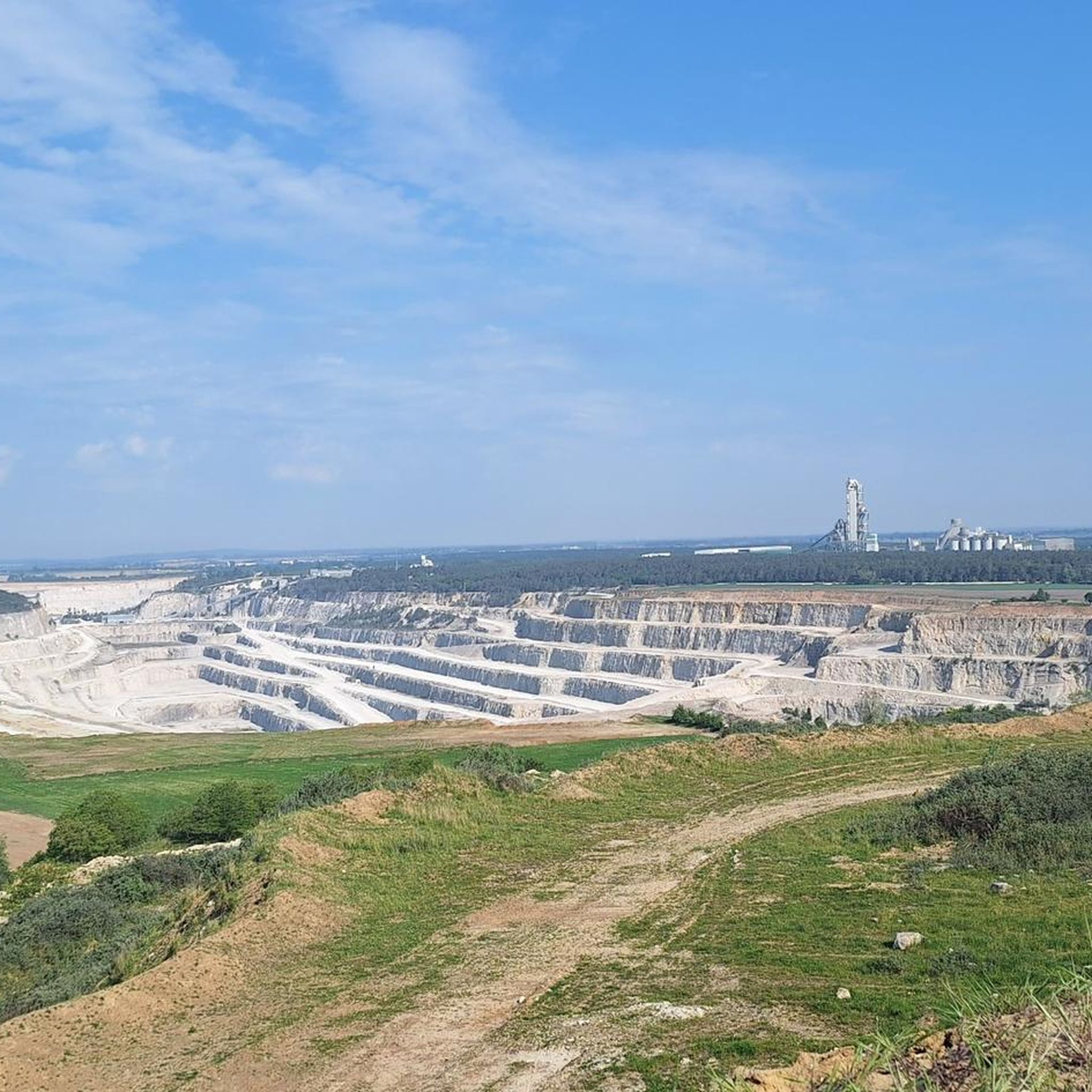
After the Second Partition of Poland, the surrounding areas were incorporated into Prussia, but not for long. After Napoleon's fall, the border between Prussia and Russia was finally moved and ran between the lakes: Kownackie, Suszewskie, Budzisławskie and Powidzkie. The areas east of the border fell under the rule of Tsarist Russia, and the western area was incorporated into the Kingdom of Prussia. The shifting of the border resulted in restrictions on free movement between the partitions. To cross the border, you had to obtain a special pass, the so-called ticket. A very important border point was Anastazewo. The Prussian-Russian border was located here, and for this reason a border crossing with a customs office was established here. In connection with the functioning of the border crossing between the partitions, it was necessary to organize a customs post. The Prussian one was located in a tall building built of red brick in a characteristic Prussian style, and it was located right by the road. Another interesting building is of course the Russian watchtower, which is a few dozen meters away in the tiny village of Salamonowo. It was the road between these two watchtowers that marked the borders between the partitions. /pojezierze24.pl/
1
0
The historic palace of the Żółtowski family, built in 1785, designed on a rectangular plan. Today, the facades have smooth plaster, but after subsequent poorly performed renovations they have no architectural details. The main facade once had three shallow avant-corps with round corners. The middle one, at which the main entrance is located, was covered with a portico in later years. Two side ones with three axes have been preserved to this day, ending with low gables in the form of attics with a wavy-step flow line, with an ellipse-shaped opening in the central part. The interior of the palace was completely rebuilt and stripped of its decor during renovation in 1965–1966. Originally, the interior had two bays, it had a large vestibule on an axis, with stairs leading to the first floor. There, in the central part, there was a large living room occupying a large part of the back hall. On the left and right sides there were connected rooms arranged in enfilade. The interiors had stucco and perhaps polychrome. /Wikipedia/
0
0
The bandit Maciej allegedly carried out his criminal activities in the area of Modliszewo and Modliszewko during the times of King Władysław. He attacked and robbed merchants who were passing by, following the route from the north to Gniezno, or heading from Gniezno towards the Baltic Sea. Since nothing is known about his companions, he had to be strong and fit to act alone. One day, Matthias attacked a caravan of merchants traveling from Italy. He robbed them, but they managed to escape alive. When they reached Gniezno, they told the mayor everything. And although he was very concerned about the report, he had no idea or means to find and capture the robber. However, when he learned from the merchants that they were carrying significant supplies of Tuscan wine, he ordered them to go immediately and find the robber. As it turned out, this time it didn't take long to find the perpetrator of the attack. Well, immediately after his success, the villain tasted the wine. And because he drank too much of it, he fell asleep under a tree. And so the robber Maciej was captured near the Koreczno forester's lodge. /tupowstalapolska.pl - trail of myths and legends of the Gniezno district/
0
0

The Market Square in Gniezno is the heart of the historic city and a place where the past meets the present. Surrounded by colorful townhouses, it retains the layout of the medieval market square with the town hall at its center. In the summer, it bustles with life, hosting concerts, fairs, and community meetings. Around the square, you'll find numerous cafes and restaurants, perfect for a moment of relaxation after visiting the cathedral. This is a space where you can truly feel the spirit of Poland's first capital.
2
0
Frequently Asked Questions
What historical sites can I explore in gmina Trzemeszno?
Gmina Trzemeszno is rich in history. You can visit the Former Prussian-Russian Border Crossing at Anastazewo, a significant historical site marking a past border. Another notable place is the Niechanowo Palace, a classicist building from 1785. Don't miss the Basilica of the Assumption of the Blessed Virgin Mary, often called the 'Pearl of the Baroque of the Piast Route', and the nearby Alumnat (Seminary) on Kosmowski Square.
Are there any unique cultural landmarks in the area?
Absolutely. The Wooden Church of St. Martin in Linowiec is a unique 18th-century structure with a Baroque main altar. You can also find the Jan Kiliński National Remembrance Chamber, commemorating a Polish national hero, and H. Cegielski Square, honoring a notable industrialist born near Trzemeszno.
What natural features are prominent in gmina Trzemeszno?
The gmina is part of the Gniezno Lake District, featuring several picturesque lakes such as Kościelne Lake and Popielewskie Lake in Trzemeszno itself. The former Prussian-Russian border also ran between lakes like Kownackie, Suszewskie, Budzisławskie, and Powidzkie, offering beautiful natural settings for exploration.
What outdoor activities can I do near these attractions?
The region offers many opportunities for outdoor activities. You can explore various cycling and hiking trails that wind through the natural landscapes and past historical sites. For specific routes, check out the Cycling around gmina Trzemeszno guide or the Easy hikes around gmina Trzemeszno guide for detailed routes.
Are there family-friendly attractions in gmina Trzemeszno?
Yes, several attractions are suitable for families. The Gniezno Market Square offers a pleasant environment with pubs and monuments, making it a good stop. The Former Prussian-Russian Border Crossing at Anastazewo and the Statue of Zbój Maciej from Modliszewo also provide interesting historical context that can engage younger visitors.
Where can I find good hiking trails in gmina Trzemeszno?
Gmina Trzemeszno has a variety of hiking trails. You can find easy routes like the 'Nature didactic path "Adventure with nature": Powidz Landscape Park' or loops around Lake Piłka. For more options, refer to the Easy hikes around gmina Trzemeszno guide, which provides details on several trails.
What cycling routes are available in the region?
Cyclists will enjoy the diverse routes around gmina Trzemeszno. Options range from easy loops like 'Ostrowickie Lake – Shelter in Gaj loop from Trzemeszno' to more moderate ones such as 'Piłka Lake – Powidzkie Lake loop from Trzemeszno'. The Cycling around gmina Trzemeszno guide offers a comprehensive list of routes.
What is the 'Piast Trail' and how does it relate to gmina Trzemeszno?
The Piast Trail is a popular tourist route in Poland, highlighting sites related to the beginnings of the Polish state. Gmina Trzemeszno is situated on this trail, featuring historical monuments like the Basilica of the Assumption of the Blessed Virgin Mary, which is considered the 'Pearl of the Baroque of the Piast Route'.
Are there any running trails near the attractions?
Yes, there are several running trails available. You can find moderate loops around Jezioro Długie or Jezioro Przedwieśnia. For a full list of options and their difficulty, check the Running Trails around gmina Trzemeszno guide.
What do visitors enjoy most about gmina Trzemeszno?
Visitors appreciate the blend of historical richness and natural beauty. The Gniezno Market Square is often highlighted for its pleasant atmosphere and historical significance. The historical sites, like the former border crossing, and the scenic lake districts are also highly valued for their unique appeal and opportunities for exploration.
Can I explore former monastic areas in Trzemeszno?
Yes, a dedicated nature and history trail leads through the former monastic areas in Trzemeszno. This trail starts at Kosmowski Square and continues along the picturesque Alley of Lindens, which runs alongside Lake Kościelne. This area is significant for both its historical past as a powerful monastery and its natural beauty.
What is the significance of St. Adalbert Square in Trzemeszno?
St. Adalbert is the patron saint of Trzemeszno, and legends suggest he founded the monastery here before his mission to Prussia. His body was also believed to have rested in the Trzemeszno church. The square holds historical importance, having once housed a Protestant church that later served Catholics.
Most popular routes around gmina Trzemeszno
Most popular attractions around gmina Trzemeszno

Get inspired with the komoot mobile app


Explore more
Still not found the Highlight you’re looking for? See guides of the top attractions in other regions:
