Attractions and Places To See around Dźwierzuty - Top 20
Best attractions and places to see around Dźwierzuty. This village in the Warmian-Masurian Voivodeship of northern Poland offers a blend of historical landmarks, cultural sites, and access to the region's natural beauty. The area is known for its picturesque landscapes of lakes and forests, providing a peaceful setting for exploration. Visitors can find a variety of historical architecture and pristine natural environments.
Best attractions and places to see around Dźwierzuty
- The most popular attractions is Szczytno Castle and Museum,…
Last updated: May 4, 2026
Szczytno Castle and Museum
Highlight • Castle
Translated by Google •
Tip by

Sorkwity Palace
Highlight • Castle
Tip by

Sign up now to discover places like this
Get recommendations on the best single tracks, peaks, & plenty of other exciting outdoor places.
Sign up for free
Evangelical-Augsburg Church in Pasym
Highlight • Religious Site
Translated by Google •
Tip by

Bridge over the Wałpusza River
Highlight • Bridge
Translated by Google •
Tip by

Sorkwity, Evangelical church from 1695
Highlight • Religious Site
Translated by Google •
Tip by

Sign up for free to discover even more attractions around Dźwierzuty.
Sign up for free
Already have an account?
Start today with a free account
Your next adventure awaits.
Login or Signup
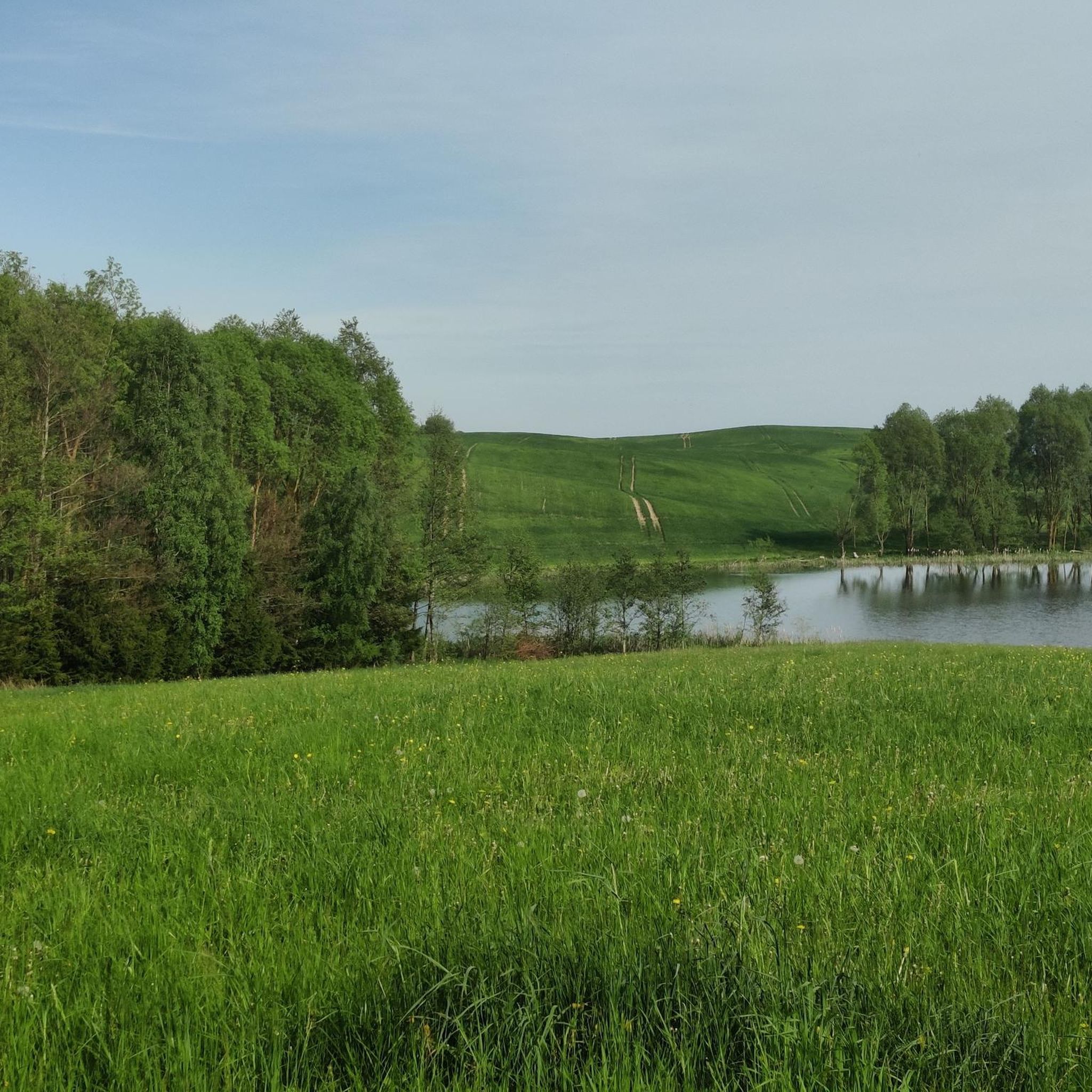
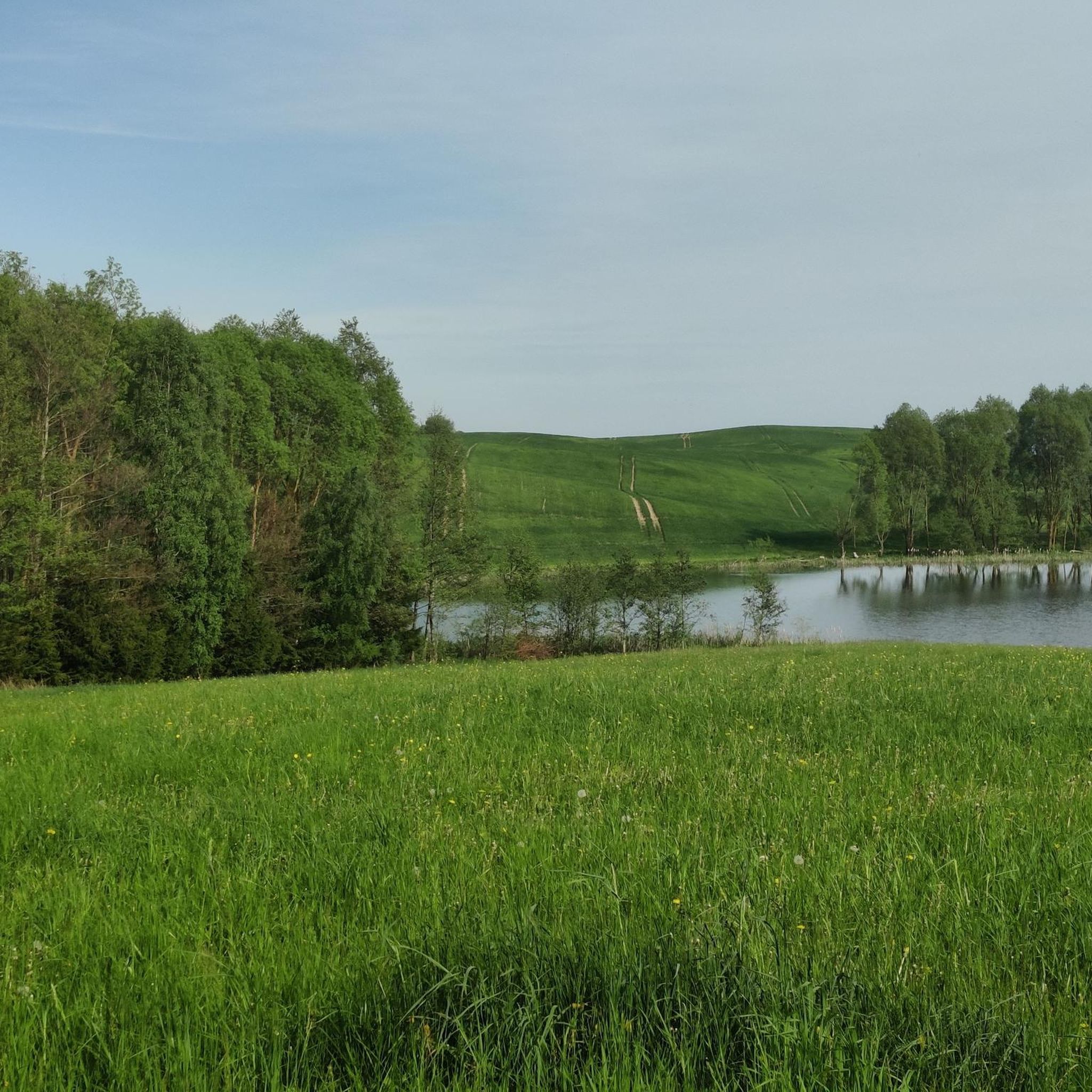
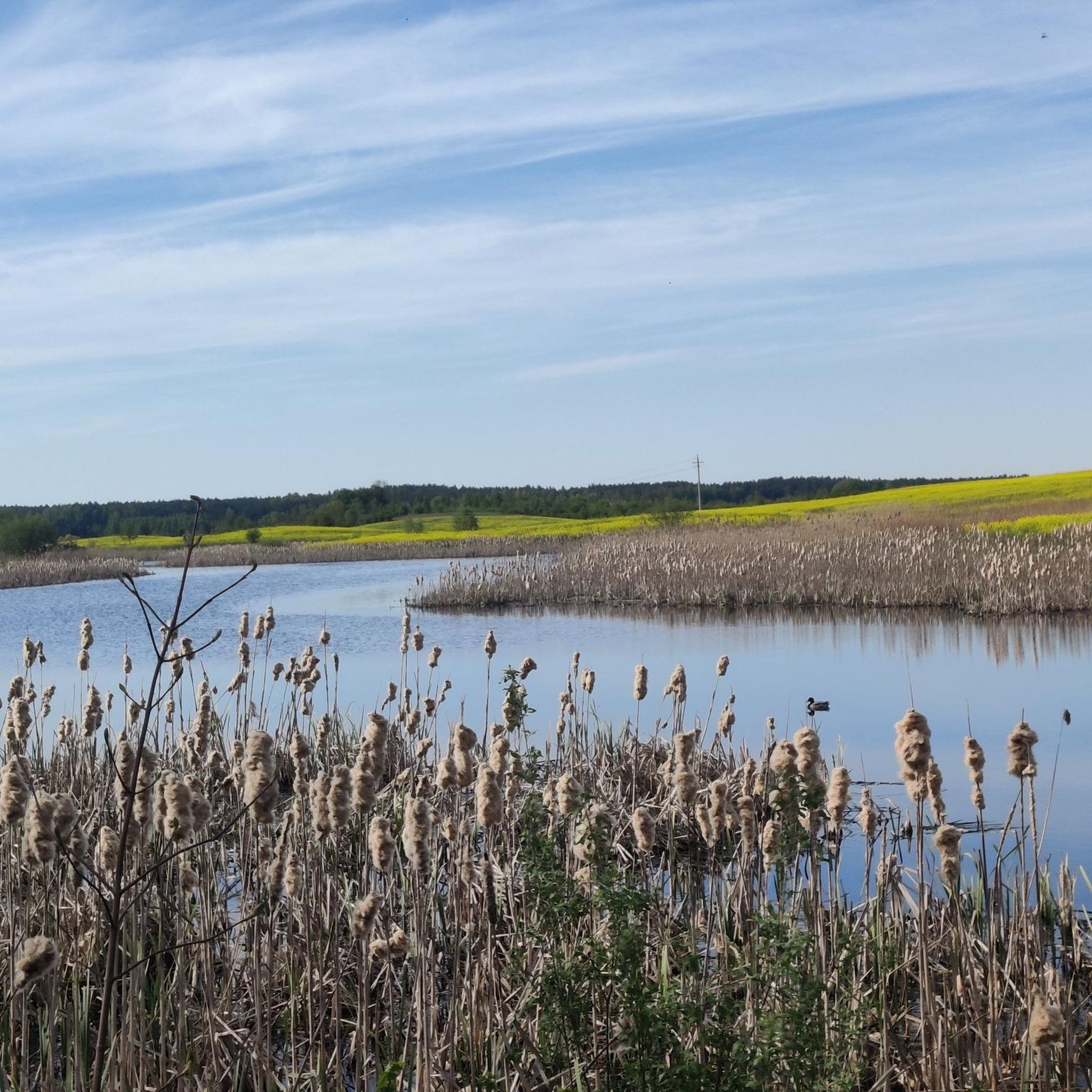
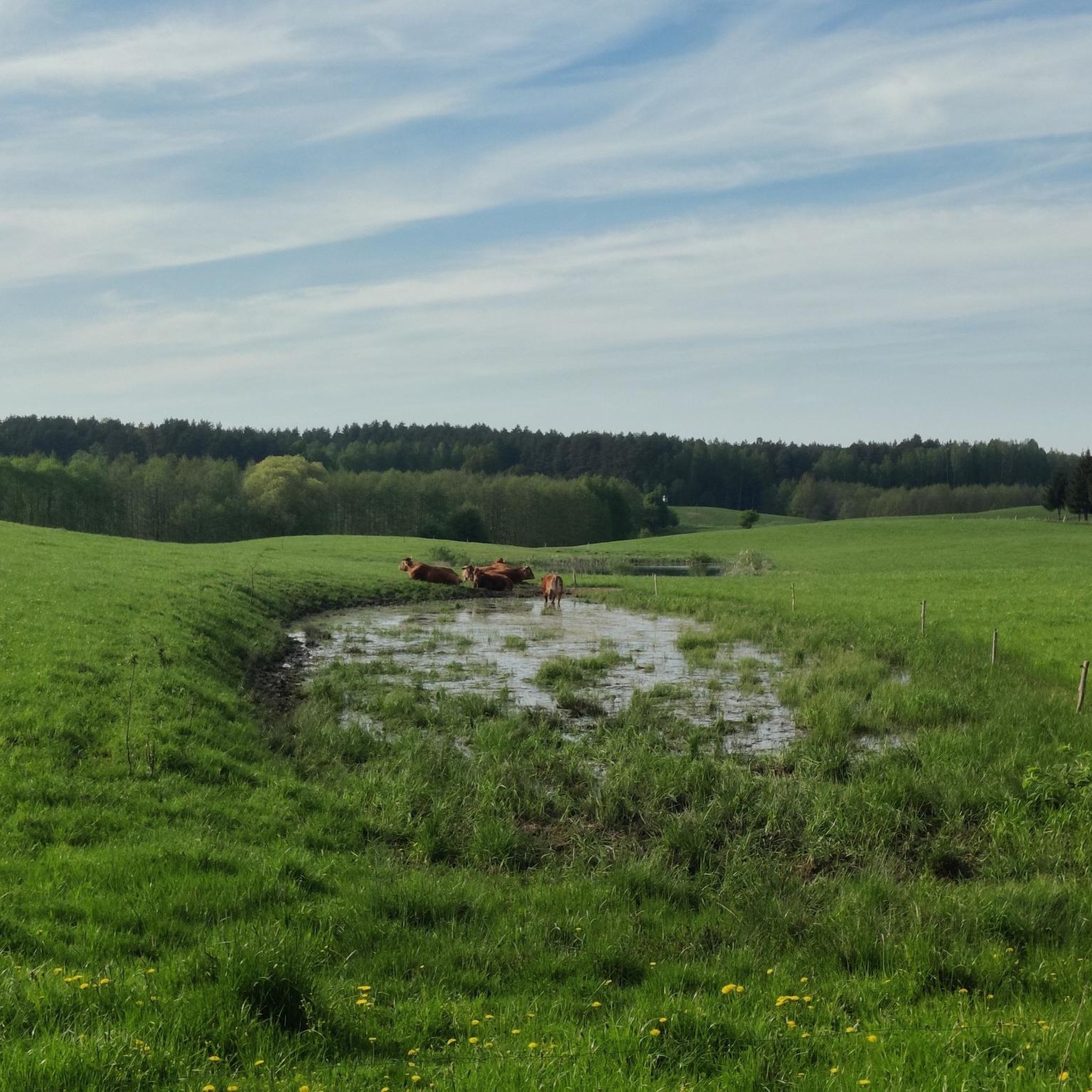

Tips from the Community

The palace was designed to resemble a medieval fortress – it has numerous turrets, pointed arch niches and characteristic teeth
1
0

The first mention of the church in Sorkwity dates back to 1470. Initially, it was a half-timbered building with a thatched roof.[1] The church was patronized by the owners of the existing knightly estates, which included the von Schlieben family.[2] The church was demolished at the turn of the 16th and 17th centuries, and a new church was built in its place in the Baroque style, while partially retaining the Gothic architectural character. The initiative for the construction of the current church building is associated with Dietrich von Schlieben, and work was carried out in four stages. The eastern part of the nave, along with the sacristy, was built between 1593 and 1607. The expansion was completed in 1698-1699 at the initiative of Sigismund von Egloffstein, the next owner of the Sorkwity estate. The tower was added between 1701 and 1712, and the final construction phase spanned 1750–1777, when the appearance of the windows in the nave was standardized. This Evangelical church is located on Lake Gielądzkie in the village of Sorkwity, in the Warmian-Masurian Voivodeship.
1
0
Juliusz Ulrich von Mirbach, who was 75 years old at the time, left his entire estate to his wife's nephew, Baron Bernard von Paleske, an aide-de-camp to Emperor Wilhelm II.[4] After Count Julius's death in 1921, Baron von Paleske began the reconstruction of the palace.[4] Under the supervision of Berlin architect Otto Rüger, the palace was rebuilt in 1922-1923, following the exact model of the original.[4] The estate and village remained under the management of the von Paleske family until 1945. During this time, the palace became the venue for numerous meetings of Prussian and German politicians.[3] During the war, the architecture of the complex was not destroyed and remained almost intact, while all movable property and interior furnishings were looted.[4] After the war, the estate was taken over by the local State Agricultural Farm (PGR), which converted the palace complex into a kindergarten and kindergarten warehouses, as well as offices and apartments for farm workers.[4] In 1957, the palace and part of the park were transferred to the Ursus Agricultural Machinery Plant in Warsaw, which turned it into a recreation center.[4] Since 1998, both the palace and the park have been in private hands.
1
0
A palace and park complex located in the village of Sorkwity. Built between 1850 and 1856 in the neo-Gothic style as the residence of the Prussian noble family von Mirbach, and later the related von Paleske family. The history of the village dates back to the early Middle Ages and is directly linked to its strategic location. Originally, a Prussian watchtower stood on the site of the current palace. The village's first name, Sarkewite, also derives from the Prussians, with "sargas" meaning sentinel and "wieta" meaning place.[2] Later, its defensive qualities were appreciated by the Teutonic Knights, and in 1379, the Grand Master of the Order, Winrich von Kniprode, granted the present-day site as knightly estates to the brothers Christian and Otto von Oelsen.[2] Later, a monk named Hans von Oelsen erected a wooden watchtower in Sorkwity to protect the village from Lithuanian raids.[2] In the mid-15th century, the estate was purchased by the von Schliebens, who built a brick church there, and the village remained in their possession until the 18th century.[2] After them, for a short time, between 1750 and 1804, the estate belonged to the Polish Bronikowski family, and the family's representative, Hussar Major Jan Oppeln-Bronikowski, built the first manor house in Sorkwity in 1788.[3] In 1804, the estate was purchased from the Bronikowski family by the von Mirbachs, who ushered in the estate's heyday.[2] Between 1850 and 1856, at the behest of Juliusz Ulrich von Mirbach, who was awarded the title of count in 1888,[2] a palace was built in the then-fashionable English Neo-Gothic style in Prussia.[3] The palace, built on the site of the Bronikowski manor house, was a large, two-story, castle-like red brick structure. At the same time, a fortified tower-like coach house and a landscape park were also constructed.[2] Numerous garden paths, a vineyard for the von Mirbachs' own wine production, and a family cemetery were established on the peninsula of Lampackie Lake.[4] During World War I, Russian troops under General Alexander Samsonov were stationed in the palace building. On the night of August 26-27, 1914, before the Battle and defeat at Tannenberg, the residence was burned down. Only the main walls survived the fire, while the entire interior and its decorations, as well as numerous works of art, were destroyed.
1
0

A church in Sorkwity was first mentioned in 1470. It was a thatched, half-timbered church. It was demolished in 1600 and replaced by a fieldstone church: a choirless, plastered building, the eastern part of which was built between 1593 and 1607, and the western part in 1689/99. The west tower, with its faced brickwork, was built between 1701 and 1721. It supports a tarmac roof with a weather vane from 1777 – commemorating the reconstruction work in 1776/77. At that time, the dilapidated upper section had to be removed by 35 feet. It was then restored as it stands today. In 1754, the church interior received a barrel vault in the nave and flat planked ceilings on the sides; the semicircular windows were also installed. The church's appearance has remained unchanged since then. The church's interior was carefully restored in the 1930s. Between 1935 and 1944, it was painted, new roof tiles and gutters were installed, and the doors and arched windows were replaced. In the years after 1945, the church was restored several times, most recently in 2010 and 2012. Source: wikipedia.org
2
0

I wonder if by negating the lack of a clue describing a given place as an attraction I am giving potential future visitors to this facility a bad advice? I don't think so, but apparently someone doesn't like it and thinks that this type of advice is useless and it's better to add a photo and we have an attraction. I will only add that I don't think that such facilities are not attractive, but to emphasize this, it is enough to add a few important pieces of information about them. After all, such are the suggestions from Komoot when adding attractions.
2
3

The history of the Szczytno castle dates back to the order's fortress of Hauß Ortelßburg, which was built between 1350 and 1360 on the land connection between the Great and the Small Haussee, with a wooden and earth defensive watchtower on the site of the earlier Prussian stronghold. The Teutonic Order used it as a border fortress against the nearby, Polish-ruled Mazovia and as a base for the settlement of the former Prussian house Galinden, which was found as a primeval forest south of the previously conquered and settled areas and was generally referred to as "wilderness". A caretaker of the order, who was subordinate to the Elbing Commandery, had his seat at the castle. The name of the Ortelsburg is traced back to the Grand Commander and Supreme Spittler of the Order, Ortloff von Trier, who, in his capacity as Commander of Elbing, arranged for the settlement of immigrants from Mazovia with a document dated 24 September 1360. Their settlement was initially established on the north side of the Kleiner Haussee, and they lived mainly from beekeeping. Beekeepers at this time were referred to as Beutner, and so the name Beutnerdorf (Polish Bartna Strona) was created for the new settlement. Less than twenty years later, the Lithuanians led by Prince Kęstutis (Kynstut) burned down the watchtower. However, the Teutonic Order did not want to give up its base and in 1370-1380 immediately built a new more resistant castle of stone and brick on a plan similar to a square, in the middle of which there was a well. It was surrounded by defensive walls and a moat together with the castle. On the south-eastern side, there was an outer bailey separated from the castle by a defensive wall with a gate leading inside. Before the outbreak of the Thirteen Years' War, the castle inventories listed: a grain silo, cellars, a kitchen, a malt house, a powder magazine, a chapel, an attic serving as a meat warehouse, a cattle farm, an ordinary farm, a bathhouse, a pantry and a woodcarving shop. 26 crossbows and 10250 bolts and 43 hook guns were also kept here. During the Thirteen Years' War (1454–1466) it was fiercely fought over and was occupied several times by both warring parties. After the secularization of the state of the Order in 1525 and its transformation into the secular Duchy of Prussia, Ortelsburg Castle became the seat of the prince's Amtshauptmann (starost) for the Hauptamt Ortelsburg, which was subordinate to the Oberländischer Kreis. The Hauptamt in turn was responsible for the offices of Willenberg and Passenheim. It also served as a quarters during the hunts of Duke Albrecht and his successors. Since the duchy was under the feudal sovereignty of Poland at that time, Ortelsburg Castle lost its importance as a border fortress and began to decay. Duke Georg Friedrich I (Brandenburg-Ansbach-Kulmbach) had it rebuilt from 1579 to 1581 by the master builders Blasius Berwart and Hans Wissmar, and expanded by a fortification, serving as a hunting lodge. Many of the craftsmen involved in the construction work settled near the castle and founded the municipality of Ortelsburg in 1581, independently of the already existing village of Beutnerdorf, causing 20 years of sometimes violent fighting. Then it became a magazine and arsenal. The tower and walls along with the towers were demolished in the 17th century. In the years 1766-1792, the north-eastern wing of the castle and the upper storeys of the other wings were demolished and the southern moat was filled. After that, the building fell into disrepair. Today, only the foundation walls of the northern part of the castle can be seen and underwent extensive revitalization with walkways on several levels and lighting, attracting visitors. Before World War II, the town hall building was built in the place of the southern half of the castle. A high tower called the "Jurand Tower", part of the buildings of the outer bailey and a moat have been preserved. The Masurian Museum in Szczytno was established in 1945 on the basis of the surviving collection of the Kreisheimatmuseum Ortelsburg founded in 1925. Originally located in the fourteenth-century Teutonic castle, in 1948 it was moved to the south and east wings of the town hall, adjacent to the ruins of the castle. The branch of the Museum of Warmia and Mazury in Szczytno possesses collections now counting thousands of museum objects, in the field of archeology, history, art, ethnography, including folk art, cartography, numismatics and nature, as well as a scientific collection with old prints - documenting history, cultural heritage and values natural environment of the Mazur region. Among the collections can be mentioned the monuments of regional sacred art (XVIII-XIX centuries), handicrafts, artistic handicrafts (XV-XIX centuries). A special position is occupied by historical documents and publications related to the Polish press and the Polish movement in Masuria (XIX-XX centuries), of which Szczytno was an important center. Ethnographic collections, the oldest of which date back to the end of the 18th century, are painted Masurian furniture, wardrobes with household writing on the inside of the door, decorative and utility fabrics as well as traditional household and farm appliances. These objects are priceless traces of folk culture of Masuria, which at the beginning of the twentieth century was marginalized. https://szczytno.muzeum.olsztyn.pl
3
0
Sorquitten Castle (Pałac w Sorkwitach) is located at the northern end of Lake Lampatzki (Jezioro Lampackie) and south of Lake Gehland (Jezioro Gielądzkie) between the towns of Biskupiec (Bischofsburg) and Mrągowo (Sensburg). The present manor house with park and coach house is one of the most impressive neo-Gothic residences in today's Ermland-Masuria. It was built in 1850 by Julius von Mirbach-Sorquitten, a landowner and member of the Prussian manor house. The combination of English neo-Gothic and red brick was more common in Prussia at the time. Sorquitten shows structural similarities to Castle Neetzow in Mecklenburg-Western Pomerania, Palace Arendsee in the Uckermark, or Rzucewo Manor in Pomerania. During the Battle of Tannenberg the palace was destroyed and rebuilt after the First World War. Its external appearance has been preserved to this day, but the interior was designed in a modified form and no longer corresponds to the original from the 19th century. Tthe village of Sorquitten was founded in 1379 by Winrich von Kniprode, who was also the builder of Ordensburg Barten. It is believed that the village, which hundreds of years later would gain fame thanks to its charming palace, was founded by Prussian tribes, hence the name of the village. For obvious reasons, we do not have much information about this period of Sorkwity's history. This state of affairs lasted until 1379, when the Grand Master of the Teutonic Order granted this area to the brothers Christian and Otto von Oelsen. The von Oelsen family was remembered by the inhabitants of Sorkwity by building a wooden watchtower. Its task was to protect the village from the invasions of Lithuanians, who organized plundering expeditions to the border areas belonging to the Order. The surrounding areas were in the hands of the von Oelsen family until the mid-15th century, when they were bought by the von Schliebens. It was them who erected a brick church in the village, which can boast of a richly decorated altar and a beautiful, carved confessional. In 1750, the estate passed into the hands of the Polish Bronikowski family and it was their representative, Hussar Major Jan Zygmunt Bronikowski von Oppeln, who built the first manor house in 1788. However, it was its subsequent owners, the von Mirbach family, who gave it the appearance seen today. The estate and the surrounding lands were bought by them in 1804, but they had to wait almost half a century for expansion, until 1850, when Juliusz Ulrich von Mirbach began works that resulted in the neo-Gothic, castle-like Palace in Sorkwity. The works lasted until 1856, and apart from the palace, a landscape park surrounding the property was also created, as well as a coachman in the form of a fortified tower, which was to give the palace an even more military character. From 1804, for 110 years, Sorkwity lived in relative happiness and prosperity under the rule of the von Mirbach family, but the beautiful palace was not spared the turmoil of the First and Second World Wars. For the inhabitants, the night of 26 to 27 August 1914 was particularly significant. That night, it was Samsonov's army that burned down the palace after a few days' stay. The furniture and other works of art that were inside were destroyed. Only the main walls survived. However, this did not discourage Baron von Paleske, who received the estate, from rebuilding. Under the supervision of architect Otto Rüger, everything was restored to its pre-war state in 1922-1923. The palace was rebuilt according to the original. In this way, the estate was given a second life and until 1945 it was a meeting place for eminent personalities, mainly Prussian and German politicians. The Second World War was a bit more kind to the palace than its predecessor. It was not destroyed itself, but the belongings collected in it were plundered. The fate of the estate after the war is no better. After 1945, it became the property of the local State Agricultural Farm, which arranged a warehouse, kindergarten and quarters for employees there. In 1957, the palace and part of the park were handed over to the Ursus Agricultural Machinery Plant and became a holiday resort. This situation lasted until 1998, when the entire property became private property and this state of affairs continues to this day. When in 1922 Baron von Paleske began the reconstruction of the palace, he wanted it to look exactly the same as before the destruction. In the same neo-Gothic style, so popular in German architecture of the nineteenth century, the building that we can see today was created. Both turrets, pinnacles and battlements were to serve the atmosphere of a romantic stronghold. And it's hard to deny him the atmosphere. Together with the high orthogonal tower in the north-east corner, the palace gives the impression of an old castle. Built on a plan resembling the letter U, with a flat roof, consisting of blocks of various heights and sizes, it will take your breath away. Various types of windows, regularly placed on the walls of the building, allow the sun to illuminate the beautiful rooms, and the curious to admire the craftsmanship of the craftsmen who create the interior of the palace. Right next to the palace there is a coach house, also designed to resemble a stronghold as much as possible. Like a huge tower with four towers, it proudly stands among the paths, trees and shrubs that make up the park, today housing restaurants. The entire complex of buildings is surrounded by a park. Originally, it covered the peninsula on Lake Lampackie, where the vineyard was located. Today, however, it is slightly smaller than the original. However, it cannot be denied its charm and rich tree stand. Noteworthy is the endangered ginkgo biloba growing near the palace, but there is much more beautiful vegetation there. https://pieknagora.pl/pl/palac-w-sorkwitach/
3
0
Frequently Asked Questions
What historical landmarks can I explore around Dźwierzuty?
Dźwierzuty and its surroundings are rich in history. You can visit the Szczytno Castle and Museum, which features the ruins of a medieval Teutonic castle and houses the Masurian Museum. Another significant site is the Sorkwity Palace, an impressive Neo-Gothic residence from 1850. In Dźwierzuty itself, explore the Evangelical Church, dating back to 1399, and the Neo-Gothic Catholic Church of the Holy Trinity built in 1882. The village also has a Historic Pastor's House and a World War I Monument.
Are there any notable churches or religious buildings to visit?
Yes, the area features several historic churches. In Dźwierzuty, you can see the Evangelical Church, which has Gothic origins from 1399 and Baroque elements from a 1693 rebuilding. It contains a 1599 altar and a 1675 pulpit. The Catholic Church of the Holy Trinity, a Neo-Gothic structure from 1882, is also in the village. Nearby, the Evangelical-Augsburg Church in Pasym, with its distinctive shingled cupola-shaped tower, dates from the late 15th century. Also, consider visiting the Evangelical church from 1695 in Sorkwity, known for its unique architecture and history.
What natural attractions can I find near Dźwierzuty?
Dźwierzuty is located in the 'land of a thousand lakes,' offering abundant natural beauty. A key natural attraction is the Kulka Nature Reserve (Rezerwat Przyrody Kulka), a floristic reserve established to preserve a forest fragment with pontic flora and protected plant species along the eastern shore of Lake Łęgsk. The region is characterized by numerous lakes and dense forests, providing a peaceful setting for nature lovers. Jezioro Szoby is another nearby lake offering scenic views.
What outdoor activities can I do around Dźwierzuty?
The Dźwierzuty area is perfect for various outdoor activities. You can enjoy cycling, hiking, and canoeing. The Krutynia River, known as the 'queen of Masurian rivers,' offers a long canoeing route through the Piska Forest and Masurian Landscape Park. For specific routes, you can explore running trails, MTB trails, and easy hiking trails in the region.
Are there family-friendly attractions in the Dźwierzuty area?
Yes, several attractions cater to families. The Szczytno Castle and Museum is considered family-friendly, offering an engaging historical experience. The natural landscapes, including lakes and forests, provide ample opportunities for family walks, picnics, and outdoor play. The Evangelical church from 1695 in Sorkwity is also listed as family-friendly.
What kind of hiking trails are available near Dźwierzuty?
You'll find a variety of hiking trails around Dźwierzuty, suitable for different skill levels. There are easy hikes, such as the 'Pier on Lake Domowe Duże – Szczytno Castle and Museum loop from Szczytno' (6.06 km) or the 'Camping Elganowo loop from Elganowo' (5.94 km). These trails allow you to explore the scenic landscapes, including lake shores and forested areas. For more options, check out the dedicated hiking guides.
Can I find cycling routes in the Dźwierzuty region?
Absolutely! The Dźwierzuty area is well-suited for cycling. You can explore various MTB trails, such as the 'Nowe Kiejkuty – Domowe Duże Lake loop from Kobyłocha' (37.35 km, moderate difficulty) or the 'Pasym Town Hall loop from Leleszki' (17.18 km, easy difficulty). The former railway station building in Dźwierzuty is even located along a bicycle path, indicating the region's cycling infrastructure.
What is the best time to visit Dźwierzuty for sightseeing and outdoor activities?
The Warmian-Masurian Voivodeship, where Dźwierzuty is located, is ideal for nature lovers seeking peace and quiet. The warmer months, from late spring to early autumn (May to September), are generally the best for outdoor activities like hiking, cycling, and canoeing, when the weather is pleasant and the natural landscapes are at their most vibrant. Historical sites are typically accessible year-round, but the full experience of the lakes and forests is best enjoyed in milder weather.
Are there any museums in or near Dźwierzuty?
Yes, there are a couple of notable museums. The Masurian Museum in Szczytno, established in 1945, is located within the ruins of the Teutonic Castle. It features extensive collections related to archaeology, history, art, ethnography, and the natural values of the Masurian region. Additionally, the Regional Museum in Sąpłaty, housed in a former school building, collects everyday objects from rural Masurian households, offering insight into the region's past.
What are some lesser-known but interesting places to see around Dźwierzuty?
Beyond the main attractions, consider exploring the well-preserved evangelical cemetery adjacent to the Evangelical Church in Dźwierzuty, featuring unique wrought iron and cast-iron crosses. The 19th-Century School Building, now a kindergarten, offers a glimpse into local history. For nature enthusiasts, the Kulka Nature Reserve provides a serene experience away from more crowded spots. The former railway station building, now part of a bicycle path, is also a point of interest.
What do visitors enjoy most about the attractions around Dźwierzuty?
Visitors particularly appreciate the blend of historical architecture and pristine natural environments. The Szczytno Castle and Museum is highly recommended for its historical curiosities, while the Sorkwity Palace is admired for its impressive Neo-Gothic design and scenic park. The komoot community has shared 93 photos and 18 highlights, indicating a strong appreciation for the diverse offerings, from ancient churches to beautiful lake views.
Are there options for camping or agrotourism in the Dźwierzuty area?
Yes, the surrounding area offers opportunities for camping and agrotourism. Locations like Tumiany and Elganowo provide options for visitors to immerse themselves in the natural surroundings. This allows for a closer connection to the region's beautiful lakes and forests, perfect for those seeking a peaceful and rustic experience.
Most popular routes around Dźwierzuty

Get inspired with the komoot mobile app


Explore more
Still not found the Highlight you’re looking for? See guides of the top attractions in other regions:
