Routes

Planner

Features

Updates

App

Login or Signup

Get the App

Login or Signup

Login or Signup

Routes
Places to see
Poland
Warmian-Masurian Voivodeship
Mrągowo

gmina Mrągowo

Attractions and Places To See around gmina Mrągowo - Top 20

Best attractions and places to see around gmina Mrągowo, located in Masuria, Poland, offers a blend of natural beauty and cultural heritage. The region is characterized by its picturesque lakes, historical sites, and opportunities for outdoor recreation. Visitors can explore a diverse landscape that includes significant waterways and preserved architectural styles.

Best attractions and places to see around gmina Mrągowo

  • The most popular attractions is Lake Mokre, a lake considered one of the most beautiful and deepest Masurian lakes.…

Last updated: May 4, 2026

Mikołajki Pedestrian Bridge

Highlight • Bridge

A modern bridge construction connecting both parts of Mikolajki. As a pedestrian bridge, it makes it possible to stroll comfortably "across the water" and watch the ships passing through 👍

Translated by Google •

Tip by

See hikes here

Send to Phone

Save

Tałcki Canal

Highlight • River

The Tałteński Canal (otherwise known as Tałcki) is one of the many canals on the Great Masurian Lakes Trail. It is 1620 meters long, about 12 meters wide, and the …

Translated by Google •

Tip by

Save

Sign up now to discover places like this

Get recommendations on the best single tracks, peaks, & plenty of other exciting outdoor places.

Sign up for free

Ryn Castle

Highlight • Castle

Ryn is a small town directly on the lake with a beautiful promenade on the lake and some shops, restaurants, a castle (hotel), and many opportunities to linger.

Translated by Google •

Tip by

Save

Lake Mokre

Highlight • Lake

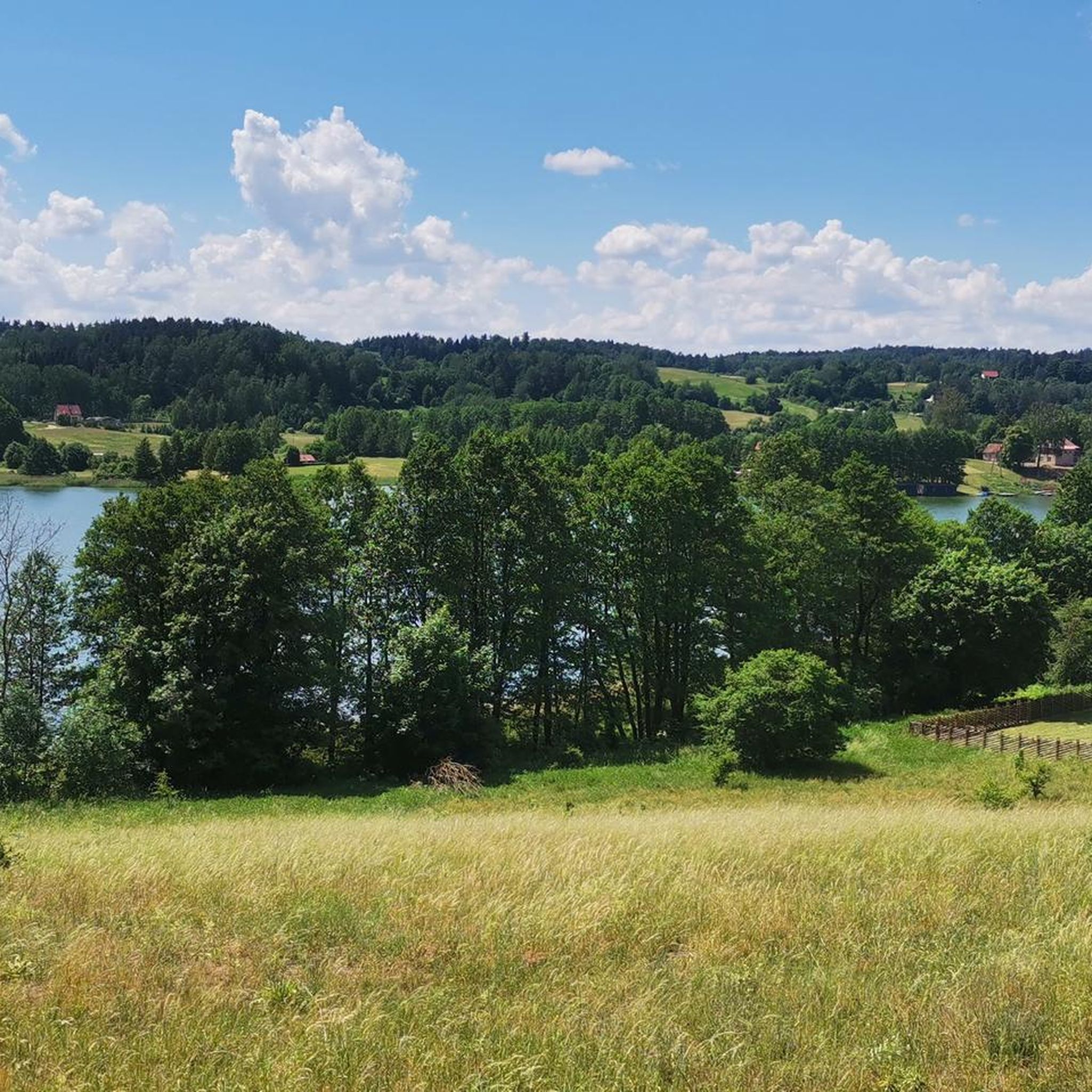
This is one of the most beautiful and deepest Masurian lakes. An extremely picturesquely situated channel lake in the Mrągowo Lake District, which has five islands. This body of water …

Translated by Google •

Tip by

Save

Sorkwity Palace

Highlight • Castle

Sorquitten Castle (Pałac w Sorkwitach) is located at the northern end of Lake Lampatzki (Jezioro Lampackie) and south of Lake Gehland (Jezioro Gielądzkie) between the towns of Biskupiec (Bischofsburg) and …

Tip by

Save

Sign up for free to discover even more attractions around gmina Mrągowo.

Sign up for free

Already have an account?

Start today with a free account

Your next adventure awaits.

Login or Signup
Popular around gmina Mrągowo

Cycling around gmina Mrągowo

Hiking around gmina Mrągowo

MTB Trails around gmina Mrągowo

Road Cycling Routes around gmina Mrągowo

Gravel biking around gmina Mrągowo

Running Trails around gmina Mrągowo

Tips from the Community

Cobbo
February 1, 2026, Sorkwity Palace

The palace was designed to resemble a medieval fortress – it has numerous turrets, pointed arch niches and characteristic teeth

Translated by Google

1

0

Juliusz Ulrich von Mirbach, who was 75 years old at the time, left his entire estate to his wife's nephew, Baron Bernard von Paleske, an aide-de-camp to Emperor Wilhelm II.[4] After Count Julius's death in 1921, Baron von Paleske began the reconstruction of the palace.[4] Under the supervision of Berlin architect Otto Rüger, the palace was rebuilt in 1922-1923, following the exact model of the original.[4] The estate and village remained under the management of the von Paleske family until 1945. During this time, the palace became the venue for numerous meetings of Prussian and German politicians.[3] During the war, the architecture of the complex was not destroyed and remained almost intact, while all movable property and interior furnishings were looted.[4] After the war, the estate was taken over by the local State Agricultural Farm (PGR), which converted the palace complex into a kindergarten and kindergarten warehouses, as well as offices and apartments for farm workers.[4] In 1957, the palace and part of the park were transferred to the Ursus Agricultural Machinery Plant in Warsaw, which turned it into a recreation center.[4] Since 1998, both the palace and the park have been in private hands.

Translated by Google

1

0

A palace and park complex located in the village of Sorkwity. Built between 1850 and 1856 in the neo-Gothic style as the residence of the Prussian noble family von Mirbach, and later the related von Paleske family. The history of the village dates back to the early Middle Ages and is directly linked to its strategic location. Originally, a Prussian watchtower stood on the site of the current palace. The village's first name, Sarkewite, also derives from the Prussians, with "sargas" meaning sentinel and "wieta" meaning place.[2] Later, its defensive qualities were appreciated by the Teutonic Knights, and in 1379, the Grand Master of the Order, Winrich von Kniprode, granted the present-day site as knightly estates to the brothers Christian and Otto von Oelsen.[2] Later, a monk named Hans von Oelsen erected a wooden watchtower in Sorkwity to protect the village from Lithuanian raids.[2] In the mid-15th century, the estate was purchased by the von Schliebens, who built a brick church there, and the village remained in their possession until the 18th century.[2] After them, for a short time, between 1750 and 1804, the estate belonged to the Polish Bronikowski family, and the family's representative, Hussar Major Jan Oppeln-Bronikowski, built the first manor house in Sorkwity in 1788.[3] In 1804, the estate was purchased from the Bronikowski family by the von Mirbachs, who ushered in the estate's heyday.[2] Between 1850 and 1856, at the behest of Juliusz Ulrich von Mirbach, who was awarded the title of count in 1888,[2] a palace was built in the then-fashionable English Neo-Gothic style in Prussia.[3] The palace, built on the site of the Bronikowski manor house, was a large, two-story, castle-like red brick structure. At the same time, a fortified tower-like coach house and a landscape park were also constructed.[2] Numerous garden paths, a vineyard for the von Mirbachs' own wine production, and a family cemetery were established on the peninsula of Lampackie Lake.[4] During World War I, Russian troops under General Alexander Samsonov were stationed in the palace building. On the night of August 26-27, 1914, before the Battle and defeat at Tannenberg, the residence was burned down. Only the main walls survived the fire, while the entire interior and its decorations, as well as numerous works of art, were destroyed.

Translated by Google

1

0

Katarzyna
February 1, 2025, Lake Mokre

View of Lake Mokre 1.6 km, surface area 846 ha, maximum depth 61 m. There are five islands on the lake. It is located in the Masurian Landscape Park near the town of Cierzpięta. There are two larger towns near the reservoir - Ruciane-Nida and Mrągowo.

Translated by Google

0

0

Traveler
October 25, 2024, Sorkwity Palace

Sorquitten Castle (Pałac w Sorkwitach) is located at the northern end of Lake Lampatzki (Jezioro Lampackie) and south of Lake Gehland (Jezioro Gielądzkie) between the towns of Biskupiec (Bischofsburg) and Mrągowo (Sensburg). The present manor house with park and coach house is one of the most impressive neo-Gothic residences in today's Ermland-Masuria. It was built in 1850 by Julius von Mirbach-Sorquitten, a landowner and member of the Prussian manor house. The combination of English neo-Gothic and red brick was more common in Prussia at the time. Sorquitten shows structural similarities to Castle Neetzow in Mecklenburg-Western Pomerania, Palace Arendsee in the Uckermark, or Rzucewo Manor in Pomerania. During the Battle of Tannenberg the palace was destroyed and rebuilt after the First World War. Its external appearance has been preserved to this day, but the interior was designed in a modified form and no longer corresponds to the original from the 19th century. Tthe village of Sorquitten was founded in 1379 by Winrich von Kniprode, who was also the builder of Ordensburg Barten. It is believed that the village, which hundreds of years later would gain fame thanks to its charming palace, was founded by Prussian tribes, hence the name of the village. For obvious reasons, we do not have much information about this period of Sorkwity's history. This state of affairs lasted until 1379, when the Grand Master of the Teutonic Order granted this area to the brothers Christian and Otto von Oelsen. The von Oelsen family was remembered by the inhabitants of Sorkwity by building a wooden watchtower. Its task was to protect the village from the invasions of Lithuanians, who organized plundering expeditions to the border areas belonging to the Order. The surrounding areas were in the hands of the von Oelsen family until the mid-15th century, when they were bought by the von Schliebens. It was them who erected a brick church in the village, which can boast of a richly decorated altar and a beautiful, carved confessional. In 1750, the estate passed into the hands of the Polish Bronikowski family and it was their representative, Hussar Major Jan Zygmunt Bronikowski von Oppeln, who built the first manor house in 1788. However, it was its subsequent owners, the von Mirbach family, who gave it the appearance seen today. The estate and the surrounding lands were bought by them in 1804, but they had to wait almost half a century for expansion, until 1850, when Juliusz Ulrich von Mirbach began works that resulted in the neo-Gothic, castle-like Palace in Sorkwity. The works lasted until 1856, and apart from the palace, a landscape park surrounding the property was also created, as well as a coachman in the form of a fortified tower, which was to give the palace an even more military character. From 1804, for 110 years, Sorkwity lived in relative happiness and prosperity under the rule of the von Mirbach family, but the beautiful palace was not spared the turmoil of the First and Second World Wars. For the inhabitants, the night of 26 to 27 August 1914 was particularly significant. That night, it was Samsonov's army that burned down the palace after a few days' stay. The furniture and other works of art that were inside were destroyed. Only the main walls survived. However, this did not discourage Baron von Paleske, who received the estate, from rebuilding. Under the supervision of architect Otto Rüger, everything was restored to its pre-war state in 1922-1923. The palace was rebuilt according to the original. In this way, the estate was given a second life and until 1945 it was a meeting place for eminent personalities, mainly Prussian and German politicians. The Second World War was a bit more kind to the palace than its predecessor. It was not destroyed itself, but the belongings collected in it were plundered. The fate of the estate after the war is no better. After 1945, it became the property of the local State Agricultural Farm, which arranged a warehouse, kindergarten and quarters for employees there. In 1957, the palace and part of the park were handed over to the Ursus Agricultural Machinery Plant and became a holiday resort. This situation lasted until 1998, when the entire property became private property and this state of affairs continues to this day. When in 1922 Baron von Paleske began the reconstruction of the palace, he wanted it to look exactly the same as before the destruction. In the same neo-Gothic style, so popular in German architecture of the nineteenth century, the building that we can see today was created. Both turrets, pinnacles and battlements were to serve the atmosphere of a romantic stronghold. And it's hard to deny him the atmosphere. Together with the high orthogonal tower in the north-east corner, the palace gives the impression of an old castle. Built on a plan resembling the letter U, with a flat roof, consisting of blocks of various heights and sizes, it will take your breath away. Various types of windows, regularly placed on the walls of the building, allow the sun to illuminate the beautiful rooms, and the curious to admire the craftsmanship of the craftsmen who create the interior of the palace. Right next to the palace there is a coach house, also designed to resemble a stronghold as much as possible. Like a huge tower with four towers, it proudly stands among the paths, trees and shrubs that make up the park, today housing restaurants. The entire complex of buildings is surrounded by a park. Originally, it covered the peninsula on Lake Lampackie, where the vineyard was located. Today, however, it is slightly smaller than the original. However, it cannot be denied its charm and rich tree stand. Noteworthy is the endangered ginkgo biloba growing near the palace, but there is much more beautiful vegetation there. https://pieknagora.pl/pl/palac-w-sorkwitach/

3

0

This is one of the most beautiful and deepest Masurian lakes. An extremely picturesquely situated channel lake in the Mrągowo Lake District, which has five islands. This body of water is part of the Krutynia kayaking trip. There are three nature reserves around the lake, which is a silence zone. The length of the lake is approx. 7.7 km, width up to 1.6 km, area 846 ha, maximum depth 61 m. There are five islands on the lake. It is located in the Masurian Landscape Park near the town of Cierzpięta. There are two larger towns near the body of water - Ruciane-Nida and Mrągowo. https://mazury24.eu/jeziora/jezioro-mokre,609

Translated by Google

3

0

Nice pedestrian crossing with a view of the lake

Translated by Google

2

0

Katarzyna
July 31, 2024, Ryn Castle

Castle hotel in Ryn. Originally a castle, then a prison, and now a hotel. The castle was built around 1377.

Translated by Google

1

0

Frequently Asked Questions

What natural attractions and lakes can I explore in Gmina Mrągowo?

Gmina Mrągowo is rich in natural beauty, particularly its lakes. You can visit Lake Mokre, known as one of the most beautiful and deepest Masurian lakes, featuring five islands and part of the Krutynia kayaking route. The area around it is a silence zone with three nature reserves. Another significant waterway is the Tałcki Canal, a 1620-meter long canal connecting Lake Tałty and Lake Tałtowisko, popular for wild camping and part of the Great Masurian Lakes Trail. Lake Czos, with its promenade, beaches, and amphitheater, is central to Mrągowo. For panoramic views, head to the Mountain of the Four Winds.

Are there historical sites or cultural landmarks to visit in the region?

Yes, Gmina Mrągowo offers several historical and cultural landmarks. The Historic Old Town of Mrągowo itself is notable for preserving its unique East Prussian atmosphere. You can visit the Mrągowo Town Hall, dating back to 1824, which houses a branch of the Varmia and Masuria Museum. The Bismarck Tower, opened in 1906, provides an observation deck with panoramic views. Further afield, explore Ryn Castle, a historic Teutonic Order castle, or the impressive neo-Gothic Sorkwity Palace with its park and coach house.

What outdoor activities can I do around Gmina Mrągowo?

The region is perfect for outdoor enthusiasts. Kayaking is very popular, especially along the picturesque Krutynia and Dajna rivers. For cycling, you can explore various routes, including those around Lake Czos. There are also dedicated cycling routes and MTB trails available. Hiking is another excellent option, with trails like the easy loop around the Amphitheatre at Lake Czos or the path to the Source of Love. You can find more details on easy hikes in the area.

Are there any family-friendly attractions in Gmina Mrągowo?

Absolutely! Families can enjoy a variety of attractions. The Mikołajki Pedestrian Bridge offers comfortable strolls and views of passing ships, often with souvenir stalls nearby. The City Beach Mrągowo on Lake Czos is a popular spot for relaxation and water activities. Mrongoville Western Town provides a unique themed experience, recreating a Wild West town with entertainment. Exploring the promenades around Lake Czos and Magistrackie Lake, or visiting General Władysław Sikorski Park, also offers pleasant family outings.

Where can I find the best viewpoints in the area?

For excellent views, consider visiting the Bismarck Tower, which has an observation deck at 198 meters above sea level, offering panoramic vistas. The Mountain of the Four Winds, approximately 183 meters above sea level, also provides spectacular views of the city skyline. Additionally, the Mikołajki Pedestrian Bridge offers beautiful views of the surrounding lakes and passing boats.

What is the best time of year to visit Gmina Mrągowo?

Gmina Mrągowo is appealing throughout the year, but the best time largely depends on your interests. Summer (June to August) is ideal for water activities, festivals like the Country & Folk Picnic, and enjoying the lakes. Spring and autumn offer pleasant weather for hiking and cycling, with beautiful natural scenery. Winter provides opportunities for skiing at the Mountain of the Four Winds.

Is there a museum in Mrągowo?

Yes, the Museum in Mrągowo is located in the historic Mrągowo Town Hall. It collects memorabilia related to the region's archaeology, history, numismatics, ethnography, and art, featuring both permanent and temporary exhibitions. You can find more information about the museum at visiton.pl.

Are there any unique or themed attractions in Gmina Mrągowo?

Yes, Mrongoville Western Town offers a unique themed experience, recreating a Wild West town with various forms of entertainment. Additionally, Mrągowo is known as a 'Town of Sculptures,' with art installations, particularly around Magistrackie Lake and Plac PCK, depicting themes like the four elements.

What water-based activities are available on the lakes?

The lakes in Gmina Mrągowo offer a range of water-based activities. Lake Czos is popular for boat trips and has city beaches for swimming and relaxation. The Lake Mokre area is excellent for kayaking, being part of the Krutynia kayaking route. The Tałcki Canal is part of the Great Masurian Lakes Trail, suitable for yachts and wild camping.

Are there any parks or green spaces for relaxation?

Yes, Mrągowo offers several peaceful parks. General Władysław Sikorski Park, where the Bismarck Tower is located, underwent renovation in 2023 and provides walking paths and green spaces. Aviators' Park (Park Lotników) is another urban green space dedicated to aviators, ideal for relaxation.

What kind of events or festivals does Mrągowo host?

Mrągowo is known as a city of festivals, hosting various events at its amphitheater on Lake Czos. Notable events include the Country & Folk Picnic, Masurian Cabaret Night, and the Border Culture Festival. These events add a vibrant cultural dimension to the region, especially during the warmer months.

Are there any dog-friendly places or trails around Mrągowo?

While specific dog-friendly designations for attractions are not always explicit, many natural areas like the promenades around Lake Czos and Magistrackie Lake, as well as the numerous hiking and walking trails in the surrounding forests and along the lakes, are generally suitable for walks with dogs, provided they are kept on a leash and owners clean up after them. Always check local regulations for specific areas.

Most popular routes around gmina Mrągowo

Cycling around gmina Mrągowo

Most popular attractions around gmina Mrągowo

Lakes

Store rating

Get inspired with the komoot mobile app

With a free komoot account, you can easily find, customize, and navigate endless outdoor adventures.

or

Join komoot Now

Store rating

Explore more

Still not found the Highlight you’re looking for? See guides of the top attractions in other regions:

gmina gmina gmina Mikołajkigmina gmina gmina PieckiSorkwityTałtyLake MikołajskieMrągowoRezerwat Lake ŁuknajnoCzosLake Mokre

Nearby adventure guides

Things to Do around Czos

background

Get ready to conquer new peaks

Sign up for Free

Explore
RoutesRoute plannerFeaturesHikesMTB TrailsRoad cycling routesBikepackingSitemap
Download the app
Follow Us on Socials

© komoot GmbH

Privacy Policy