Attractions and Places To See around Dwikozy - Top 20
Attractions and places to see around Dwikozy offer a blend of historical significance, natural beauty, and cultural insights. This village, with a history dating back to the 12th century, is located approximately 7 km from Sandomierz. The region features diverse terrain, including loess ravines and river valleys, alongside historical landmarks and cultural sites. It serves as a base for exploring the area's unique points of interest.
Best attractions and places to see around Dwikozy
- The most popular attractions is Sandomierz…
Last updated: July 1, 2026
Royal Castle in Sandomierz
Highlight • Castle
Translated by Google •
Tip by

Sandomierz Market Square
Highlight • Historical Site
Translated by Google •
Tip by

Sign up now to discover places like this
Get recommendations on the best single tracks, peaks, & plenty of other exciting outdoor places.
Sign up for free
Opatowska Gate
Highlight • Monument
Translated by Google •
Tip by

Cathedral Basilica of the Nativity of the Blessed Virgin Mary, Sandomierz
Highlight • Religious Site
Tip by

Sandomierz Vineyard
Highlight • Structure
Translated by Google •
Tip by

Sign up for free to discover even more attractions around Dwikozy.
Sign up for free
Already have an account?
Start today with a free account
Your next adventure awaits.
Login or Signup
Tips from the Community

Beautiful historic architecture, the entire market square paved with stone.
0
0
Beautiful historic architecture, the entire market square paved with stone.
0
0

The Sandomierz Vineyard is one of the most famous places in the region, combining the tradition of grape growing with a modern approach to winemaking. Situated on picturesque hills near Sandomierz, it offers not only tastings of local wines, but also the opportunity to visit the vineyard and learn about the production process. The climate and loess soils are conducive to growing varieties such as Solaris, Regent or Johanniter, which give the wines a unique character. It is an ideal place for a relaxing bike trip, and visitors can taste wines accompanied by regional snacks. Various events are organized here during the season, including workshops and meetings with winemakers.
1
0
The Royal Castle in Sandomierz is one of the most important historical buildings in the city, located on a slope above the Vistula River. It was built in the 14th century on the initiative of Casimir the Great and for centuries served as a royal residence and the seat of starosts. In the 17th century it was partially destroyed by the Swedes and later transformed into a prison, which operated until the 1950s. Currently, it houses the District Museum, where you can see exhibitions on the history of Sandomierz, art and archaeology. From the castle hill there is a beautiful view of the Vistula and the city, which makes this place an attractive point on the tourist route.
0
0

A beautiful place for long evening walks.
0
0
The Gothic basilica was built on the site of the original Romanesque collegiate church, which did not survive the Tatar invasions in the 13th century and the Lithuanians in 1349. A new collegiate church was founded in 1360 by King Casimir the Great, and in 1818 it received the rank of Cathedral, and in 1960 of Cathedral Basilica.
0
0

Opatowska Gate – a Gothic entrance gate from the 2nd half of the 14th century in Sandomierz. Built by Casimir the Great as part of the city's defensive walls. In the 16th century, it was topped with a Renaissance attic funded by Sandomierz physician Stanisław Bartolon[2]. During the January Uprising, on February 8, 1863, the dramatic epilogue of the Battle of Słupcza took place here. The defeated insurgents, escaping from the battlefield, tried to resist on the barricade erected in the Opatowska Gate. However, it was captured during the first attack by the pursuing Cossacks. It is the only preserved gate out of four that once led to Sandomierz. Apart from Opatowska, the city was also accessed by the Zawichojska, Lublin and Krakowska gates, as well as two wickets, of which one has survived – the Dominican, called the Eye of the Needle.
0
0
The Market Square in Sandomierz – a rectangular square (110×120 m) located in the center of the old town of Sandomierz. The following streets lead out of the market square: Opatowska from Oleśnicka, Sokolnickiego from Długosza, Mariacka from Krótka and Zamkowa from Bulińskiego. The market square is sloping (height difference up to 15 m). The central part of the square (almost in the middle of the Market Square) is occupied by the Gothic town hall (No. 1), next to which there is a statue of the Virgin Mary and a municipal well. In the western frontage of the market square, three historic buildings stand out: Kamienica pod Skrzydłami (No. 4) with a Renaissance portal, Konkwit Boboli (No. 5) and Kamienica Oleśnickich (No. 10) with arcades, in the northern so-called The Gomółka Tenement House (No. 14), and in the southern part the Lazarczyk House (No. 27) with arcades and the Dutreppich Tenement House (No. 31) There are cafes, restaurants, souvenir shops and numerous art galleries around the Market Square. In the southwestern corner of the market square, a huge anchor with a chain standing upwards, symbolically reaching towards the sky was placed[2]. In 2018, 16 glass benches commemorating figures from Polish cinematography were placed on the Market Square. Tourist trails branch off from the market square and then Krótka Street, including the yellow one to Leżajsk[3]. Since 1977, the Underground Tourist Route has been available to visitors, consisting of rooms located, among others, under the Market Square and buildings at the Market Square.
0
0
Frequently Asked Questions
What historical landmarks can I explore in the Dwikozy region?
The Dwikozy region is rich in history. You can visit the late-Baroque Church of Saints Vitus and Our Lady of Sorrows in Góry Wysokie, which houses relics of the Holy Cross. Other notable historical sites include the unique Chocimskie Lanterns in Nowe Kichary, Nowy Garbów, and Gierlachów, and the 17th-century St. Roch and Jacek Tower-Chapel in Nowe Kichary. Additionally, the area features a monument to the January Insurgents in Dwikozy and memorials dedicated to national heroes Zawisza Czarny and General Józef Dowbor Muśnicki in Nowy Garbów.
Are there any natural attractions or scenic viewpoints around Dwikozy?
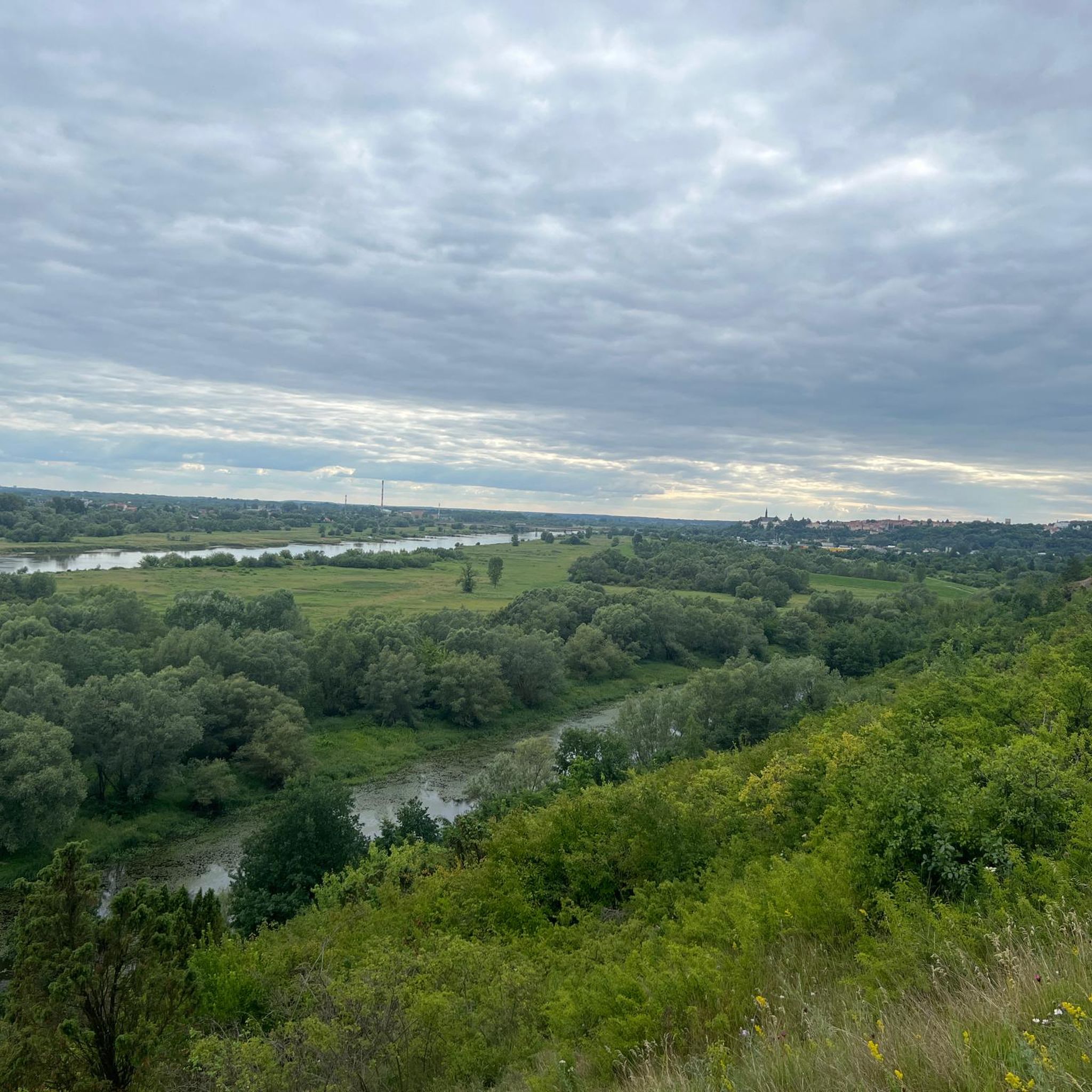
Yes, the Dwikozy commune offers several natural attractions. The Pepper Mountains (Góry Pieprzowe), located near Kamień Łukawski, are among Poland's oldest mountains and provide unique landscapes. You can also explore beautiful loess ravines found in Nowe Kichary, Góry Wysokie, and other villages. The confluence of the San and Vistula Rivers in Szczytniki offers picturesque views, and the Panieńska Góra Steppe Vegetation Reserve provides panoramic vistas of Dwikozy and Słupcza.
What cultural experiences are available in Dwikozy?
Dwikozy offers unique cultural insights. It is the birthplace of renowned Polish writer Wiesław Myśliwski, whose works were inspired by the local area. The commune is also home to several wineries, such as Winnica Sandomierska and Winnica Dworska, where you can taste local wines and learn about viticulture. For a hands-on experience, visit the Processing Incubator in Dwikozy to learn about creating preserves from local fruits and vegetables.
What kind of outdoor activities can I do near Dwikozy?
The Dwikozy area is great for outdoor enthusiasts. You can enjoy various activities, including hiking and cycling. For detailed routes and guides, explore options like hiking around Dwikozy or gravel biking around Dwikozy. Equestrian centers like Stajnia koni Collina and Stajnia u Madzi also offer horseback riding.
Are there family-friendly attractions in the Dwikozy region?
While Dwikozy itself has historical and natural sites, nearby Sandomierz offers several family-friendly attractions. The Sandomierz Market Square and Royal Castle in Sandomierz are popular for all ages. The wider Świętokrzyskie Voivodeship also features the Bałtowski Tourist Complex, which includes a dinosaur park and prehistoric oceanarium, making it a great day trip for families.
What is the best time of year to visit Dwikozy for outdoor activities?
The best time to visit Dwikozy for outdoor activities is generally from spring to early autumn (April to October). During these months, the weather is pleasant for hiking in the loess ravines, exploring the Pepper Mountains, or enjoying cycling routes. The wineries are also typically active during the warmer seasons, offering tastings and tours.
Where can I find easy walking trails near Dwikozy?
For easy walking trails, consider exploring the areas around the loess ravines in villages like Nowe Kichary or Góry Wysokie. The Panieńska Góra ecological site also offers accessible paths with beautiful panoramic views. Komoot provides several easy hiking routes around Dwikozy, including loops from Kamień Łukawski.
Are there any vineyards or wine-tasting opportunities in Dwikozy?
Yes, the Dwikozy commune is known for its burgeoning wine scene. You can visit several local wineries, including Winnica Sandomierska in Góry Wysokie, Winnica Dworska in Słupcza, and Winnica Nadwiślańska and Winnica Z Gór Pieprzowych in Kamień Łukawski. These offer opportunities to taste local wines and learn about the viticulture of the region.
What are the most popular attractions that visitors enjoy near Dwikozy?
Visitors particularly enjoy the historical and scenic highlights near Dwikozy. The Sandomierz Market Square is highly appreciated for its rich architectural heritage and vibrant atmosphere. The Royal Castle in Sandomierz offers stunning views over the Vistula, and the Opatowska Gate provides panoramic city views. The Sandomierz Vineyard is also a favorite for its wine-tasting experiences and picturesque setting.
Can I find places for horseback riding in the Dwikozy area?
Yes, for those interested in equestrian activities, there are options available. You can enjoy horseback riding at Stajnia koni Collina in Rzeczyca Sucha and Stajnia u Madzi in Stary Garbów, offering a unique way to experience the local landscape.
What is the significance of the Pepper Mountains (Góry Pieprzowe) near Dwikozy?
The Pepper Mountains (Góry Pieprzowe) are exceptionally charming hills located in Kamień Łukawski, on the border of Sandomierz and Dwikozy commune. They are considered among the oldest mountains in Poland, composed of Cambrian shales approximately 500 million years old. Their unique geological structure and natural beauty make them a significant natural landmark in the region.
Are there any religious sites or monuments in Dwikozy?
Beyond the main church, the Dwikozy commune is dotted with numerous roadside shrines, crosses, and figures, reflecting the local piety and religious traditions. One notable example is a cross found on the 'Panieńska Góra' ecological site, which also offers beautiful panoramic views.
Most popular attractions around Dwikozy

Get inspired with the komoot mobile app


Explore more
Still not found the Highlight you’re looking for? See guides of the top attractions in other regions:
