The best walks and hikes around Żyrardów
4.5
(21)
395
hikers
30
hikes
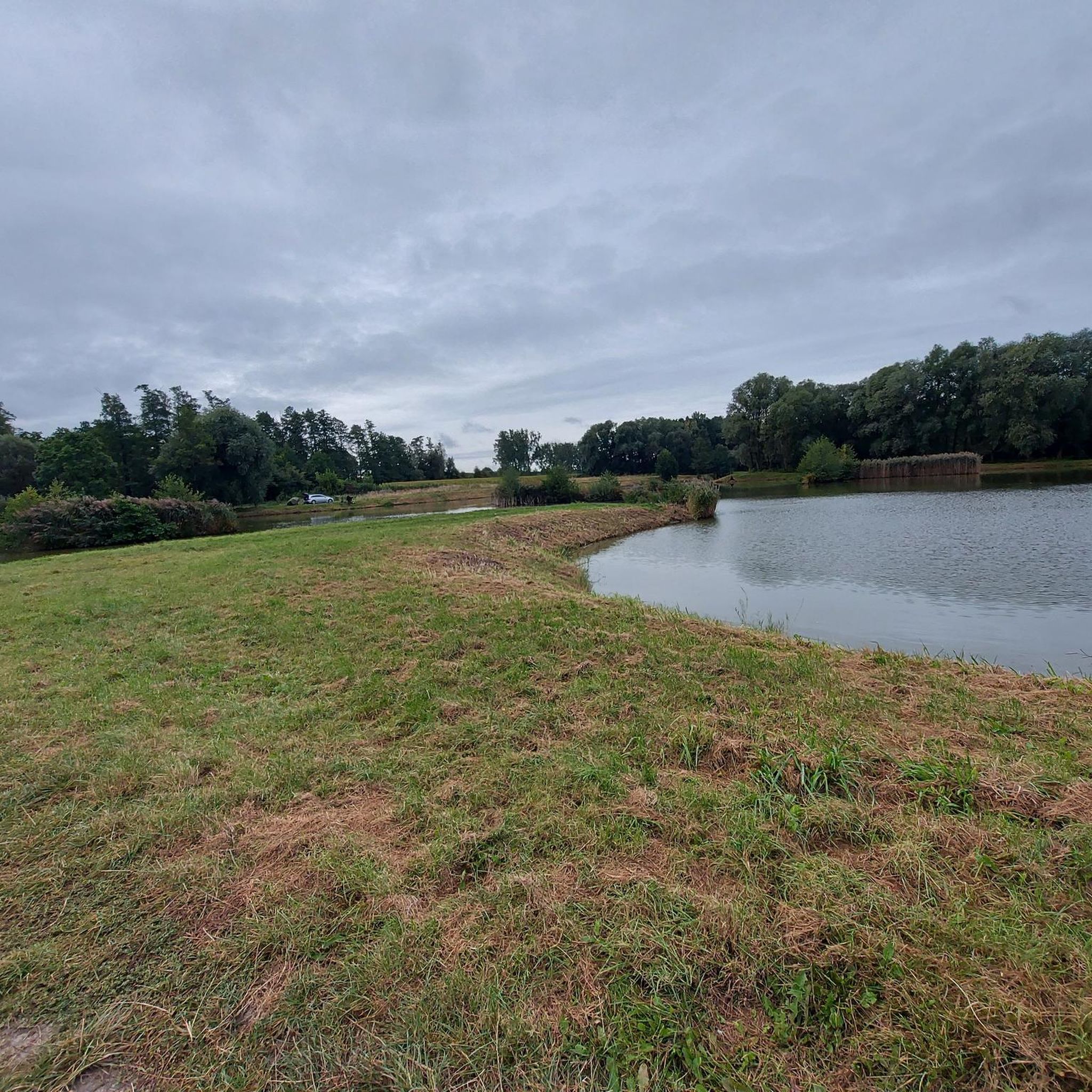
Hiking around Żyrardów offers a network of trails primarily characterized by low elevation gains and a mix of natural and urban landscapes. The region features the expansive Zalew Żyrardowski, providing lakeside paths and views. Trails often traverse green spaces within the town and connect to historic areas, reflecting Żyrardów's unique industrial heritage. The terrain is generally flat, making it accessible for various activity levels.
Best hiking trails around Żyrardów
- The most popular hiking route is Zalew Żyrardowski Beach loop from…
Last updated: August 28, 2026
5.0
(2)
40
hikers
Moderate hike. Good fitness required. Easily-accessible paths. Suitable for all skill levels.
16
hikers
6.98km
01:46
20m
20m
Easy hike. Great for any fitness level. Easily-accessible paths. Suitable for all skill levels.

Sign up for free
5.0
(1)
5
hikers
Easy hike. Great for any fitness level. Easily-accessible paths. Suitable for all skill levels.
4
hikers
Easy hike. Great for any fitness level. Easily-accessible paths. Suitable for all skill levels.
5.0
(1)
5
hikers
5.26km
01:20
10m
10m
Easy hike. Great for any fitness level. Easily-accessible paths. Suitable for all skill levels.
Get access to more routes and recommendations from other explorers.
Sign up for free
Already have an account?
Our route recommendations are based on thousands of hikes, rides, and runs completed by other people on komoot.
Start today with a free account
Your next adventure awaits.
Login or Signup

Tips from the Community

The Wydmy Międzyborowskie (also called Sadzone Góry) are a forest nature-landscape complex in the Masovian Voivodeship, in the vicinity of Międzyborów and Jaktorów. These pine forest-covered dunes reach a height of up to 114.5 m above sea level, rising about 10 meters above the surrounding terrain. They were formed during the last ice age. The monument commemorates the place where Germans, during the occupation in World War II, carried out executions of Poles.
0
0

Access to platforms via tunnels and stairs...
0
0
The residential building, rebuilt from a flax spinning mill, was built in 1913 in Żyrardów. It was one of the most modern buildings of the Linen Plant and one of the first in the world made of reinforced concrete, adapted to the loads resulting from the work of several thousand spindles. In order to evenly distribute the stresses and vibrations of the building, the roof structure was loaded with earth, and then plants were planted. There was a fire tank on the roof of the building. The water, which was drawn from the Górny Staw on Pisia Gągolin, was to flood all the floors of the building in turn in the event of a fire. On the top floor, below the fire tank, there were two other huge water tanks used to store water used for flax processing (so-called wet spinners). The water was drawn from a source located on the factory premises. It was the cleanest and healthiest water in Żyrardów.
0
0
Resursa is a term for a social club, e.g. of merchants, landowners, etc., as well as the premises of such a club. The factory resursa in Żyrardów was established around 1870. It housed the Association of Officials of the Joint-Stock Company of Żyrardów Plants. The interior was decorated with splendor. Regulars had at their disposal quiet offices, a specialist library with a reading room, a billiard room and rooms for playing cards. Guest salons were located on the first floor. The theatre (ballroom) hall was enriched with gildings and colorful wall paintings.
0
0
Philippe Henri de Girard (born February 1, 1775 in Lourmarin, Provence, died August 26, 1845 in Paris) – French engineer and inventor. He was born into a wealthy Calvinist bourgeois family. At the age of 14, he constructed a device for obtaining energy from sea waves. In 1810, he took part in a competition announced by the French government to build a flax fiber spinning machine. The spinning machine he invented was able to spin 150 km of thread from one kilogram of flax[1]. This device revolutionized the process of producing linen fabrics. In 1812, he launched a plant with 2,000 spindles in Paris. In 1818, while living in Vienna, he constructed a flax combing machine and a machine for producing flax yarn from tow. In the years 1825–1844, he lived in Poland. In 1825, he was appointed by Prince Franciszek Ksawery Drucki Lubecki, Minister of the Treasury of the Kingdom of Poland, to the position of Chief Mechanic at the Mining Department of the Government Commission of Revenue and Treasury. His duties included installing mechanical devices in mines and steelworks and improving existing ones. He modernized, among others, mechanical plants in Białogon, Samsonów, Sielpia and the zinc smelter "Ksawery" near Będzin. In 1828, he installed a water turbine of his own design in Dowspuda. He got involved in the November Uprising - he developed a technique for producing rifle stocks, and the linen factory in Marymont, of which he was the technical director, switched to the production of weapons. The linen factory in Marymont near Warsaw was moved to the village of Ruda Guzowska in 1833. The town of Żyrardów, established on the territory of Ruda Guzowska and the surrounding villages, took its name from him. In 1880, 16,000 spindles were working in this spinning mill.
0
0
The manor-style station designed in the architectural studio of the Road Department of the Warsaw Railway Directorate headed by Bronisław Brochowicz-Rogoyski and then Romuald Miller is an example of high-class utility architecture of the interwar period. It is included in the group of buildings constructed in place of destroyed railway facilities during World War I on the line of the former Warsaw-Vienna Railway, characterized by a homely form and symmetrical plan. The historicizing shape and detail referring especially to the Baroque express the then searches and attempts to shape a national style.
0
0

was established in 1914
0
0
Factory Resources
0
1
Frequently Asked Questions
How many hiking trails are available around Żyrardów?
There are over 15 hiking routes around Żyrardów, offering a variety of experiences. The majority of these are easy, making the area accessible for many different activity levels.
Are there easy hiking trails suitable for beginners or families in Żyrardów?
Yes, Żyrardów is well-suited for beginners and families, with 15 out of 18 routes classified as easy. These trails typically feature low elevation gains and pleasant paths. An example is the Zalew Żyrardowski Beach loop from Chroboty, which is an easy 5.2 km walk.
Are there any circular walks around Żyrardów?
Many of the trails in Żyrardów are designed as circular routes, allowing you to start and end at the same point. For instance, the Statue of Philippe de Girard loop from Żyrardów offers a pleasant circular experience through the town's green spaces.
What kind of landscapes can I expect on hikes in Żyrardów?
Hiking in Żyrardów offers a unique blend of natural and urban landscapes. You'll find lakeside paths around the expansive Żyrardów Reservoir, urban green spaces, and routes that lead through historic industrial areas, reflecting the town's unique heritage.
What are some interesting landmarks or attractions to see along the hiking trails?
Many trails incorporate points of interest. You can explore historical sites like the Radziejowice Palace and Park, or enjoy natural beauty at the Pond in Bolimowski Landscape Park. The Stara Przędzalnia Passage – Statue of Philippe de Girard loop from Żyrardów takes you through significant urban historical areas.
Are there any trails that combine natural scenery with urban exploration?
Yes, several routes in Żyrardów offer this combination. The Zalew Żyrardowski Beach – Żyrardów Railway Station loop from Żyrardów is a great example, connecting the natural lakeside environment with key urban points and the railway station.
What do other hikers say about the trails in Żyrardów?
The trails in Żyrardów are highly regarded by the komoot community, with an average rating of 4.8 stars. Hikers often praise the accessibility of the routes, the pleasant mix of natural and urban scenery, and the well-maintained paths, especially around the reservoir.
Are there any nature reserves or forests to explore near Żyrardów?
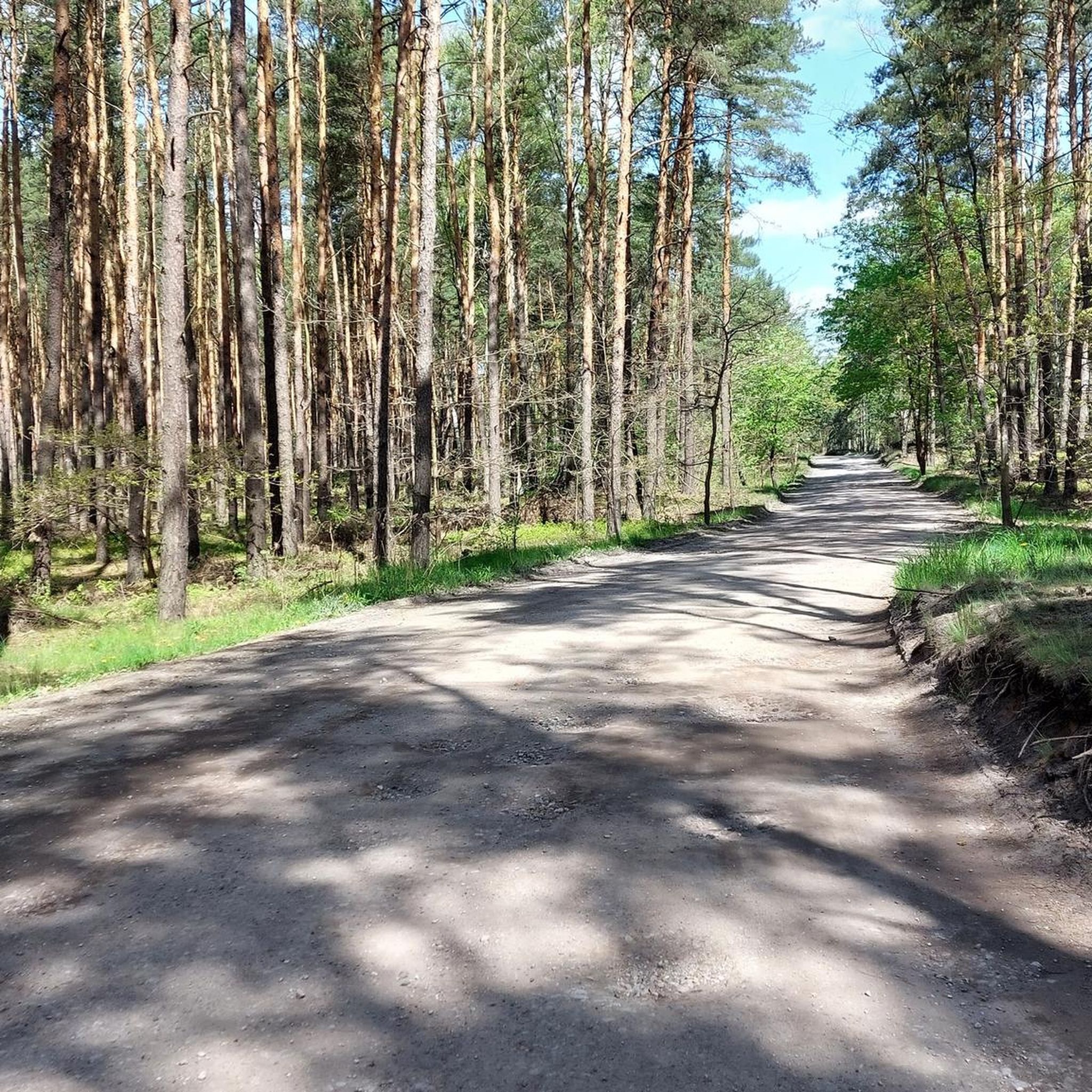
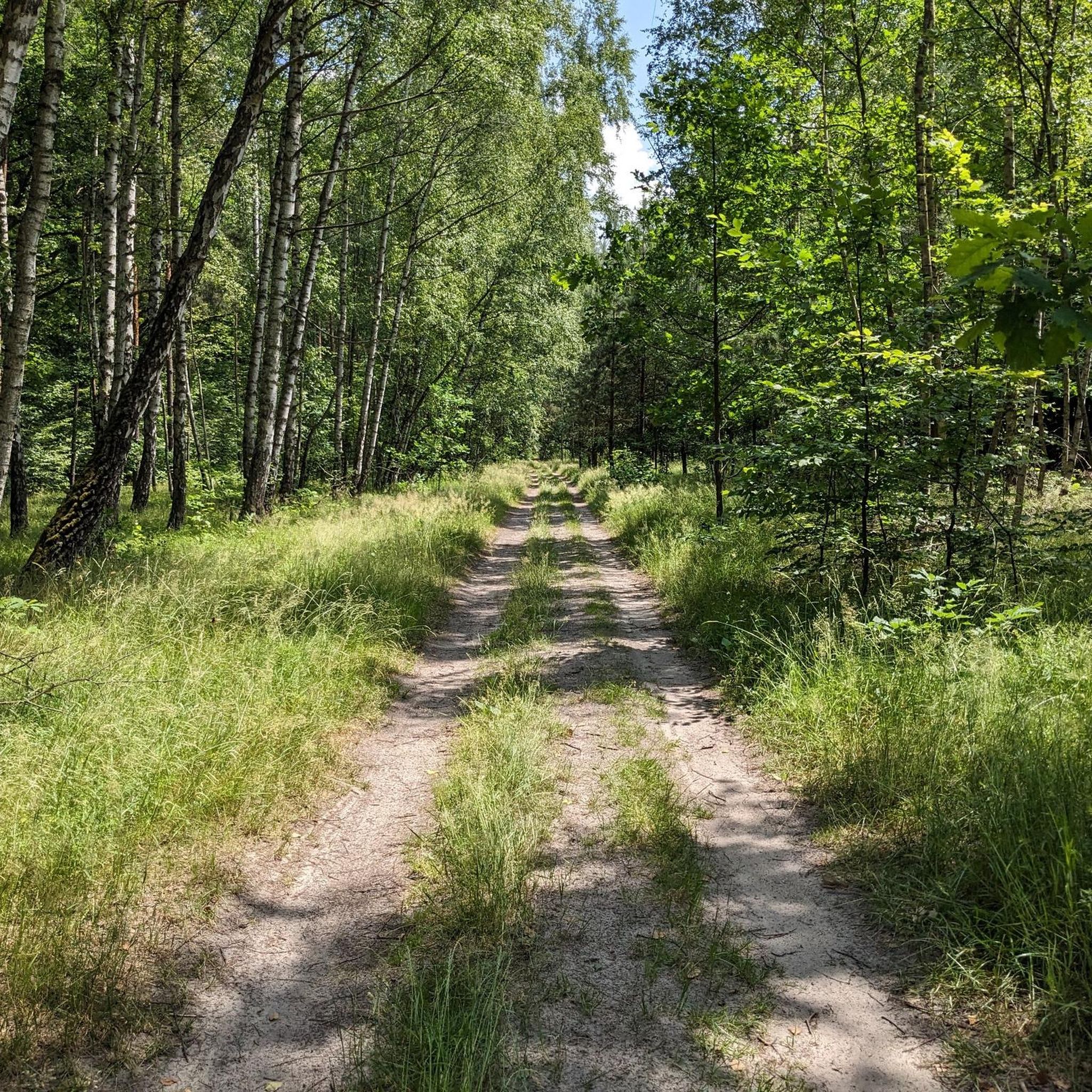
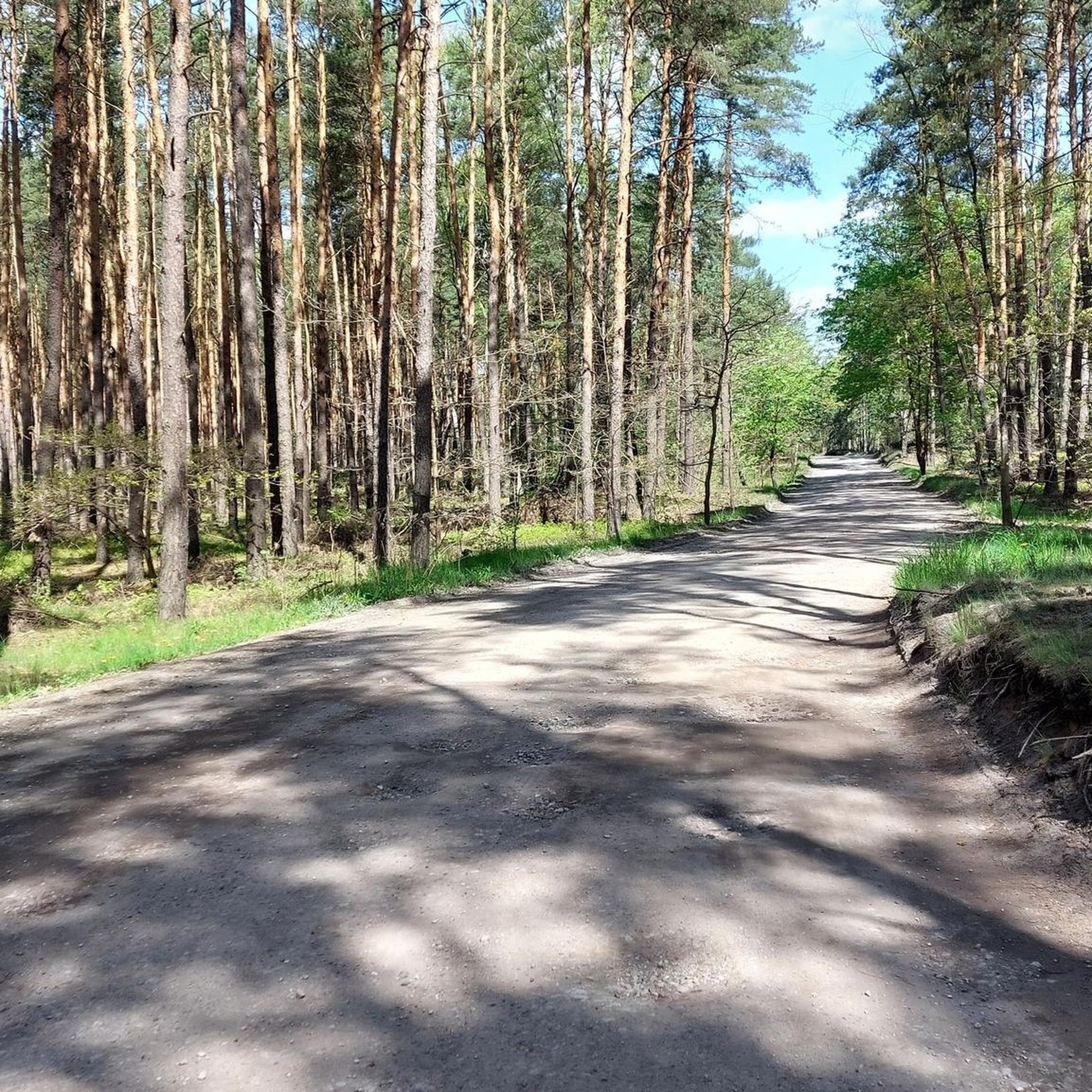
Yes, the region features natural areas such as the Dąbrowa Radziejowska Nature Reserve and the Uroczysko Rozłogi Nature Reserve. These offer opportunities to experience more forested environments and natural monuments like the Aleja Lipowa Natural Monument.
Are the hiking trails in Żyrardów suitable for dog walking?
While specific regulations for dogs on trails can vary, the generally flat terrain and numerous green spaces around Żyrardów make many routes suitable for walking with dogs, provided they are kept on a leash and you clean up after them. Always check local signage for any restrictions.
What is the typical duration for a hike in Żyrardów?
Hikes in Żyrardów vary in length, but many easy routes can be completed in 1 to 2 hours. For example, the Zalew Żyrardowski Beach loop from Chroboty typically takes about 1 hour and 19 minutes, while longer moderate options might take around 2.5 hours.
Are there any routes that pass by historical museums or cultural sites?
Yes, Żyrardów has a rich industrial history. The Museum of Western Mazovia – Żyrardów railway station loop from Żyrardów is an excellent choice for those interested in combining a walk with cultural exploration, as it passes by the museum and other significant town areas.
Most popular routes around Żyrardów
Most popular attractions around Żyrardów

Get inspired with the komoot mobile app


Explore more
Browse the best Hikes in other regions.
