Attractions and Places To See around gmina Zaręby Kościelne - Top 17
Attractions and places to see around gmina Zaręby Kościelne include a variety of historical, cultural, and natural sites in east-central Poland. The region features picturesque meanders of the Bug River within the Nadbużański Landscape Park, alongside significant landmarks. Visitors can explore historic churches, monuments, and cultural centers that reflect the area's heritage. The gmina offers diverse points of interest for those exploring its landscape and history.
Best attractions and places to see around gmina Zaręby Kościelne
- The most popular attractions is Church of the Most Holy Trinity and Saint Anne in Prostynia, a religious building. The church is known for its sculpture of the Holy Trinity by Wit Stwosz.
- Another must-see spot is Małkinia Train Station, a facility. This station has undergone renovation and features an underpass to the other side of the city.
- Visitors also love Saint Bartholomew Church, a religious building. This temple is an example of Vistula Gothic style, with construction starting in 1526.
- gmina Zaręby Kościelne is known for its historical sites, religious buildings, and natural viewpoints. The region offers a variety of attractions to see and explore, from cultural landmarks to scenic river views.
- The attractions around gmina Zaręby Kościelne are appreciated by the komoot community, with 17 upvotes and 6 photos shared by visitors.
Last updated: May 4, 2026
Church of the Most Holy Trinity and Saint Anne in Prostynia
Highlight • Religious Site
Translated by Google •
Tip by

Małkinia Train Station
Highlight • Rest Area
Translated by Google •
Tip by

Sign up now to discover places like this
Get recommendations on the best single tracks, peaks, & plenty of other exciting outdoor places.
Sign up for free
Museum of the German extermination camp in Treblinka
Highlight • Historical Site
Treblinka I - Labor Camp
The Penal Labor Camp operated from the summer of 1941 to the end of July 1944. The initiator and organizer was the district governor of Sokołów Podlaski, Ernst Gramss. The commandant throughout the period was Theo van Eupen. The German staff numbered about 20 people. They were assisted by guard companies, mainly Ukrainians, numbering about 100 people. 20,000 prisoners passed through the camp, of whom about 10,000 died or were shot.
Treblinka II - Extermination Camp
The Treblinka II extermination camp (center) was built by the Germans in mid-1942 next to the penal labor camp that existed nearby. It was established as part of "Operation Reinhard", aimed at the physical liquidation of the Jewish population. It occupied 17 hectares of land. It was surrounded by a high barbed wire fence. The crew consisted of 30-40 Germans and Austrians, who managed the camp, and a company of guards, about 100-120 people, mainly of Ukrainian origin. The camp commandant was appointed medical doctor Irmfried Eberl, who was succeeded by Franz Stangl. The deputy commandant was Kurt Franz.
The first transport of people deported here arrived on July 23, 1942, bringing Jews from the Warsaw ghetto. From that day on, Jews were brought here mainly from occupied Poland, but also from Czechoslovakia, France, Greece, Yugoslavia, the USSR, as well as Germany and Austria. Roma and Sinti from Poland and Germany were also sent here.
The deportees were killed with exhaust gases in gas chambers built especially for this purpose. It is estimated that over 800 thousand people died here. To cover up the traces of the crime, the bodies were burned on specially constructed grates.
On August 2, 1943, an armed uprising organized by prisoners broke out in the camp. Out of 840 people, only about 200 managed to escape from the camp. At most, about 100 could live to see the end of the war. After the uprising, the camp slowly began to be liquidated. In November 1943, all camp buildings and installations were dismantled. A house was built for a Ukrainian family, and the camp area was ploughed and sown with lupine. Before the arrival of the Eastern Front, the buildings were burned down.
muzeumtreblinka.eu
Translated by Google •
Tip by

Saint Bartholomew Church
Highlight • Religious Site
Translated by Google •
Tip by

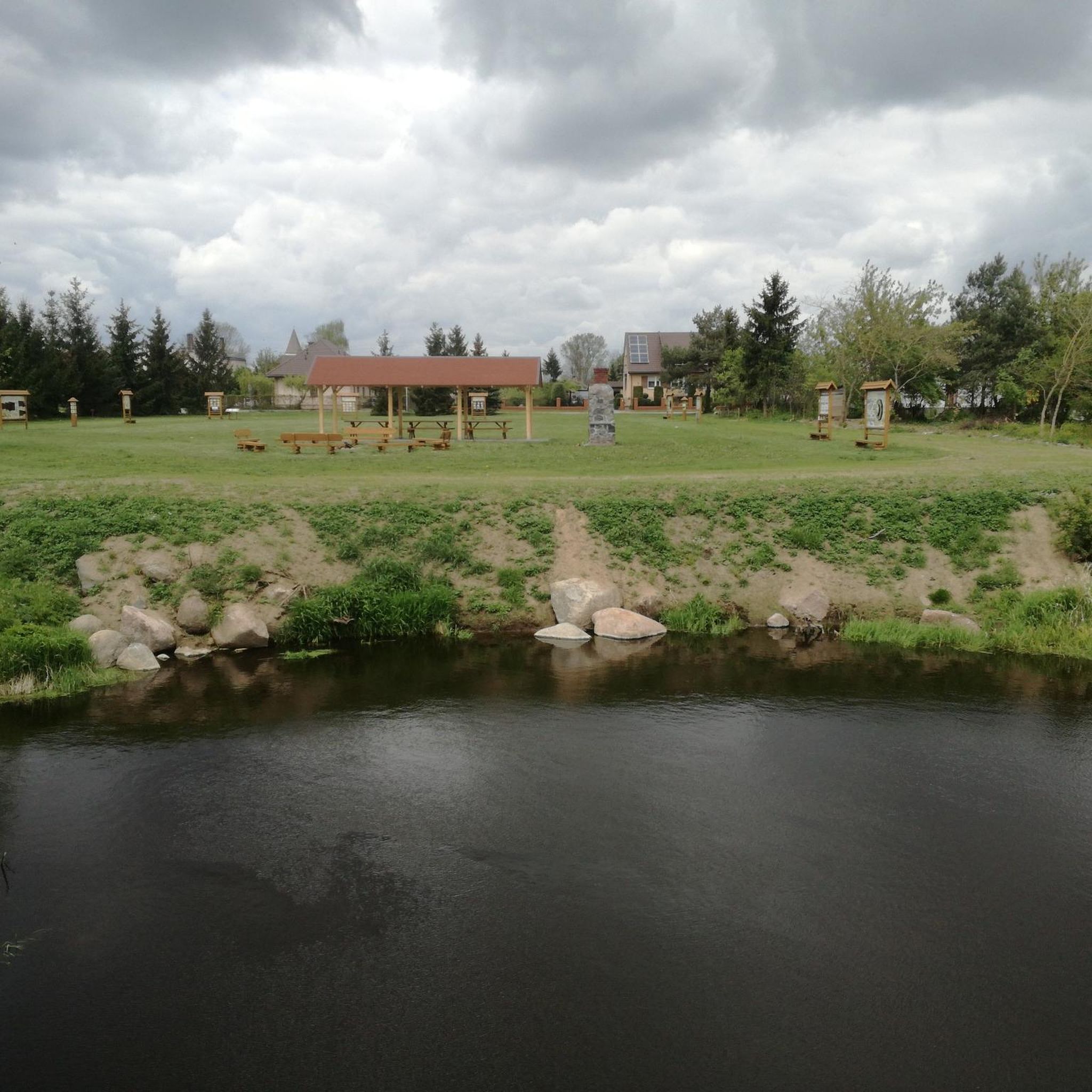
View of the river from the bridge
Highlight (Segment) • Viewpoint
Translated by Google •
Tip by

Sign up for free to discover even more attractions around gmina Zaręby Kościelne.
Sign up for free
Already have an account?
Start today with a free account
Your next adventure awaits.
Login or Signup
Popular around gmina Zaręby Kościelne
Tips from the Community

The Treblinka II camp was one of three extermination centers established by the Germans as part of Operation Reinhardt. It had been in operation since July 1942, serving the extermination of the Jewish population. According to Jacek A. Młynarczyk, the minimum number of its victims should be estimated at 780,863 people. On August 2, 1943, an uprising broke out in the camp, during which about 400 prisoners escaped[2]. Shortly afterwards, the Germans began to liquidate the camp and erase all traces of its existence. By November 17, 1943, the fence and surviving buildings had been dismantled, and the mass graves, from which hundreds of thousands of corpses had been previously exhumed and burned, were filled in and sown with lupine. A farm was built on the former camp grounds, where two Ukrainian guards and their families were imprisoned[3]. The Germans were forced out of the Treblinka area in August 1944. Fearing the approaching Red Army, both guards set fire to their farm buildings and fled with their families[4]. A year later, the only remains of the farm were the remains of the foundations of the farm building and the excavation of the basement. The fence has not survived[5]. It was dismantled, like the ruins of the farm, by the local population, who used the material obtained in this way to rebuild farms destroyed during the passage of the front[6]. The only remains of the camp itself are the remains of the railway ramp; they still existed in 1962[7].
1
0

Museum of the German Labor and Extermination Camp in Treblinka. Treblinka I - Labor Camp The Penal Labor Camp operated from the summer of 1941 to the end of July 1944. The initiator and organizer was the district governor of Sokołów Podlaski, Ernst Gramss. The commandant throughout the period was Theo van Eupen. The German staff numbered about 20 people. They were assisted by guard companies, mainly Ukrainians, numbering about 100 people. 20,000 prisoners passed through the camp, of whom about 10,000 died or were shot. Treblinka II - Extermination Camp The Treblinka II extermination camp (center) was built by the Germans in mid-1942 next to the penal labor camp that existed nearby. It was established as part of "Operation Reinhard", aimed at the physical liquidation of the Jewish population. It occupied 17 hectares of land. It was surrounded by a high barbed wire fence. The crew consisted of 30-40 Germans and Austrians, who managed the camp, and a company of guards, about 100-120 people, mainly of Ukrainian origin. The camp commandant was appointed medical doctor Irmfried Eberl, who was succeeded by Franz Stangl. The deputy commandant was Kurt Franz. The first transport of people deported here arrived on July 23, 1942, bringing Jews from the Warsaw ghetto. From that day on, Jews were brought here mainly from occupied Poland, but also from Czechoslovakia, France, Greece, Yugoslavia, the USSR, as well as Germany and Austria. Roma and Sinti from Poland and Germany were also sent here. The deportees were killed with exhaust gases in gas chambers built especially for this purpose. It is estimated that over 800 thousand people died here. To cover up the traces of the crime, the bodies were burned on specially constructed grates. On August 2, 1943, an armed uprising organized by prisoners broke out in the camp. Out of 840 people, only about 200 managed to escape from the camp. At most, about 100 could live to see the end of the war. After the uprising, the camp slowly began to be liquidated. In November 1943, all camp buildings and installations were dismantled. A house was built for a Ukrainian family, and the camp area was ploughed and sown with lupine. Before the arrival of the Eastern Front, the buildings were burned down. https://muzeumtreblinka.eu/
2
0

Station after renovation some time ago. Underpass under the tracks to the other side of the city. No elevators, long ramps lead to the platforms.
0
0

The temple in the Vistula Gothic style. Construction started in 1526 and consecrated in 1605.
1
0

There is a beautiful view of the river from the bridge.
0
0

Cube bicycle road. Not very cool but avoids driving the main road over a narrow bridge.
0
0

The church is famous for the sculpture of the Holy Trinity by Wit Stwosz. Unfortunately, no photo was taken during my visit. Maybe someone else will succeed?
0
0
Frequently Asked Questions
What historical sites can I visit in Gmina Zaręby Kościelne?
Gmina Zaręby Kościelne is rich in historical sites. You can explore the Complex of the Former Reformers' Monastery, a late-Baroque monastic complex, and the Parish Church of St. Stanislaus, a significant example of brick sacred architecture in Mazovia. Don't miss the Saint Bartholomew Church, known for its Vistula Gothic style, with construction starting in 1526. The region also features remnants of the Molotov Line bunkers, concrete combat shelters from 1939-1941.
Are there any significant religious buildings to see?
Yes, the region has several notable religious buildings. The Church of the Most Holy Trinity and Saint Anne in Prostynia is particularly famous for its sculpture of the Holy Trinity by Wit Stwosz. You can also visit the Parish Church of St. Stanislaus and the Complex of the Former Reformers' Monastery in Zaręby Kościelne.
What natural attractions can I find in Gmina Zaręby Kościelne?
The gmina offers beautiful natural landscapes, primarily centered around the Bug River. You can enjoy picturesque meanders of the river within the buffer zone of the Nadbużański Landscape Park. The river valleys of Brok, Mały Brok, and Wągroda also contribute to the scenic views, along with beautiful forest complexes in the southwestern part of the gmina. For a scenic vista, visit the View of the river from the bridge.
Is the Museum of the German extermination camp in Treblinka located nearby?
Yes, the Museum of the German extermination camp in Treblinka is a profoundly significant historical site located near Gmina Zaręby Kościelne. It details the history of the Treblinka I labor camp and the Treblinka II extermination camp, offering a solemn and important educational experience.
What outdoor activities can I do in the area?
The region is great for cycling. You can find various routes, including an easy 25 km bike loop from gmina Małkinia Górna or a moderate 41 km loop from Kańkowo that crosses the Bug River. For more cycling options, explore the cycling guide for Gmina Zaręby Kościelne.
Are there family-friendly attractions in Gmina Zaręby Kościelne?
Many attractions are suitable for families. The Church of the Most Holy Trinity and Saint Anne in Prostynia and the Museum of the German extermination camp in Treblinka are listed as family-friendly. Additionally, enjoying the View of the river from the bridge and exploring the natural areas of the Nadbużański Landscape Park can be pleasant family outings.
What monuments and memorials can I visit?
Gmina Zaręby Kościelne features several important monuments and memorials. These include a Commemorative Plaque on the Monastery honoring January Uprising insurgents, plaques at the Monastery Parking Lot dedicated to Czesław Dłuski and the Smolensk plane crash victims, and an Oak of Peace planted in 1928. There's also a Monument to Pope John Paul II by the school and a Monument to Maria Curie-Skłodowska near the Health Center.
Is there a cultural center in the gmina?
Yes, the Cultural Activity Center (Centrum Aktywności Kulturalnej) is located at ul. Rynek 15. It serves as a central hub for cultural events and activities within the gmina, offering opportunities to engage with local culture.
Are there any unique historical connections to famous figures in the region?
The gmina has a notable connection to Maria Skłodowska-Curie. Her grandfather, Józef Skłodowski, originated from the nearby Skłody-Piotrowice and attended elementary school in Zaręby Kościelne, adding a unique historical link to this renowned scientist.
What is the Małkinia Train Station known for?
The Małkinia Train Station has undergone renovation and is notable for its underpass, which connects to the other side of the city. While it features long ramps to the platforms, it does not have elevators.
Can I find any historical cemeteries in the area?
Yes, the gmina is home to several historical cemeteries. You can visit the Former Parish Cemetery in Złotoria, which features a 19th-century chapel. There is also a Parish Cemetery holding graves of notable figures like Father Edward Łapiński. Additionally, the gmina has both a new and an old Jewish Cemetery in Zaręby Kościelne, reflecting its pre-Holocaust Jewish community.
Most popular routes around gmina Zaręby Kościelne

Get inspired with the komoot mobile app


Explore more
Still not found the Highlight you’re looking for? See guides of the top attractions in other regions:
