Attractions and Places To See around gmina Brok - Top 20
Best attractions and places to see around gmina Brok include historical sites and natural landscapes. Situated on the high right bank of the Bug River, the municipality is surrounded by the Puszcza Biała (White Forest). It offers a variety of attractions for visitors interested in history, culture, and nature, including castle ruins and a Gothic-Renaissance church. This region in Poland's Masovian Voivodeship provides a serene environment for exploration.
Best attractions and places to see around gmina Brok
- The most popular attractions is St. Andrew the Apostle Church in Brok, a religious building that is a historic church in Brok. This Gothic-Renaissance church, built between 1542 and 1560, is a prominent cultural site.
- Another must-see spot is Wyniocha Swimming Area, a beach. Visitors can expect a swimming spot with facilities, including the option to rent kayaks or water bikes during the season.
- Visitors also love Bridge over the Bug River, a bridge with a total length of 402 m. The view from the bridge is notable, offering scenic perspectives of the Bug River.
- gmina Brok is known for its historical sites, natural features, and recreational areas. Visitors can explore ancient church architecture, river landscapes, and designated swimming spots.
- The attractions around gmina Brok are appreciated by the komoot community, with more than 60 upvotes and 25 photos shared.
Last updated: August 25, 2026
Oxbow Lake of the Bug River
Highlight • Lake
Translated by Google •
Tip by

Bridge over the Bug River
Highlight • Bridge
A very low structural steel consumption rate was achieved for this class of bridge - 210 kg/m2. Design solutions were used to increase the durability of the structure. After more than 25 years of use, there are no signs of corrosion on the steel structure of the bridge.
It stands next to the old bridge built after the war, steel from the demolition of other bridges and founded on wooden piles.
Translated by Google •
Tip by

Sign up now to discover places like this
Get recommendations on the best single tracks, peaks, & plenty of other exciting outdoor places.
Sign up for free
St. Andrew the Apostle Church in Brok
Highlight • Religious Site
Until 1795, the parish included nearby towns, including Kępa, Morzyczyn and Płatkownica, which were located across the river. After the partitions, the river became the border and these towns were incorporated into the neighboring parish of Sadowne. The first church in Brok was probably built in the 12th century, while the church foundation was confirmed in 1239. Since that year, there may have even been several wooden churches in Brok, which preceded the construction of a brick church in the late Gothic-Renaissance style.
pl.wikipedia.org/wiki/Ko%C5%9Bci%C3%B3%C5%82_%C5%9Bw._Andrzeja_Aposto%C5%82a_w_Broku
Translated by Google •
Tip by
Treblinka Railway Siding Memorial
Highlight • Monument
Translated by Google •
Tip by
Singletrack Along the Bug River
Highlight (Segment) • Trail
Translated by Google •
Tip by

Sign up for free to discover even more attractions around gmina Brok.
Sign up for free
Already have an account?
Start today with a free account
Your next adventure awaits.
Login or Signup
Tips from the Community

There was a railway siding here, where Jews and Roma people locked in wagons waited to be transported to the gas chambers in the nearby Treblinka II extermination camp.
1
0

A symbolic monument inspired by the ramp and railway tracks leading to the German extermination camp in Treblinka.
2
0
The parish was established in the 13th century. Until 1795, the parish included nearby towns, including Kępa, Morzyczyn and Płatkownica, which were located across the river. After the partitions, the river became the border and these towns were incorporated into the neighboring parish of Sadowne. The first church in Brok was probably built in the 12th century, while the church foundation was confirmed in 1239. Since that year, there may have even been several wooden churches in Brok, which preceded the construction of a brick church in the late Gothic-Renaissance style. https://pl.wikipedia.org/wiki/Ko%C5%9Bci%C3%B3%C5%82_%C5%9Bw._Andrzeja_Aposto%C5%82a_w_Broku
1
0
Total length 402 m. The bridge consists of 6 spans, the length of the main span is 88 m. The structure is of a composite structure, steel truss girders cooperate with a prestressed concrete slab. A very low structural steel consumption rate was achieved for this class of bridge - 210 kg/m2. Design solutions were used to increase the durability of the structure. After more than 25 years of use, there are no signs of corrosion on the steel structure of the bridge. It stands next to the old bridge built after the war, steel from the demolition of other bridges and founded on wooden piles.
1
0

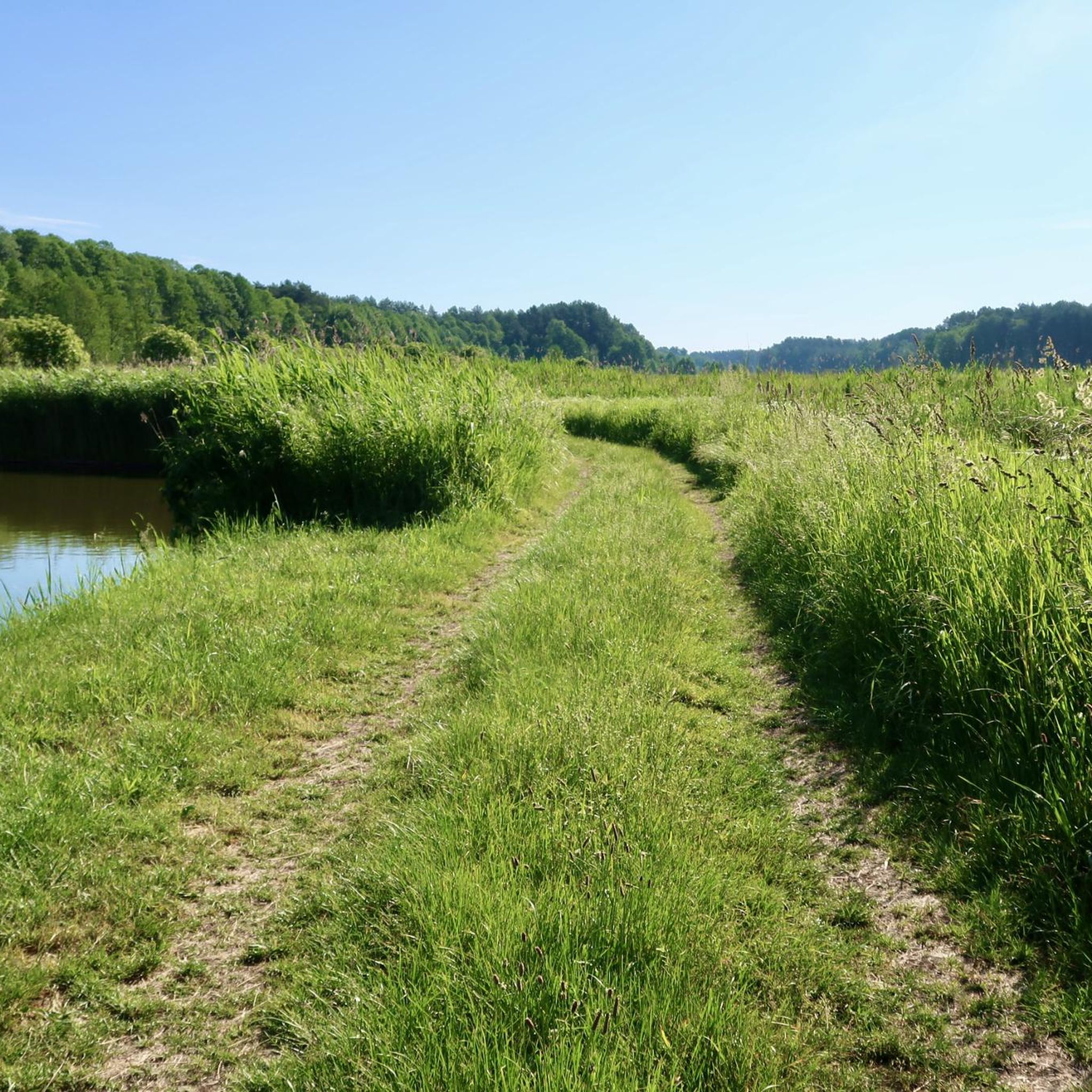
In addition to the fishing grounds near Szumin, Wywłóka is a mecca for Mazovian anglers from the surrounding area. From the stories of anglers we have met, pike, zander, asp and perch are the most desirable fish in these fishing grounds (although of course these are not the only fish that can be found there). But fish are a magnet, not only for anglers who fish for them here at different times of the year, also in winter, from under the ice. There are many more people willing to fish in this fish kingdom, in the form of numerous species of waterfowl, including such ornithological rarities as corncrakes, curlews, black-tailed godwits and sandpipers. In the vicinity of Szumin and Wywłóka, one can observe almost exemplary effects of the meandering of the Bug, which leaves behind old branches and small "lakes". These areas are subject to flooding in spring; backwaters are created that facilitate the movement of fish. That is why it is here, on the "bużyska", as the old riverbeds of the Bug are called, that you can observe many anglers trying to catch the golden crucian carp, which they call the "Japanese carp", or the tench, which likes to hide in the mud, in small, often overgrown reservoirs.
0
0

as for cycling it's quite narrow
0
0
it seems like a bulky but beautiful structure
0
0

Quite nice, just before the floodgate lock, but a longer stop - better to do it behind the floodgate, already on the Bug River
0
0
Frequently Asked Questions
What historical sites can I explore in Gmina Brok?
Gmina Brok offers several significant historical sites. You can visit the impressive Church of St. Andrew the Apostle in Brok, a Gothic-Renaissance church built between 1542 and 1560, known for its beautiful barrel vaulting and frescoes. The ruins of the Bishops' Castle, dating back to the 16th century, also stand as a notable historical remnant. Additionally, the town features a classicist-style Town Hall from the early 20th century and traditional 19th-century houses.
Are there opportunities for hiking and cycling in Gmina Brok?
Yes, Gmina Brok is ideal for outdoor activities. The picturesque surroundings, including the Puszcza Biała (White Forest) and areas along the Bug River, offer numerous trails. You can find marked trails for walking and cycling within the Puszcza Biała. For specific routes, explore options like the hiking trails around gmina Brok, which include easy loops like 'View of the Bug – Witój in Szumin Agritourism loop from Szumin'.
What natural attractions can I find along the Bug River in Gmina Brok?
The Bug River is a central natural attraction. You can enjoy its picturesque meanders and oxbow lakes, such as the Oxbow Lake of the Bug River, which is popular for fishing. The river also features a wide, sandy urban beach and opportunities for kayaking. The Bridge over the Bug River offers scenic views of the landscape.
Are there family-friendly activities available in Gmina Brok?
Absolutely. Families can enjoy the Wyniocha Swimming Area, a designated spot on the Bug River with facilities and options to rent kayaks or water bikes during the season. The Rope Park in Brok (Park Linowy w Broku) provides an active outdoor experience with varied routes and obstacles amidst the trees, suitable for different age groups.
Where can I go swimming or relax by the water in Gmina Brok?
The primary spot for swimming and water relaxation is the Wyniocha Swimming Area, located on the Bug River along Promenada Street in Brok. This popular bathing area offers a pleasant environment to cool off and enjoy the river during warmer months, with amenities like ice cream and drink booths, and kayak/water bike rentals.
What is the Church of St. Andrew the Apostle known for?
The Church of St. Andrew the Apostle in Brok is a prominent Gothic-Renaissance church built between 1542 and 1560. It is renowned for its architectural beauty, including Renaissance barrel vaulting adorned with decorative stucco and frescoes. Inside, you can admire the main altar of St. Andrew the Apostle from 1742 and a Baroque side altar of Our Lady of the Rosary from the mid-18th century.
Can I find any unique historical monuments or cemeteries in the area?
Yes, Gmina Brok holds unique historical sites beyond the main church and castle. The Jewish Cemetery, established in the 19th century, is one of the best-preserved Jewish necropolises in Mazovia, featuring approximately thirty matzevot (tombstones). Adjacent to it is a 17th-century burial mound, serving as the resting place for victims of a plague epidemic. There's also a Chapel of January Insurgents, likely built in the 1920s, commemorating the January Uprising.
What kind of outdoor activities are available in the Puszcza Biała (White Forest)?
The Puszcza Biała, a large primeval forest surrounding Gmina Brok, covers about 70% of the area and is perfect for various outdoor activities. You can enjoy marked trails for walking and cycling, making it ideal for nature walks and bike rides. It's also a popular spot for mushroom picking and hunting, offering a true immersion into nature.
Is Gmina Brok suitable for wildlife spotting or nature observation?
Yes, Gmina Brok is excellent for nature observation, especially around the Bug River and within the Nadbużański Landscape Park. The oxbow lakes and old river branches are rich in diverse fish species, attracting numerous waterfowl. Ornithological rarities like corncrakes, curlews, black-tailed godwits, and sandpipers can be observed, making it a great location for birdwatching.
What is the best time of year to visit Gmina Brok for outdoor activities?
The warmer months, typically from late spring to early autumn (May to September), are ideal for visiting Gmina Brok for outdoor activities. During this period, the weather is pleasant for hiking, cycling, kayaking on the Bug River, and enjoying the swimming areas. The 'Days of Brok and Puszcza Biała' festival, held in early July, also offers cultural events and adds to the vibrant atmosphere.
Are there any specific cycling routes recommended in Gmina Brok?
Gmina Brok offers several cycling opportunities. A notable route is the 13 km cycling path that connects Brok to Ostrów Mazowiecka, winding through picturesque pine forests. While the Singletrack Along the Bug River can be challenging in parts, it offers very scenic views. For more options, you can explore the attractions around gmina Brok guide for routes that pass by various points of interest.
What is the significance of the Bishops' Castle in Brok?
The Bishops' Castle in Brok, though now largely in ruins, holds significant historical importance. Dating back to the 16th century, it was once a favored residence of the Płock bishops. Initially built by Bishop Erazm Ciołek and completed by Bishop Henryk Firlej, it was destroyed during the Swedish wars, rebuilt, and then burned down in 1831, remaining in ruins ever since. It stands as a testament to the region's rich past and ecclesiastical influence.
Are there any easy walking trails for a relaxed stroll?
Yes, Gmina Brok offers easy walking trails suitable for relaxed strolls. The Puszcza Biała (White Forest) has marked trails that are generally accessible. Additionally, the areas along the Bug River provide pleasant paths for leisurely walks. For specific easy routes, consider exploring the easy hikes around gmina Brok, which include options like 'View of the Bug – Witój in Szumin Agritourism loop from Szumin' with an easy difficulty grade.
Can I go kayaking on the Bug River in Gmina Brok?
Yes, kayaking is a popular activity on the Bug River in Gmina Brok. The river's serene environment and picturesque meanders make it an excellent spot for water sports. You can often rent kayaks at designated spots like the Wyniocha Swimming Area during the season, allowing you to explore the river from a unique perspective.
What makes the Nadbużański Landscape Park special?
The Nadbużański Landscape Park, within which Brok is situated, is the largest landscape park of its kind in Poland. It's special due to its extensive natural beauty, encompassing the Bug River's unique meanders, oxbow lakes, and the surrounding Puszcza Biała forest. It provides excellent conditions for hiking, cycling, and boat trips, offering a rich habitat for diverse flora and fauna, making it a haven for nature lovers and outdoor enthusiasts.
Most popular attractions around gmina Brok

Get inspired with the komoot mobile app


Explore more
Still not found the Highlight you’re looking for? See guides of the top attractions in other regions:
