Attractions and Places To See around gmina Ciężkowice - Top 20
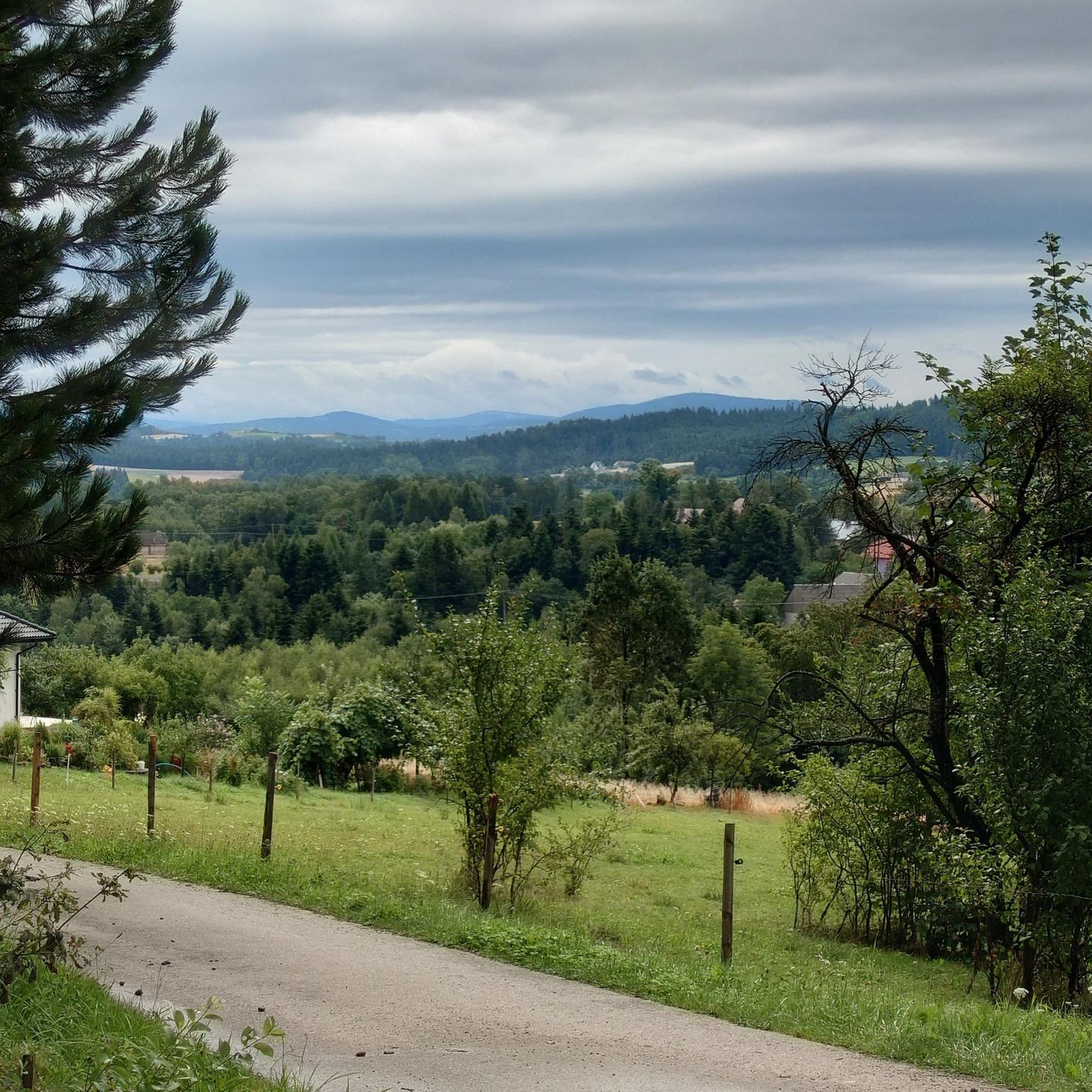
Best attractions and places to see around gmina Ciężkowice are found in the picturesque Pogórze Ciężkowickie region of Poland. This area is characterized by striking natural landscapes, including unique geological formations and scenic gorges. Visitors can explore a rich cultural heritage through historic sites and architectural landmarks. The gmina offers a diverse array of attractions for those interested in nature, history, and outdoor activities.
Best attractions and places to see around gmina Ciężkowice
- The most popular attractions is Skamieniałe Miasto Nature Reserve, a natural monument featuring sandstone rock formations shaped by erosion, resembling a petrified town. It consists of many rocks with individual names and associated legends, and a blue trail takes about 45 minutes to traverse.
- Another must-see spot is Market Square in Ciężkowice, Paderewski’s bench, a historic market square with a 19th-century Town Hall as its centerpiece. It features 18th and 19th-century houses with arcades and a monument bench dedicated to Ignacy Jan Paderewski.
- Visitors also love Melsztyn Castle, a historic castle that was started in 1347 by the castellan of Kraków. The castle was restored in 2022 and 2023, and offers views from its location.
- gmina Ciężkowice is known for its geological features, historical sites, and cultural landmarks. The region offers a mix of natural monuments, historical sites, and cultural landmarks to see and explore.
- The attractions around gmina Ciężkowice are appreciated by the komoot community, with 34 upvotes and 54 photos shared.
Last updated: July 15, 2026
Melsztyn Castle
Highlight • Castle
At the beginning of its existence, the castle functioned as a knightly residence of the powerful Melsztyński family. The stronghold was built in the 14th century. On the western edge of the hill, a high five-storey tower was erected on a rectangular plan. The third and fourth floors served as living quarters. The old and the new were themselves connected by a wall, enclosing the whole establishment with one defensive perimeter. From the west and south, a retaining wall was built to level the sweats in the courtyard and to strengthen the wall against sliding. At the bottom of the great, from the north-east side, there was a gatehouse through which the entrance to the castle led. Another extension of the defense system took place around 1461, which enabled the use of firearms. From the potnocnet side, an earth fortification was erected, which moved the first line of defense to a further distance. The main gate was also strengthened. In 1311, Melsztyn was sold and became the property of the Jordan family. In the middle of the 16th century, the oldest part of the castle was rebuilt in the Renaissance style into magnate residences. In the lower storey there were slit shooting ranges, while the upper storey had a representative and residential character.
The castle survived almost unchanged until the end of the 18th century, despite the fact that its owners changed. From 1601 they were the Tarls, and from 1744 the Lanckoronskis. Resisting even the attacks of the Swedes in the 17th century The year 1770 turned out to be tragic for the Melsztyn castle, when it was first taken over by the Bar confederates and then conquered and burned by the Russian army.
The first research work and securing the walls were undertaken in the years 1879-85 with the participation of architects and art historians. We owe it to Karol
Lanckoronski and thanks to him we can still see the remains of the zambu today
Local Action Group Dunajec-Biala
Translated by Google •
Tip by

Witch Rock (Czarownica), Skamieniałe Miasto, Ciężkowice
Highlight • Natural Monument
Another legend says that witches and witches from all over the area met here for the Sabbath. The second legend seems to be still valid, considering that for several years there has been a mysterious fire ring at the foot of the rock - probably created by witches who met here.
The safest way to get to the rock is from the parking lot via a footbridge hanging over the road, designed to make it easier for tourists to safely explore the "Petrified City".
Source:
skamienilemiasto.pl/skamieniale-miasto/legendy
Translated by Google •
Tip by

Sign up now to discover places like this
Get recommendations on the best single tracks, peaks, & plenty of other exciting outdoor places.
Sign up for free
St. Michael the Archangel Wooden Church in Szalowa
Highlight • Religious Site
Translated by Google •
Tip by

Market Square in Ciężkowice, Paderewski’s bench
Highlight • Monument
On the market square there is a classicist town hall, the "Paderewski Bench" monument and a statue of St. Florian, the patron saint of the town.
10 minutes from the market square there is the Zbigniew Jurkiewicz Spa Park. And in neighboring Kąśna Dolna, there is the manor house of Ignacy Jan Paderewski surrounded by a park.
Translated by Google •
Tip by

Skamieniałe Miasto Nature Reserve
Highlight • Natural Monument
Translated by Google •
Tip by
Sign up for free to discover even more attractions around gmina Ciężkowice.
Sign up for free
Already have an account?
Start today with a free account
Your next adventure awaits.
Login or Signup
Tips from the Community

Church of St. Michael. Building from the 18th century. The whole is surrounded by a wall. Next to it is a baroque chapel and a brick belfry.
0
0

It is a 15 hectare wooded hill, located 700 m south of the town, on which there is a group of rocks. Over the years, wind, frost and rain have given the rocks fantastic shapes. Legends shroud Skamieniałe Miasto in mystery. Witch (Czarownica) The most popular rock in the reserve, its height is 13 metres. The upper part of the rock looks like a mystical profile of a witch, with clearly defined eye sockets, a long crooked nose and a protruding chin. The witch is made of sandstone layers with different grain sizes. In the upper part of the rock there are many cracks, the largest of which is 0.5 m by 8 m. Rock with a cross The rock is in the shape of a tower and is about 10 m high. Inside there is a crack with steps that allow you to climb to the top of the rock. The view from the top extends over the neighboring hills, valleys, the Biała River and Ciężkowice. Grunwald The rock was given its name in 1910 to commemorate the Battle of Grunwald, which took place 500 years ago. A memorial plaque donated by I.J. Paderewski was attached to the rock. The rock is in the shape of a tower, which lies along the road and is considered the largest in the entire reserve. The height in the western part is 17 m.
1
0
Pride of Szalowa - a wooden church from the 1730s. It is worth noting that at the time of its foundation, Augustus III of Saxony, the penultimate king of Poland, began his rule and the hussars were still a significant force in the Polish army. Inventions such as the steam engine, the telephone or even the light bulb were not yet known - the pinnacle of modernity at that time was the mercury thermometer invented a few years earlier.
1
0

petrified city
1
0

Impressive rock city and beautiful walk through the countryside - worth it!
1
0
Quite a steep climb, but the castle and views are worth the effort.
1
0

There is parking on the back road which is then a fairly level walk to the tower. If you park by the restaurant on the main road it is a steep & muddy when wet climb up to the site.
0
0

It is not without reason that Ignacy Jan Paderewski has his monument in Więcowice. For some time in his life, he was closely associated with the town and made a great contribution to the Więcwicka region.
0
0
Frequently Asked Questions
What unique natural attractions can I explore in Gmina Ciężkowice?
Gmina Ciężkowice is renowned for its striking natural landscapes. A must-see is the Skamieniałe Miasto Nature Reserve, also known as the Petrified City, featuring unique sandstone rock formations with individual names and legends. You can also visit the mysterious Wąwóz Czarownic (Witches' Gorge) and its 14-meter high Wodospad Czarownic (Witches' Waterfall), or the impressive Diable Boisko (Devil's Playground) in Pławna, which boasts the largest rock window in the Carpathian Flysch.
What historical and cultural landmarks are worth visiting?
The region offers a rich cultural heritage. Explore the historic Market Square in Ciężkowice, with its 19th-century Town Hall and an 18th-century layout. Don't miss the Ignacy Jan Paderewski Manor House in Kąśna Dolna, the only preserved place globally where the famous composer lived and worked. Another significant site is Melsztyn Castle, a historic castle offering great views, which was restored in 2022 and 2023.
Are there family-friendly attractions in Gmina Ciężkowice?
Yes, Gmina Ciężkowice offers several attractions suitable for families. The Skamieniałe Miasto Nature Reserve is great for exploring legends and unique rock formations. The recently opened Ścieżka w Koronach Drzew (Treetop Walkway) is over 1 kilometer long and accessible to people with disabilities, offering an exciting perspective of the forest canopy. The Museum of Natural History also features interactive exhibits like a bat cave model and an interactive meadow.
Where can I find the best panoramic views in the area?
For breathtaking panoramic views, head to the Viewing Tower in Bruśnik, located on the Styrki hill. This 23-meter high tower provides expansive vistas of the Pogórze, Beskidy Mountains, and even the Slovak Tatras. Additionally, the Melsztyn Castle also offers excellent views from its elevated position.
What kind of outdoor activities are popular in Gmina Ciężkowice?
Gmina Ciężkowice is ideal for outdoor enthusiasts. The area is crisscrossed with numerous hiking and cycling routes. You can explore trails like the "Szlak Nietoperza" (Bat Trail) or choose from a network of 74 km of loop-shaped cycling routes with varying difficulty levels. For more specific routes, check out the hiking guide or the cycling guide for the region.
Are there hiking trails suitable for different skill levels?
Yes, Gmina Ciężkowice offers a variety of hiking trails. For an easy walk, you can traverse the blue trail in the Skamieniałe Miasto Nature Reserve, which takes about 45 minutes. The region's network of trails includes options for various difficulty levels, from easy loops to more challenging routes. You can find detailed information on specific trails in the hiking guide around gmina Ciężkowice.
Can I learn about local history and heritage beyond the main landmarks?
Beyond the main landmarks, you can delve deeper into local history by visiting the numerous World War I cemeteries scattered across the gmina, such as those in Ciężkowice, Bogoniowice, Ostrusza, Tursk, and Zborowice, which serve as poignant points of remembrance. The Church of St. Andrew the Apostle, a neogothic basilica-style church built in 1903, also houses an 18th-century crucifix.
What unique experiences related to nature or local crafts can I find?
For a unique experience, visit the Brzęczący Ogród (Buzzing Garden) and Pszczela Kuźnia (Bee Forge) in Zborowice. These sites offer fascinating insights into bees and beekeeping, with opportunities to observe bees and even participate in workshops. It's a great way to connect with the local ecosystem and traditional crafts.
Is there a place for relaxation and wellness in Gmina Ciężkowice?
Yes, the Park Zdrojowy (Spa Park) is a modern attraction designed for relaxation and wellness. It features hydrotherapy facilities, an alpinarium (rock garden), an arboretum, mineral bath pools, walking paths, a heather garden, an outdoor gym, a playground, water gardens, a salt graduation tower, and a sensory garden, providing a comprehensive space for rejuvenation.
Are there any attractions that are particularly accessible?
The Ścieżka w Koronach Drzew (Treetop Walkway), opened in 2023, is designed to be accessible to people with disabilities, allowing everyone to enjoy the forest canopy. Additionally, the Market Square in Ciężkowice is generally wheelchair accessible, making it easy to explore the historic town center.
What do visitors enjoy the most about Gmina Ciężkowice?
Visitors particularly enjoy the unique geological formations of the Skamieniałe Miasto Nature Reserve, often noting the fantastic shapes the rocks have taken due to erosion. The historic charm of the Market Square in Ciężkowice and the panoramic views from elevated points like Melsztyn Castle are also highly appreciated. The blend of natural beauty and rich history makes the region a captivating destination.
Most popular routes around gmina Ciężkowice
Most popular attractions around gmina Ciężkowice

Get inspired with the komoot mobile app


Explore more
Still not found the Highlight you’re looking for? See guides of the top attractions in other regions:
