Attractions and Places To See around Papowo Biskupie - Top 20
Best attractions and places to see around Papowo Biskupie include historical landmarks, natural features, and cultural sites. The area is characterized by its rich history, featuring the ruins of a 13th-century Teutonic Knight Castle and the Gothic Church of St. Nicholas. Visitors can explore several manor parks and palaces, along with the natural beauty of Papowskie Lake. Recent archaeological discoveries also highlight the region's ancient past, offering insights into Bronze Age cultures.
Best attractions and places to see around Papowo…
Last updated: July 15, 2026
Chełmno Renaissance Town Hall
Highlight • Monument
is always worth a trip. Also called the city of love.
Translated by Google •
Tip by

Brąchnówko Palace and Park
Highlight • Historical Site
The first mention of the village dates back to 1423. It was then listed as a knight's estate in the Biergłowice prosecutor's …
Translated by Google •
Tip by

Sign up now to discover places like this
Get recommendations on the best single tracks, peaks, & plenty of other exciting outdoor places.
Sign up for free
Chełmno Market Square
Highlight • Settlement
Translated by Google •
Tip by
St. Catherine of Alexandria Church in Nawra
Highlight • Religious Site
The …
Translated by Google •
Tip by

Głęboka Droga in Starogród
Highlight • Trail
Translated by Google •
Tip by
Sign up for free to discover even more attractions around Papowo Biskupie.
Sign up for free
Already have an account?
Start today with a free account
Your next adventure awaits.
Login or Signup

Tips from the Community

Stunning town hall, plenty of benches around the square to admire it from. You can also find food and a bike repair stand nearby.
0
0

Palace and park complex from the 19th century. The first mention of the village dates back to 1423. It was then listed as a knight's estate in the Biergłowice prosecutor's office. Over the years, the estate was owned by, among others, Załuskowski, Kolbe, Łaszewski. Since the 19th century, Brąchnówko belonged to the Schedlin-Czarliński family. Emil Czarliński (1833-1913) built the current palace here. The last owner of the estate before the outbreak of World War II was Leon Schedlin-Czarliński. After the war, the State Treasury became the owner of the estate. The palace and park were devastated and neglected. The palace was restored in 1994. It is an eclectic building with classicist features, two-story, on a square plan, with a basement, and a hipped roof. The elevations are decorated with modest architectural details: rustication, ground floor windows framed by pilasters and closed with decorative cornices, mezzanine windows divided by panels. In front of the entrance located in the facade, there is a driveway, above which there is a balcony supported by four pillars. On the south side, there is a second entrance with a small veranda, topped with a triangular gable. Side single-flight stairs lead to it. The park layout was quite large and surrounded the entire palace. Originally, it was an English park and had an area of about 2.5 hectares. Currently, it is much smaller. Fortunately, some of the park trees survived the period of neglect. These are plane trees, pines, chestnut trees, black locust and common hornbeam. Some of the trees have the status of a Natural Monument and are appropriately marked. The entire complex is currently owned by the Chełmża Commune. (according to "Polish Monuments")
0
0

Rectangular marketplace with town hall, modern fountain and statue of a mounted rifleman
2
0
The town hall with the Renaissance facade was built at the end of the 16th century.
1
0

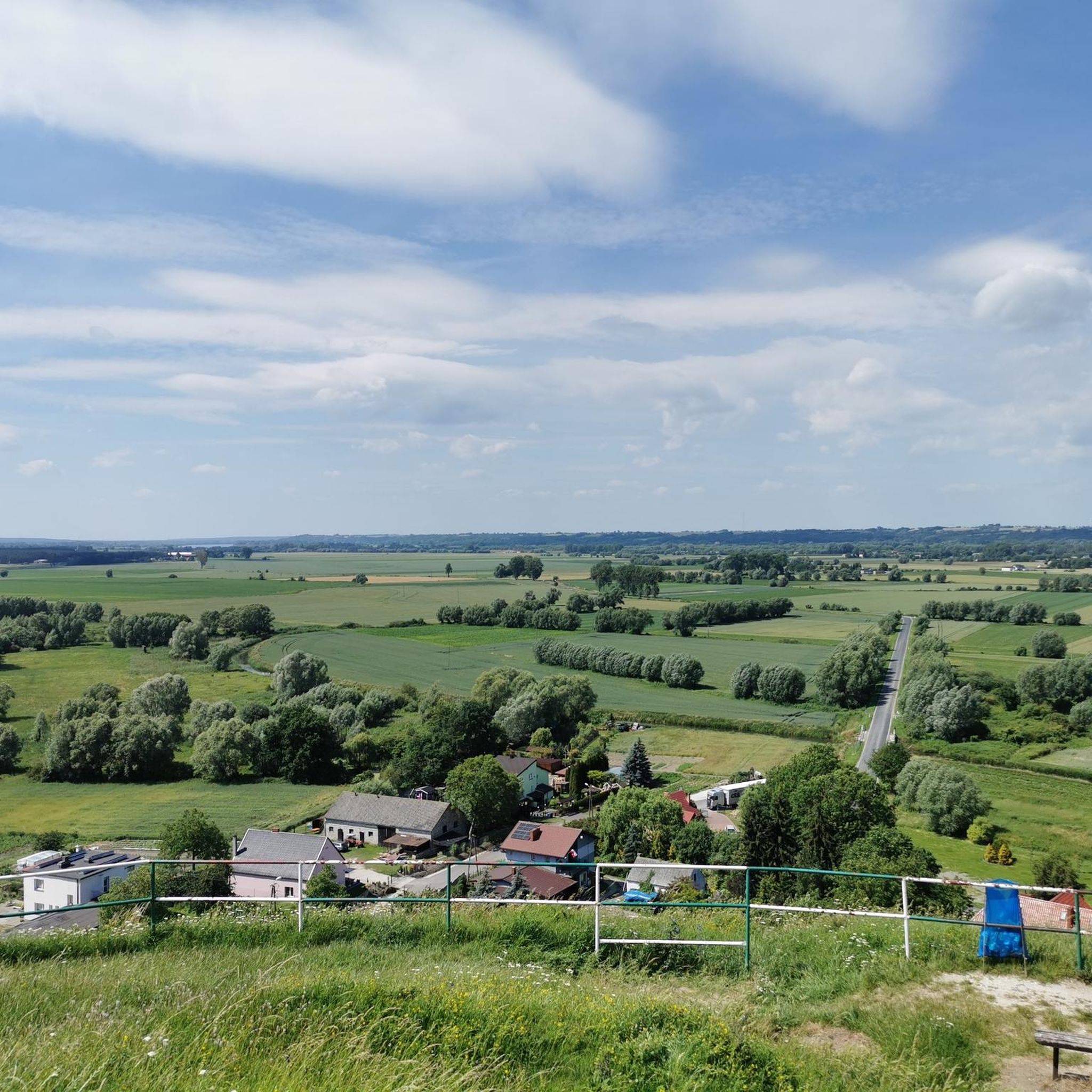
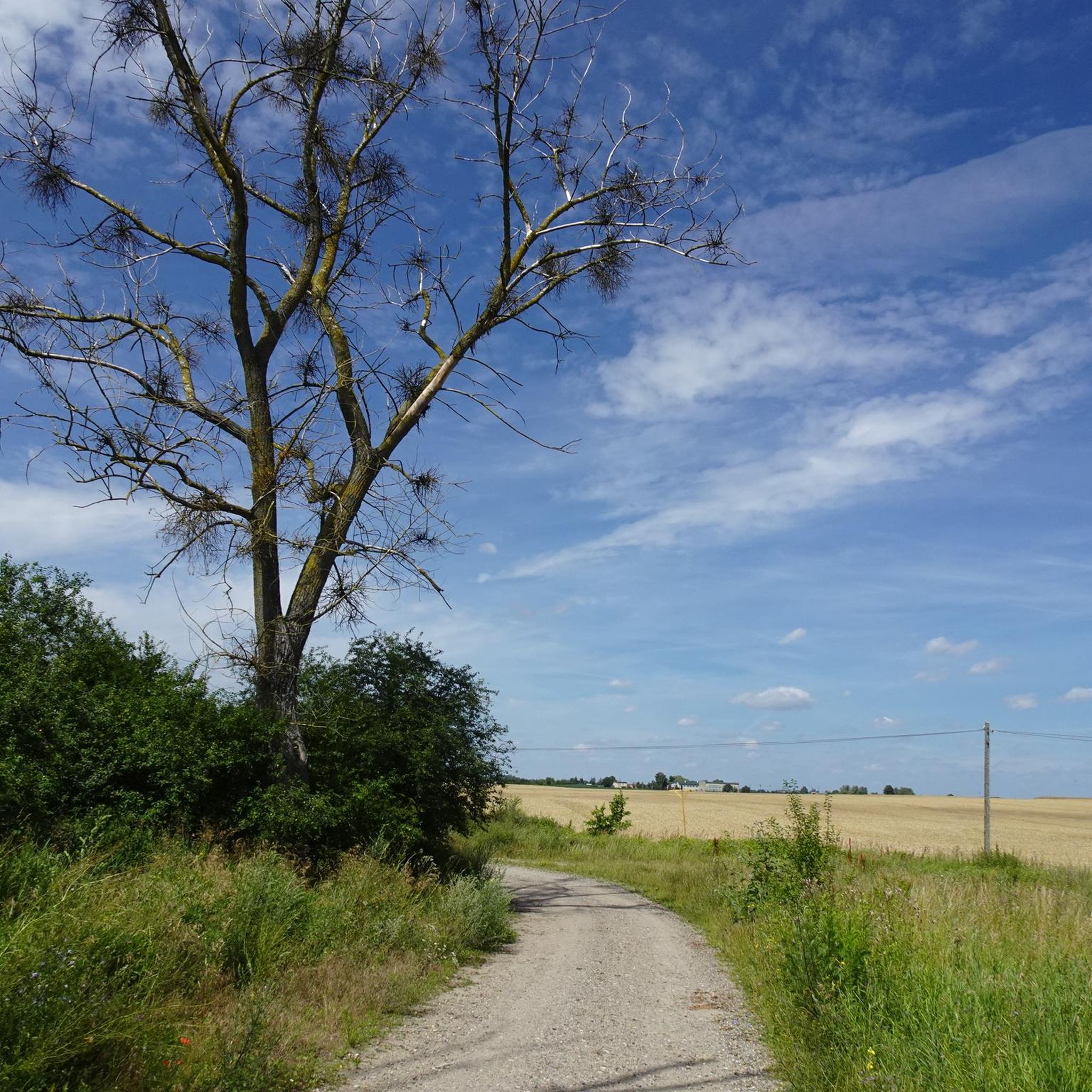
Głęboka Droga in Starogród in 1968 was one of the important outdoor locations during the production of the 13th episode of the series "Czterej armored i pies" under the title "Death Bet". This fact was commemorated on the information board (see photos). Before the current asphalt roads were built, it was the main communication route that connected the lowland areas, i.e. Staroród pod Górami, Bieńkówka, Borówno, Kokocko with the castle, church, cemetery and farm. This route was used to transport people and all kinds of goods. The oldest inhabitants of Starogród say that funeral processions and wedding processions used this route, as well as the entire parish population to go to church and children to school. Completely functional, as the road ceased after 1980. More on this subject: http://starogrod.pl/gleboka_droga.php
1
0

Very clean and well-kept small town with many highlights. Top.
5
0
Big and worth seeing with the possibility to take a break in the many beer gardens.
4
0
Very nice place. The old town with the big market, the castle and the old walls around is always worth a trip. Also called the city of love.
6
0
Frequently Asked Questions
What historical landmarks can I explore in Papowo Biskupie?
Papowo Biskupie is rich in history. You can visit the impressive Ruins of the Teutonic Knight Castle, dating back to the 13th century, which was uniquely built from stone. Another significant site is the Gothic Church of St. Nicholas, from the late 13th and early 14th centuries, featuring late Baroque and Rococo furnishings, medieval baptismal fonts, and a peculiar deer's head chandelier.
Are there any ancient archaeological sites to visit in the area?
Yes, recent excavations in the Papowo Biskupie municipality have uncovered a significant Bronze Age archaeological site. Discoveries include over 550 bronze artifacts and skeletal remains from the Lusatian culture (1200 to 450 BCE). These findings are currently housed in the Archaeological Museum in Biskupin. You can read more about these discoveries at archaeologymag.com.
What natural attractions are there around Papowo Biskupie?
The most prominent natural feature is Papowskie Lake, located alongside Papowo Biskupie. It offers opportunities for fishing and swimming, with water quality improving due to ongoing modernization efforts. A local legend also speaks of a submerged church within its depths.
Can I find any manor parks or palaces in the Papowo Biskupie municipality?
Yes, the municipality is home to several manor parks and palaces. The best-preserved complex is the neo-Gothic palace and park in Jeleniec, built in the 19th century near Papowskie Lake. The Storlus Palace and Park, also from the late 19th century, is noted as a 'twin' to the Jeleniec palace. Other manor parks can be found in Niemczyk, Nowy Dwór Królewski, Falęcin, Wrocławki, and Zegartowice.
What outdoor activities are available near Papowo Biskupie?
The region around Papowo Biskupie offers various outdoor activities, including hiking and cycling. You can explore routes that take you through historical landscapes and natural settings. For specific routes, check the dedicated guides for hiking, cycling, and road cycling around Papowo Biskupie.
Are there specific hiking trails recommended around Papowo Biskupie?
Yes, you can find several hiking trails nearby. For example, there's an easy 5 km route called 'Promenade on Lake Chełmżyńskie – Chełmża City Beach loop from Chełmża' and a moderate 17.8 km 'Chełmżyńskie Lake – Chełmża Old Town loop from Chełmża'. More options are available in the Hiking around Papowo Biskupie guide.
What cycling routes can I find near Papowo Biskupie?
Cyclists can enjoy various routes. An easy option is the 'Chełmno Renaissance Town Hall – Chełmno Market Square loop from Chełmno' at 33.7 km. For a more challenging ride, consider the 'View of the Vistula Boulevards – Chełmno Market Square loop from Nawra', which is 113.7 km. Discover more routes in the Road Cycling Routes around Papowo Biskupie guide and Cycling around Papowo Biskupie guide.
What is the 'Castles and places of Polish martyrdom' Tourist Trail?
Papowo Biskupie is part of a red tourist trail known as the 'Castles and places of Polish martyrdom'. This trail highlights the region's significant historical sites, particularly due to the presence of the Teutonic castle ruins and the St. Nicholas Church, connecting visitors with the area's rich and often turbulent past.
What do visitors enjoy the most about the attractions in the Papowo Biskupie area?
Visitors frequently praise the historical depth and architectural beauty. For instance, the Chełmno Renaissance Town Hall is described as an 'architectural gem' and the town itself as 'very clean and well-kept'. The Chełmno Market Square is appreciated for its vibrant atmosphere and places to relax. The historical significance of sites like Brąchnówko Palace and Park also draws interest.
Are there family-friendly attractions in Papowo Biskupie?
Yes, several attractions in the wider Papowo Biskupie area are considered family-friendly. These include the Chełmno Renaissance Town Hall, Chełmno Market Square, and Brąchnówko Palace and Park. The natural setting of Papowskie Lake also offers family-friendly activities like swimming and fishing.
What is the Chełmno Renaissance Town Hall, and why is it popular?
The Chełmno Renaissance Town Hall is a man-made monument and an architectural gem built in the 13th century, serving as a central feature of Chełmno's historic old town. It's popular for its historical significance and beautiful architecture, often highlighted by visitors as a must-see spot in the region.
Are there any unique architectural features in the Gothic Church of St. Nicholas?
The Gothic Church of St. Nicholas, dating from the late 13th and early 14th centuries, features late Baroque and Rococo furnishings from the 18th century. Inside, you'll find three late-Gothic sculptures from the early 16th century, two medieval stone baptismal fonts, and a notable image of St. Hubert from 1676. A peculiar chandelier in the shape of a deer's head with antlers, from around 1700, is also a unique feature in the nave.
Most popular attractions around Papowo Biskupie

Get inspired with the komoot mobile app


Explore more
Still not found the Highlight you’re looking for? See guides of the top attractions in other regions:
