Attractions and Places To See around Gołdap - Top 20
Best attractions and places to see around Gołdap blend natural beauty with historical and cultural sites in the Warmian-Masurian Voivodeship. This region, known for its clean air, offers a diverse range of outdoor activities and points of interest. Visitors can explore extensive forests, picturesque lakes, and unique man-made structures. Gołdap provides opportunities for relaxation and active exploration within its natural landscape.
Best attractions and places to see around Gołdap
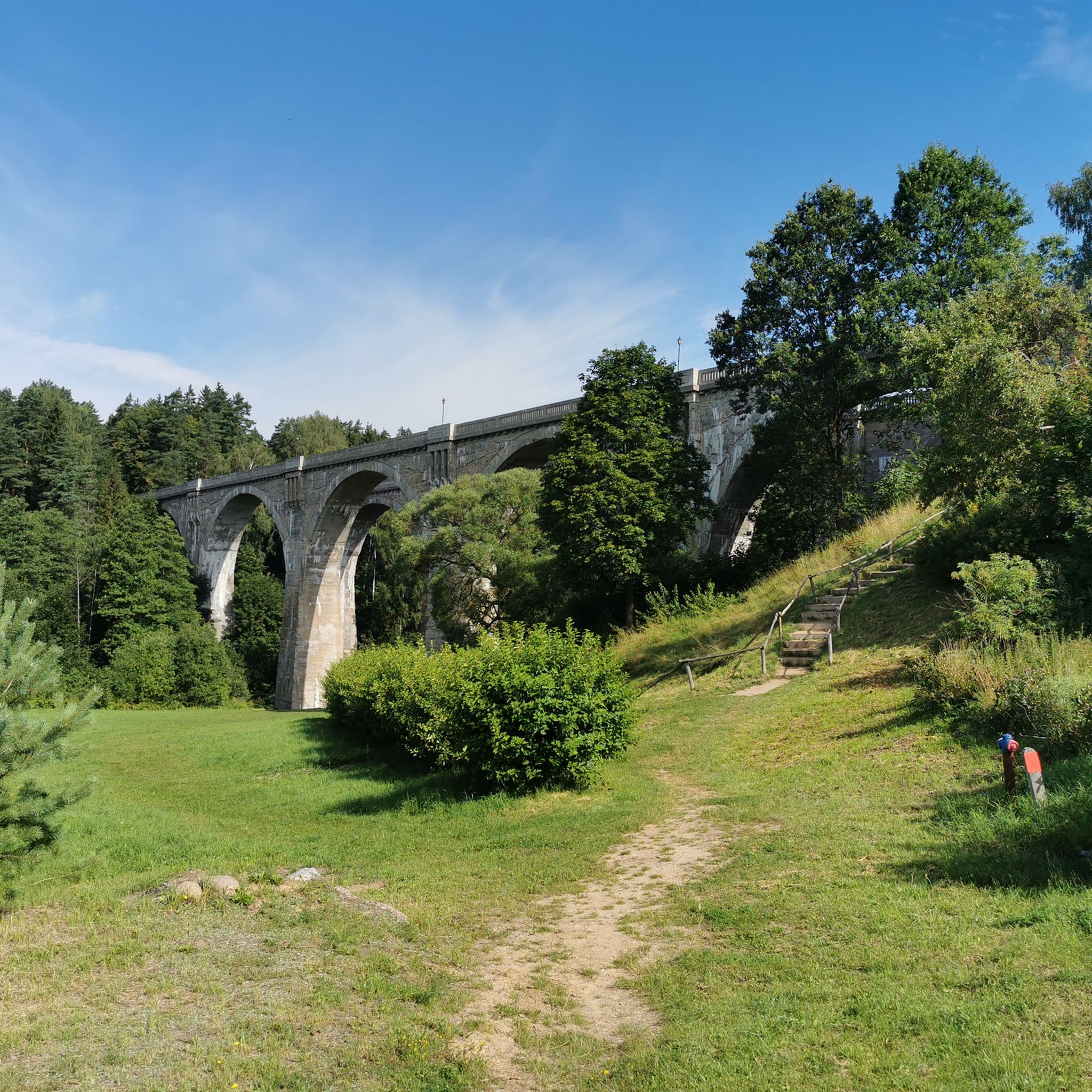
- The most popular attractions is Stańczyki Bridges, a bridge that consists of two railway viaducts. These structures are among the highest railway bridges in Poland, measuring 180 meters long and 36.5 meters high.
- Another must-see spot is Kiepojcie Brick Viaduct, a bridge with arches finished in red brick. These viaducts are notable for their unique construction and historical significance as part of a former railway route.
- Visitors also love Lithuania–Poland–Russia Tripoint Monument, a man_made_monument marking the border intersection of three countries. This site features a white concrete obelisk and offers a unique geographical point of interest.
- Gołdap is known for its historical sites, impressive bridges, and scenic viewpoints. The area offers a variety of attractions to see and explore, from natural landscapes to significant architectural structures.
- The attractions around Gołdap are appreciated by the komoot community. With 100 upvotes and 131 photos, these places offer diverse experiences for outdoor enthusiasts.
Last updated: August 25, 2026
Stańczyki Bridges
Highlight • Bridge
These are elements of the disused infrastructure of the railway line connecting Gołdap with Żytkiejmy. Sometimes called the Aqueducts of the Romincka Forest.
The bridges are among the highest in Poland. The structure has 5 spans, is 180 m long and up to 36.5 m high. The Błędzianka River flows under the buildings. First, the southern bridge was built (1912-1914, completed in 1917), and later, in 1918, the northern bridge. Both buildings are parallel to each other, and the architecture resembles the Roman aqueducts in Pont du Gard. In the spring of 1917, the construction of the so-called the third transport corridor from Chojnice through Czersk, Smętowo, Kwidzyn, Prabuty, Myślice, Morąg, Orneta, Lidzbark Warmiński, Bartoszyce, Kętrzyn, Węgorzewo, Gołdap, Pobłocie, Kalwaria to Alytus in Lithuania. Most of the mentioned sections already existed at that time, so this huge investment consisted of, among others: to widen the embankments along the entire route for the second track. Since the construction of the Botkuny-Popowiedzie section was already quite advanced before the outbreak of World War I, it was decided to build twin bridge structures and new viaducts at the intersections with road roads on this route. This investment could not be completed by the end of World War I and most of the sections remained single-track.
In the face of the new political situation, there was no point in building a main line to Lithuania, so in the 1920s it was decided to complete the construction of the line as a local single-track route 35 km long from the Botkuny station, through Dubeninki, Stańczyki, Pobłocie to Żytkiejmy. Track was laid on only one of the bridges, and on October 1, 1927, trains started running on the entire route. Initially, there were three pairs of passenger trains, later, for the numerous tourists visiting these areas, a fourth pair was launched on Saturdays and Sundays. At that time, fishermen, mushroom pickers, and in winter also skiers came to the area of Błędzianka. There were also freight trains on the route, carrying mainly wood from the surrounding forests, and in the 1940s also stones, among others. for the construction of Hitler's Wolf's Lair headquarters in Gierłoż. The line was dismantled by trophy troops of the Red Army in 1945.
pl.wikipedia.org/wiki/Mosty_w_Sta%C5%84czykach
Translated by Google •
Tip by

Pobłędzie Observation Tower
Highlight • Viewpoint
Here you will find a cyclist service area with a shelter and toilet.
Translated by Google •
Tip by

Sign up now to discover places like this
Get recommendations on the best single tracks, peaks, & plenty of other exciting outdoor places.
Sign up for free
Lithuania–Poland–Russia Tripoint Monument
Highlight • Monument
Translated by Google •
Tip by

Stańczyki Observation Tower
Highlight • Viewpoint
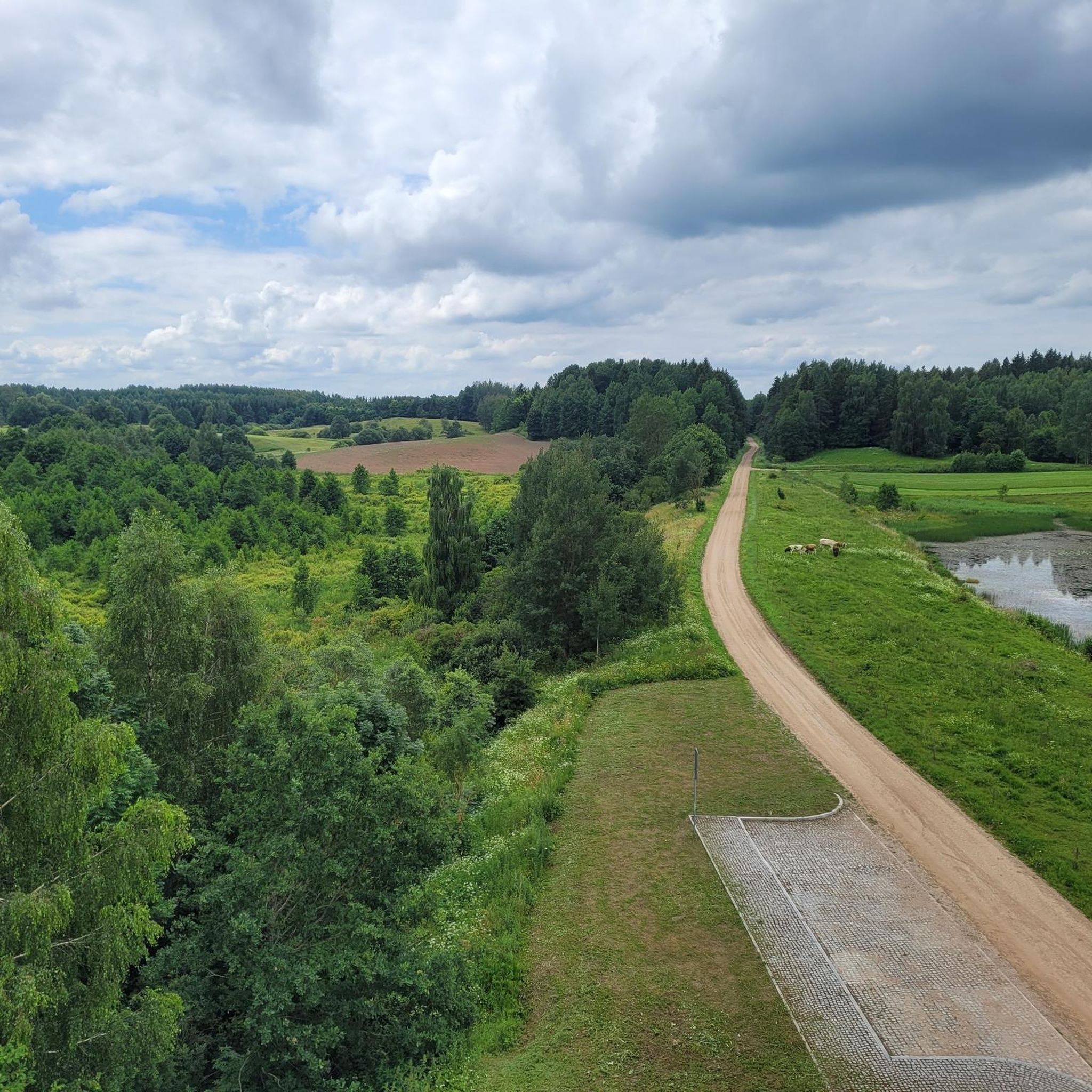
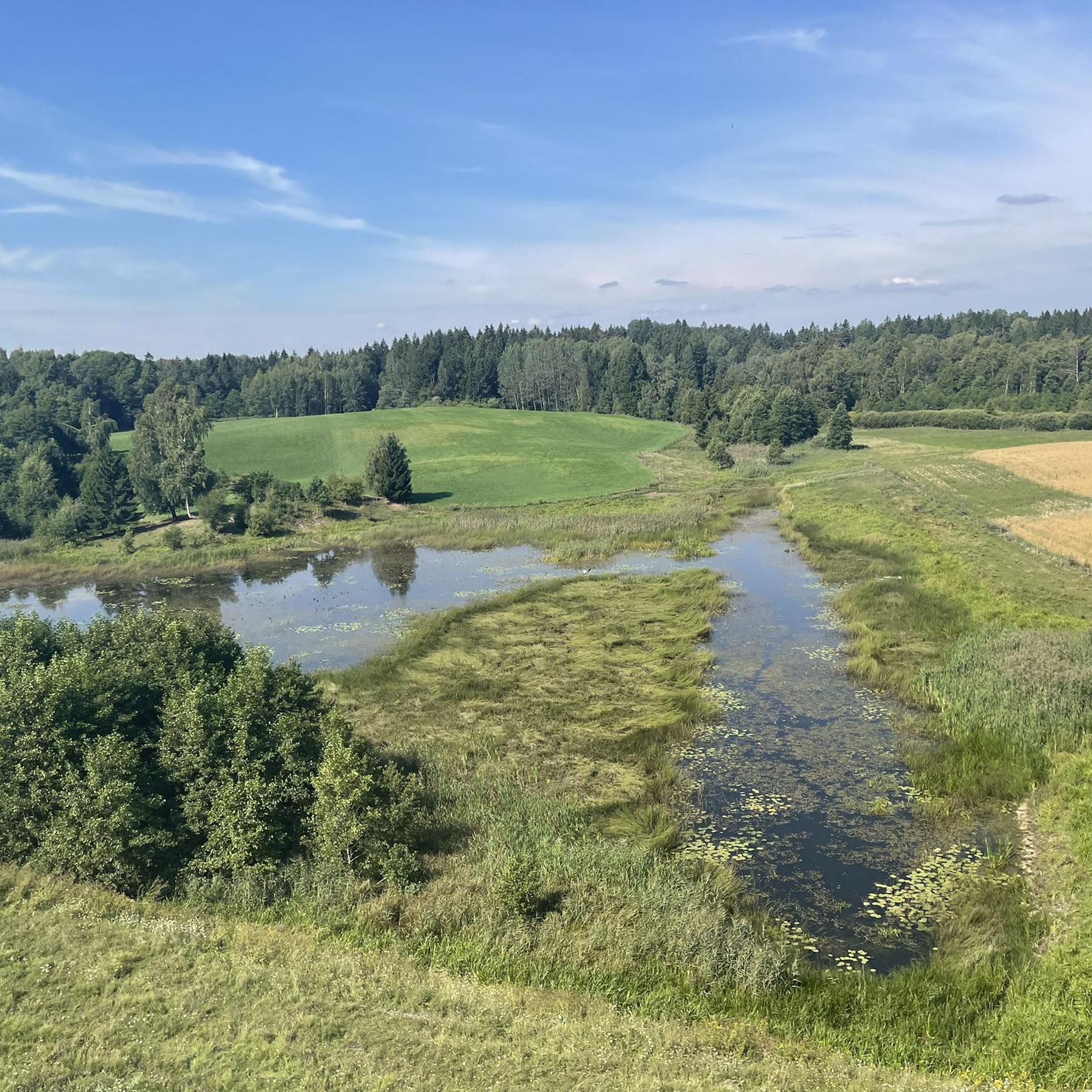
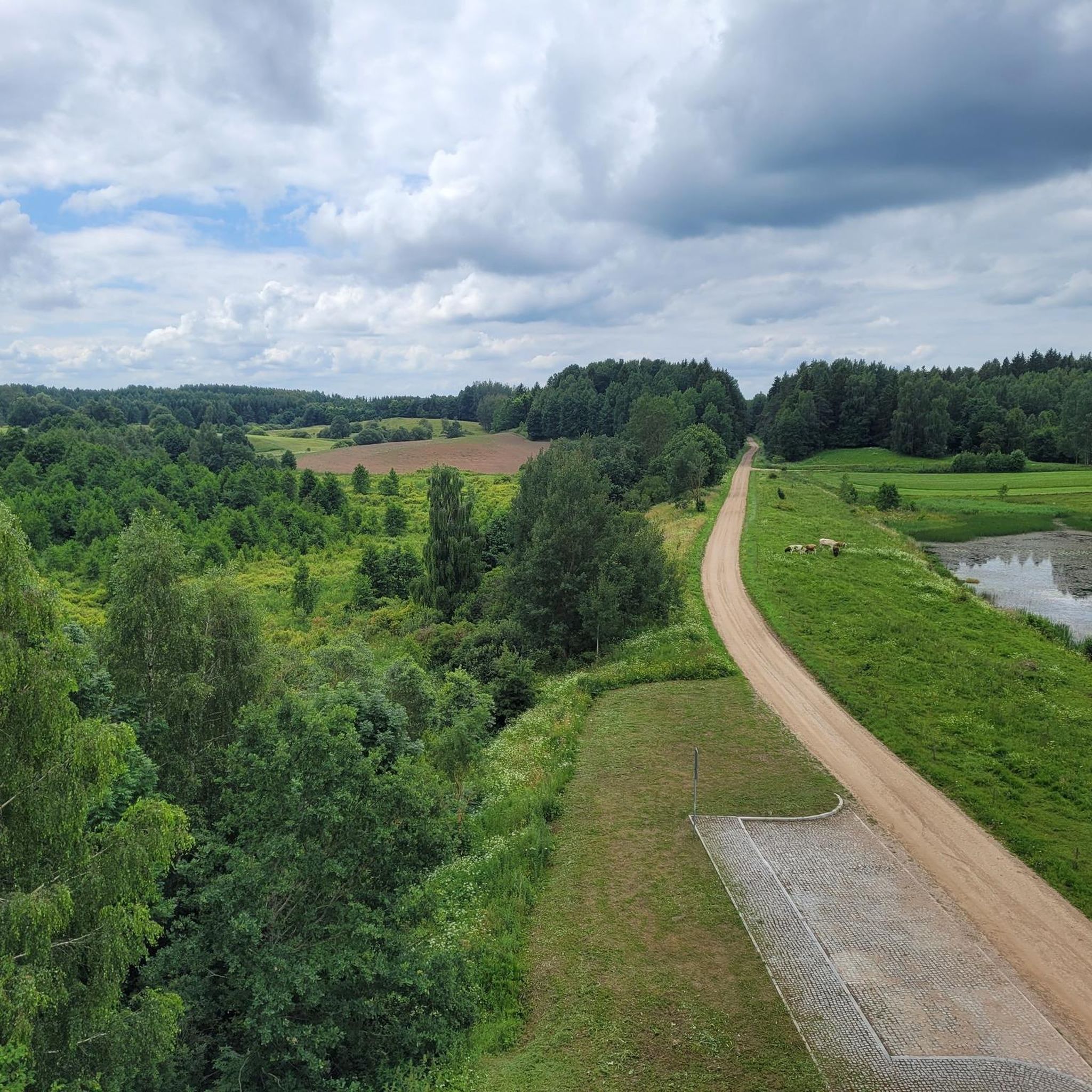
In Stańczyki and in Pobłębie, two 20-meter observation towers have been officially put into use. From the terrace situated at a height of 15 meters above the ground, there are views of the beautiful postglacial landscapes. From the tower in Stańczyki you can see the tombstone lakes of Tobellus, the gorge of the Błędzianki valley and the famous historic railway bridges. From the second tower you can see, among other things, Lake Pobłędzie and the panorama of the Romincka Forest. Parking lots and pavements were built next to the towers. Admission to both towers is free.
traveligo.pl/blog/wieze-widokowe-w-stanczykach-i-w-pobledziu
Translated by Google •
Tip by
Gołdap
Highlight • Settlement
On the slopes of Piękna Góra (better known as Gołdapska Góra) a stone's throw from the town, there are five ski lifts. The town also offers beautiful green spaces. It is ideal for resting.
Translated by Google •
Tip by
Kiepojcie Brick Viaduct
Highlight • Bridge
To find the answer to this question, we need to go back to the times before World War I, or more precisely to 1910. It was in this year that the construction of a railway route through the Romincka Forest began, a route connecting Gołdap with the town of Żytkiejmy. This line was a complement to the route from Chojnice, Królewiec and further to Vilnius. The route was used for both passenger and freight traffic.
Due to the hilly terrain, river valleys, swamps and floodplains, it was necessary to build crossings in critical places along the route. Arched structures set on pillars, secured from above with openwork railings, were chosen. The bridges in Masuria were designed by Italian architects, which is perhaps why they resemble Roman aqueducts so much. However, an interesting fact is that they are the only bridges of this type in Poland.
Brick bridges in Kiepojcie
We return to road 651 and after less than 17 kilometres, in the town of Barcie, according to the sign we head for the next bridges in Masuria, the bridges in Kiepojcie. Travelling along the Masurian gravel roads we come across a single bridge stretched over the road. This is the first bridge in Kiepojcie and a trained eye will immediately notice that it is different from the one stretched over the Jarka River. The bridges in Kiepojcie, as the only ones in Masuria, are made not only of reinforced concrete, but also of red brick. The arches of the bridges are finished with brick, which gives them a unique character.
But that's not all. The real icing on the cake are the double bridges in Kiepojcie. They cross the Bludzia River and are often called "little Stańczyki". To get to them, you have to go up the embankment of the single bridge and head east. After a few minutes, our eyes will see two impressive and 50-meter-long bridges.
robimypodroze.pl/2021/01/mosty-na-mazurach-kolejowe-stanczyki-kiepojcie-i-botkuny
Translated by Google •
Tip by
Stańczyki Railway Viaducts
Highlight • Bridge
These are elements of the inactive infrastructure of the railway line connecting Gołdap with Żytkiejmy. Sometimes called the Romincka Primeval Forest Aqueducts.
Bridges are among the highest in Poland. The structure is 5-span, 180 m long, up to 36.5 m high. The Błędzianka river flows under the buildings. First, the south bridge was built (1912-1914, completed in 1917), and later, in 1918, the north bridge. Both buildings are parallel to each other, and the architecture resembles the Roman aqueducts in Pont du Gard. In the spring of 1917, the construction of the so-called the third transport corridor from Chojnice through Czersk, Smętowo, Kwidzyn, Prabuty, Myślice, Morąg, Orneta, Lidzbark Warmiński, Bartoszyce, Kętrzyn, Węgorzewo, Gołdap, Pobłędzie, Kalwaria to Alytus in Lithuania. Most of the above-mentioned episodes already existed then, so this huge investment boiled down, inter alia, to widen the embankments along the entire route for the second track. Since the construction of the Botkuny-Pobłędzie section until the outbreak of World War I was already quite advanced, it was decided to add twin bridges and new viaducts at the intersections with roads on this route. This investment was not completed by the end of World War I and most of the episodes remained single-track.
In view of the new political situation, it did not make sense to build a main line to Lithuania, so in the 1920s it was decided to complete the construction of the line as a local single-track route 35 km from the Botkuny station, through Dubeninki, Stańczyki, Pobłędzie to Żytkiejm. The track was only laid on one of the bridges, and on October 1, 1927, trains began to run along the entire route. Initially, it consisted of 3 pairs of passenger trains, then a fourth pair was launched on Saturdays and Sundays for tourists visiting the area in large numbers. At that time, anglers, mushroom pickers, and in winter also skiers came to the vicinity of Błędzianka. There were also freight trains on the route, transporting mainly wood from the surrounding forests, and in the 1940s also stones, among others. for the construction of Hitler's Wolf's Lair in Gierłoż. The line was dismantled by the Red Army trophies in 1945.
pl.wikipedia.org/wiki/Mosty_w_Sta%C5%84czykach
Translated by Google •
Tip by
St. Anthony of Padua Church in Banie Mazurskie
Highlight • Religious Site
Translated by Google •
Tip by

WTR Trójstyk Stop
Highlight • Rest Area
Translated by Google •
Tip by

Kiepojcie Viaducts
Highlight • Bridge
A few hundred meters west of the viaduct there is a pair of twin railway bridges over the Bludzia River. The viaducts are very similar to the famous bridges in Stańczyki. The northern spans are made of brick and concrete, the southern bridge is unfinished. The line, originally planned as a local single-track line, was to be expanded in 1917-18 into a double-track main line connecting Chojnice through East Prussia to Vilnius.
The bridge with red brick arches was completed before the outbreak of World War I, while the twin concrete bridge was built in 1918 and due to the approaching end of World War I, the construction of the embankments leading to it was not completed in time.
On the western bank of the river, under the bridges, a road has been preserved, the embankment of which was reinforced with the roots of trees planted for this purpose and marked with stones.
mazury.info.pl/atrakcje/kiepojcie/index.html
Translated by Google •
Tip by

Sign up for free to discover even more attractions around Gołdap.
Sign up for free
Already have an account?
Start today with a free account
Your next adventure awaits.
Login or Signup

Other adventures around Gołdap

Tips from the Community

Actually, a puzzling investment. A viewing tower in the middle of a plain, without particularly interesting views. On the other hand, built with a flourish, a nice resting spot, shelter, maps, etc.
0
0

You have to see it with your own eyes .
0
0

The bridges in Stańczyki, often called the "Aqueducts of the Romincka Forest," are among the highest railway bridges in Poland – 180 meters long and reaching a height of 36.5 meters. Built between 1912 and 1918 in a style reminiscent of Roman aqueducts, they were intended to be part of a major railway line, but the line operated only as a local route until 1945. Today, the tracks no longer exist, and the impressive structures have become a tourist attraction and a bungee jumping site. Situated on the Błędzianka River and surrounded by picturesque scenery, they are a destination for bicycle tours and a good place to rest. Admission to the bridges is charged, but the view and history of the site are definitely worth a visit.
2
0
The observation tower in Pobłędzie is a great stop on a bike trip around the Romincka Forest. The wooden and steel structure with a platform at a height of 15 meters offers views of Lake Pobłędzie and a vast panorama of the forest. The tower is located on a gravel road and on the Green Velo route. Here you will find a cyclist service area with a shelter and toilet.
3
0
The observation tower in Stańczyki is an interesting point on the Green Velo Eastern Cycling Trail. The wooden and steel structure is 20 meters high, and from the platform at a height of 15 meters you can admire the railway bridges in Stańczyki, the Błędzianka Valley and nearby lakes. The tower is accessible all year round and is located right next to an asphalt road, so you can easily get there by bike.
4
0

From the stop there is a pedestrian/bicycle path to the place where the borders of Lithuania, Russia and Poland meet. And quite importantly, there is a toilet with a sink and running water, operating from May 1st to the end of the season, the only inconvenience - the entrance fee is 2 PLN.
0
1

Great view over the beautiful landscape
0
2
It is on the route and a detour to the border is also only a short distance away
0
0
Frequently Asked Questions
What unique historical bridges can I visit around Gołdap?
The region is home to several impressive historical bridges. The most notable are the Stańczyki Bridges, often called the "Aqueducts of the Romincka Forest." These two railway viaducts are among Poland's highest, reaching 36.5 meters. You can also explore the Kiepojcie Brick Viaduct, known for its distinctive red brick arches, and the smaller, hidden Botkuny Railway Bridges over the Jarka River.
Where can I find the best panoramic views of the Gołdap area?
For breathtaking panoramic views, consider visiting the Pobłędzie Observation Tower or the Stańczyki Observation Tower, which offer excellent vistas of the postglacial landscapes. Additionally, the restored Water Tower in Gołdap, dating back to 1905, now houses a café and provides superb views of the city and surrounding forests. Piękna Góra also features a revolving cafe at its summit with panoramic views.
Are there family-friendly activities and attractions in Gołdap?
Yes, Gołdap offers several family-friendly options. Piękna Góra (Beautiful Mountain) is a recreational center with a rope park and a more than one-kilometer-long toboggan run during warmer months. The sandy town beach "Słoneczny Zakątek" on Gołdap Lake provides swimming, a bar, and water equipment rentals. Many of the bridges and observation towers are also suitable for family outings.
What kind of outdoor activities can I do near Gołdap's attractions?
The region is ideal for various outdoor activities. You can find numerous hiking trails, including easy options around the Stańczyki Bridges and Gołdapska Góra. For more ideas, explore the Easy hikes around Gołdap guide. The Romincka Forest offers hundreds of kilometers of walking and cycling trails. Cyclists can also find gravel biking routes, with options ranging from moderate to difficult, as detailed in the Gravel biking around Gołdap guide. Running enthusiasts can check out the Running Trails around Gołdap guide.
Where can I experience the unique natural features of the Gołdap region?
Gołdap is renowned for its natural beauty. The Romincka Forest is an extensive area with old-growth trees and diverse wildlife, perfect for nature lovers. Gołdap Lake is a picturesque border lake with a sandy beach. The Masurian Brine Graduation Tower, the fourth largest in Poland, offers health benefits from its curative waters and a viewing platform. You can also visit the Water Pump Room to taste mineral and medicinal waters.
What historical and cultural sites are there to explore in Gołdap?
Beyond the impressive bridges, you can visit the Lithuania–Poland–Russia Tripoint Monument, a unique obelisk marking the border intersection of three countries. The Gołdap Co-Cathedral, a 16th-century structure, is a significant cultural site. The enigmatic Pyramid in Rapa, located within the Skaliskie Forest, offers a mysterious historical experience. The town's green Market Square with its fountain and bridge is also a pleasant spot.
What makes Gołdap a health resort destination?
Gołdap is the only health resort in the Warmian-Masurian Voivodeship, known for its exceptionally clean air. Key health attractions include the Masurian Brine Graduation Tower, where curative water flows over sloe branches, beneficial for respiratory ailments. The Water Pump Room also provides access to mineral and medicinal waters, and features a salt cave, contributing to the town's spa status.
Can I go skiing or enjoy winter sports in Gołdap?
Yes, Piękna Góra (Beautiful Mountain) transforms into a ski destination during winter. It offers ski lifts and a chairlift, making it a popular spot for winter sports enthusiasts in the region.
What is the best time of year to visit Gołdap for outdoor activities?
The warmer months are generally best for outdoor activities like hiking, cycling, and enjoying the lake and rope park at Piękna Góra. The Romincka Forest is beautiful year-round, but spring and autumn offer pleasant temperatures and vibrant scenery. Winter provides opportunities for skiing and other snow sports at Piękna Góra.
What is the 'Bloodless Safari' and where can I experience it?
The 'Bloodless Safari' is an activity offered in the Piękna Góra area, where participants engage in 'hunting' animals with a camera instead of traditional hunting. It's a unique way to observe and photograph local wildlife in their natural habitat.
Are there any places to rest or have a snack near the attractions?
Yes, several attractions offer facilities. The restored Water Tower in Gołdap houses a café. The WTR Trójstyk Stop near the Tripoint Monument has a nice shelter, benches, and a toilet, perfect for a rest. The town beach on Gołdap Lake also has a bar. For more options, the town of Gołdap itself has various cafes and restaurants.
Most popular routes around Gołdap
Most popular attractions around Gołdap

Get inspired with the komoot mobile app


Didn’t find what you were looking for?
Are you keen on exploring more awesome places nearby? Browse our guides:
Explore more
Still not found the Highlight you’re looking for? See guides of the top attractions in other regions:
