Routes

Planner

Features

Updates

App

Login or Signup

Get the App

Login or Signup

Login or Signup

Routes
Places to see
Poland
Silesian Voivodeship

Tarnowskie

Attractions and Places To See around Tarnowskie - Top 20

Best attractions and places to see around Tarnowskie include a rich mining heritage, significant cultural sites, and natural features. This historic city in Poland's Silesian Voivodeship is particularly renowned for its UNESCO-recognized mining history. The region offers a diverse landscape, from historical landmarks to appealing natural areas like lakes and forests. Tarnowskie provides opportunities for exploring both underground wonders and surface-level points of interest.

Best attractions and places to see around Tarnowskie

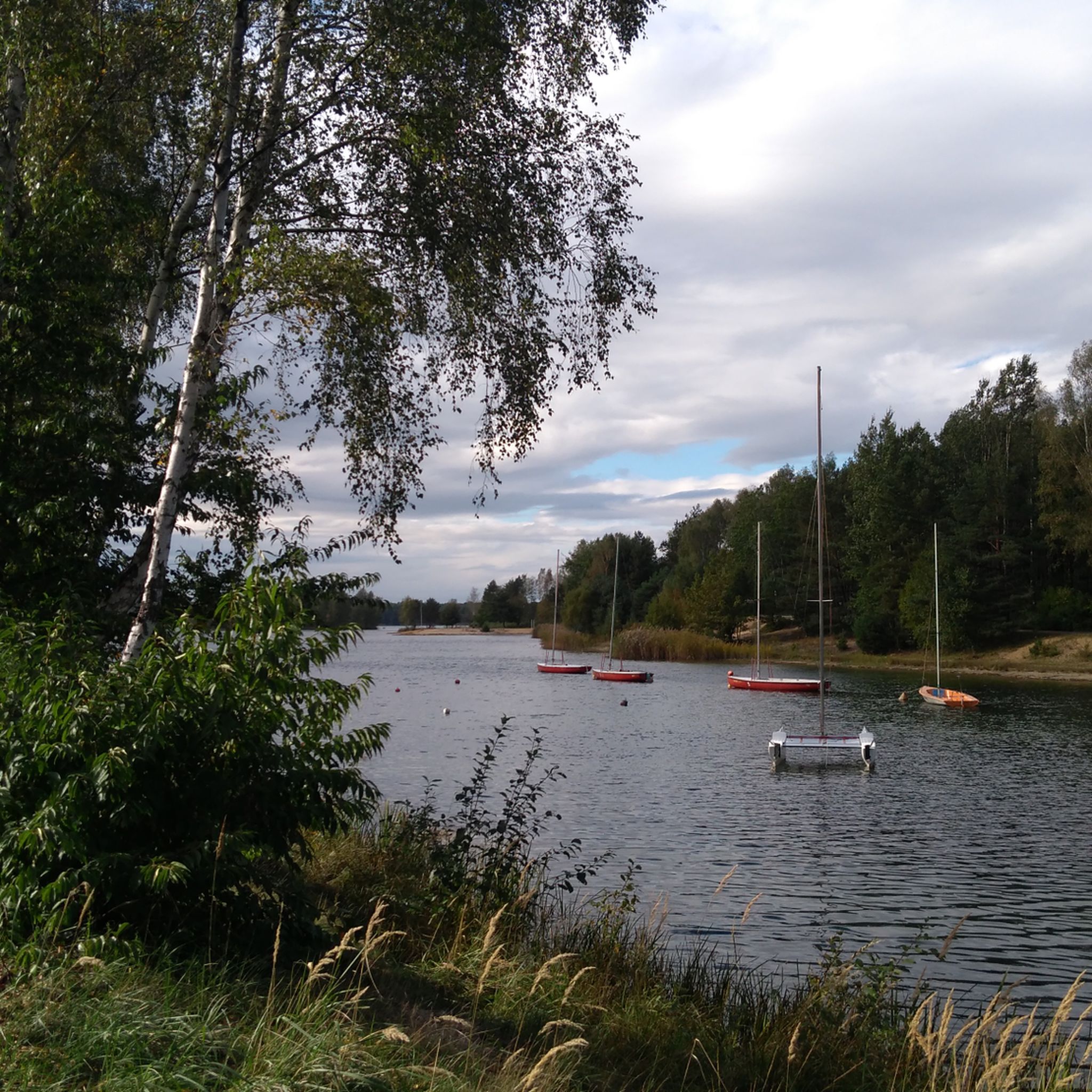
  • The most popular attractions is Lake Chechło, a lake that offers opportunities for walking around its perimeter on an asphalted road or smaller paths. This spot provides pleasant views and is a popular place for recreation.
  • Another must-see spot is Town Hall in Tarnowskie Góry, a man-made monument. This building, constructed between 1896 and 1898 in a Neo-Renaissance-Neo-Gothic style, features an impressive tower and is considered a notable architectural landmark in the city.
  • Visitors also love Sylwester Shaft (Szyb Sylwester), a historical site offering an underground boat trip. This attraction, part of the Industrial Monuments Route, allows visitors to observe small stalactites and original adit sidewalks during a 600-meter journey.
  • Tarnowskie is known for its historical sites, natural features, and man-made monuments. The area offers a variety of attractions to see and explore, from underground mining routes to architectural landmarks and serene lakes.
  • The attractions around Tarnowskie are appreciated by the komoot community, with more than 190 upvotes and over 30 photos shared by visitors.

Last updated: May 4, 2026

Lake Chechło

Highlight • Lake

You can walk around the lake (5-6 km), there is an asphalted road but also small paths and in many places, you can go down to the water. Visited this place in October and it was very quiet, but inhabitants say in the summer the lake is very crowded. There were some cafés and bars around the lake.

Tip by

See rides here

Send to Phone

Save

Kawaler Palace

Highlight • Castle

Świerklaniec is a small town situated in the district of Tarnowskie Góry, in the valley of the Brynica River. The history of the village and the construction of the unique palace and park complex are closely related to the Donnersmarck family. In the 1870s, Count Guido von Donnersmarck built a residence for his wife, which was called "Little Versailles" or "Silesian Versailles". Its designer was Hector Lefuel, the court architect of Napoleon III. The "Little Versailles" delighted with its splendor and technical innovations.
Thinking about the guests visiting the Donnersmarck family, in the years 1903-1906, near the "Little Versailles", another building, enchanting with its taste and modernity, was created, called the Cavalier's Palace. The Cavalier's Palace was equipped with, among others in Istrian marble floors, American "Royal" bathtubs made of one piece of earthenware, paintings by masters, etc. The main reason for its creation was the frequent visits of the Emperor of Germany, Wilhelm II, who came here to hunt. The Knight's Palace in the French neo-baroque style was designed by Ernest von Ihne, architect of Emperor Wilhelm II. The Kawalera Palace was built on a plan similar to a square. The brick facade of the building is made in two colors: red walls and white corners. In the central part of the building there is a representative, oval hall with a marble-mirror staircase. On the front of the palace there is an inscription "Memento vivere" (Remember about life), which was supposed to encourage visiting guests and bachelors (especially) to have fun.
slaskie.travel/poi/3416/palac-kawalera-w-swierklancu

Translated by Google •

Tip by

Save

Sign up now to discover places like this

Get recommendations on the best single tracks, peaks, & plenty of other exciting outdoor places.

Sign up for free

Town Hall in Tarnowskie Góry

Highlight • Monument

The present town hall in Tarnowskie Góry, which can be admired in the southern frontage of the Market Square, was built at the end of the 19th century, when the city was dynamically developing. The plot was purchased in 1894, but construction began two years later. The design was prepared by an architect from Berlin, Hermann Guth. He proposed a magnificent building in the neo-renaissance-neo-gothic style, interestingly very similar to another, realized at the same time, own project - the town hall in Jawor in Lower Silesia. The building was erected in the years 1896-98. Bricks were used for its construction, and for the facade decoration - clinker bricks, Silesian granite and sandstone.
The building has three floors, but a tall tower dominates the body. Numerous turrets, projections topped with gables, balconies and bay windows look impressive. In the front elevation, we can see a stone figure of the goshawk, which replaced the old sculpture of Prince George Hohenzollern. This building is commonly considered the most beautiful (next to Bielsko) town hall in the entire voivodeship. Originally, there were shops on the ground floor of the town hall, the office on the first floor, and the mayor's apartment on the second floor. To this day, the magnificent boarding room of the city council makes a great impression.
slaskie.travel/poi/15865/ratusz-w-tarnowskich-gorach
pl.wikipedia.org/wiki/Ratusz_w_Tarnowskich_G%C3%B3rach

Translated by Google •

Tip by

Save

Gliwice Radio Tower

Highlight • Monument

The tallest wooden radio tower in Europe. The site of the German provocation in 1939, which preceded the outbreak of World War II.

Translated by Google •

Tip by

Save

Sylwester Shaft (Szyb Sylwester)

Highlight • Historical Site

The adit has been open to visitors since 1957. It is one of the attractions of the Industrial Monuments Route of the Silesian Voivodeship. The Black Trout Adit and the underground of the Historic Silver Mine were recognized as a historical monument by the ordinance of the President of the Republic of Poland of April 14, 2004.
The tourist route runs between the shafts "Ewa" (adit shaft no. 13 of the Deep Adit "Fryderyk"; depth 20 m) and "Sylwester" (adit shaft no. 17; depth 30 m). During the trip, which takes place by boat, you can observe the small stalactites that are being formed today and the original parts of the adit sidewalk carved in the dolomite rock.
Visiting the facility begins with going down the winding stairs to the underground marina located in the shafts "Ewa" or "Sylwester" (swing movement). Several dozen meters underground, tourists get into a boat and, under the light of lamps, swim a distance of 600 m - until 2018 the longest underground boat flow in Poland. The guide, pushing the boats away from the side walls, tells about the history of mining in Tarnowskie Góry. Due to the variable terrain profile, the adit is situated at a depth of 20–30 m. The width of the adit ranges from 1.2 to 2.5 m, its height is up to 4 m, and the water depth is from 0.7 to 1 m.
pl.wikipedia.org/wiki/Sztolnia_Czarnego_Pstr%C4%85ga
sztolniapstraga.pl

Translated by Google •

Tip by

Save

The adit has been open to visitors since 1957. It is one of the attractions of the Industrial Monuments Route of the Silesian Voivodeship. The Black Trout Adit and the underground of the Historic Silver Mine were recognized as a historical monument by the ordinance of the President of the Republic of Poland of April 14, 2004.
The tourist route runs between the shafts "Ewa" (adit shaft no. 13 of the Deep Adit "Fryderyk"; depth 20 m) and "Sylwester" (adit shaft no. 17; depth 30 m). During the trip, which takes place by boat, you can observe the small stalactites that are being formed today and the original parts of the adit sidewalk carved in the dolomite rock.
Visiting the facility begins with going down the winding stairs to the underground marina located in the shafts "Ewa" or "Sylwester" (swing movement). Several dozen meters underground, tourists get into a boat and, under the light of lamps, swim a distance of 600 m - until 2018 the longest underground boat flow in Poland. The guide, pushing the boats away from the side walls, tells about the history of mining in Tarnowskie Góry. Due to the variable terrain profile, the adit is situated at a depth of 20–30 m. The width of the adit ranges from 1.2 to 2.5 m, its height is up to 4 m, and the water depth is from 0.7 to 1 m.
pl.wikipedia.org/wiki/Sztolnia_Czarnego_Pstr%C4%85ga
sztolniapstraga.pl

Translated by Google •

Tip by

Save

Castle in Stare Tarnowice

Highlight • Castle

The first knight's seat in Tarnowice (now a district of Tarnowskie Góry) was located in the vicinity of the parish church, where a small hill has been preserved, which is the remnant of the former knight's stronghold - probably the seat of Adam de Tarnowice - the oldest resident of the settlement known by name, mentioned in documents between 1310 and 1351. Later, Tarnowice was ruled by Święcisław, a member of the court of the Duke of Oleśnica, Konrad II, appointed in 1369 as an arbitrator in the dispute over the division of the Duchy of Bytom. The last known knights from Tarnowice are the knight Sambor, mentioned in 1411, and Mikołaj and Teodor Włodków of the Sulima coat of arms, certified in 1415. The seat in the form of a knight's stronghold functioned in the fourteenth and fifteenth centuries and was replaced by a renaissance-style castle built in a new place in the sixteenth century with a courtyard and cloisters. The courtyard, surrounded on three sides, was originally open to the north. The founder of the new foundation was probably the knightly Włodek family or Piotr Wrochem, who owned the property in 1525. The castle was rebuilt many times in the following centuries. Among other things, the cloisters were walled up, the entrance hall was rebuilt, and the northern wing was enlarged.
In 1820, count Karol Łazarz Henckel von Donnersmarck from Świerklaniec bought from Gottlieb von Büttner the castle along with the surrounding goods. Tarnowice goods, including together with the Repecki family, they were transformed by Count Guido into a fideicomis for his younger son Kraft, who inherited them in 1916. However, he did not live in the castle, but chose a new palace built near Rept as his seat.
pl.wikipedia.org/wiki/Zamek_w_Starych_Tarnowicach
komplekszamkowy.pl

Translated by Google •

Tip by

Save

Church of the Nativity of the Blessed Virgin Mary in Szałsza - a historic Catholic church located in Szałsza in the Tarnowskie Góry district in the Silesian Voivodeship.
The first church in Szałsza was built around 1460, the current one comes from 1554, the tower was built after 1571. In the first half of the 17th century, until 1655, the church was a Protestant church, at that time it belonged to the parish in Ziemięcice. After 1655, as a Catholic church, it became a branch of the parish in Szobiszowice. In 1784, destroyed by fire or by a storm, it was rebuilt by the Kytzia family. In the second half of the 19th century, the sacristy was expanded and new ceilings were made. At the beginning of the 20th century, a waste room was built next to the tower. From 1930, the church belongs to the parish of St. John the Baptist in Gliwice-Żerniki. In 1968 a fire destroyed part of the church and it was rebuilt thanks to the efforts of the parishioners. In the years 2008-2010 restoration works were carried out in the church.
pl.wikipedia.org/wiki/Ko%C5%9Bci%C3%B3%C5%82_Narodów_Naj%C5%9Bwi%C4%99tszej_Maryi_Panny_w_Sza%C5%82szy

Translated by Google •

Tip by

Save

Known from the 12th century historical documents, the Piekary settlement, from 1303 had a small wooden church of St. Bartholomew the Apostle, in the Romanesque style. In the side altar there was an image of the Virgin Mary, an unknown author and founder. The genesis of miracles began in the 17th century. The people began to gather in front of the painting more and more often to worship the Mother of God. According to the account of Fr. Pastor Jakub Roczkowski, after the painting was transferred to the main altar in 1659, there were numerous cases of miraculous healings.
In 1676 a plague broke out in Tarnowskie Góry, then pilgrims from the city pray in front of the image of the Mother of God, and when they return, the plague begins to subside. It was the first so-called a "vowed" pilgrimage, in which the whole village made a commitment to make a pilgrimage on a specific day each year as a thank you for the favors received. In 1680 a plague broke out in Prague, then the Austrian Emperor Leopold I Habsburg asked for the painting to be brought back. On March 15, 1680, the painting was transferred through the streets of Prague in a solemn procession. The plague subsided and the Archbishop of Prague, Jan Frederick Waldstein, officially confirmed the miraculousness of the painting. On the way back, the painting stopped in Hradec Králové, where people also suffered from the plague. A year later, the city offered a votive picture to Piekary as a token of gratitude.
On August 20, 1683, King Jan III Sobieski, on his way to Vienna, where he fought a victorious battle with the troops of the vizier Kara Mustafa, wanted to pray in the church in Bakery, where he heard a mass and asked for victory in front of the image of Our Lady.
pl.wikipedia.org/wiki/Bazylika_Naj%C5%9Bwi%C4%99tszej_Marii_Panny_i_%C5%9Bw._Bart%C5%82omieja_w_Piekarach_%C5%9Al%C4%85skich
bazylikapiekary.pl

Translated by Google •

Tip by

Save

Palace in Szałsza

Highlight • Historical Site

Szałsza is a small village located north of Gliwice, on the road to Tarnowskie Góry. And there is a palace that impresses with its beauty and has an extraordinary history.

The first palace in Szałsza was built in the second half of the 18th century. Its baroque building was built for Anna von Winter. In the 1930s, Szałsza and the neighboring Żerniki were bought by Antonia von Groeling.

The Groeling family came from the Duchy of Anhalt and enjoyed nobility for a short time, from 1768. In Upper Silesia, they owned the estates of Pniów, Rudziniec, Zacharzowice and Ligota. In Szałsza they signed up as good hosts. A permanent trace of the Groelings is the palace, located right next to the historic church.

The representative building gained its final shape in the 1870s, during the times of Wiktor von Groeling. It is a two-story palace, built of intensely red brick, on a rectangular plan. Stylistically it refers to the English Tudor Gothic. The decorative turrets, projections and the battlement crowning the building attract attention.
Currently, the building is privately owned and has been beautifully restored. The palace is surrounded by a nice park with many trees - natural monuments. At the wooden church of the Nativity of the Blessed Virgin Mary, there is a tombstone with the names of the Groelings and their coat of arms. There is also a stone cross, funded at the end of the 19th century by one of the family members.
polskieszlaki.pl/palac-w-szalszy.htm

Translated by Google •

Tip by

Save

Sign up for free to discover even more attractions around Tarnowskie.

Sign up for free

Already have an account?

Start today with a free account

Your next adventure awaits.

Login or Signup
Popular around Tarnowskie

Bike Pilgrimage on the Royal Route – St. James' Way via Regia

Cycling around Tarnowskie

Hiking around Tarnowskie

Running Trails around Tarnowskie

Gravel biking around Tarnowskie

Road Cycling Routes around Tarnowskie

MTB Trails around Tarnowskie

Other adventures around Tarnowskie

Bike Pilgrimage on the Royal Route – St. James' Way via Regia

Cycling Collection by

Wandering Cloud

Tips from the Community

Adam Kaczmarek
July 25, 2025, RATUSZ w Tarnowskich Górach

A great landmark on the bike route through the center of Tarnowskie Góry – the town hall with its neo-Renaissance façade and tower, where it is worth taking a break and admiring the architectural details and the historical atmosphere of the city.

Translated by Google

0

0

A beautiful building preserved in excellent condition.

Translated by Google

0

0

An interesting historic site in Tarnowskie Góry

Translated by Google

0

0

A pleasant walk by the lake, I recommend coming during the week, there are a huge number of walkers and cyclists.

Translated by Google

0

0

good place to rest, nice views

Translated by Google

0

0

because it's nice and old and stuff like that

Translated by Google

0

0

Radio transmitter and tower from the 1920s and 1930s. On the eve of World War II, the SS and SD provoked the outbreak of war here. On August 30, the Gestapo arrested the Pole Franciszek Honiok. Honiok was initially detained at the police station in Gliwice. At 8:00 PM on the evening of August 31, the staged attack on the transmitter began. Immediately afterward, Honiok was drugged and taken to the transmitter, where he was shot. Honiok was the first Polish war casualty. Roger Moorhouse, Poland 1939 - The Outbreak of World War II

Translated by Google

2

0

Zibi
October 10, 2024, Gliwice Radio Tower

The tower is the tallest wooden structure in Europe (111 m). Known for the provocation that was to be used as a cause for the outbreak of World War II,

Translated by Google

0

0

Frequently Asked Questions

What are the key historical mining attractions in Tarnowskie Góry?

Tarnowskie Góry is renowned for its UNESCO-recognized mining heritage. You can explore the Sylwester Shaft (Szyb Sylwester), which offers an underground boat trip, allowing you to observe small stalactites and original adit sidewalks. Another significant site is the Black Trout Adit, accessible via the Ewa Shaft (Szyb Ewa), also featuring a unique underground boat journey. These sites are part of the extensive historical mining network beneath the city.

Are there any notable architectural landmarks to visit in Tarnowskie Góry?

Yes, the city boasts several impressive architectural landmarks. The Town Hall in Tarnowskie Góry, built in a Neo-Renaissance-Neo-Gothic style, is a prominent feature of the Market Square. Nearby, in Świerklaniec, you can find the Kawaler Palace, an elegant French neo-baroque building originally intended for guests like Emperor Wilhelm II.

What natural attractions can I find around Tarnowskie Góry?

For nature lovers, Lake Chechło offers pleasant walks around its perimeter on asphalted roads or smaller paths, providing scenic views. The Segiet Forest Reserve, known for its beautiful beechwood, is ideal for cycling and walking. The Tarnowskie Góry Ridge also features forested areas and post-industrial landscapes that are part of the Natura 2000 program.

Are there family-friendly activities or attractions in the area?

Many attractions around Tarnowskie Góry are suitable for families. The underground boat trips at the mining sites like Sylwester Shaft offer a unique adventure. Natural spots like Lake Chechło are great for leisurely strolls. Additionally, the Sport Valley offers a ski slope and walking paths, and there's a popular water park, Park Wodny Tarnowskie Góry, for aquatic fun.

What kind of outdoor activities, like cycling or hiking, are available near Tarnowskie Góry?

The region around Tarnowskie Góry is excellent for outdoor enthusiasts. You can find various routes for mountain biking, road cycling, and gravel biking. For example, there are challenging MTB trails like the 'Segiet Nature Reserve – Popłuczki Spoil Heap loop' and scenic road cycling routes such as the 'Wooden Church in Poland – Rest Area with Gazebo loop'. You can explore more options on the dedicated guides for MTB Trails, Road Cycling Routes, and Gravel Biking around Tarnowskie.

Where can I learn more about the history and culture of Tarnowskie Góry?

The Tarnowskie Góry Museum, located in the historic Sedlaczek House on the Old Town Square, is an excellent place to delve into the town's history, art, ethnography, and extensive mining heritage. Additionally, the Tarnowskie Góry Cultural Centre (TCK) hosts a wide range of events including movies, music, and theater, offering a glimpse into the local cultural scene.

Are there any historic churches or religious buildings worth visiting?

Yes, the area features several historic religious buildings. The 17th-century Lutheran church on the north side of the Market Square and the 16th-century Saints Peter and Paul church (later re-fashioned as neo-Romanesque) are notable. Further afield, the Church of the Nativity of the Blessed Virgin Mary in Szałsza, with parts dating back to the 15th century, offers a rich history.

What do visitors particularly enjoy about the attractions in Tarnowskie Góry?

Visitors frequently praise the unique experience of the underground mining tours, highlighting the historical insight and the adventurous boat rides. The natural beauty of Lake Chechło is appreciated for its peaceful atmosphere and scenic walks. The architectural details of the Town Hall and the grandeur of the Kawaler Palace also receive positive remarks for their beauty and historical significance.

Can I visit a castle in the vicinity of Tarnowskie Góry?

Yes, you can visit the Castle in Stare Tarnowice. This historical site offers a glimpse into the region's past and is a good option for those interested in medieval architecture and local history.

What is the best time of year to visit Tarnowskie Góry?

Tarnowskie Góry offers attractions year-round. The underground mining sites maintain a consistent cool temperature, making them suitable for visits in any season. For outdoor activities like cycling and walking around Lake Chechło or in the Segiet Forest Reserve, spring, summer, and early autumn provide the most pleasant weather. Winter can be charming for exploring the city's historical sites and potentially for activities at Sport Valley.

Are there any unique natural features related to the mining history?

Beyond the underground mines, the region's mining past has shaped its landscape. The Gwarków Gate (Miner's Gate), a UNESCO-listed site, is a unique mining portal from 1834 where water from the Deep Fryderyk Adit flows out into the Drama River. The Tarnowskie Góry Ridge also includes post-industrial areas that have become important habitats, particularly for bats, as part of the Natura 2000 program.

Most popular routes around Tarnowskie

Traffic-free bike rides around Tarnowskie

Most popular attractions around Tarnowskie

Lakes

Store rating

Get inspired with the komoot mobile app

With a free komoot account, you can easily find, customize, and navigate endless outdoor adventures.

or

Join komoot Now

Store rating

Didn’t find what you were looking for?

Are you keen on exploring more awesome places nearby? Browse our guides:

Zalew Nakło-ChechłoTworógŚwierklaniecZbrosławiceRadzionkówTarnowskie GóryLas WymysłowskiMiasteczko Śląskie

Nearby adventure guides

Things to Do around Tarnowskie Góry

background

Get ready to conquer new peaks

Sign up for Free

Explore
RoutesRoute plannerFeaturesHikesMTB TrailsRoad cycling routesBikepackingSitemap
Download the app
Follow Us on Socials

© komoot GmbH

Privacy Policy