Attractions and Places To See around Gliwice City - Top 20
Attractions and places to see around Gliwice City offer a blend of historical landmarks, cultural sites, and natural spaces in Upper Silesia, Poland. The city features a medieval Old Town, unique architectural structures, and green areas. Visitors can explore sites ranging from historical monuments to modern cultural institutions. Gliwice provides diverse points of interest for those seeking to understand its past and present.
Best attractions and places to see around Gliwice City
- The most popular attractions is Gliwice Market Square, a historical site that retains its medieval layout. In the center of the square, there is a town hall and a Neptune fountain.
- Another must-see spot is Wooden Church in Żernica, a religious building. This 17th-century church features a baroque main altar and unique 17th-century polychromes covering its walls and ceiling.
- Visitors also love Gliwice-Trynek Airfield, an other man-made historical site. This non-certified civil public airport has roots dating back to 1916.
- Gliwice City is known for its historical sites, religious buildings, and man-made monuments. The area offers a variety of attractions to see and explore, including museums, parks, and unique architectural structures.
- The attractions around Gliwice City are appreciated by the komoot community, with more than 230 upvotes and over 80 photos shared.
Last updated: July 15, 2026
Gliwice Market Square
Highlight • Historical Site
Showing Translation
Tip by

Wooden Church in Żernica
Highlight • Religious Site
Translated by Google •
Tip by

Sign up now to discover places like this
Get recommendations on the best single tracks, peaks, & plenty of other exciting outdoor places.
Sign up for free
Gliwice-Trynek Airfield
Highlight • Structure
Already in 1916, on the orders of the military authorities, the first airport was built in the present place. It was built in the fields towards Boykowo, to which electricity and a railway line were connected. It occupied an area of about 117 ha. Eight aircraft halls were built there, including 2 metal hangars, an engine control station and an administration building. Later, buildings such as an officers' casino, a staff building, apartments for service staff and rooms for an aviation school were built.
By virtue of the decisions of the Versailles Conference, all facilities at this airport were to be razed to the ground, and the area turned over for agricultural purposes.
pl.wikipedia.org/wiki/Lotnisko_Gliwice-Trynek
aeroklub.gliwice.pl
Translated by Google •
Tip by

MiG-21 Monument in Gliwice
Highlight • Monument
Translated by Google •
Tip by
Gliwice Palm House
Highlight • Structure
As a child, I visited this beautiful place regularly. The Palm House building is a modern architectural construction with a usable area of 2000 m2. More than 5600 plants grow in it, and the oldest specimens are over 140 years old.
The Palm House is divided into five thematic pavilions - the fifth, aquarium, was put into use in 2012 [1]. In the first four, in addition to exotic plants, there are also terrariums with reptiles, aquariums with turtles and rays, cages with exotic parrots and canaries. In front of the main entrance are sculptures of Lions lying.
Translated by Google •
Tip by

PIAST GLIWICE Stadium
Highlight • Structure
After the incorporation of Gliwice to Poland in 1945, the construction team (also known as Lechia) first settled there. In 1956, after the merger of three clubs (Sparta with KS Hutnik and KS Budowlani), GKS (Gliwice Sports Club) was established. In 1964, GKS Hutnik merged with SKS "Piast", as a result of which the Gliwice Sports Club "Piast" was established, which played matches not only at Okrzei, but also at the 20th anniversary stadium.
There are 9,913 seats at the stadium (including 40 seats for disabled people and their guardians, 192 seats in the VIP area, 30 seats for commentators and 50 for the press).
pl.wikipedia.org/wiki/Stadion_Miejski_w_Gliwicach
piast-gliwice.eu
Translated by Google •
Tip by
Brine Graduation Tower in the Municipal Forest in Gliwice
Highlight • Monument
Translated by Google •
Tip by

St. Bartholomew's Church (13th Century)
Highlight • Religious Site
Translated by Google •
Tip by

Former Narrow-Gauge Railway Station in Nieborowice
Highlight • Historical Site
Translated by Google •
Tip by
Silesian University of Technology in Gliwice
Highlight • Structure
pl.wikipedia.org/wiki/Politechnika_%C5%9Al%C4%85ska
Translated by Google •
Tip by
Sign up for free to discover even more attractions around Gliwice City.
Sign up for free
Already have an account?
Start today with a free account
Your next adventure awaits.
Login or Signup

Tips from the Community


The first mention of Szobiszowice (Petersdorf) dates back to 1276; it was then a separate knight's village. At the end of the 13th century, a parish already existed, considered one of the oldest in Upper Silesia. Information about the parish appears in a document dated September 17, 1297, drawn up by its first parish priest. The exact date of the construction of the old church is unknown. There are unconfirmed hypotheses that the church was built by the Order of the Poor Knights of Christ and of the Temple of Solomon (Templars), which allegedly took place in 1232. The church was probably originally built of wood. It is assumed that the current stone one was built after the reconstruction of a previous one, which took place in the 15th century. Archaeological research conducted in 1973 indicates that the church's chancel is older and dates from the turn of the 12th and 13th centuries. As a result of the reconstruction in 1447, a rectangular nave was added to the chancel. In 1623, the suburban buildings, along with the church, were burned down in preparation for the defense of the city against the Danish troops of General Ernst von Mansfeld. When rebuilding the church after the destruction (after 1626), a tower was added to the nave and the chancel vault was changed. On August 25, 1683, the baptism of Bartłomiej, son of a soldier from the army of King John III Sobieski, who was passing through the city at the time, took place in the church. Until 1843, a cemetery operated around the church. On April 28, 1850, a newly built organ was consecrated in the church. The instrument was made by Johann Mathias Vinzenz Haas from Baborów (German: Bauerwitz).
0
0

Very interesting architecture. There are several similar wooden churches in Silesia.
0
0


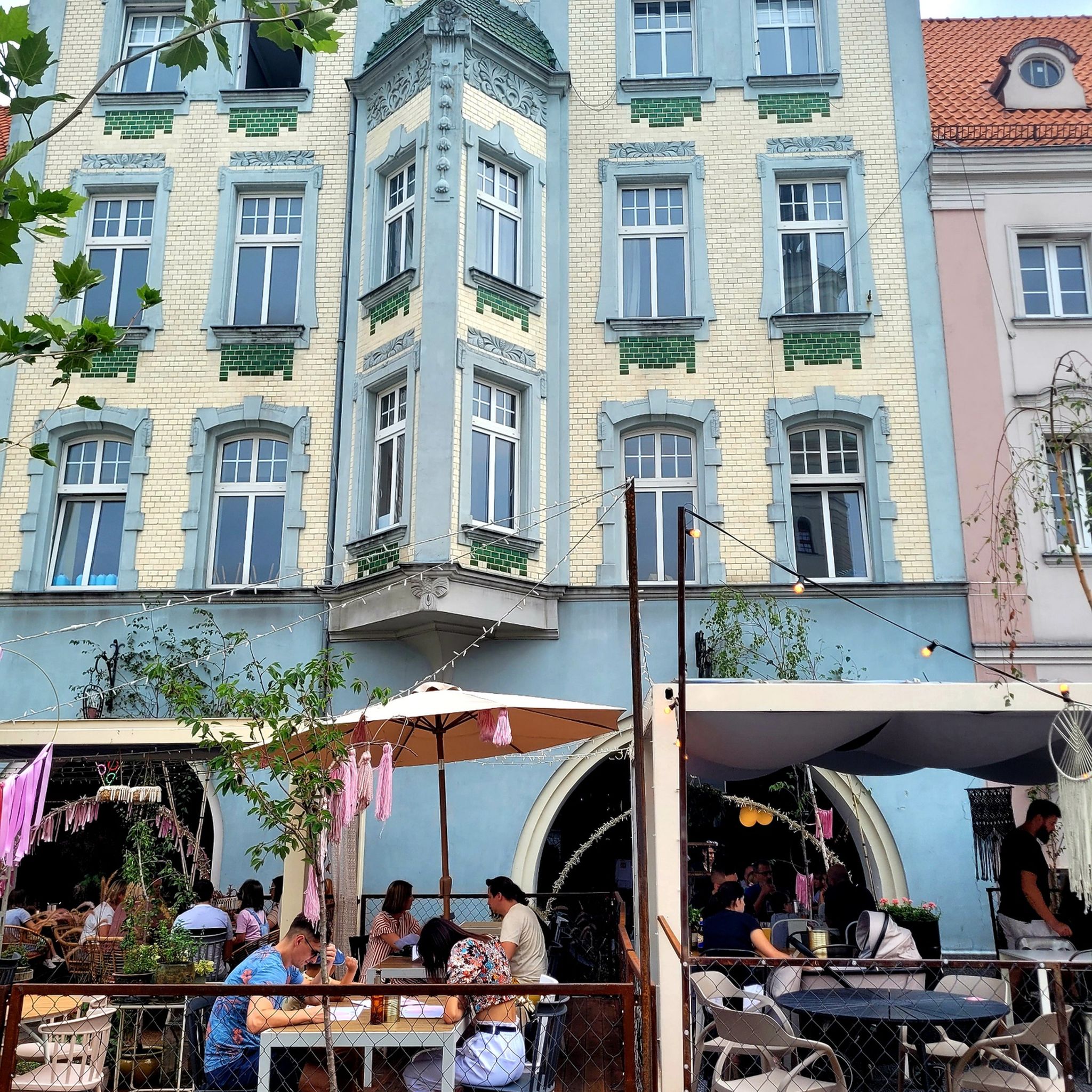
Rectangular square dating back to the 14th century. The town hall building dates back to the 1st century. The square survived World War II largely unscathed, but was destroyed by the Red Army after the war. Reconstruction took place in the following years.
2
0

Opening hours of the Municipal Palm House: Tuesday to Friday 9 a.m. to 6 p.m. Saturdays and Sundays 10 a.m. to 6 p.m. Book excursions: 9 a.m. to 6 p.m. by calling 32 231 32 39 and palmiarnia.powiedzacje@mzuk.pl The Palm House is closed on Mondays
2
0

The facility is accessible to external visitors.
0
0
Historical records say that the church was built in the 13th century by the Templars.
0
0
Frequently Asked Questions
What historical sites can I explore in Gliwice City?
Gliwice is rich in history. You can visit the Gliwice Market Square, the city's medieval heart with its Town Hall and Neptune Fountain. Other significant historical sites include the Wooden Church in Żernica, a 17th-century religious building with unique polychromes, and the Gliwice-Trynek Airfield, which has roots dating back to 1916. Don't miss the Villa Caro – Gliwice Museum, a historic 19th-century mansion now housing museum departments, or the Piast Castle, which hosts archaeological and historical exhibitions.
Are there any family-friendly attractions in Gliwice City?
Yes, Gliwice offers several attractions suitable for families. The Gliwice Palm House in Chopin Park is a year-round green oasis with exotic plants and aquariums. The Gliwice Market Square is a pleasant area for a stroll, and the MiG-21 Monument in Gliwice can be an interesting stop for children. Additionally, the Kolejkowo Gliwice, a large miniature railway model, and Funzeum, an interactive museum and amusement park, are popular choices for families.
What natural features or green spaces can I find in Gliwice?
Gliwice boasts several green spaces and natural attractions. The Gliwice Palm House is a prominent feature, surrounded by the pleasant Chopin Park. Other parks like Chrobry Park offer space for relaxation and outdoor activities. For a unique experience, visit the Brine Graduation Tower in the Municipal Forest in Gliwice, which provides health benefits through its microclimate. Lake Dzierżno Duże is also a great spot where nature meets the industrial past, perfect for relaxation.
What cultural attractions are available in Gliwice?
Beyond historical sites, Gliwice has a vibrant cultural scene. The Villa Caro – Gliwice Museum offers insights into the city's history and art. The Museum in Gliwice, primarily housed within the Piast Castle, showcases archaeological findings. For a unique cultural experience, the Artistic Casting Museum documents the history of metal processing in Silesia, located in a spectacular 19th-century production hall.
Are there any unique architectural landmarks in Gliwice?
Absolutely. The Gliwice Radio Station, often called the 'Silesian Eiffel Tower,' is a 111-meter tall wooden structure with significant historical importance. The Gliwice Market Square is surrounded by beautiful tenement houses and features the neoclassical Town Hall. The Sts. Peter and Paul Cathedral, a stunning Neo-Gothic church, and the Gothic All Saints Church from the 15th century are also architectural highlights.
What outdoor activities can I do near Gliwice City attractions?
You can enjoy various outdoor activities around Gliwice. For cycling enthusiasts, there are numerous road cycling routes, such as the 'Tracing the castles and palaces of Silesia' or the 'Gliwice Market Square – Forest Road loop'. Mountain biking trails are also available, including routes around Pławniowice Lake. If you prefer hiking, explore easy hikes like the 'Graduation Tower – Old Water Tower Gliwice loop'. You can find more details on these routes in the Road Cycling Routes around Gliwice City, MTB Trails around Gliwice City, and Easy hikes around Gliwice City guides.
Are there easy hiking trails suitable for beginners near Gliwice attractions?
Yes, there are several easy hiking trails around Gliwice. For instance, you can try the 'Graduation Tower – Old Water Tower Gliwice loop' which is about 7.4 km, or a shorter 'Graduation Tower loop' of approximately 5 km. Another easy option is the 'Villa Caro – Gliwice Museum – Gliwice Sister Cities Signpost loop' which is just over 1 km. These trails are perfect for a leisurely walk and can be found in the Easy hikes around Gliwice City guide.
What do visitors enjoy most about Gliwice City?
Visitors appreciate Gliwice for its blend of historical charm and modern amenities. The Gliwice Market Square is often highlighted for its lively atmosphere and numerous restaurants. The unique architecture, such as the wooden radio tower and the historic tenement houses, also leaves a strong impression. Many enjoy the peaceful green spaces like Chopin Park and the exotic plants at the Gliwice Palm House.
Is Gliwice accessible by public transport, and are attractions wheelchair-friendly?
Gliwice has a well-connected public transport system, with the Gliwice train station serving as a key hub. Many central attractions, including the Gliwice Market Square, are noted as wheelchair-accessible. The Brine Graduation Tower in the Municipal Forest and the PIAST GLIWICE Stadium also offer wheelchair accessibility, making many parts of the city welcoming for all visitors.
Where can I see monuments related to Gliwice's past?
Gliwice features several monuments reflecting its rich history. The MiG-21 Monument in Gliwice commemorates a significant aircraft. The partially preserved Defensive Walls of Gliwice offer a glimpse into the city's medieval fortifications. You can also find historical significance in structures like the Gliwice train station, which dates back to 1845, and the Former Narrow-Gauge Railway Station in Nieborowice.
What is the best time of year to visit Gliwice attractions?
Gliwice can be enjoyed year-round, but the spring and summer months (May to September) are ideal for exploring outdoor attractions, parks, and enjoying the lively atmosphere of the Market Square. During these months, the weather is pleasant for walking and cycling. The Gliwice Palm House is a great indoor option that can be visited comfortably in any season.
Most popular routes around Gliwice City

Get inspired with the komoot mobile app


Explore more
Still not found the Highlight you’re looking for? See guides of the top attractions in other regions:
