Attractions and Places To See around powiat żagański - Top 20
Best attractions and places to see around powiat żagański, located in western Poland, offer a diverse range of experiences. This region is characterized by its historical landmarks, natural beauty, and cultural sites. Visitors can explore grand palaces, significant wartime memorials, ancient fortifications, and scenic routes, making it a destination for those interested in history and outdoor activities.
Best attractions and places to see around powiat żagański
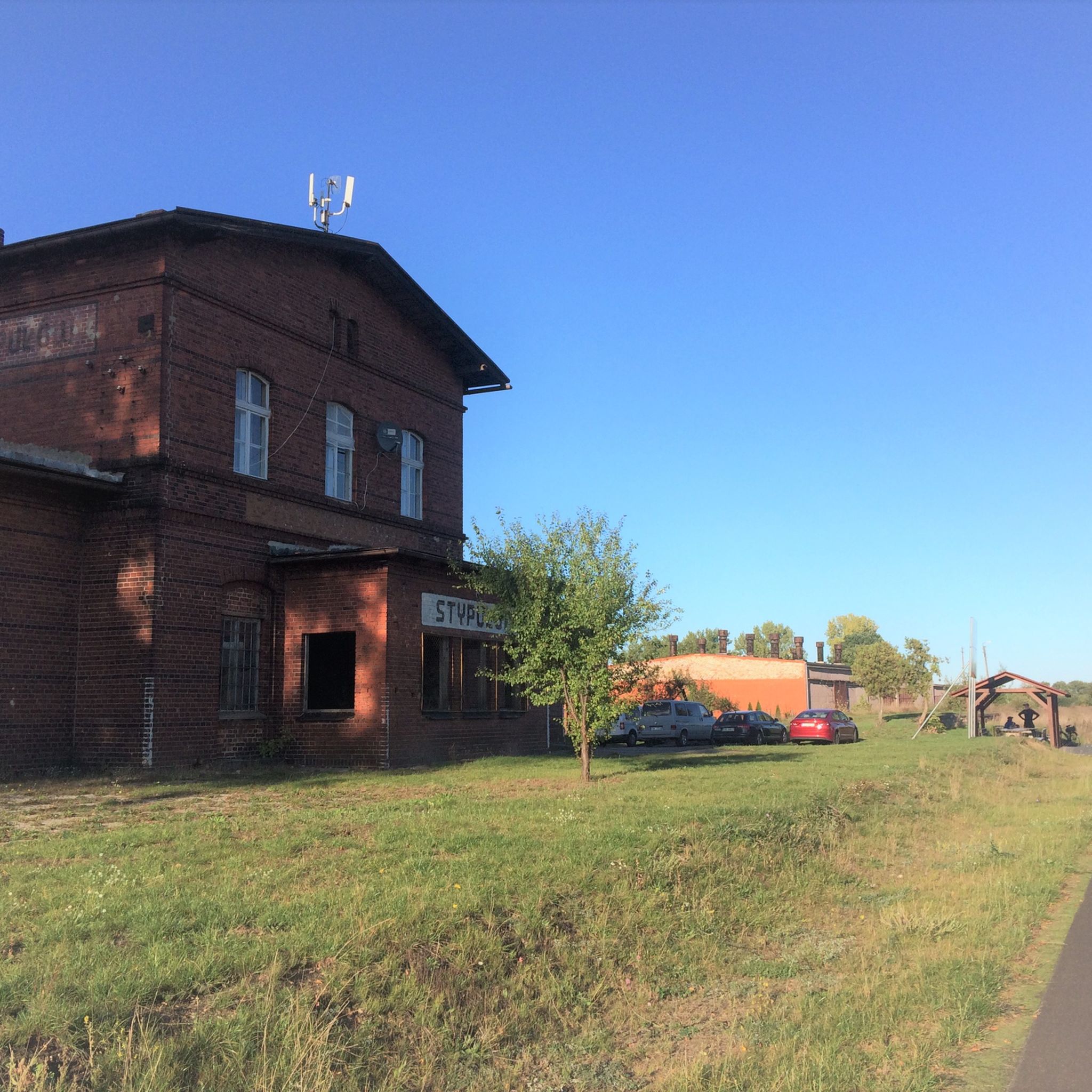
- The most popular attractions is Stypułów Train Station, a facilities highlight that serves as a convenient starting point for cycling routes. It features a small resting place with a carport and table, ideal for breaks.
- Another must-see spot is Iłowa Palace and Park, a historic castle complex. Originally a late Renaissance palace, it was redesigned in Baroque style and features a unique park inspired by a trip to Asia, including Japanese and Chinese gardens.
- Visitors also love Rudno–Stypułów Rail Trail, a very nice railway cycle path with great asphalt. This trail offers a smooth ride on a former railway line, connecting several towns.
- powiat żagański is known for its historical sites, scenic cycling routes, and impressive palaces. The area provides a variety of attractions to see and explore, from ancient ruins to renovated parks.
- The attractions around powiat żagański are appreciated by the komoot community, with 16 upvotes and 23 photos shared by visitors, highlighting the appeal of these locations.
Last updated: July 15, 2026
Iłowa Palace and Park
Highlight • Castle
From 1682 the barons of Promnitz were the owners, who redesigned the palace in Baroque style in 1712 and had a west wing added in 1720. After several changes of ownership, the castle was among other things. owned by von Kospoth, von der Recke and von Holleben. From 1902 Friedrich Maximilian von Hochberg was the owner, who in 1905 had the castle redesigned according to a design by Robert Weber. The central tower was given an onion helmet, the facade was redesigned in neo-baroque style, a reinforced concrete vestibule was placed in front of the portal, and the west wing was given an annex to the ballroom.
Inspired by a trip to Asia, Friedrich Maximilian von Hochberg had the garden redesigned with several partial gardens. A Japanese garden with small watercourses and bridges between islets was laid out on an island in the Tschirne. From the castle to the west, the Chinese garden extends as a further partial garden, bounded by two backdrop-like clinker walls on a curved floor plan with round and oval window openings, which are intended to be reminiscent of Chinese moon gates. A path leads to the border of the garden, where a staircase and pagoda architecture crosses a street as a pedestrian bridge. Another area was the rose garden enclosed by an ornamental wall. From 1919 the von Alvensleben were the owners. Today the palace park has been extensively renovated. Source: Wikipedia Castle and castle park are accessible.
Translated by Google •
Tip by

Velo Sprotavia Cycling Route
Highlight (Segment) • Cycleway
Translated by Google •
Tip by

Sign up now to discover places like this
Get recommendations on the best single tracks, peaks, & plenty of other exciting outdoor places.
Sign up for free
Chotków Church
Highlight • Religious Site
The beautiful 13th-century entrance portal on the south side is particularly noteworthy. It was made of sandstone, is pointed-arched, with profiled ledges, and has columns in the corners.
The whole is surrounded by a brick fence, probably from the 15th century.
Showing Translation
Tip by

Dulag Kunau – Prisoner of War Transit Camp Memorial
Highlight • Historical Site
Individual stalags were marked with a Roman number corresponding to the military district in which the camp was located (in the case of Żagań, it was the 8th Military District of the Wehrmacht) and the next letter of the Arabic alphabet (for example: Stalag VIII A Görlitz, Stalag VIII B Lamsdorf/Łambinowice, Stalag VIII C Sagan etc.). About 8,000 prisoners were transferred from Dulag Kunau to Żagań and immediately set to work building barracks. Work at the Sagan camp began in October 1939.
Translated by Google •
Tip by

St. Dorothea Hospital Complex
Highlight • Historical Site
The foundation stone for the construction of the hospital complex was laid on May 3, 1851, and the facility was put into use in 1859. Source: urzadmiasta.zagan.pl/de/turystyka/zabytki/zespol-szpitalny-sw-doroty
Translated by Google •
Tip by
Żagań Palace
Highlight • Castle
After a fire, this system was rebuilt for Duke Georg von Sachsen as an irregular four-wing system. After 1549 the castle was owned by the Habsburgs, who enfeoffed the von Promnitz with the rule. In 1627 the duchy was sold to Albrecht von Wallenstein by Emperor Ferdinand II. After his order, a four-wing new building was built under the direction of Vicenzo Boccacci using two existing castle wings, which is considered to be the first building of the early Baroque in Silesia. After Wallenstein's murder, the buildings were stopped.
From 1646 Wenzel Eusebius von Lobkowicz was enfeoffed with the rule, who commissioned Antonio della Porta to complete the building with slight changes to the original plan. Wenzel Eusebius' grandson Philipp had the interior work done. From 1786, Duke Peter Biron von Kurland was in possession of the rulership, and had the interior of the palace redesigned in a classicist style. with stucco ceilings based on designs by Christian Valentin Schultze. Duke Peter also had an important art collection built. His daughter Louise Pauline had a chapel built in the east wing in 1839 according to plans by Leonhard Dorst von Schatzberg. Via the youngest daughter of Duke Peters, Dorothea von Sagan, the castle came to the Talleyrand-Périgord, who owned the castle even after the communist takeover of the region. However, when the Red Army moved in and in the late 1940s, the castle was completely looted. After repairs from 1965 to 1983, the castle serves as the city's cultural center. Source: Wikipedia
Translated by Google •
Tip by
Jelenin Palace Ruins
Highlight • Historical Site
Translated by Google •
Tip by

Iłowa Castle Park (Halbau)
Highlight • Historical Site
Translated by Google •
Tip by

Rudno–Stypułów Rail Trail
Highlight (Segment) • Cycleway
More info: kolejnarower.pl
Translated by Google •
Tip by

Wiechlice Palace
Highlight • Castle
Translated by Google •
Tip by
Sign up for free to discover even more attractions around powiat żagański.
Sign up for free
Already have an account?
Start today with a free account
Your next adventure awaits.
Login or Signup

Tips from the Community

The temple was erected at the end of the 13th century from erratic boulders, in the early Gothic style. The first written information about it dates back to 1376. In the 15th century, the church was extended, and in the 16th century, a tower was added, somewhat unusually, from the south side. During the Baroque period, a sacristy was added and the window openings were given a new form (the outline of pointed arch window openings can still be seen on the outer walls). The beautiful 13th-century entrance portal on the south side deserves special attention. It was made of sandstone, is pointed-arched, with profiled offsets, and has columns in the corners. The whole is surrounded by a brick fence, probably from the 15th century.
0
0
The temple was erected at the end of the 13th century from erratic boulders, in the early Gothic style. The first written information about it dates back to 1376. In the 15th century, the church was extended, and in the 16th century, a tower was added, somewhat unusually, from the south side. In the Baroque period, the sacristy was added and the window openings were given a new form (the outlines of pointed-arch window openings can still be seen on the outer walls). The beautiful 13th-century entrance portal on the south side is particularly noteworthy. It was made of sandstone, is pointed-arched, with profiled ledges, and has columns in the corners. The whole is surrounded by a brick fence, probably from the 15th century.
0
0

Unfortunately, this cycle path is not completely finished. The final layer of asphalt over the concrete slabs is missing. The cycle path is apparently rarely cleared and cleaned, which means that you have to cycle very slowly in some sections. The connection to the cycle path at the former Stypułów train station leads along an unpaved gravel road.
0
0
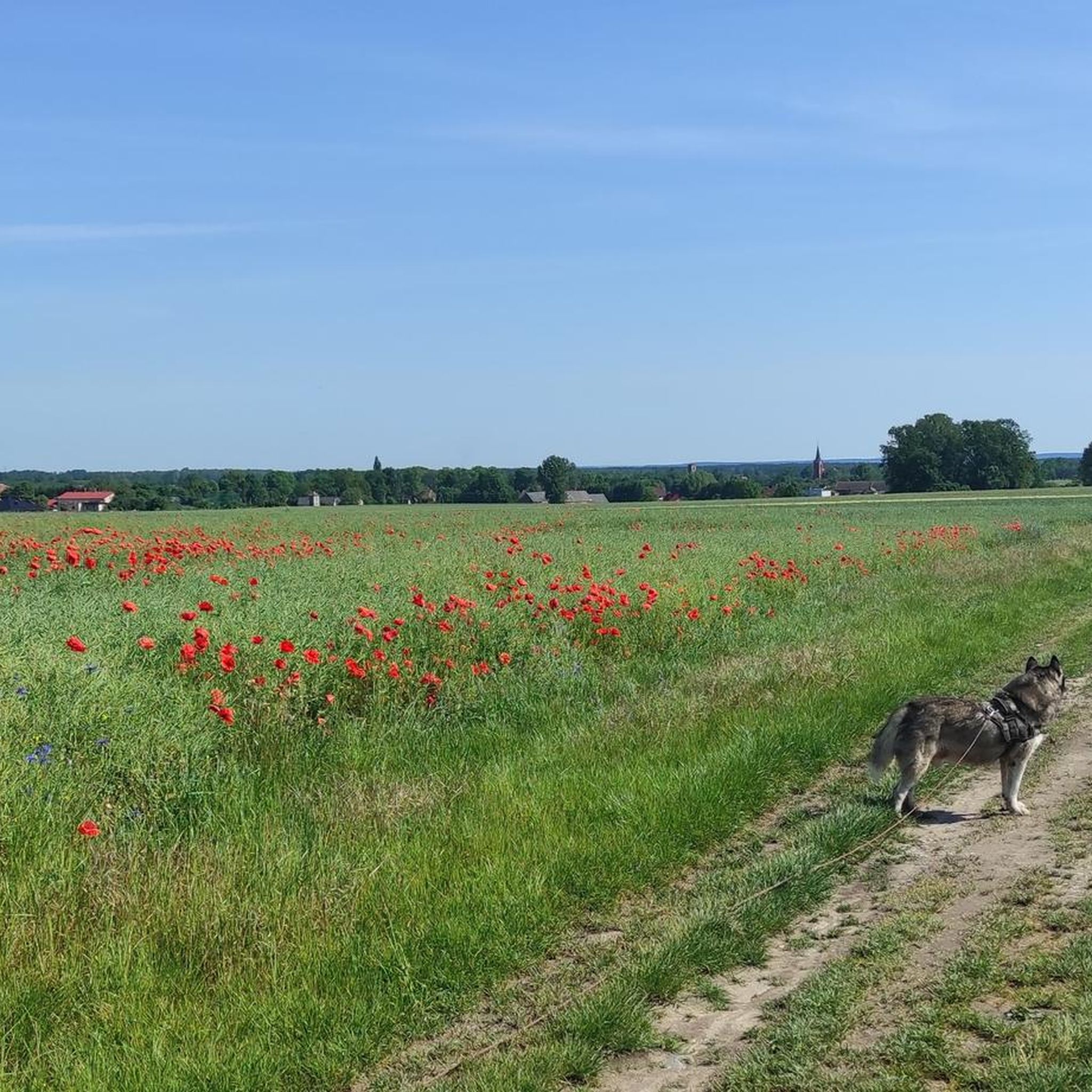
VELO SPROTAVIA is a strategic cycling path in the southern Lubusz Voivodeship. It runs vertically through the Szprotawa commune, from the town of Szprotawa to the village of Stypułów. At the former railway station in Stypułów, it connects with the regional RAILWAY TO BIKE path, which runs to Kożuchów, Nowa Sól, Otyń, Konotop, and the border with the Wielkopolska Voivodeship. The total length of VELO SPROTAVIA is 16 km. The route follows the former Szprotawa-Zielona Góra railway line (1911-1955), along the Szprotawa-Kartowice-Witków-Siecieborzyce-Stypułów section. Initially, the path runs parallel to the district road towards Kartowice, a short distance away. We ascend a gentle hill (141 m above sea level), offering a panoramic view of the surrounding area. Under favorable conditions, we can see the Karkonosze and Jizera Mountains from here. The agricultural landscape is only interrupted by a strip of trees growing along the path, with a significant proportion of fruit trees. According to legend, former passengers of the Zielona Góra railway, by throwing fruit pits out of the train windows, contributed to the creation of a linear orchard of plums, apples, pears, and cherries. From the hill, we descend pleasantly all the way to Kartowice itself, where, near the ruins of the village railway station, a cyclist service area (MOR) has been built, complete with a shelter, table, benches, parking spaces, and a bicycle repair module. No one will likely object if we pitch a tent near the shelter if necessary. It's a very atmospheric place. Near the shelter, we'll see a monument to the residents of Kartowice (Kortnitz in German) who died on the front lines of World War I. After a rest in Kartowice, we head further north, towards Witków. Soon, the agricultural landscape will transform into forest. This preservation owes its historical preservation to the fact that since the Middle Ages, this has been an inviolable border between the duchies of Głogów and Żagań. The forest preserves fragments of the famous Silesian Ramparts, built in the 15th/16th centuries, a kind of border barrier. All the preserved sections of the Silesian Ramparts constitute the longest archaeological site in Poland. The Szprotawa Land Museum holds a unique boundary marker from this forest. Nearby, by the district road, we come across a 19th-century stone signpost pointing the way towards Borowina (orig. "nach Hartau"). Old maps show peculiar enclaves in this area, such as Wilczy zaułek (Wilczy Lane), Krowie Bagno (Ciche Hill).
0
0

The ruins of a palace from 1797. Until World War II, it often changed owners, and after the war it was managed by the State Agricultural Farm. It was never renovated, and eventually it was abandoned and fell into ruin. Today it is in private hands. The area is fenced and cleared, but there is no sign that the building will be rebuilt.
2
0

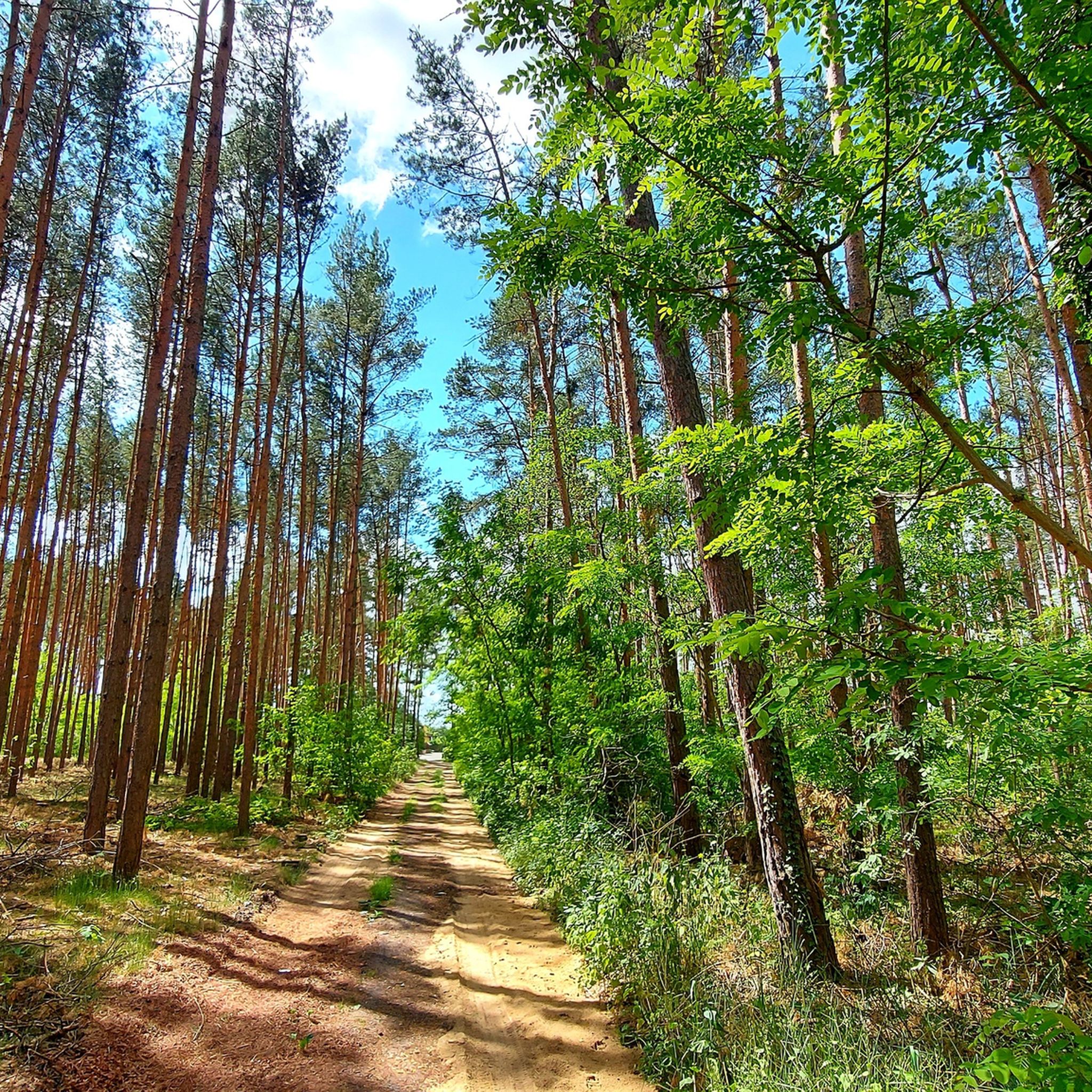
A very pleasant bike path
0
0

Probably once a beautiful manor house, today more of a ruin.
0
0
Very nice railway cycle path, great asphalt. More info: www.kolejnarower.pl
2
0
Frequently Asked Questions
What historical palaces can I visit in Powiat Żagański?
Powiat Żagański is home to several impressive historical palaces. You can explore the grand Żagań Palace, which now serves as a cultural center, or discover the unique Iłowa Palace and Park, known for its Baroque architecture and Asian-inspired gardens. Additionally, the atmospheric Jelenin Palace Ruins offer a glimpse into the region's past.
Are there any significant wartime memorials or sites to visit?
Yes, the region holds important historical sites related to wartime events. You can visit the Dulag Kunau – Prisoner of War Transit Camp Memorial, which commemorates a transit camp for soldiers. The area also has connections to the Stalag Luft III Prisoner of War Camp, documented at its museum.
What cycling routes are available in the area?
Cyclists can enjoy several scenic routes. The Velo Sprotavia Cycling Route is a 16 km path following a former railway line, offering panoramic views. Another excellent option is the Rudno–Stypułów Rail Trail, known for its smooth asphalt and pleasant ride. For more cycling adventures, explore the gravel biking routes around Powiat Żagański.
Where can I find easy hiking trails near the attractions?
For those looking for leisurely walks, Powiat Żagański offers several easy hiking trails. You can find routes like the 'Ulica Warszawska – St. Dorothea Hospital Complex loop from Żagań' or the 'Serene Stream – Bridge Over the Czerna loop from Żagań'. More options are available in the Easy hikes around Powiat Żagański guide.
Are there family-friendly attractions in Powiat Żagański?
Many attractions in Powiat Żagański are suitable for families. The Iłowa Palace and Park, with its unique Japanese and Chinese gardens, is a great place for children to explore. Cycling routes like the Velo Sprotavia Cycling Route and the Rudno–Stypułów Rail Trail are also popular with families due to their smooth surfaces.
What natural features can I see in the region?
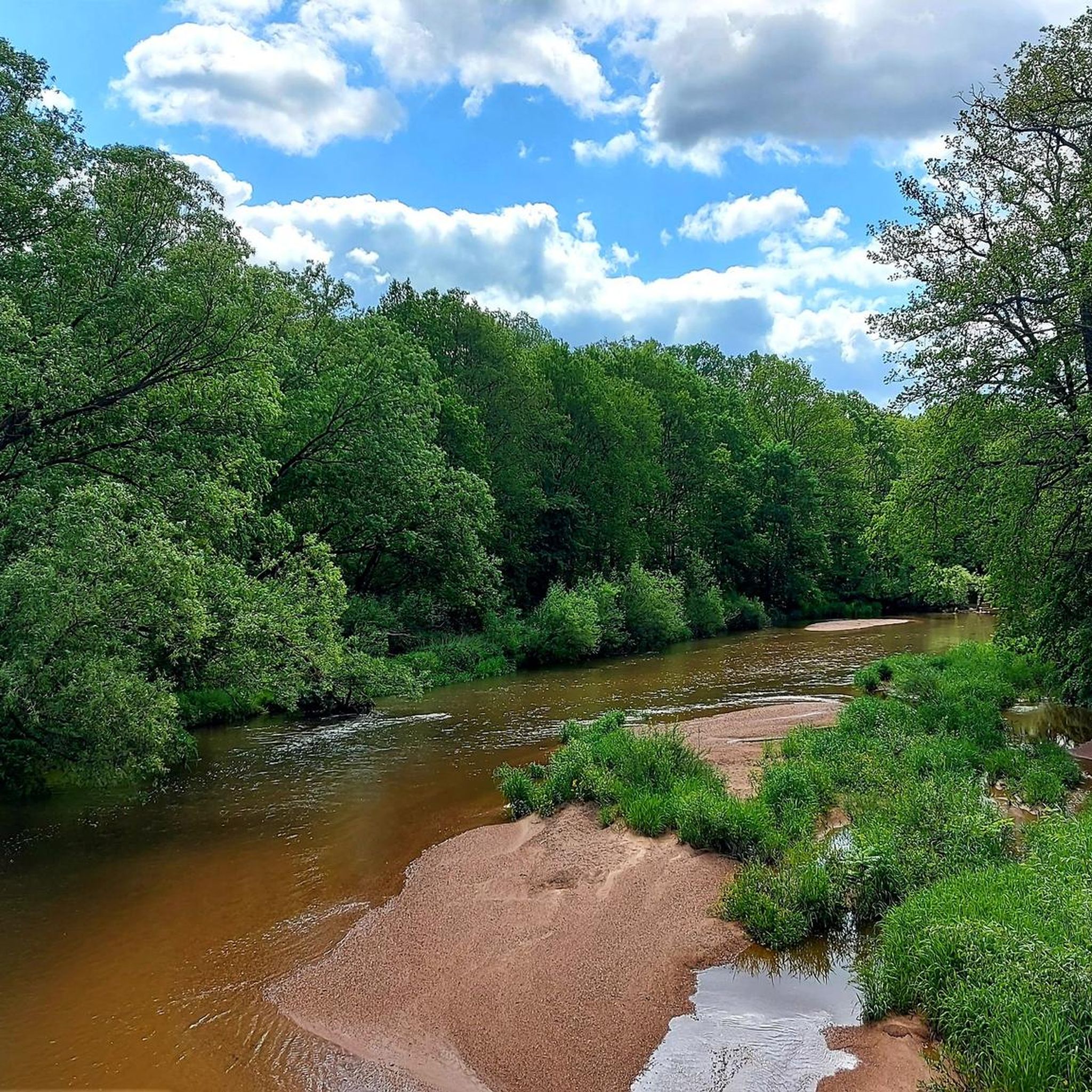
Beyond historical sites, Powiat Żagański boasts natural beauty. The Żarski Forest offers scenic views, and you can find the Chrobry Oak, one of Poland's oldest oaks, within the Szprotawa forest district. The cycling routes also provide opportunities to enjoy the local flora and landscapes.
What cultural and religious sites are notable in Żagań?
Żagań features several significant cultural and religious sites. The St. Dorothea Hospital Complex, an impressive 19th-century Gothic-style structure, includes a cruciform church and Loreto chapel. The Church of the Assumption of the Blessed Virgin Mary, connected to the Augustinian monastery, is another important historical monument dating back to the 13th century.
Are there any unique historical structures or ruins to explore?
Yes, the region offers unique historical structures. You can visit the Jelenin Palace Ruins, which date back to the late 18th century. Additionally, fragments of the 15th/16th-century Silesian Ramparts, the longest archaeological site in Poland, are preserved in the forest, and the ruins of St. James' Church in Długie provide an impressive historical landmark.
What do visitors enjoy most about the attractions in Powiat Żagański?
Visitors particularly appreciate the well-maintained cycling paths, such as the Rudno–Stypułów Rail Trail, often described as having 'great asphalt' and being 'smooth as a table'. The historical sites, like the Iłowa Palace and Park, are also highly rated for their unique architecture and beautiful gardens, offering a blend of history and natural beauty.
Are there any attractions related to popular culture or media?
Yes, a unique point of interest is the Wooden bridge from "Czterej Pancerni i Pies". This bridge is known from the popular Polish TV series, making it a fun stop for fans of the show.
What is the best time to visit Powiat Żagański attractions?
The best time to visit Powiat Żagański attractions is generally during the spring and summer months (April to September) when the weather is pleasant for exploring historical sites, cycling routes, and natural features. The palace parks and gardens are particularly vibrant during these seasons.
Are there any places to start cycling routes with facilities?
Yes, the Stypułów Train Station serves as a convenient starting point for cycling routes. It features a small resting place with a carport and table, making it ideal for breaks and preparing for your ride.
Most popular routes around powiat żagański
Most popular attractions around powiat żagański

Get inspired with the komoot mobile app


Didn’t find what you were looking for?
Are you keen on exploring more awesome places nearby? Browse our guides:
Explore more
Still not found the Highlight you’re looking for? See guides of the top attractions in other regions:
