Routes

Planner

Features

Updates

App

Login or Signup

Get the App

Login or Signup

Login or Signup

Routes
Places to see
Poland
Greater Poland Voivodeship

powiat ostrowski

Attractions and Places To See around powiat ostrowski - Top 20

Best attractions and places to see around powiat ostrowski include a diverse range of historical landmarks, cultural sites, and natural areas. This region in the Greater Poland Voivodeship features elegant palaces, historic churches, and engaging recreational spaces. Visitors can explore a landscape characterized by historical architecture and natural beauty, offering varied experiences for those interested in culture and outdoor activities.

Best attractions and places to see around powiat ostrowski

  • The most popular attractions is Piaski-Szczygliczka Recreation Area, a lake and recreation center located by a reservoir. It offers a sandy beach, a rope adventure park, a zip line over the water, and a pedestrian and cycling promenade.
  • Another must-see spot is Lewków Palace, a historical site built between 1788 and 1791. This classicist palace now houses a museum showcasing antique furniture, Sarmatian portraits, and memorabilia of former landowners.
  • Visitors also love My Will Hunting Palace, a historical site built in 1852. This residence is notable for its facade clad with rectangular sheets of cork oak bark.
  • powiat ostrowski is known for its historical sites, religious buildings, and recreational areas. The region offers a variety of attractions to explore, from palaces and churches to lakes and parks.
  • The attractions around powiat ostrowski are appreciated by the komoot community, with 23 upvotes and 19 photos shared across various highlights.

Last updated: May 4, 2026

Lewków Palace

Highlight • Historical Site

The palace in Lewków was built in 1788-1791. The founder of the palace, Wojciech Lipski - a hunter from Kalisz, from 1776 he was adjutant general of King Stanisław August Poniatowski, by whom he was awarded the Order of St. in 1790. Stanisław. This order was established by the king in 1765, as the second Polish order after the Order of the White Eagle.
The palace in Lewków was probably designed in the classicist style by Jan Christian Kamsetzer - the court architect of Stanisław August. It belongs to the first series of classicist residences in Greater Poland and is a faithful copy of the palace in Sierniki near Wągrowiec. The palace is made of brick, two-story, on a rectangular plan with a four-column, deep Ionic portico topped with a triangular tympanum.
The palace houses a museum. It presents, among others: period furniture (including the deposit of the Lipski family from the former palace furnishings), a collection of Sarmatian portraits and memorabilia of former landowners.

Translated by Google •

Tip by

See rides here

Send to Phone

Save

Ostrów Wielkopolski Town Hall

Highlight • Monument

In summer, there are a lot of gardens around the square where you can drink coffee ☕, eat tasty 🍽️, and have a beer 🍺 or a drink 🍹 in the RETROSPEKCJA pub 😉

Translated by Google •

Tip by

Save

Sign up now to discover places like this

Get recommendations on the best single tracks, peaks, & plenty of other exciting outdoor places.

Sign up for free

My Will Hunting Palace

Highlight • Historical Site

The residence was built in 1852, funded by Wilhelm, Duke of Brunswick-Olesno, according to the design of the Polish architect and engineer Karłowski. The palace's facade is clad with rectangular sheets of cork oak bark imported from Portugal.

The building was expanded in 1895 to include a southwestern section with a dining room, and in 1902-1903 to include a brick tower and a two-story northeastern wing. The facades of the added sections were clad with native oak bark.

During the fighting for Wrocław in 1945, the palace served as a front-line hospital. After the war, it housed the Forestry Workers' Training Center (1949-1950), and then the Forestry Vocational Training Center (1950-1951). In 1951, the first women's Forestry Technical School in Poland, named after Bolesław Bierut, was established here. In mid-1975, the school was closed. That same year, the building was added to the register of historic monuments. Since then, it has operated as a Forest Training Center at the Antonin Forest District, and later as a hotel for forestry workers. Currently, it is privately owned. Unfortunately, the building is in poor condition.

Translated by Google •

Tip by

Save

Church of St. Nativity N.P. Mary from 1785-86. Expanded in 1927 - extension of the nave. Renovated in 1929, 1959, 1985 and 2001-02.

Wooden church, single-nave, log structure. Oriented. The smaller presbytery from the nave, closed on three sides, with the adjacent brick sacristy and the wooden tomb chapel of Wanda Tyszkiewiczowa. Porch on the side of the nave. Double-ridge roof, covered with shingles. In the central part there is an octagonal turret with a turret. Topped with a tin, onion-shaped Baroque helmet with a lantern. Above the front entrance, the eaves are supported by wooden poles. The interior is plastered with wainscoting in the lower part of the walls. Flat ceilings with facets common to the nave and chancel. The choir is supported by four pillars, has a straight window sill and a baroque organ. Polychrome by Wiktor Gosieniecki from 1929 on the ceiling of Our Lady with the Child. Forms of ceiling lamps, coffers, medallions with floral and geometric ornaments. The main Rococo altar from the end of the 18th century is of the cupboard type. Two Rococo side altars from the end of the 18th century with a painting of the founders and Our Lady of Śnieżna from 1637. The tombstone of Władysław Czaski, a colonel of the Polish infantry and a soldier of Napoleon fighting in 1812 near Moscow. Wooden bell tower of a pole structure from 1948 with a flag from the previous one with the date "1804". Built on a square plan, covered with a shingle tent roof with two bells from 1948 and 1976.

Translated by Google •

Tip by

Save

Radziwiłł Hunting Palace in Antonin

Highlight • Historical Site

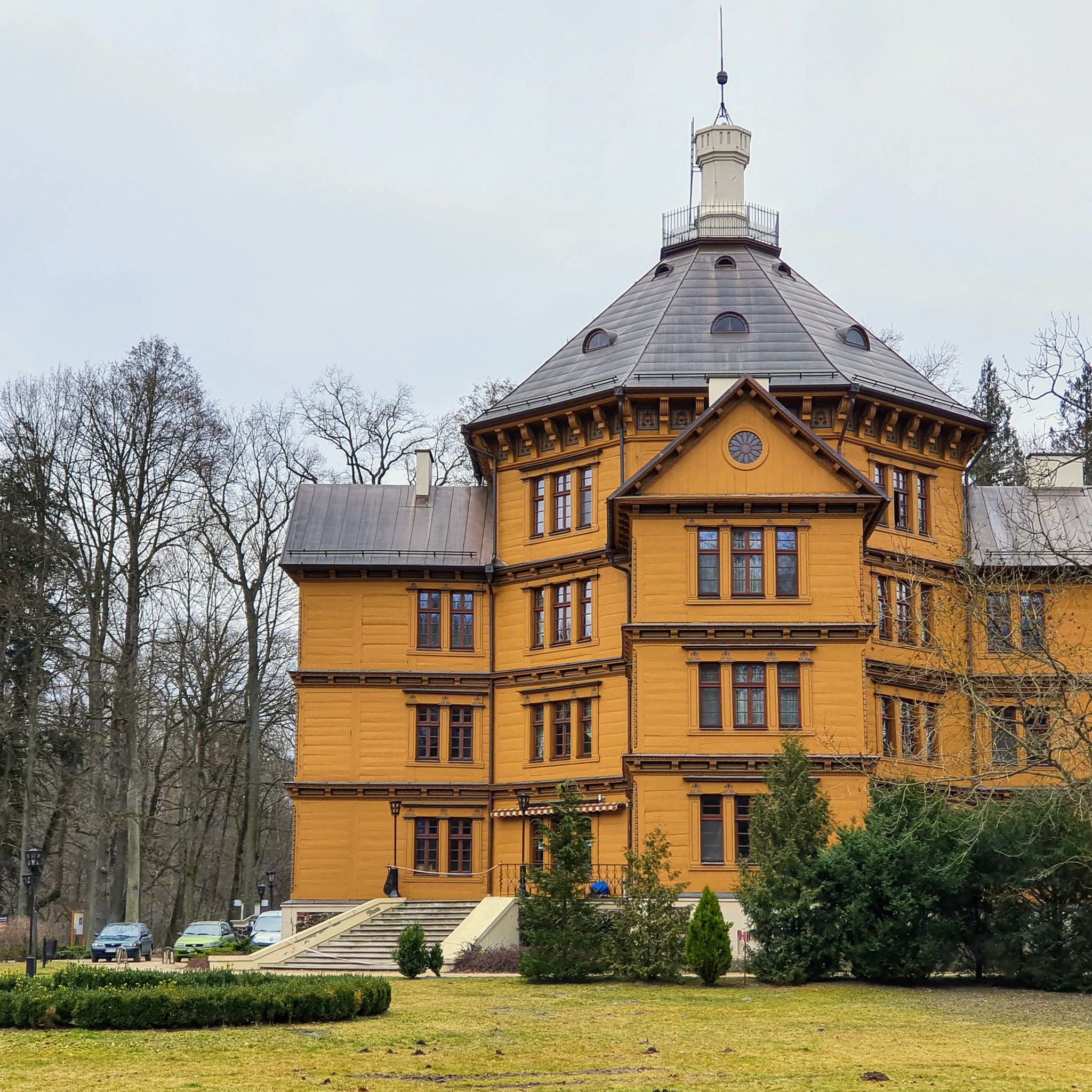
The Hunting Palace of the Radziwiłł Princes in Antonin is a unique monument in southern Wielkopolska, known for its characteristic wooden architecture and picturesque location. Surrounded by a large park with a fountain, it originally served as a hunting residence for the Radziwiłł family. Today, it houses a museum and cultural center, and its interiors are used for concerts, exhibitions, and cultural events.

Translated by Google •

Tip by

Save

Parish Church of St. Saint Stanisław, Bishop and Martyr was built in the years 1905-1907 according to the design of Sylwester Pajzderski, modified by Roger Sławski, in the Neo-Romanesque style (with a clear Rhine provenance). The church was built thanks to the efforts of the parish priest, Fr. Walenty Śmigielski and the parishioners, with the material support of the collector, Prince Ferdynand Radziwiłł. The cornerstone for the new church was laid in 1904. The new church was consecrated on September 30, 1906. The temple was consecrated on October 6, 1906 by Bishop Edward Likowski, later Primate of Poland in 1914-1915. With the establishment of the Kalisz diocese, it was raised to the rank of co-cathedral in the bull of John Paul II "Totus Tuus Poloniae Populus" announced on March 25, 1992.

Because the temple was built in a marshy area, a meter-thick concrete slab was poured under the church, and 200 piles were driven under the tower to a depth of 8 meters. The church is 67 m long and 33 m wide (in the transept), the height of the main nave is 14 m. The tower rises to a height of 55 m. The temple can accommodate 4,000 people. faithful. The facility was built of red semi-clinker brick, while the decorations are made of white sandstone.

The Ostrów co-cathedral is a four-span, three-nave basilica with a transept. The extensive, three-sided presbytery is surrounded by a ring of low, semi-circular apses housing a sacristy, a collator's box and auxiliary rooms. These apses are connected by a corridor and covered with mono-pitched and conical roofs. The asymmetrically situated tower is topped with a pointed four-field roof. In the main nave, transept and side aisles. a groin vault was used, and in the presbytery - a conch vault with lunettes. The walls of the main nave and aisles where the vaults rest are reinforced with buttresses, while in the transept the square towers flanking its corners serve as buttresses. The octagonal shape of the presbytery is topped with a pointed pyramidal roof.

From the west, the Ostrów co-cathedral is decorated with a portico, a rose window and arcaded niches. In the portico, the bas-relief "Annunciation" placed in the tympanum, made by an outstanding artist from Greater Poland, Władysław Marcinkowski, attracts attention. Under the colonnade of the portico you can see a beautiful sculpture "Pilgrim" from 1890, made of sandstone. The sculpture shows the figure of an old man dressed in a long pilgrim's habit, belted with a rope, with a hat on his back, crouching and hugging a rotten cross.

The interior of the church was not initially polychrome, and was colored by beautiful stained glass windows. Currently, the interior is decorated with a polychrome by Henryk Jackowski-Nostitz from 1929.

The spacious octagon-shaped presbytery is decorated with a two-level gallery with 30 sandstone columns supporting a domed vault. Figures of Polish saints and blesseds are placed on the vault of the presbytery. In its central part there is a marble altar, made by Stefan Ballenstedt in 1907, with an alabaster figure of the Virgin Mary and Child, which is adored by two angels carved by Władysław Marcinkowski. In addition to the main altar, there are 6 more altars in the church. Left aisle:
– Our Lady of Perpetual Help (in the apse).
– Saint Antoni.


Right aisle:
– Sacred Heart of Jesus (in the apse).
– Saint Joseph (formerly St. Anna, in a niche).
– Saint Teresa of the Child Jesus (in a niche).
– Our Lady of Częstochowa (in the side chapel)


The interior also includes a marble pulpit on pillars, decorated with a mosaic of St. Peter, holding a key, as well as a marble baptismal font with a forged sheet metal cover. The organ with 33 voices was built ten years before World War II by Józef Stanisławski's company from Poznań.

Translated by Google •

Tip by

Save

Pogrzybów Palace

Highlight • Historical Site

Palace from the mid-18th century
It was rebuilt twice, in 1848 by the owners of Pogrzybów Niemojewski.
For the second time at the beginning of the 20th century, when the Prussian Colonization Commission adopted a school.
Pogrzybów is mentioned under the name Grzybowo before 1213 as the property of the monastery in Ołobok.
In the 14th century the owners were Pogrzybowcy and in 1612 Dażbog Karnkowski.
The property remained in the hands of the Karnkowski family until 1833, before it was transferred to the Skórzewski family, including Walenty Skórzewski, a colonel of the Polish army.
Then it belonged to the Niemojowski family.
From 1884, Pogrzybów was in the hands of the Prussian Colonization Commission, then it was parceled out.
At the beginning of the 20th century, another reconstruction was made to adapt it to a school. The facades are plastered with a chained architectural detail. Until recently, as the property of the Raszków commune, it was used as apartments, and the condition of the building left much to be desired. In 2018, the modernization of the palace and its adaptation into a cultural institution began. The designer of the reconstruction is Władysław Podonowski.

Translated by Google •

Tip by

Save

A place popular with locals.

Translated by Google •

Tip by

Save

Church in Mikstat

Highlight • Religious Site

The Church of the Holy Trinity in Mikstat is the town's main parish church, dating back to the 14th century, when the first residents built a wooden church on the so-called Church Hill. Over the centuries, the church was rebuilt several times after fires and destruction, until the current brick church in the neo-Baroque style, designed by Marian Andrzejewski, was built in 1914. It was consecrated by Cardinal Edmund Dalbor in 1918, an event not only religious but also patriotic – the streets of Mikstat were decorated with white and red banners, and young people welcomed the distinguished guest in national costumes.

The church is impressive in its architecture – the three-nave main body is enclosed on the eastern side by a semicircular apse, while a tall tower with a ground-floor porch, topped by a metal dome with a lantern and a cross, dominates the west. The entrance portal is adorned with sculptures of angels and flanked by columns, giving the building a monumental character. The church interior is divided by arcades, the vaults of which are adorned with rich polychrome and stucco decorations. In the western part is a brick choir loft with an organ case, supported by three arcades. The organ, built by Józef Bach in 1939, is unique in Poland.

The church's furnishings are in the spirit of neo-Baroque – the main altar features a bas-relief depicting the Holy Trinity, flanked by scenes of the Annunciation of the Archangel Gabriel and the fight of the Archangel Michael with the dragon. The side altars are dedicated to St. Agatha and the Virgin Mary with the Infant Jesus. A canopied pulpit, the Stations of the Cross, and numerous stained glass windows from 1914 complete the interior's sacred atmosphere. In the church cemetery stands a 19th-century wooden cross, the work of Paweł Bryliński, decorated with sculptures of the Virgin Mary, saints and a pelican feeding its chicks – a symbol of Christ.

Translated by Google •

Tip by

Save

Air-raid Shelter in Lamki

Highlight • Monument

The bunker in Lamki - it is actually an Anti-Aircraft Rift, it is located in the forest about one meter from the dirt road.
Information obtained from local residents leads to the conclusion that the rift was built by the Germans in order to hold the lines of the Russians going west. There are apparently two more such gaps in the area, one at the Orlen base and the other at the coal depot.
Such a crack was only equipped with technical and sanitary equipment, so it only served as a shelter during the raid, perhaps there was some light infrastructure in the forest that served some production facilities.

Translated by Google •

Tip by

Save

Sign up for free to discover even more attractions around powiat ostrowski.

Sign up for free

Already have an account?

Start today with a free account

Your next adventure awaits.

Login or Signup

Popular around powiat ostrowski
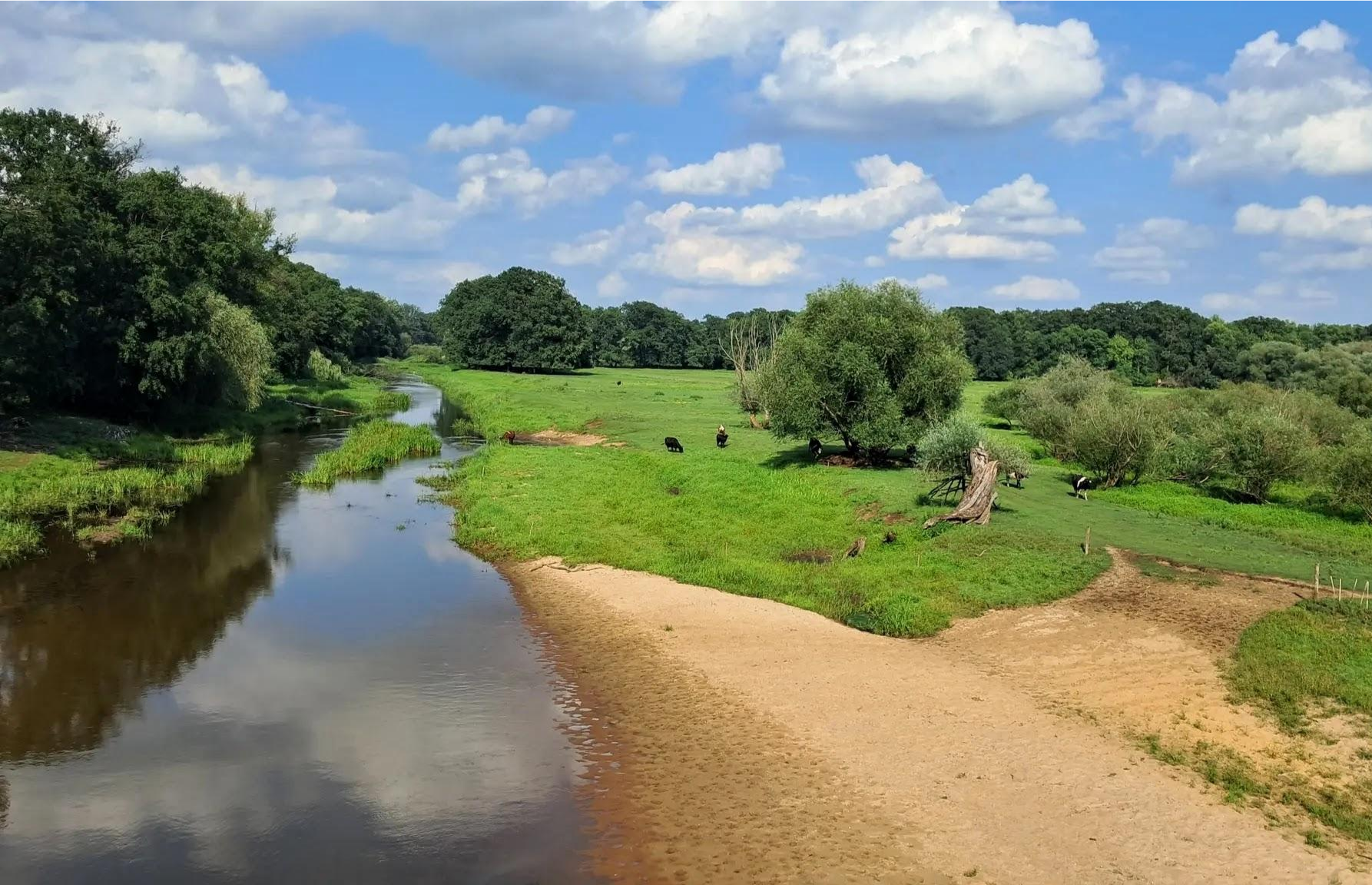
Where Carp Swim and Birds Soar – Barycz Valley Cycle Route

Cycling around powiat ostrowski

Road Cycling Routes around powiat ostrowski

Running Trails around powiat ostrowski

MTB Trails around powiat ostrowski

Hiking around powiat ostrowski

Gravel biking around powiat ostrowski

Other adventures around powiat ostrowski

Where Carp Swim and Birds Soar – Barycz Valley Cycle Route

Cycling Collection by

Sylwia

Tips from the Community

Radek
July 9, 2025, Church in Mikstat

The Church of the Holy Trinity in Mikstat is the town's main parish church, dating back to the 14th century, when the first residents built a wooden church on the so-called Church Hill. Over the centuries, the church was rebuilt several times after fires and destruction, until the current brick church in the neo-Baroque style, designed by Marian Andrzejewski, was built in 1914. It was consecrated by Cardinal Edmund Dalbor in 1918, an event not only religious but also patriotic – the streets of Mikstat were decorated with white and red banners, and young people welcomed the distinguished guest in national costumes. The church is impressive in its architecture – the three-nave main body is enclosed on the eastern side by a semicircular apse, while a tall tower with a ground-floor porch, topped by a metal dome with a lantern and a cross, dominates the west. The entrance portal is adorned with sculptures of angels and flanked by columns, giving the building a monumental character. The church interior is divided by arcades, the vaults of which are adorned with rich polychrome and stucco decorations. In the western part is a brick choir loft with an organ case, supported by three arcades. The organ, built by Józef Bach in 1939, is unique in Poland. The church's furnishings are in the spirit of neo-Baroque – the main altar features a bas-relief depicting the Holy Trinity, flanked by scenes of the Annunciation of the Archangel Gabriel and the fight of the Archangel Michael with the dragon. The side altars are dedicated to St. Agatha and the Virgin Mary with the Infant Jesus. A canopied pulpit, the Stations of the Cross, and numerous stained glass windows from 1914 complete the interior's sacred atmosphere. In the church cemetery stands a 19th-century wooden cross, the work of Paweł Bryliński, decorated with sculptures of the Virgin Mary, saints and a pelican feeding its chicks – a symbol of Christ.

Translated by Google

0

0

A beautiful wooden church worth seeing

Translated by Google

0

0

The Hunting Palace of the Radziwiłł Princes in Antonin is a unique monument in southern Wielkopolska, known for its characteristic wooden architecture and picturesque location. Surrounded by a large park with a fountain, it originally served as a hunting residence for the Radziwiłł family. Today, it houses a museum and cultural center, and its interiors are used for concerts, exhibitions, and cultural events.

Translated by Google

3

0

Church of St. Nativity N.P. Mary from 1785-86. Expanded in 1927 - extension of the nave. Renovated in 1929, 1959, 1985 and 2001-02. Wooden church, single-nave, log structure. Oriented. The smaller presbytery from the nave, closed on three sides, with the adjacent brick sacristy and the wooden tomb chapel of Wanda Tyszkiewiczowa. Porch on the side of the nave. Double-ridge roof, covered with shingles. In the central part there is an octagonal turret with a turret. Topped with a tin, onion-shaped Baroque helmet with a lantern. Above the front entrance, the eaves are supported by wooden poles. The interior is plastered with wainscoting in the lower part of the walls. Flat ceilings with facets common to the nave and chancel. The choir is supported by four pillars, has a straight window sill and a baroque organ. Polychrome by Wiktor Gosieniecki from 1929 on the ceiling of Our Lady with the Child. Forms of ceiling lamps, coffers, medallions with floral and geometric ornaments. The main Rococo altar from the end of the 18th century is of the cupboard type. Two Rococo side altars from the end of the 18th century with a painting of the founders and Our Lady of Śnieżna from 1637. The tombstone of Władysław Czaski, a colonel of the Polish infantry and a soldier of Napoleon fighting in 1812 near Moscow. Wooden bell tower of a pole structure from 1948 with a flag from the previous one with the date "1804". Built on a square plan, covered with a shingle tent roof with two bells from 1948 and 1976.

Translated by Google

0

0

A treat for history and architecture lovers. I also recommend summer Chopin concerts every Sunday. A wonderful place surrounded by a beautiful palace park.

Translated by Google

0

0

The Piaski - Szczygliczka Sports and Recreation Center is located by the reservoir in the northern part of the city, with a sandy beach and numerous attractions, including: a rope Adventure Park, the Na5ięć tower, from which you can take a zip line over the water, and a pedestrian and bicycle promenade around the reservoir, the Park of Giant Insects, a tourist railway and playgrounds for children, and a multi-purpose sports field with an artificial surface. The center has a wooden tavern and the "Plażowa" restaurant with a rich gastronomic offer. In addition, you can rent pedal boats, kayaks and boats at the reservoir.

Translated by Google

0

0

The Hunting Palace of the Radziwiłł Princes from the 19th century. Currently a hotel.

Translated by Google

0

0

Town hall in Ostrów Wielkopolski

Translated by Google

0

0

Frequently Asked Questions

What historical palaces can I visit in Powiat Ostrowski?

Powiat Ostrowski is home to several elegant palaces. You can explore Lewków Palace, a classicist masterpiece from the late 18th century that now houses a museum. Another significant site is the Radziwiłł Hunting Palace in Antonin, a unique 19th-century wooden palace known for its cultural events and picturesque park. Additionally, the My Will Hunting Palace, built in 1852, features a distinctive facade clad with cork oak bark. You can also find Pogrzybów Palace in the region.

Are there notable religious sites to explore in the region?

Yes, Powiat Ostrowski features several historic churches. The Co-cathedral of St. Stanislaus, Bishop and Martyr in Ostrów Wielkopolski is a prominent basilica with intricate interior details. The Church of the Nativity of the Blessed Virgin Mary in Ociąż is a beautiful wooden church dating back to 1785-1786. Other notable religious sites include the Church of the Immaculate Conception of the Blessed Virgin Mary in Czarnylas and the Church in Mikstat. The Sanctuary of Our Lady Osuchowska, an intimate chapel nestled in a forest, is also a place of interest.

What natural attractions are there in Powiat Ostrowski?

The region offers a blend of natural beauty and recreational spaces. The Piaski-Szczygliczka Recreation Area, located by a reservoir, provides a sandy beach and various outdoor activities. Beyond specific sites, the broader Wielkopolska region, which includes Powiat Ostrowski, is characterized by vast forests, picturesque river valleys, post-glacial lakes, and peat bogs, offering an ideal setting for nature enthusiasts. The area also has designated nature monuments, including specimens of English Ivy, Common Yew, and various types of oaks and lindens.

What recreational activities are available for visitors?

The Piaski-Szczygliczka Recreation Area is a hub for recreation, offering a sandy beach, a rope adventure park, a zip line over the water, and a pedestrian and cycling promenade. You can also find a Park of Giant Insects, a tourist railway, playgrounds, and a multi-purpose sports field. Visitors can rent pedal boats, kayaks, and boats for water activities. The area's natural landscapes also provide opportunities for hiking, running, and mountain biking.

Are there family-friendly attractions in Powiat Ostrowski?

Absolutely! The Piaski-Szczygliczka Recreation Area is highly recommended for families, with its beach, rope park, zip line, playgrounds, and tourist railway. Many historical sites, such as Lewków Palace and the Radziwiłł Hunting Palace in Antonin, are also considered family-friendly, offering cultural experiences in engaging settings. Several churches, like the Church of the Nativity of the Blessed Virgin Mary in Ociąż, are also suitable for family visits.

Where can I find outdoor activities like hiking or cycling near these attractions?

Powiat Ostrowski offers numerous opportunities for outdoor activities. For hiking, you can explore trails like the easy "Antonin - Hunting Palace loop from Ludwików" or the moderate "Piaski-Szczygliczka loop from Ostrów Wielkopolski." Cyclists can enjoy routes such as the "Ostrów Wielkopolski Town Hall – Piaski–Szczygliczka Reservoir loop from Ostrów Wielkopolski" for mountain biking. You can find more details on these and other routes in the Hiking around powiat ostrowski and MTB Trails around powiat ostrowski guides.

What kind of unique architecture can I see in Powiat Ostrowski?

The region showcases diverse architectural styles. The Lewków Palace is a prime example of classicist architecture from the late 18th century. The Radziwiłł Hunting Palace in Antonin stands out with its unique 19th-century wooden construction. You can also find traditional wooden churches, such as the Church of the Nativity of the Blessed Virgin Mary in Ociąż, which retains its distinct wooden architecture with a shingle roof and an octagonal turret.

Are there any unique historical sites beyond palaces and churches?

Yes, beyond the prominent palaces and churches, you can discover other historical points of interest. The Air-raid Shelter in Lamki offers a glimpse into a different aspect of the region's history. Additionally, the Palace and Park Complex in Bagatela, near Czekanów, includes a former Radziwiłł palace and is surrounded by the Bagatela forest, featuring three erratic boulders.

What do visitors particularly enjoy about the attractions in Powiat Ostrowski?

Visitors appreciate the blend of historical richness and natural beauty. The palaces, like Lewków Palace and the Radziwiłł Hunting Palace in Antonin, are valued for their historical significance and architectural charm, with the latter also hosting cultural events. The Piaski-Szczygliczka Recreation Area is popular for its diverse recreational offerings and being a local favorite. The region's historical sites, religious buildings, and recreational areas collectively offer a variety of engaging experiences.

Are there opportunities for running or jogging in the area?

Yes, Powiat Ostrowski provides several running trails. You can find easy routes like the "Running loop from Szczygliczka" or the "Piaski–Szczygliczka Reservoir loop from Ostrów Wielkopolski." For a more moderate challenge, consider the "Running loop from Orzechowa" or the "Running loop from Wenecja." More options are available in the Running Trails around powiat ostrowski guide.

What kind of natural heritage is characteristic of the broader Wielkopolska region?

The broader Wielkopolska region, where Powiat Ostrowski is located, is known for its diverse natural heritage. This includes vast forests, picturesque river valleys, numerous post-glacial lakes, and unique peat bogs. This varied landscape provides an excellent backdrop for outdoor activities and offers a rich environment for nature observation.

Can I find places to relax by the water in Powiat Ostrowski?

Yes, the Piaski-Szczygliczka Recreation Area is an excellent spot for relaxing by the water. It features a sandy beach by a reservoir, where you can enjoy the sun, swim, or rent pedal boats and kayaks. The promenade around the reservoir also offers a pleasant setting for a stroll by the water.

Most popular routes around powiat ostrowski

Cycling around powiat ostrowski

Most popular attractions around powiat ostrowski

Lakes

Store rating

Get inspired with the komoot mobile app

With a free komoot account, you can easily find, customize, and navigate endless outdoor adventures.

or

Join komoot Now

Store rating

Didn’t find what you were looking for?

Are you keen on exploring more awesome places nearby? Browse our guides:

gmina Nowe Skalmierzycegmina Ostrów WielkopolskiSieroszewicegmina Sośniegmina MiędzybórzOdolanówOstrów WielkopolskiRaszkówPrzygodziceMikstat

Nearby adventure guides

Things to Do around Przygodzice

background

Get ready to conquer new peaks

Sign up for Free

Explore
RoutesRoute plannerFeaturesHikesMTB TrailsRoad cycling routesBikepackingSitemap
Download the app
Follow Us on Socials

© komoot GmbH

Privacy Policy