Attractions and Places To See around Piotrków Trybunalski - Top 20
Best attractions and places to see around Piotrków Trybunalski, a city in central Poland, offer a blend of historical landmarks, natural features, and cultural sites. The city's Old Town features a medieval urban layout with approximately 100 historic buildings. Nearby, visitors can explore recreational areas like Słoneczko Beach at Lake Bugaj and the Sulejów Reservoir, alongside numerous religious buildings and historical monuments. This region provides diverse opportunities for exploration.
Best attractions and places to see around Piotrków Trybunalski
- The most…
Last updated: July 15, 2026
Church of the Assumption of the Blessed Virgin Mary in Milejów
Highlight • Religious Site
Translated by Google •
Tip by

Słoneczko Beach
Highlight • Beach
Translated by Google •
Tip by

Sign up now to discover places like this
Get recommendations on the best single tracks, peaks, & plenty of other exciting outdoor places.
Sign up for free
District Court in Piotrków Trybunalski
Highlight • Historical Site
Translated by Google •
Tip by
Water Tower in Piotrków Trybunalski
Highlight • Structure
Translated by Google •
Tip by
All Saints Orthodox Church
Highlight • Religious Site
Translated by Google •
Tip by

War Cemetery in Milejów
Highlight • Historical Site
Translated by Google •
Tip by
Church of the Visitation of the Blessed Virgin Mary (Old Church)
Highlight • Religious Site
Translated by Google •
Tip by
Old Town Market Square, Piotrków Trybunalski
Highlight • Historical Site
Translated by Google •
Tip by
Piotrkowska Manufactory
Highlight • Monument
Translated by Google •
Tip by
Royal Castle
Highlight • Castle
Translated by Google •
Tip by
Sign up for free to discover even more attractions around Piotrków Trybunalski.
Sign up for free
Already have an account?
Start today with a free account
Your next adventure awaits.
Login or Signup

Tips from the Community

The water tower was completed in 1926 according to the design by Władysław Horodecki. The construction was financed by a loan taken from the New York company „Ulen & Co.”, as part of an agreement concerning the financing of investments in four Polish cities (Częstochowa, Lublin, Radom, and Sosnowiec) aimed at modernizing infrastructure and improving sanitary and health standards. The tower was intended to be part of the water and sewage system of Piotrków Trybunalski, which is why it was located in the very center of the city on Słowackiego street, right next to the railway station. In the mid-1990s, a radio transmitter was placed on it. Until May 20, 2013, the Polsat television company had a transmitter on the tower. In mid-2008, the exterior of the Water Tower was renovated as part of the Trail of Many Cultures project.
0
0
The cemetery was established in 1939, and in 1967, a concrete obelisk and grave plots were made. 631 Polish soldiers who died in 1939 during the battles of Rozprza and Piotrków Trybunalski are buried in the cemetery. The cemetery is entered into the provincial register of memorial sites and the register of real estate monuments of the Łódź province. The first monument to the fallen soldiers was built in 1967. The unveiling ceremony took place on October 29, 1967. In 2022, the cemetery was renovated. The plots were thoroughly rebuilt, the alleys were tidied up, and a new obelisk was made. Traditionally, every first Sunday in September, ceremonies are held at the war cemetery in Milejów to commemorate soldiers who fought in the so-called "Battle for Piotrków Road" and residents of nearby towns who were murdered by the Germans at the time.
1
0

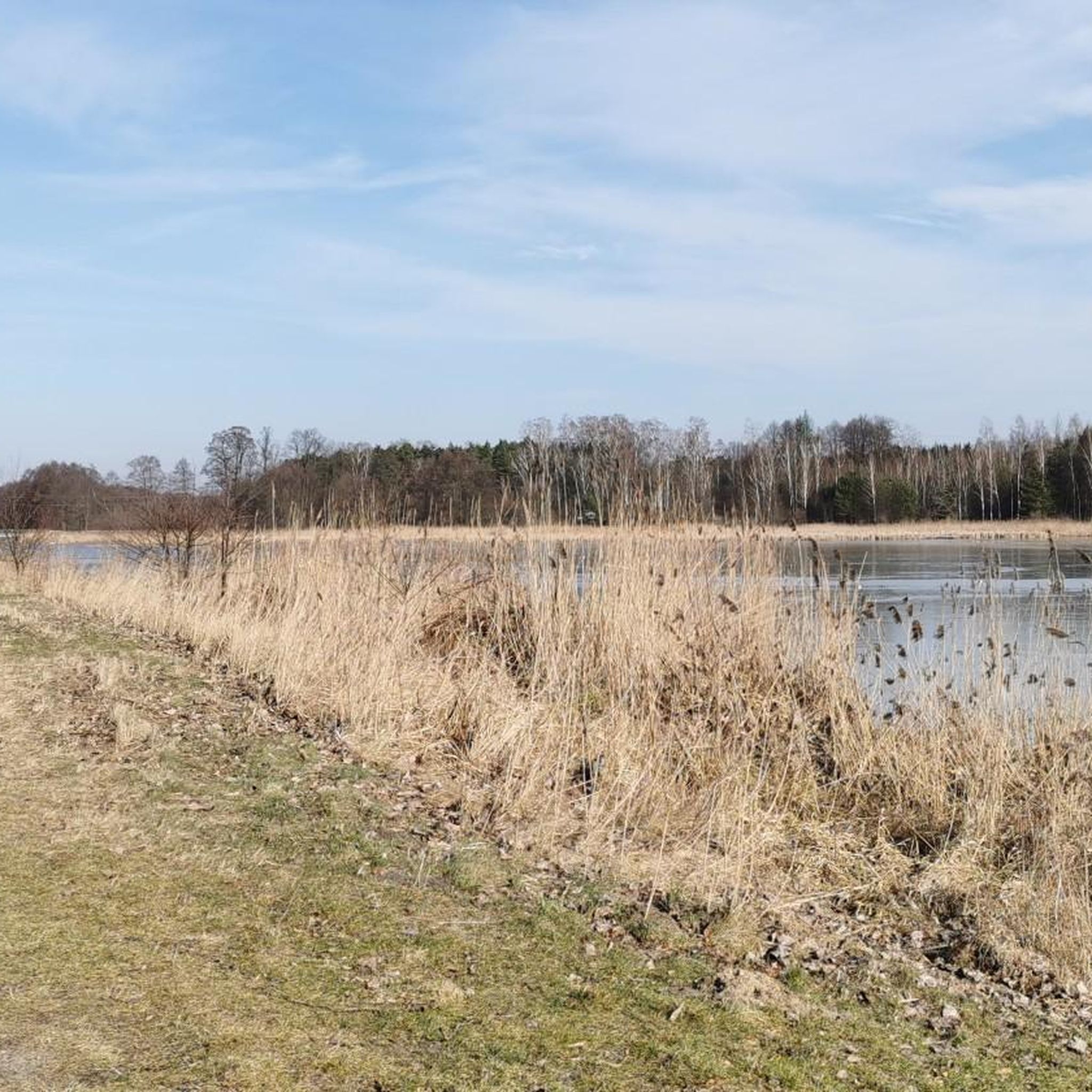
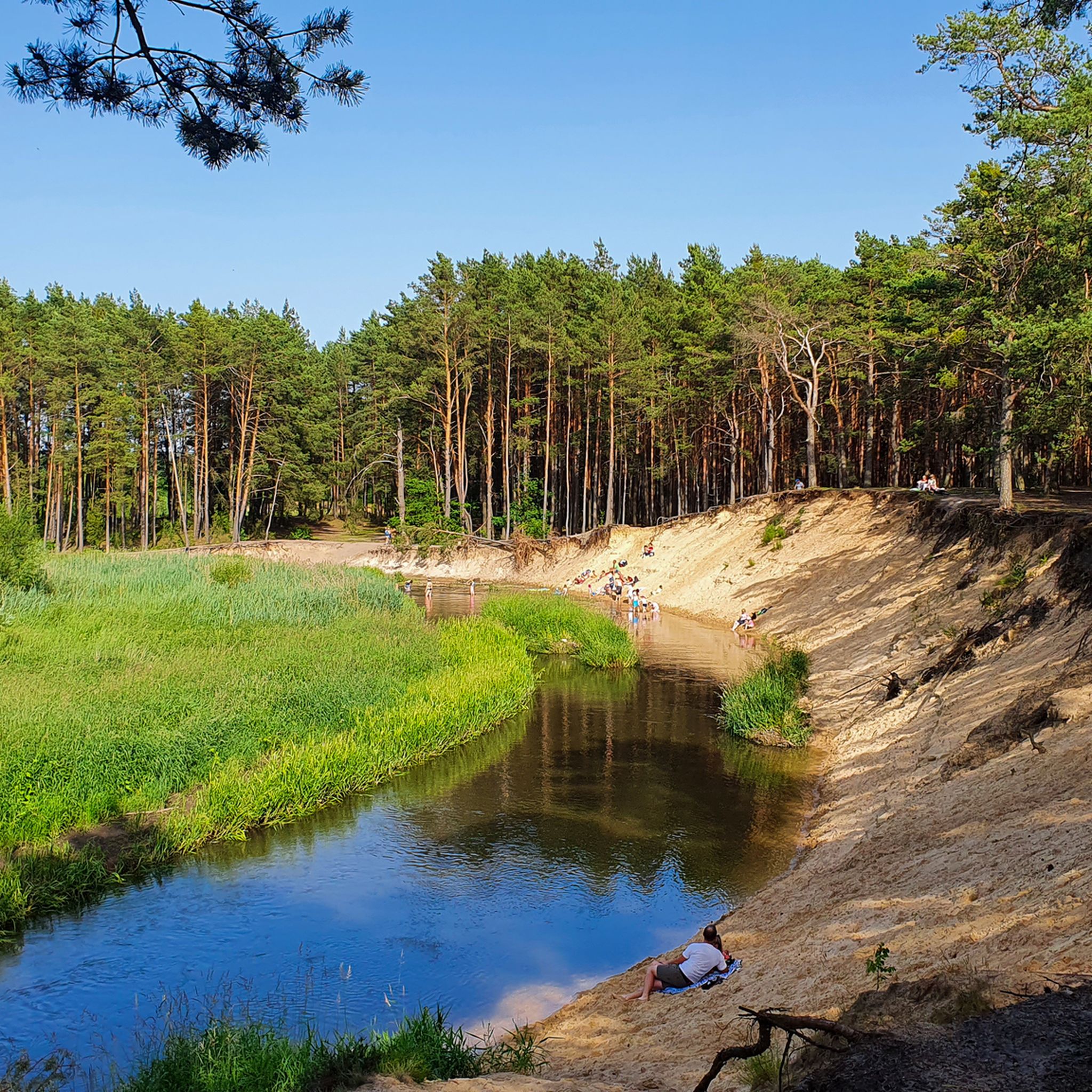
It may not be the French Riviera or even a substitute for Polish Masuria. But as a park with a beach in the city. Quite an interesting development of the place.
0
0
The establishment of the Orthodox parish in Piotrków is associated with a group of Greeks who came to Piotrków from Macedonia in the mid-18th century. King Stanisław August allowed the opening of an Orthodox pastoral facility in the attic of a private house, owned by the Grabowski family at today's Plac Stefana Czarnieckiego (former Krótka Street) 10 in 1788. The first parish priest was hieromonk Grzegorz, originally from the island of Chios, a monk from one of the Athos communities. He performed his duties until his death in 1832. His duties were taken over by a Russian priest, Fr. Żadziński. Until 1839, the Piotrków parish, as an ethnically Greek one, was not subject to the local structures of the Russian Orthodox Church. It was only after that date that it was incorporated into it, which meant the removal of the Greek language from the liturgy. Located at 15 Juliusza Słowackiego Street. Built in the years 1844–1847, and expanded according to the design of the Russian architect Ivan Vasilyevich Shtrem in the years 1867–1869.
0
0
The courthouse was built according to various designs between 1905 and 1909 according to the design of the provincial architect Feliks Nowicki in a style described as eclectic, Art Nouveau or neoclassical. During World War I, in 1914 during the fighting for the city, a field hospital was set up in its interior. After the end of World War II, the courthouse first housed the Municipal National Council, and then, after the establishment of the Piotrków Trybunalski Voivodeship in 1975, the building was the seat of the Voivodeship Office. Since 1989, it has once again served as a court. The eastern wing of the building with an entrance from Toruńska Street houses the State Archives established in 1919. The building is entered in the register of monuments under the number 278 of 2.04.1979. It is also in the municipal register of monuments of the city of Piotrków Trybunalski.
0
0
The current "old" church of the Visitation of the Blessed Virgin Mary on "Krakówka" is made of brick, built by the efforts of the parish priest of Piotrków, Fr. Spytek, in the years 1372-1373 from the foundation of the starost of Sieradz, then of Piotrków, Jan Kmita of Wiśnicz, in the Gothic style. The founder gave the church the suburban farm of Szczekanica as an endowment, on the condition that one Mass would be celebrated every week for Casimir the Great and his family. He entrusted the care of the new church to the parish priests of Piotrków. This foundation was confirmed in 1392 by Queen Jadwiga. Robbed and burned by the Swedes in 1657. This is mentioned in the Latin inscription on the stone built into the western wall of the porch of the parish church, that in 1657 on April 1, on Easter Day itself, at noon, during lunchtime, the Swedish king with a huge army occupied the suburbs of Piotrków. He burned down the Franciscan and Bernardine churches and the Church of Our Lady on Krakówka, took many residents, both clergy and lay people, into captivity, and brutally murdered some. The church was rebuilt and re-consecrated in 1666 thanks to the charity of the townspeople and the nobility through the efforts of the then parish priest, Father Nowakowicz. In 1848, the church was seriously damaged during a storm. A lightning strike caused the walls to crack. The church was renovated in 1872 through the efforts and funds of Michalecki, a citizen of the city, the president of the church supervision. The church was covered with a new, lower shingle roof. In 1898, when heavy machinery and boilers were being transported along Krakowskie Przedmieście to a factory under construction on Bugaj, the walls of the Church of the Visitation of the Blessed Virgin Mary, built without foundations, began to crumble again. This threatened the building with total ruin. In 1900, thanks to the efforts of the parish priest, Father Aleksander Sałaciński, the church was thoroughly rebuilt. In 1937, the church required renovation again, as the walls were once again starting to show cracks. The security works have been carried out under the parish priest Józef Goździk since 1933. They were interrupted by the outbreak of World War II. In 1940, the Germans fenced off part of the streets in the old town with barbed wire, creating a so-called ghetto for people of Jewish origin. The parish church was on the side of the ghetto and was closed to the faithful.
0
0
The distance of Milejów from Sulejów influenced the monks to decide to build a wooden church in Milejów, which was dedicated to Saint Joseph. Probably as a result of invasions and wars, this temple burned down. In 1468, another wooden church was built, dedicated to Saint Mary Magdalene, which by the decision of Pope Sixtus IV was transferred in 1482 to the pastoral care of the Norbertine Order from Witów. In 1743, the Witów abbey built a third church in Milejów, which it dedicated to the Holy Guardian Angels. This state of affairs lasted until 1819, when Tsar Alexander I abolished the Norbertine Order, taking over the landed estates for the state and entrusting the parish to the care of diocesan priests. Among the many epitaphs decorating the walls of the Milejów church, we find the one dedicated to Fr. Piotr Jankowski, who served as parish priest in the years 1890-1926. It was this priest who contributed to the establishment of the People's House, the Volunteer Fire Department and the current brick church in Milejów, which was consecrated in 1902 by Bishop Stanisław Zdzitowiecki - the ordinary of the Włocławek diocese. In 1920, with the establishment of the diocese and the subsequent expansion of its borders, Milejów was incorporated into the community of the Łódź Church. It should be noted that Bishop Jan Wawrzyniec Kulik came from Milejów - the third auxiliary bishop of the Łódź diocese since its establishment. A painful chapter in the history of the Milejów parish is the period of World War II. After all, after the "Battle for Piotrków Road", which was an expression of commitment to the fight against the occupier, the Germans murdered many residents of Milejów and villages belonging to the parish. Two priests: Fr. Jan Mikołajczyk and Father Stefan Trzaska were taken to the Dachau concentration camp, where they died.
0
0
The establishment of the Orthodox parish in Piotrków is associated with a group of Greeks who came to Piotrków from Macedonia in the mid-18th century. King Stanisław August allowed the opening of an Orthodox pastoral facility in 1788 in the attic of a private house, owned by the Grabowski family at today's Stefan Czarniecki Square (former Krótka Street) 10. The first parish priest was hieromonk Grzegorz, originally from the island of Chios, a monk of one of the Athos communities. He performed his duties until his death in 1832. His duties were taken over by a Russian priest, Fr. Żadziński. Until 1839, the Piotrków parish, as an ethnically Greek one, was not subject to the local structures of the Russian Orthodox Church. It was only after that date that it was incorporated into it, which meant the removal of the Greek language from the liturgy. Located at 15 Juliusza Słowackiego Street. Built in the years 1844–1847, and expanded according to the design of the Russian architect Ivan Vasilyevich Shtrem in the years 1867–1869.
0
0
Frequently Asked Questions
What historical sites can I explore in Piotrków Trybunalski?
Piotrków Trybunalski boasts a rich history. You can visit the charming Old Town, which features a medieval urban layout and approximately 100 historic buildings. Don't miss the Royal Castle, dating back to the early 14th century, or the remnants of the city's 14th and 15th-century town walls. Other notable historical structures include the Renaissance-style Town Hall and the Jaxa-Bykowskis' Palace. For a specific highlight, consider the War Cemetery in Milejów, a significant site established in 1939.
What natural attractions are available for recreation around Piotrków Trybunalski?
For nature lovers, Piotrków Trybunalski offers several green spaces and water bodies. Enjoy the peaceful atmosphere of Park Fr. Jozef Poniatowski or Park Belzacki. A popular spot for water activities is Słoneczko Beach at Lake Bugaj, which provides an eighty-meter sandy beach, water equipment rentals, and sports facilities. Nearby, the Sulejów Reservoir and Cieszanowice Reservoir are also popular for recreation and fishing.
Are there any unique cultural or religious sites to visit?
Yes, the city has a diverse array of cultural and religious sites. The Great Synagogue, built between 1791 and 1793, now serves as the Public Library. You can also visit historic churches such as St. Jacob Church (13th century), the 19th-century All Saints' Orthodox Church, and the Church of the Visitation of the Blessed Virgin Mary. A unique cultural highlight is the Brewing Museum, offering an interesting glimpse into local history.
What outdoor activities or trails are available near Piotrków Trybunalski?
The region around Piotrków Trybunalski offers various outdoor activities. You can explore the Pilica Recreational Trail, a 122-kilometer path that connects monuments in Piotrków and surrounding villages. For hiking, komoot users enjoy routes like the 'Słoneczko Beach – View of Jezioro Bugaj loop' or the 'Water Canal in the Park loop'. You can find more details on these and other trails in the Hiking around Piotrków Trybunalski guide. For gravel biking, there are routes around Sulejów Reservoir and Wierzeje Reservoir, detailed in the Gravel biking around Piotrków Trybunalski guide.
Are there easy hiking trails suitable for families or casual walkers?
Absolutely. Many of the hiking routes near Piotrków Trybunalski are rated as easy, making them suitable for families and casual walkers. For example, the 'Słoneczko Beach loop from Piotrków Trybunalski' is an easy 3.9 km route. Other easy options include the 'View of Jezioro Bugaj loop' and the 'Vabank Bench – All Saints Orthodox Church loop'. You can discover more easy trails in the Easy hikes around Piotrków Trybunalski guide.
When is the best time of year to visit Piotrków Trybunalski?
Piotrków Trybunalski can be enjoyed throughout the year, but the warmer months, particularly from late spring to early autumn (May to September), are ideal for outdoor activities and exploring the natural features like Słoneczko Beach and the parks. The city also hosts cyclical cultural events, such as Piotrków Days in early June, which can enhance a visit during that period.
Are there family-friendly attractions in Piotrków Trybunalski?
Yes, several attractions are suitable for families. Słoneczko Beach at Lake Bugaj is a great option with its sandy beach, water equipment rentals, and sports pitches. Parks like Park Fr. Jozef Poniatowski offer green spaces for relaxation and play. Historical sites such as the Old Town Market Square and the War Cemetery in Milejów can also be educational for older children.
What are some architectural highlights or unique buildings in the city?
Beyond the historical Old Town, Piotrków Trybunalski features several interesting architectural pieces. The renovated Railway Station, with origins in the mid-19th century, is a point of interest. The Historic Courthouse, designed by Felix Nowicki and built in 1909, is a notable white structure. Also, look out for the city's Water Tower, which has a distinctive appearance, and the Red Brick Factory Tower.
Where can I find places to eat or relax near the attractions?
The Old Town Market Square is a vibrant area with cafes and restaurants where you can enjoy a meal or a drink. At Słoneczko Beach, there is a gastronomic garden perfect for relaxing after an active day. Additionally, local markets offer opportunities to experience local flavors and find fresh produce.
Are there any significant religious buildings outside the city center?
Yes, a particularly significant religious complex nearby is the Cistercian Abbey Complex in Sulejów, located in Podklasztorze. It is one of Poland's best-preserved Cistercian complexes, an important monument of Romanesque architecture, and a listed Historic Monument. Within the city, the Church of the Assumption of the Blessed Virgin Mary in Milejów is also a notable religious building with a rich history dating back to 1902, built on the site of earlier wooden churches.
What is the 'Movie City Route' in Piotrków Trybunalski?
Piotrków Trybunalski has been a popular filming location for many Polish productions. The 'Movie City Route' is a special trail designed to guide tourists to places within the city that have been featured in various films, offering a unique perspective on the city's role in Polish cinema.
Most popular routes around Piotrków Trybunalski

Get inspired with the komoot mobile app


Didn’t find what you were looking for?
Are you keen on exploring more awesome places nearby? Browse our guides:
Explore more
Still not found the Highlight you’re looking for? See guides of the top attractions in other regions:
