Attractions and Places To See in Schwaighauser Forst - Top 20
Best attractions and places to see in Schwaighauser Forst, a 16.20 km² forest area in the Regensburg district of Bavaria, offers a diverse range of attractions. This region features notable landmarks, natural features, and cultural sites. Visitors can explore ancient Celtic burial mounds, historical military sites, and extensive woodlands. The area provides opportunities for nature enthusiasts and those interested in history.
Best attractions and places to see in Schwaighauser Forst
- The most popular attractions is Wooden bridge with stone railing…
Last updated: July 15, 2026
Bismarck Column Schwaighausen-Geiersberg
Highlight • Monument
A Bismarck-enthusiastic forester and other Bismarck admirers initiated the construction of this Bismarck fire column. Schwaighausen-Geiersberg (since 1997: Markt Lappersdorf) was chosen as the location. The cost and …
Translated by Google •
Tip by

St. Wenceslas Chapel of Aschach
Highlight • Religious Site
The Aschach chapel is located on an artificial terrace southwest of the residential building and is mentioned for the first time in a letter of protection …
Translated by Google •
Tip by
Sign up now to discover places like this
Get recommendations on the best single tracks, peaks, & plenty of other exciting outdoor places.
Sign up for free
Wooden bridge with stone railing on the Besinnungsweg Hainsacker
Highlight • Bridge
Translated by Google •
Tip by

Dürrloch Cave Entrance
Highlight • Cave
Not far from the gravel road, but currently not to be seen due to tree foliage and bushes.
Translated by Google •
Tip by

Pine Forest Trail Near the Motorway Underpass
Highlight (Segment) • Trail
With increasing distance to the highway the disturbing traffic noises disappear.
Who does not bother with the …
Translated by Google •
Tip by

Sign up for free to discover even more attractions in Schwaighauser Forst.
Sign up for free
Already have an account?
Start today with a free account
Your next adventure awaits.
Login or Signup

Tips from the Community

What a beautiful place on this route
0
0
What a beautiful place on this route
0
0

Chapel of St. Wenceslaus The Aschach chapel is located on an artificial terrace southwest of the residential building and is mentioned for the first time in a letter of protection from Pope Gregory IX. mentioned on May 14, 12138. The current construction status with a steep gable roof dates back to the construction work in 1473/74. An unknown builder accentuated the building with a retracted, square east choir, which is characterized by a smaller height and width on the outside. Inside the church, this corresponds to a flat ceiling in the nave and an ogival, ridged cross vault in the choir. The cellar room with a barrel vault, which is unusual for a chapel, is entered from the east via a steep staircase. An opening on the south side of the chapel, which is hardly intended as a light but rather as a filling shaft, indicates that it was once used as a storage facility. The Wenzeslaus Chapel was a branch church of Hainsacker and was severely devastated during the Thirty Years' War. An altar structure with two columns can be found in the 18th century and a supporting altar in the 19th century. The hospital's accounting books provide reliable information about minor construction and repair work on the chapel, for example the renovation or renewal of the altarpiece is noted for the year 1462/63. The next repair work dates back to 1720. In the 1760s the chapel was to receive a bell tower. However, the plan drawing of the tower preserved in the hospital archives was never implemented. On October 25, 1860, the responsible pastor, Achatz von Hainsacker, was informed by the hospital administration that due to “the dilapidated condition” in the chapel in Aschach, he could only say mass in the parish church in Hainsacker. Again in 1889, Pastor Köppl regretted the decay of the chapel. It was only at the beginning of the 1930s that the chapel was renovated on the orders of hospital master Leingärtner, so that it could be returned to its sacred purpose on January 4, 1932. Today's furnishings date from this time. The flat ceiling above a wide hollow is adorned with a painting of St. Katharina, on the side of the Gothic choir arch there are depictions of St. Leonhard (left) and St. Wenceslaus (right). The last major renovation of the chapel was completed in 2003. Source: www.oberpfaelzerkulturbund.de
3
0
Bismarck Column A Bismarck-enthusiastic forester and other Bismarck admirers initiated the construction of this Bismarck fire column. Schwaighausen-Geiersberg (since 1997: Markt Lappersdorf) was chosen as the location. The cost and financing of the pillar are not known. The column was erected by Regensburg officers from the 11th Royal Bavarian Infantry Regiment “Von der Tann”. Quarry stones were used as building material. A four-tier, triangular substructure (height: 0.74 m) serves as the basis of the 3.38 m high triangular fire column. The 1.78 m high column (in the shape of an equilateral triangle) rises on the top step. In the middle of the column shaft on the front, a 0.36 m high and 0.35 m wide Bismarck coat of arms (green escutcheon, green clover leaf, silver oak leaves) made of iron was attached. A 0.17 m high stone was built above the triangular column shaft, which serves as the base of a three-legged ornate metal holder that supports the fire bowl (diameter: 0.60 m). The year “1899” is scratched on the brick base stone. The Pillar of Fire was inaugurated on June 8, 1899. The fire bowl was stolen in the mid-1960s. In 1986, the rusted fire bowl holder was replaced by a fire bowl designed by Bernhard Frahsek by Mr. Menath from Oppersdorf. The masonry of the column was repaired by the Spitz company from Kareth. The current owner of the column (Ev. Charity Foundation Regensburg) bore the costs. A metal cross was subsequently placed above the Bismarck coat of arms in memory of a suicide and several suicide attempts in the area of the column. The column still stands today - in an idyllic location - on the edge of a clearing. The substructure is heavily overgrown with moss. Source: www.bismarcktuerme.net
3
0
Drought Hole Cave Ice Age animal bones, human skeletal remains and ceramic shards were found in this approximately 120 m long cave system. Based on excavation finds, a settlement dating back several thousand years has been proven: a pottery from the Münchshöfen group (4500 BC to 3800 BC), a shard from the Rössen culture (middle Neolithic period, 4500 to 4300 BC), shards from the Urnfield culture (1300 to 800 BC) and the Hallstatt period (800 to 450 BC), as well as medieval shards were found. The cave is a roost for bats and was closed for this reason. Source: Wikipedia
2
0

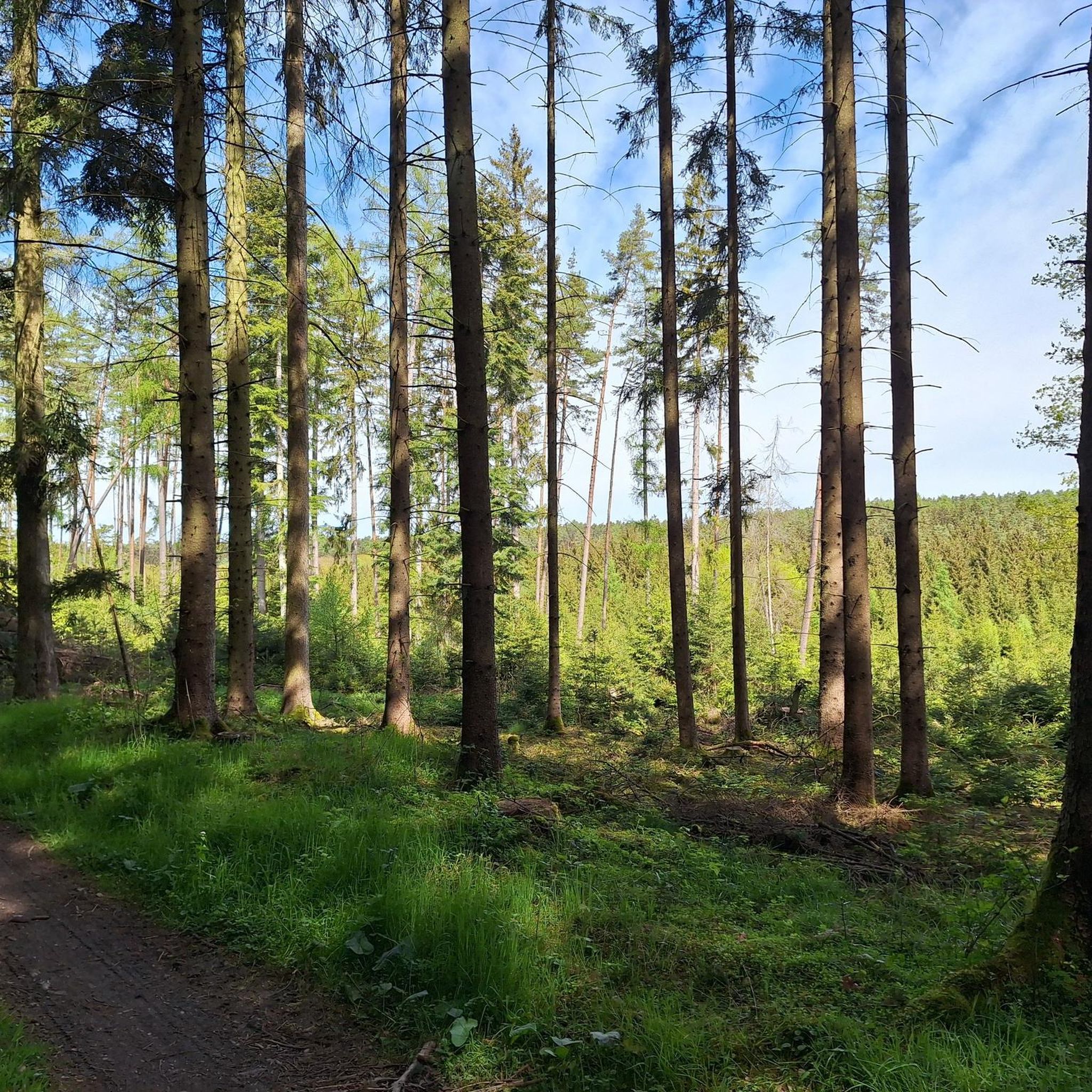
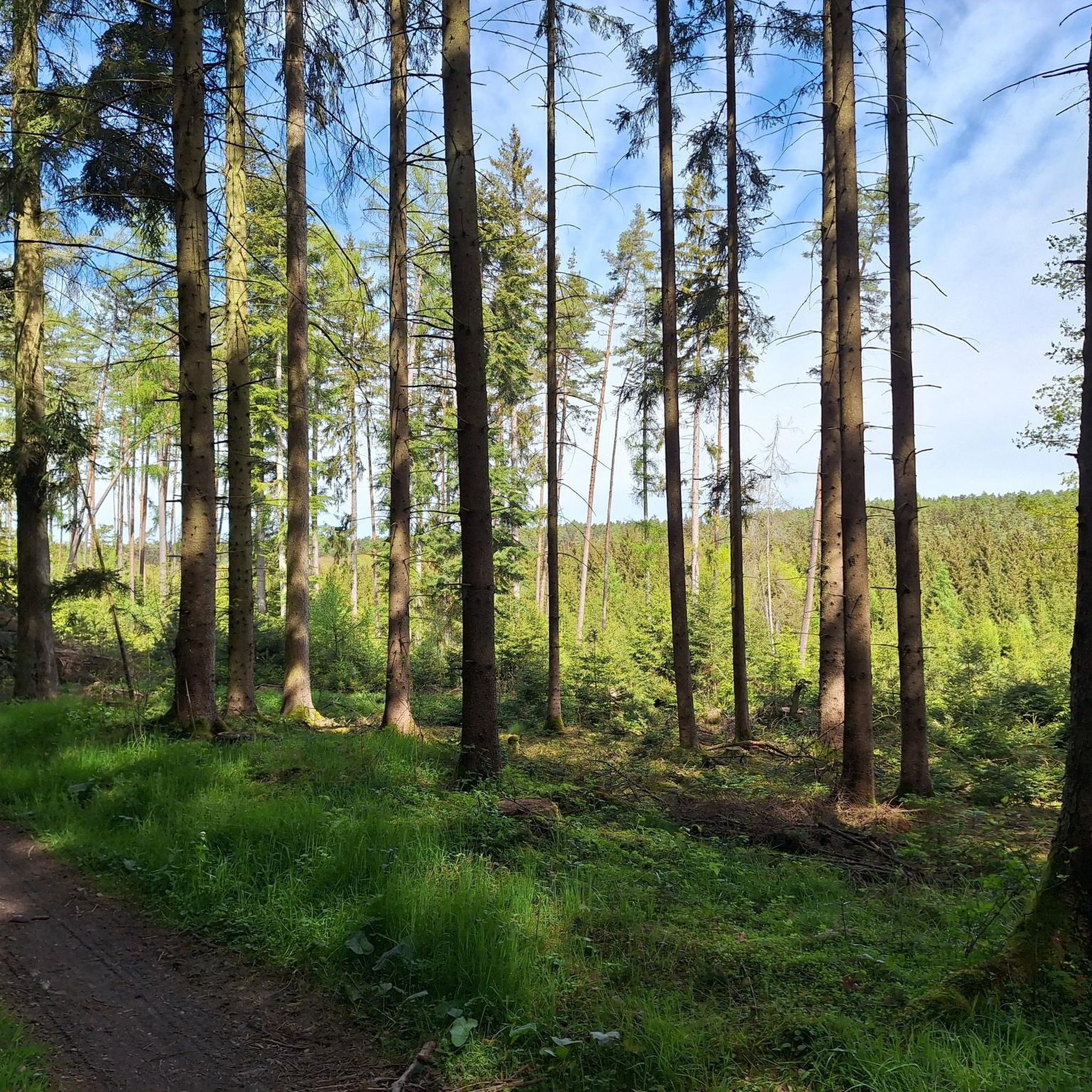
Very nice trail. In wet weather partly slippery.
1
0

Can be driven in both directions, the first stretch away from the motorway is uphill and slightly rooty.
2
0

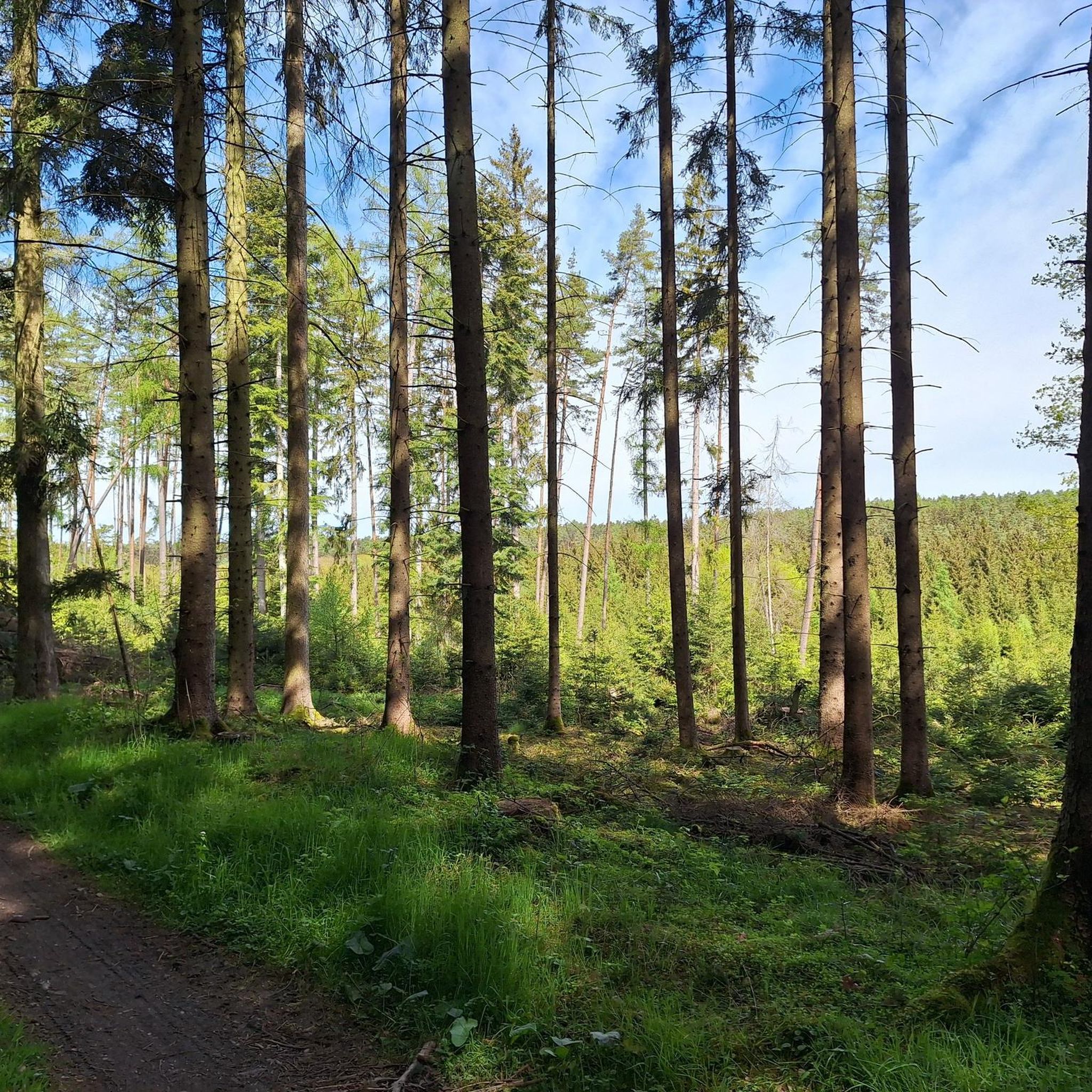
a wonderful place on the hiking trail at any time of the day and season.
1
0
Frequently Asked Questions
What historical sites can I explore in Schwaighauser Forst?
Schwaighauser Forst is rich in history. You can visit the well-preserved medieval Burg Wolfsegg, which houses a museum. The area also features ancient Celtic burial mounds and remnants of historical military sites. Don't miss the Bismarck Column Schwaighausen-Geiersberg, erected in 1899, and the historic St. Wenceslas Chapel of Aschach, dating back to the 13th century.
What natural features can I discover in Schwaighauser Forst?
The region is primarily an extensive forest area, offering lush woodlands. You can explore the Dürrloch Cave System, known for its archaeological findings and as a bat roost. The forest also contains important biotopes like Dürrwiesweiher and Schwarzer See, home to rare frog and toad species. For an educational experience, visit the Bodenkundlicher Lehrpfad (Soil Science Educational Path) at Schneckenberg.
Are there easy hiking trails suitable for all fitness levels?
Yes, Schwaighauser Forst offers several easy hiking options. The Besinnungsweg Hainsacker is an easy trail suitable for all fitness levels, leading to the Statue of St. Francis. A highlight along this path is the Wooden bridge with stone railing on the Besinnungsweg Hainsacker. For more easy routes, you can explore the Easy hikes in Schwaighauser Forst guide, which includes routes like the 'Saint Francis Statue – Baumorgel Laitlajärvi loop'.
What kind of outdoor activities can I do in Schwaighauser Forst?
Beyond exploring attractions, Schwaighauser Forst is excellent for outdoor activities. You can enjoy various hiking trails, from easy walks to moderate loops. The area is also popular for running. For detailed routes, check out the Hiking in Schwaighauser Forst guide and the Running Trails in Schwaighauser Forst guide.
Are there any family-friendly attractions or activities?
Absolutely. The Besinnungsweg Hainsacker, with its easy terrain and points of interest like the Wooden bridge with stone railing and the Statue of St. Francis, is ideal for families. The Bodenkundlicher Lehrpfad (Soil Science Educational Path) also offers an engaging and educational experience for children and adults alike, teaching about the forest's underground world.
What is the Pine Forest Trail Near the Motorway Underpass like?
The Pine Forest Trail Near the Motorway Underpass is a wide, easy-to-drive trail that offers a direct connection to the motorway underpass. It's known for its extensive pine trees and is suitable for those who enjoy forest drives or walks. While initially near the motorway, the traffic noises diminish as you venture further into the forest.
Can I find any unique or 'hidden gem' spots in the forest?
Yes, beyond the main attractions, the Schwaighauser Forst holds some unique spots. The Dürrloch Cave System, though sealed to protect bats, is a fascinating historical and natural feature. The numerous Celtic burial mounds scattered throughout the forest also offer a glimpse into ancient human presence, providing a sense of discovery for those who seek them out.
What do visitors enjoy most about Schwaighauser Forst?
Visitors particularly appreciate the blend of nature and history. The serene atmosphere of the extensive woodlands, combined with the historical significance of sites like Burg Wolfsegg and the ancient burial mounds, creates a unique experience. The well-maintained hiking trails, such as the Besinnungsweg Hainsacker, are also highly valued for their accessibility and scenic beauty.
Are there any specific viewpoints or scenic spots?
While Schwaighauser Forst is primarily a forest landscape, the area around Burg Wolfsegg offers picturesque views of the surrounding countryside. The Wooden bridge with stone railing on the Besinnungsweg Hainsacker is also noted as a wonderful, scenic spot along the hiking trail at any time of day or season.
What is the best time of year to visit Schwaighauser Forst?
Schwaighauser Forst offers different charms throughout the year. Spring brings fresh greenery and blooming flora, while autumn transforms the forest with vibrant colors, making it ideal for hiking. Summer is perfect for enjoying the shade of the trees, and even in winter, the trails can be beautiful for a crisp walk, though some paths might be less accessible depending on snow conditions.
Are there any educational paths in the area?
Yes, the Bodenkundlicher Lehrpfad (Soil Science Educational Path) at Schneckenberg is an approximately 1.5-kilometer circular path. It features eight information boards that provide insights into the formation, diversity, functions, and importance of local soils for sustainable forest management, offering an engaging learning experience.
Most popular routes in Schwaighauser Forst

Get inspired with the komoot mobile app


Explore more
Still not found the Highlight you’re looking for? See guides of the top attractions in other regions:
