Attractions and Places To See around Hochdorf-Assenheim - Top 20
Best attractions and places to see around Hochdorf-Assenheim include a blend of historical sites, cultural experiences, and natural features. Located in the "Gemüsegarten der Vorderpfalz," the area is characterized by agriculture and wine growing. Visitors can explore historical buildings within the municipality and natural points of interest in the surrounding Palatinate region. The landscape offers opportunities for outdoor activities like hiking and cycling.
Best attractions and places to see around Hochdorf-Assenheim
- The most popular attractions is Kriemhildenstuhl Roman Quarry,…
Last updated: May 9, 2026
Wachtenburg Castle Ruins
Highlight • Castle
Translated by Google •
Tip by

St. Michael's Chapel, Deidesheim
Highlight • Religious Site
Translated by Google •
Tip by

Sign up now to discover places like this
Get recommendations on the best single tracks, peaks, & plenty of other exciting outdoor places.
Sign up for free
Kriemhildenstuhl Roman Quarry
Highlight • Historical Site
Many display boards provide information on site about this cultural and historical highlight.
Due to the proximity to the city and the good …
Translated by Google •
Tip by

Heidenlöcher - 9th-10th century refuge (with knight's stone no. 260)
Highlight • Historical Site
Translated by Google •
Tip by

Bad Dürkheim Graduation Tower
Highlight • Monument
Translated by Google •
Tip by

Sign up for free to discover even more attractions around Hochdorf-Assenheim.
Sign up for free
Already have an account?
Start today with a free account
Your next adventure awaits.
Login or Signup

Tips from the Community

A highlight for big and small
24
2

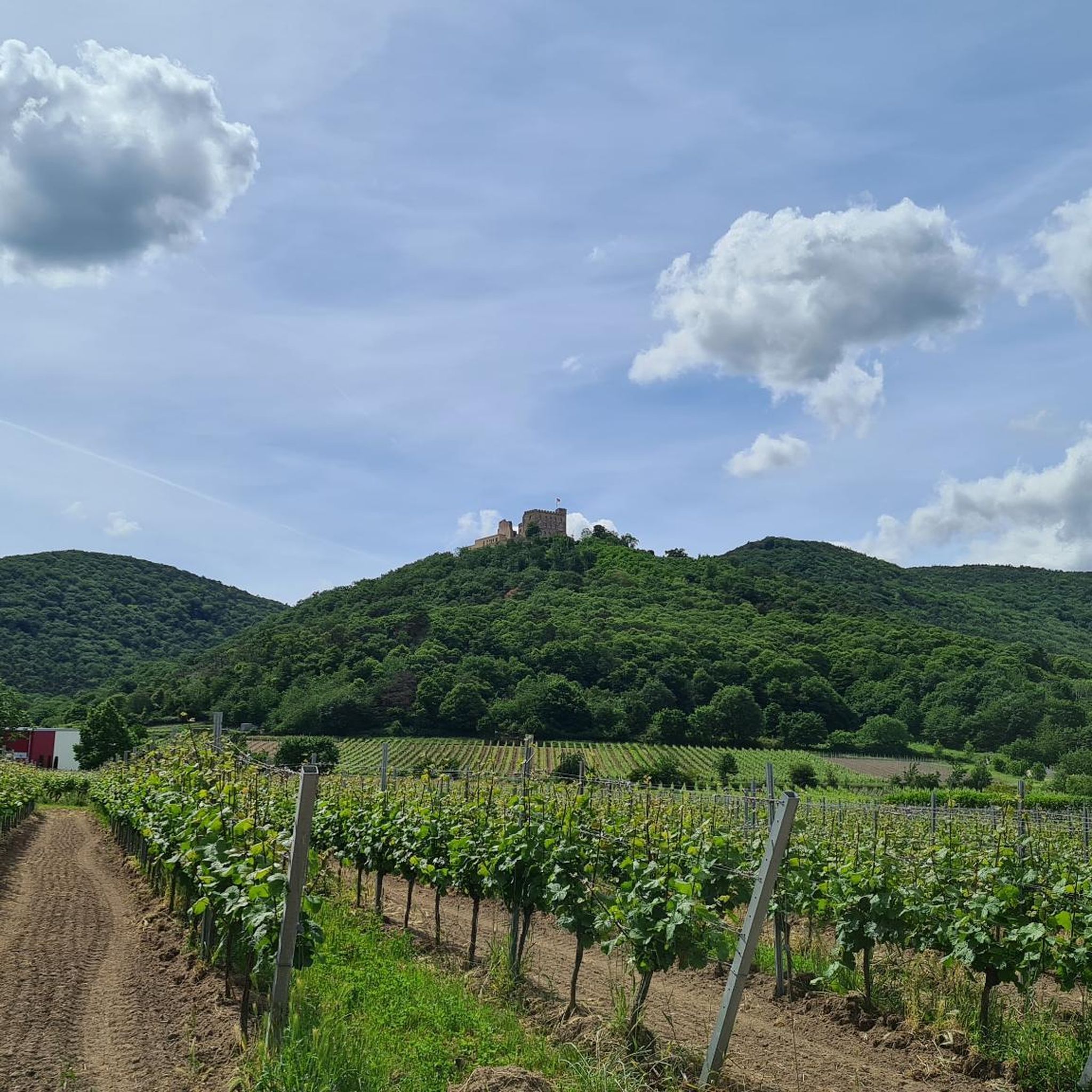
In the castle museum there are exhibits of life from earlier times. Arrowheads, bullets and other paraphernalia are on display, as well as pottery and stove tiles. Traces of tools on the crockery reveal that the oldest find can be dated back to 1180. The imposing model of the castle is also on display. It shows the castle founded around 1200. The support group for the preservation of the ruins of Wachtenburg has set itself the goal of preserving the Wachtenburg. Many thanks from my side for your commitment.
18
0

Here stands Ritterstein No. 260. It is one of over 300 Rittersteine (memorial stones) erected by the Palatinate Forest Association (PWV) and bears the inscription "Heidenlöcher – Refuge Castle 9th-10th Century." It marks the remains of a refuge castle that served as protection against the warring Normans and Hungarians. Today, the foundations of two gate structures, 65 stone houses, and a 450-meter-long curtain wall are still preserved. The inner of the two adjoining dry-stone walls served as a parapet walk. - Source: Information panels on site A little further to the right of this Ritterstein are the foundations of one of the gate structures. The refuge castle, or rather its remains, can be entered through the two gate structures. The curtain wall can be easily walked along (with minor exceptions): either on top of the wall or along its inner side – and the remains of many stone houses can be seen along the way. Without Komoot, it is easy to get lost here: Therefore, it is best to follow the "Palatinate Wine Trail" hiking signs!
12
0

The entire facility is very exciting. A look into early history.
8
0
An impressive castle ruin on the Palatinate Wine Trail. There is a place to stop for refreshments and you can climb the tower ruins, beautiful view!
20
1

This Deidesheimer church was consecrated to the Archangel Michael. The name (coming from Hebrew) means "Who is like God?". He is often depicted - on paintings or as a statue - with a flaming sword, and occasionally a lance. Michael is - together with Raphael, Gabriel and Uriel - one of the four archangels who (according to human imagination) occupy the highest rank in the heavenly hierarchy of angelic beings. Their common feast day in the saints calendar is September 29th.
12
1

Even at the saltworks below you can breathe better because of the salt water that flows through brushwood. You can tell immediately how clean the air is there.
9
0
In contrast to the (red) quarries in the middle of the Palatinate Forest, sandstone on the Haardt edge is white and yellow! Many of the inscriptions/pictures that can be found on the walls are explained on a beautiful information board and marked with red arrows on the walls of the quarry. Horse pictures are particularly easy to recognize. These rock paintings come from the Roman legionnaires who worked in the quarry here. Also carved into the stone: a large memorial plaque for the Bad Dürkheim soldiers who died in World War I and all their names.
23
2
Frequently Asked Questions
What historical sites can I visit in and around Hochdorf-Assenheim?
The region offers a rich history. Within Hochdorf-Assenheim, you can explore the Catholic Parish Church of St. Petrus (1756) and the Protestant Parish Church (1752-1758), along with well-preserved late Baroque residential houses and farmsteads. Nearby, don't miss the Kriemhildenstuhl Roman Quarry, an ancient Roman site, the impressive Wachtenburg Castle Ruins, and the Heidenlöcher, ruins of a hilltop refuge castle.
Are there any ancient Roman sites near Hochdorf-Assenheim?
Yes, the Kriemhildenstuhl Roman Quarry is a significant ancient Roman site near Bad Dürkheim, dating back to around 200 AD. It features unique white and yellow sandstone and contains rock paintings and inscriptions made by Roman legionnaires.
What kind of outdoor activities are available near Hochdorf-Assenheim?
The area around Hochdorf-Assenheim is excellent for outdoor activities, especially hiking and cycling through fields, meadows, and forests. You can find various routes for gravel biking, road cycling, and running. The Palatinate Wine Trail and Palatinate Forest offer numerous trails for all skill levels.
Are there good viewpoints for scenic photography?
Absolutely. The St. Michael's Chapel in Deidesheim offers beautiful panoramic views of the wine villages, the Rhine plain, Heidelberg, and the Odenwald. On clear days, you might even see the Black Forest. The Wachtenburg Castle Ruins also provide stunning vistas of the Rhine valley from its climbable tower.
Are there family-friendly attractions around Hochdorf-Assenheim?
Yes, several attractions are suitable for families. The Kriemhildenstuhl Roman Quarry is considered family-friendly, offering an educational experience with its historical significance. The Heidenlöcher, with its castle ruins and forest setting, can also be an engaging exploration for families. Additionally, the Bad Dürkheim Graduation Tower is a family-friendly site where you can experience improved air quality.
What is the significance of the Heidenlöcher near Deidesheim?
The Heidenlöcher are the ruins of a hilltop refuge castle, believed to date back to Carolingian or Ottonian times (9th-10th century). It served as protection against warring Normans and Hungarians. Visitors can explore the foundations of gate structures, stone houses, and a 450-meter-long curtain wall, offering a glimpse into ancient defensive architecture.
Where can I experience the unique air quality of a saltworks nearby?
You can visit the Gradierwerk Bad Dürkheim (Saltworks). Even from below, you can experience the improved air quality as saltwater flows through brushwood, creating a beneficial microclimate.
What do visitors enjoy most about the attractions near Hochdorf-Assenheim?
Visitors particularly enjoy the stunning panoramic views from places like St. Michael's Chapel and Wachtenburg Castle Ruins. The historical depth of sites like the Kriemhildenstuhl Roman Quarry and the Heidenlöcher is also highly appreciated, offering educational and engaging experiences.
Are there dog-friendly trails or attractions in the area?
Yes, the Heidenlöcher are noted as dog-friendly, allowing you to explore the historical ruins and surrounding forest with your canine companion. Many of the natural trails and paths through the fields and vineyards around Hochdorf-Assenheim are also suitable for walks with dogs.
What is the best time to visit Hochdorf-Assenheim for outdoor activities?
The region, known as the 'Gemüsegarten der Vorderpfalz' and for its wine growing, is pleasant for outdoor activities throughout much of the year. Spring and autumn generally offer the most comfortable temperatures for hiking and cycling, with blooming landscapes or vibrant fall colors. Summer is also popular, especially for enjoying the vineyards, though it can be warmer.
Can I find refreshments or places to eat near the attractions?
Yes, the Wachtenburg Castle Ruins feature a castle tavern where you can stop for refreshments. Many of the wine villages in the surrounding Palatinate region, such as Deidesheim, also offer various cafes, pubs, and restaurants.
Are there any cultural monuments within Hochdorf-Assenheim itself?
Yes, Hochdorf-Assenheim has several cultural monuments. These include the Catholic Parish Church of St. Petrus (1756), the Protestant Parish Church (1752-1758), the former School and Town Hall (1819), various well-preserved late Baroque residential houses and farmsteads, and a late Baroque Way Chapel from 1785. The cemetery, established in the 1820s/30s, also features historical grave crosses.
Most popular routes around Hochdorf-Assenheim
Most popular attractions around Hochdorf-Assenheim

Get inspired with the komoot mobile app


Explore more
Still not found the Highlight you’re looking for? See guides of the top attractions in other regions:
