The best walks and hikes around Forest Of Alyth
4.5
(100)
707
hikers
37
hikes
Hiking around Forest Of Alyth offers a variety of trails through a landscape characterized by woodlands, lochs, and rolling hills in Perth and Kinross. The region features routes that traverse open countryside and follow waterways, providing diverse terrain for outdoor activities. Elevations are generally moderate, with some paths offering gentle gradients suitable for various fitness levels. The area's natural features include several lochs, such as Loch Shandra and Auchintaple Loch, which are central to many hiking experiences.
Best hiking trails…
Last updated: May 12, 2026
4.5
(6)
23
hikers
17.6km
04:46
250m
250m
Moderate hike. Good fitness required. Easily-accessible paths. Suitable for all skill levels.
5.0
(1)
22
hikers
13.8km
03:46
210m
210m
Moderate hike. Good fitness required. Easily-accessible paths. Suitable for all skill levels.

Sign up for free
4.5
(2)
10
hikers
11.3km
03:05
170m
170m
Moderate hike. Good fitness required. Easily-accessible paths. Suitable for all skill levels.
3.0
(2)
7
hikers
4.32km
01:15
100m
100m
Easy hike. Great for any fitness level. Easily-accessible paths. Suitable for all skill levels.
4.0
(1)
16
hikers
18.5km
05:11
370m
370m
Hard hike. Very good fitness required. Easily-accessible paths. Suitable for all skill levels.
Get access to more routes and recommendations from other explorers.
Sign up for free
Already have an account?
Our route recommendations are based on thousands of hikes, rides, and runs completed by other people on komoot.
Start today with a free account
Your next adventure awaits.
Login or Signup

Tips from the Community

Leave the path near the solitary tree and head down for a swim.
0
0

Glenisla Kirk, a small Gothic church built in 1821, is located at the west end of Kirkton of Glenisla on the B951. Originally part of a religious site dating back to the 13th century, it was first gifted to the Abbey of Cambuskenneth by King William the Lion and later transferred to the Abbey of Coupar Angus in 1311. After numerous repairs, the original church was replaced with the current structure. Now owned by the Glenisla Church Trust, it continues to serve the community with monthly informal evening services (April to December) and a Christmas Eve Watch Night Service. It also offers a venue for weddings and funerals, with local venues providing additional support.
0
0
Kirkton of Glenisla, an ancient farming community with Bronze Age and Pictish remains, has a deep ecclesiastical heritage reflected in its name, meaning "church town." From the 14th to 16th centuries, it was part of the lands of Coupar Angus Abbey, which influenced the area's farming development. After the Reformation, the lands were feued to the Ogilvy family, later Earls of Airlie, with Forter Castle remaining as a historical landmark. In the 19th century, the area became a romantic destination, attracting Queen Victoria and Prince Albert. Glenisla also saw the construction of Brackny Bridge in 1824, designed by John Justice, marking a significant moment in the area's architectural history.
0
0
Built in 1824 by Dundee engineer John Justice, this 19-meter iron suspension bridge is the oldest of its kind in Scotland and served as a prototype for a larger version at the Haughs of Drimmie. Featuring a sheep gate at one end, it was likely built to help children from Auchenleish cross the River Isla to reach school. Damaged by extreme weather in 2021, it has since been repaired. Previously, a ford behind the manse allowed passage along the Coffin Road, used to transport coffins from Kilry to Glenisla Graveyard, but frequent spates have rendered it impassable.
0
0
Glenisla, planted in 1949, is a productive forest mainly consisting of Sitka Spruce, a species known for its rapid growth and high-quality timber. Introduced to Scotland in 1831 by David Douglas, Sitka Spruce originates from the fog-belt of western North America, where it had various uses such as in basketry and boat caulking. Plans to establish native riparian woodlands are underway, though deer management is crucial to protect young trees. The forest is served by three main burns—Glen Taitney, Finlet, and Muckle—which supply water to the Backwater Reservoir and local rivers, benefiting nearby towns in Angus and Dundee.
0
0
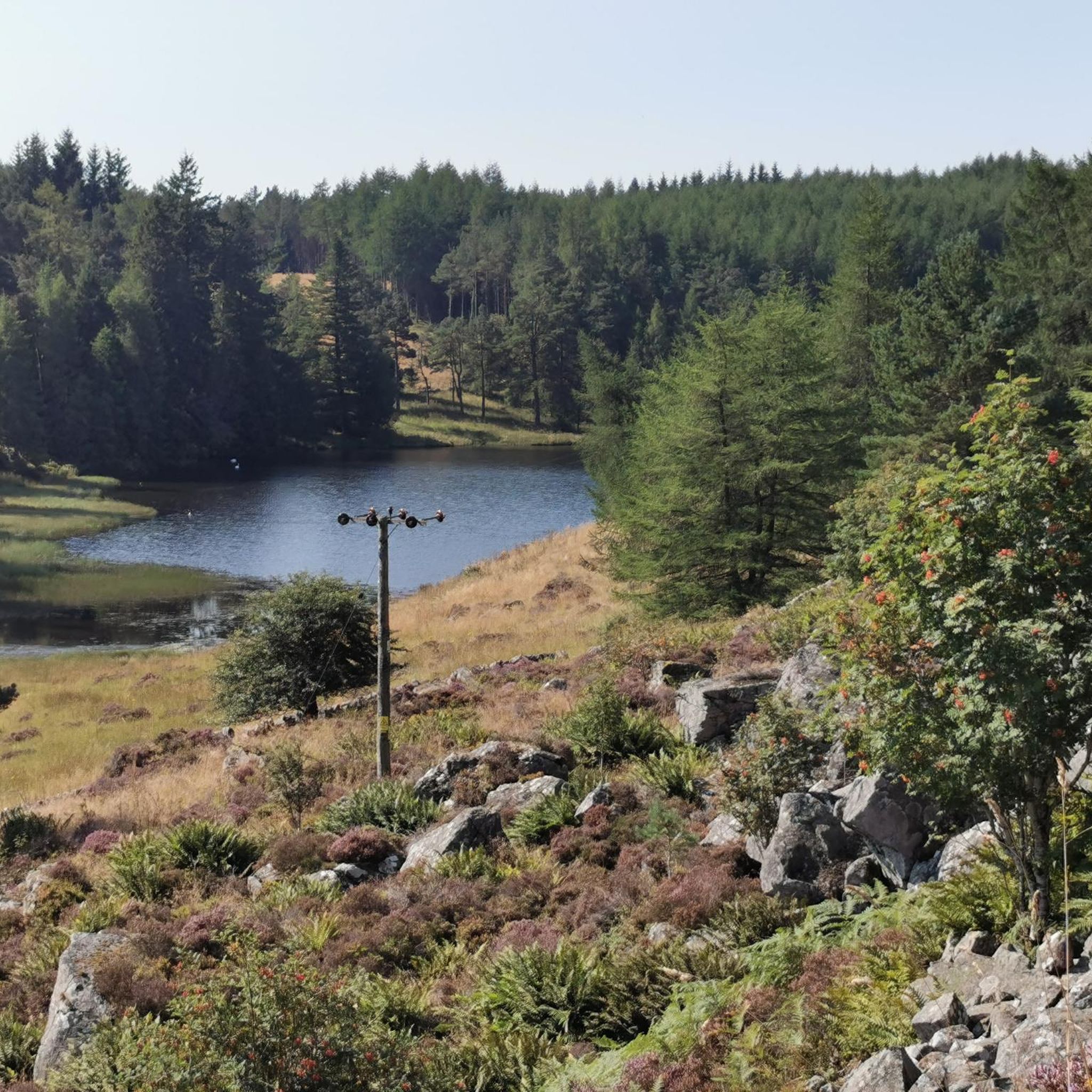
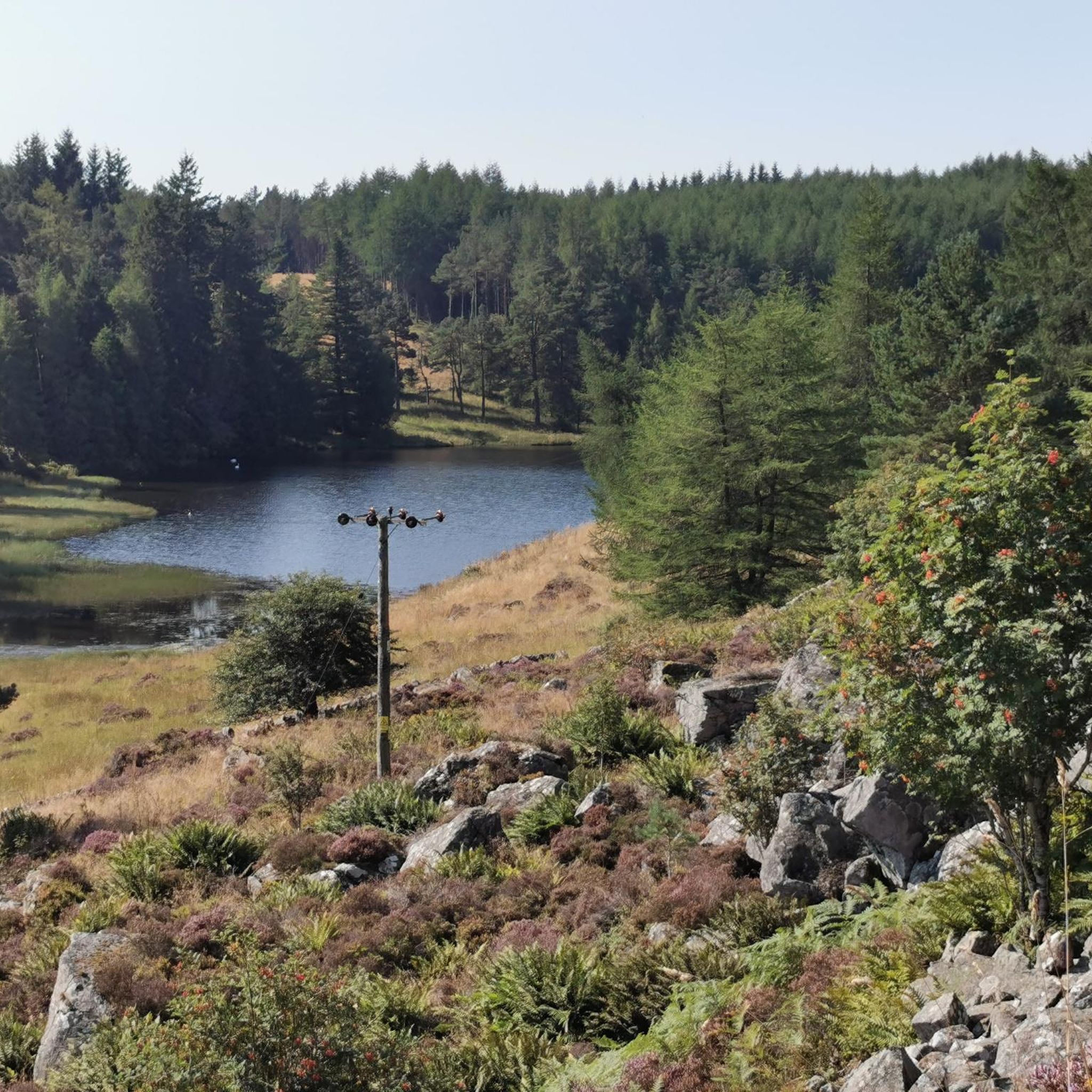
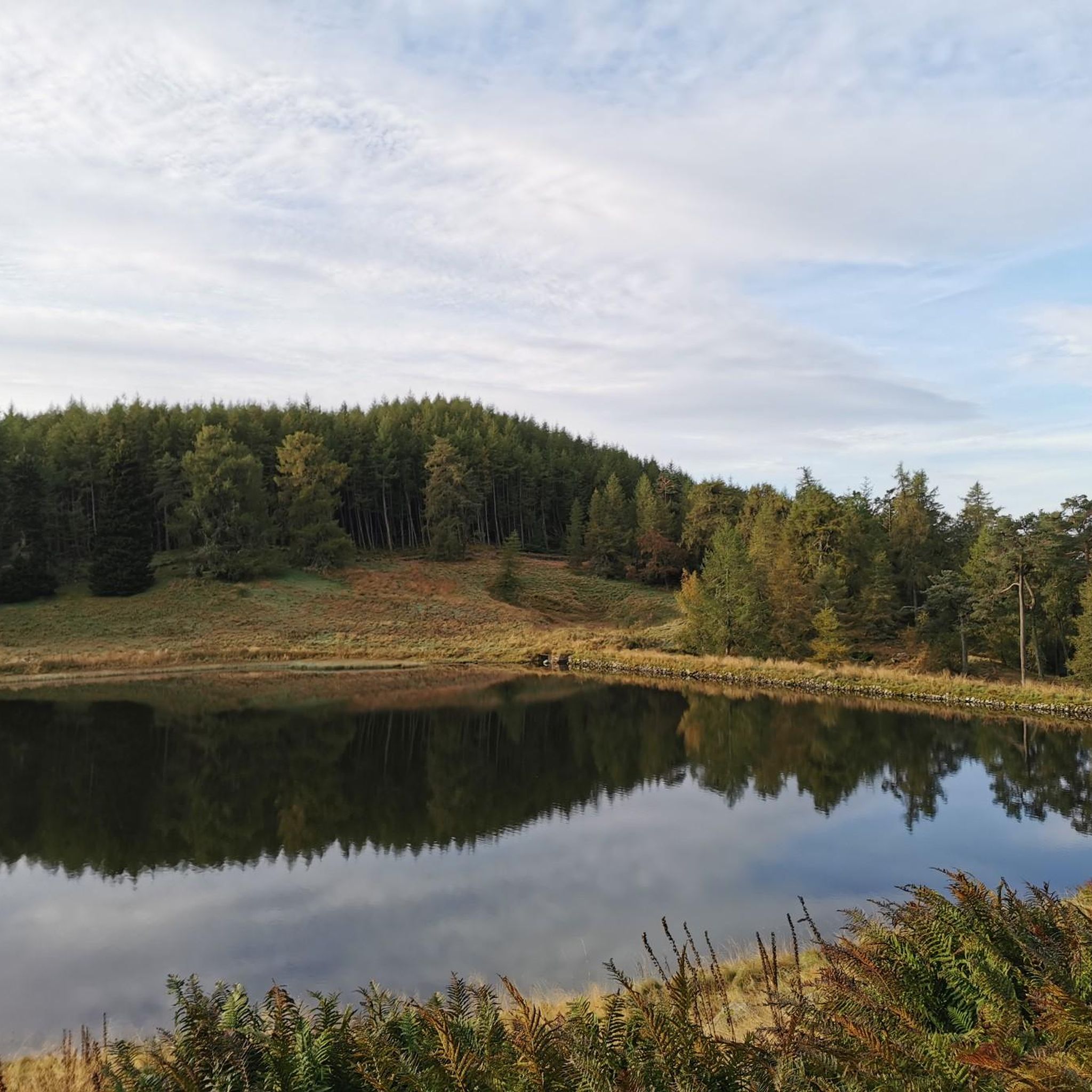
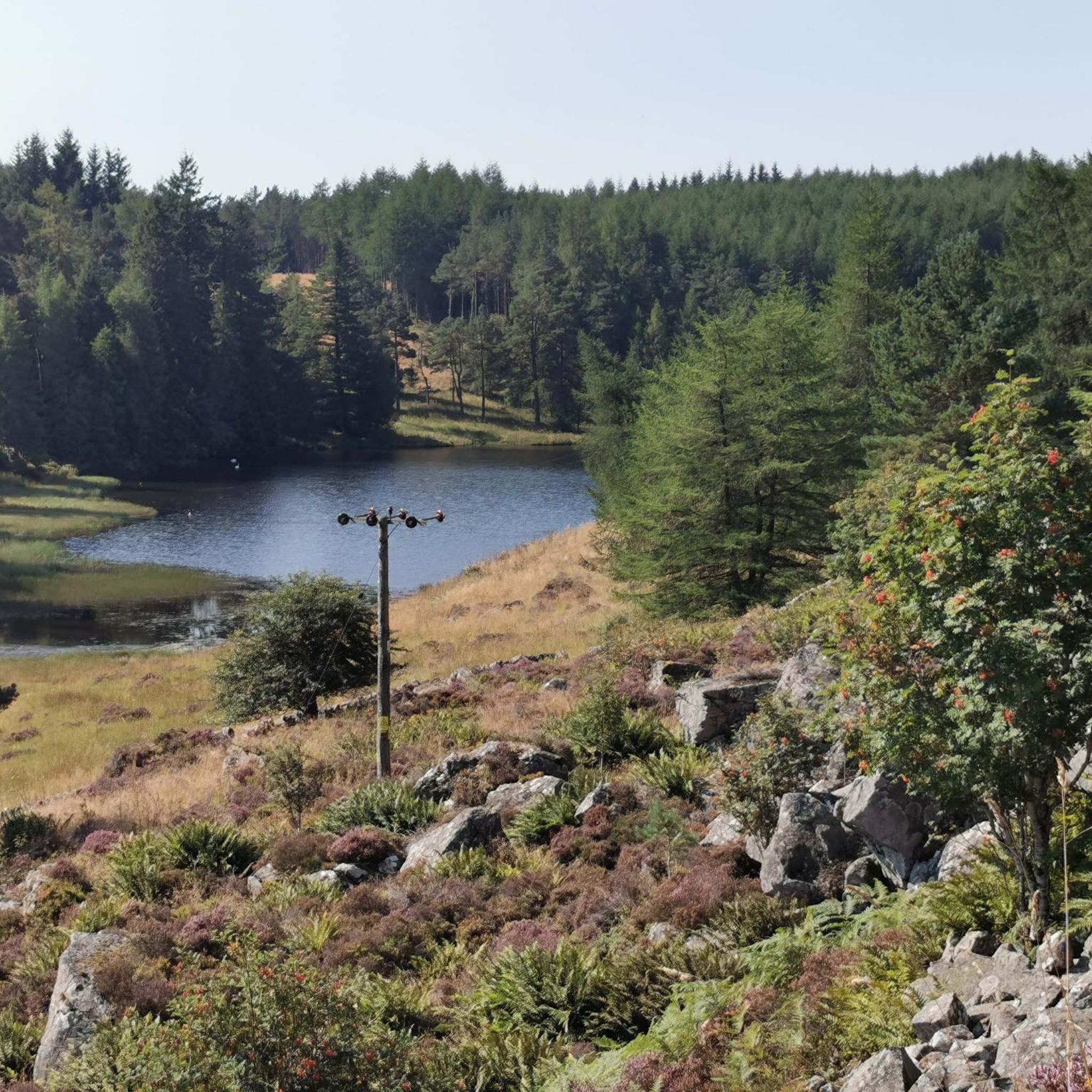
This man-made loch, created by damming the burn flowing down the glen, is a peaceful spot renowned for its excellent fly fishing opportunities, where anglers can catch wild brown and rainbow trout. The loch's name is believed to stem from the Scottish Gaelic term "Seantruibh," meaning "Old farmtoun" or "settlement," reflecting the area's deep historical roots. This connection to the Gaelic past adds cultural significance to the loch, enhancing its charm alongside its natural beauty and recreational appeal.
1
0
Auchintaple Loch, a popular spot for walkers on the Cateran Trail, features a boat house on its far side. Although man-made, the area is rich in history, with nearby remnants of an early chapel at Chapel Hillock. The site, marked by a turf-covered stone bank enclosing a hollow, contains several stones. Close by is the Lady Well, or Virgin Mary's Well, which still flows with clear water. Historically, this well, along with others in the region, was believed to have curative properties, attracting people seeking healing. The first Sabbath in May was thought to be the time when the waters were most powerful, and drinking from the well before sunrise was considered particularly beneficial.
0
0
Forter Castle, built in 1560 by the Ogilvys of Airlie, is a four-storey tower house that was restored in the 1990s after falling into ruin. Its strong defenses made it difficult to capture by surprise, and it withstood various attacks until 1640, when it was besieged by a force of 5,000 men with heavy artillery. The castle was at the heart of a personal feud between the Ogilvys and the Campbells, stemming from land disputes and religious differences. The feud escalated into violent raids, with the Campbells attacking Forter and its lands. In 1640, Archibald Campbell, the Earl of Argyll, led a campaign against the Ogilvys, ultimately razing the castle in an act of personal vengeance. The Countess of Ogilvy is said to have witnessed the destruction from a nearby hill, marking the end of an era for the Ogilvy family in Glenshee.
0
0
Frequently Asked Questions
Are there easy hiking trails suitable for beginners in Forest Of Alyth?
Yes, Forest Of Alyth offers a good selection of easy trails. There are 15 routes categorized as easy, providing gentle gradients and accessible paths for those new to hiking or looking for a relaxed walk. An example is the Glenisla Hotel – Glenisla Kirk loop from Kirkton of Glenisla, which is a shorter, easy option.
What is the typical length and duration of hikes in Forest Of Alyth?
Hikes in Forest Of Alyth vary in length, with options ranging from shorter walks to longer excursions. For instance, the Glenisla Hotel – Glenisla Kirk loop from Kirkton of Glenisla is about 2.7 miles (4.3 km) and takes around 1 hour 15 minutes, while the Cateran Trail: Loch Shandra and Auchintaple Loch Loop covers 10.9 miles (17.6 km) and typically takes 4 hours 45 minutes.
Are there family-friendly hiking options in Forest Of Alyth?
Absolutely. The region's network includes several easy routes that are well-suited for families. These trails often feature moderate elevations and scenic views, making them enjoyable for various ages. Look for the 15 easy-rated routes for suitable family adventures.
What kind of terrain can I expect on the hiking trails in Forest Of Alyth?
The terrain in Forest Of Alyth is diverse, characterized by woodlands, open countryside, and rolling hills. Many routes also feature lochs, such as Loch Shandra and Auchintaple Loch, adding to the scenic variety. Paths can range from well-defined tracks to more natural, unpaved sections.
Are there circular hiking routes available in Forest Of Alyth?
Yes, many of the trails in Forest Of Alyth are circular, allowing you to start and end your hike at the same point. Examples include the Glenisla Kirk – Glenisla Hotel loop from Kirkton of Glenisla and the Glenisla Hotel – Loch Shandra loop from Kirkton of Glenisla, which offer convenient loop options.
What do other hikers enjoy most about hiking in Forest Of Alyth?
The area is highly rated by the komoot community, with an average score of 4.5 stars from over 90 reviews. Hikers often praise the varied terrain, the tranquility of the woodlands, and the scenic beauty of the lochs and rolling hills. The well-maintained paths and diverse options for different skill levels are also frequently highlighted.
What are some notable natural features or landmarks to see while hiking in Forest Of Alyth?
The region is known for its beautiful lochs, with Loch Shandra and Auchintaple Loch being prominent features along many routes. These lochs provide picturesque views and are central to the hiking experience. The trails also traverse woodlands and open countryside, offering opportunities to appreciate the natural landscape of Perth and Kinross.
Is parking generally available for hikers in Forest Of Alyth?
While specific parking details vary by trailhead, it is generally possible to find parking near the starting points of popular routes or in nearby villages like Kirkton of Glenisla. It's advisable to check route descriptions for specific parking recommendations.
Can I reach the hiking trails in Forest Of Alyth using public transport?
Access to some trailheads in Forest Of Alyth via public transport can be limited due to the rural nature of the area. While local bus services might connect to larger villages, reaching specific, more remote starting points often requires personal transport. Planning ahead and checking local bus schedules for connections to villages near trailheads is recommended.
What is the best time of year to go hiking in Forest Of Alyth?
The best time to hike in Forest Of Alyth is typically from spring through autumn (April to October). During these months, the weather is generally milder, and the trails are more accessible. Spring brings blooming wildflowers, while autumn offers stunning foliage. Winter hiking is possible but requires appropriate gear for potentially colder and wetter conditions.
Are there any challenging hikes in Forest Of Alyth for experienced hikers?
Yes, for more experienced hikers seeking a challenge, there are routes with greater distances and elevation gains. One such route is the Loch Shandra – Auchintaple Loch loop from Kirkton of Glenisla, which is rated as difficult, covering a longer distance and featuring more significant ascents.
Most popular routes around Forest Of Alyth

Get inspired with the komoot mobile app


Explore more
Browse the best Hikes in other regions.
