Attractions and Places To See in Arequipa - Top 20
Best attractions and places to see in Arequipa include its historic center, a UNESCO World Heritage site known for colonial buildings constructed from white volcanic sillar stone. The city is set against a backdrop of volcanoes like Misti, Chachani, and Pichu Pichu. Arequipa offers a blend of historical landmarks, cultural sites, and natural features. Visitors can explore deep canyons, high-Andean landscapes, and learn about local traditions.
Best attractions and places to see in Arequipa
- The most popular attractions is Arequipa's…
Last updated: July 17, 2026
Arequipa's Plaza de Armas and Cathedral
Highlight • Historical Site
Translated by Google •
Tip by

Santa Catalina Monastery, Arequipa
Highlight • Religious Site
Translated by Google •
Tip by
Sign up now to discover places like this
Get recommendations on the best single tracks, peaks, & plenty of other exciting outdoor places.
Sign up for free
Church of the Society of Jesus, Arequipa
Highlight • Religious Site
Translated by Google •
Tip by
Summit of Nevado Chachani (6,057 m)
Highlight • Summit
Translated by Google •
Tip by

San Francisco Square, Arequipa
Highlight • Historical Site
Translated by Google •
Tip by
San Camilo Market
Highlight • Monument
Translated by Google •
Tip by
Museo Santuarios Andinos
Highlight • Historical Site
To begin with, you can see a film about the discovery and preservation of the mummy …
Translated by Google •
Tip by
Arequipa Main Square
Highlight • Historical Site
Showing Translation
Tip by

San Juan Bautista Parish, Yanahuara
Highlight • Religious Site
Translated by Google •
Tip by
Zig Zag Restaurant
Highlight • Restaurant
Translated by Google •
Tip by
Sign up for free to discover even more attractions in Arequipa.
Sign up for free
Already have an account?
Start today with a free account
Your next adventure awaits.
Login or Signup
Popular around Arequipa
Other adventures in Arequipa

Tips from the Community

This is the main square of the old town of Arequipa, with the Cathedral on one side and the Jesuit Church (the oldest church) on the opposite corner. The atmosphere is particularly beautiful in the early evening hours.
0
0

The climb is demanding due to the altitude and the steepness. Prior acclimatization is essential. Personally, the last section between 5850 meters and the summit was difficult (I was out of breath), and the feeling of not making any progress required me to dig deep. Once at the summit, the view is superb, and the satisfaction is immense. For the descent... you can simply relax in the layer of ash on the volcano's cone. To avoid carrying our gear, base camp was set up just before the end of the 4x4 track. From this point, it took us about 7 hours to reach the summit and about 3.5 hours to return to camp. A fantastic adventure!
0
0

The highlight of this museum is the body of "Juanita, the girl from Ampato". To begin with, you can see a film about the discovery and preservation of the mummy in the Andes. The first room is the introductory room, where texts and presentations about the Andean sanctuary project and the chronology of the Incas are shown. The next five rooms exhibit ceramics, metals, textiles and organic materials.
3
0
The Church of San Juan Bautista de Yanahuara is very special because its construction is made entirely of sillar, a characteristic stone of the city of Arequipa since it is present in monuments, houses, squares and other buildings.
4
0
The Zig Zag restaurant offers an imaginative culinary fusion with its own Alpandina gastronomy, which has deep roots in the mountains, where the sun fills the nutrients of the Andes with energy and allows them to mature in balance. This harmony between creative cuisine and nature is reflected in our well-known specialties: fillet of meat or fish on hot volcanic stone, exotic salads, Alpine rösti, and many other original gastronomic offerings. Be sure to reserve a table, it is often fully booked.
8
0
Saint Catherine of Siena is the saint who inspired this monastery, where silence found its voice in the bright colors of its walls and in the cobbled corridors that converge on the beautiful main square. Santa Catalina is more than a monastery, a melting pot of secrets that the visitor can barely guess through its enclosures, but whose truth will remain forever within its walls.
8
0
According to the chronicles, the most important social and religious activities were held in this space. Bullfights were even held. However, until 1868, the square was mainly the home of the city's merchants. After the earthquake (magnitude 9 on the Ritcher scale), a large part of the cathedral was damaged, as were the arches that surround the square. At that time, a process of beautification of the place began. The arcades were unified, the cathedral was improved and the merchants of the area were relocated.
9
0
The current façade is 40 meters high and 107 meters long and, as already mentioned, occupies an entire side of Arequipa's main square. In 1868, the next earthquake destroyed the basilica; the bell towers, the portal, some arches of the façade and the altars were rebuilt faithfully. The cathedral was last damaged by an earthquake in 2001; both towers were severely damaged, but these were repaired just one year later.
6
0
Frequently Asked Questions
What historical landmarks can I explore in Arequipa?
Arequipa's historic center is a UNESCO World Heritage site, rich in colonial architecture built from white volcanic sillar stone. Key historical landmarks include the vibrant Arequipa's Plaza de Armas and Cathedral, the imposing Santa Catalina Monastery (a 'city within a city'), and the intricately designed Church of the Society of Jesus. You can also wander through the charming, oldest neighborhood of San Lázaro.
Are there any natural attractions or viewpoints near Arequipa?
Yes, Arequipa is surrounded by stunning natural beauty. The city is famously overlooked by the majestic Misti Volcano. For panoramic views of the city and its surrounding volcanoes (Misti, Chachani, and Pichu Pichu), visit the Yanahuara Viewpoint with its distinctive sillar arches. Further afield, you can explore the incredibly deep Colca Canyon, known for Andean condor sightings, or the Salinas and Aguada Blanca National Reserve, home to vicuñas and flamingos.
What cultural experiences does Arequipa offer?
Arequipa provides several unique cultural insights. The Museo Santuarios Andinos is renowned for housing the well-preserved mummy of Juanita, an Inca ice maiden. You can also learn about South American camelids like alpacas and llamas at Mundo Alpaca. For a taste of local life, immerse yourself in the bustling atmosphere of San Camilo Market, where you can find local products and traditional foods.
What are some family-friendly activities in Arequipa?
Many of Arequipa's main attractions are suitable for families. Exploring the colorful streets of Santa Catalina Monastery can be an engaging experience for all ages. Visiting Mundo Alpaca offers an interactive way to learn about local animals. The San Camilo Market is also a vibrant place for families to experience local culture and try new foods.
What outdoor activities and routes are available near Arequipa?
Arequipa is a great base for outdoor adventures. You can find various hiking, cycling, and mountain biking routes in the surrounding areas. For hiking, consider routes like the 'Arequipa Main Square – Yanahuara Viewpoint loop'. Cycling enthusiasts can explore routes such as the 'Carmen Alto Church – Carmen Alto Viewpoint loop'. Mountain bikers have options like the 'Mirador de Yanahuara loop'. For more details on these and other routes, visit the dedicated guides for Hiking in Arequipa, Cycling in Arequipa, and MTB Trails in Arequipa.
What is the best time of year to visit Arequipa?
Arequipa generally enjoys a pleasant climate year-round. However, the dry season, from April to December, is often considered the best time to visit. During these months, you'll experience clear skies and less rainfall, which is ideal for exploring the city's attractions and enjoying views of the surrounding volcanoes and canyons.
Can I visit the quarries where Arequipa's sillar stone comes from?
Yes, you can explore the Sillar Route (Canteras de Sillar). This unique experience allows you to visit the quarries where the white volcanic sillar stone, used to construct much of Arequipa's iconic architecture, is extracted. You can learn about the traditional working processes and witness the source of the city's distinctive 'White City' nickname.
Are there any less crowded alternatives to the main tourist spots?
If you're looking for a quieter experience, consider visiting the San Lázaro Neighborhood, Arequipa's oldest district, with its charming cobblestone streets and sillar structures. Another option is the Sabandía Mill, a well-preserved colonial-era mill outside the historic center, offering a glimpse into traditional Arequipan life and scenic views.
What are some unique geological sites to see near Arequipa?
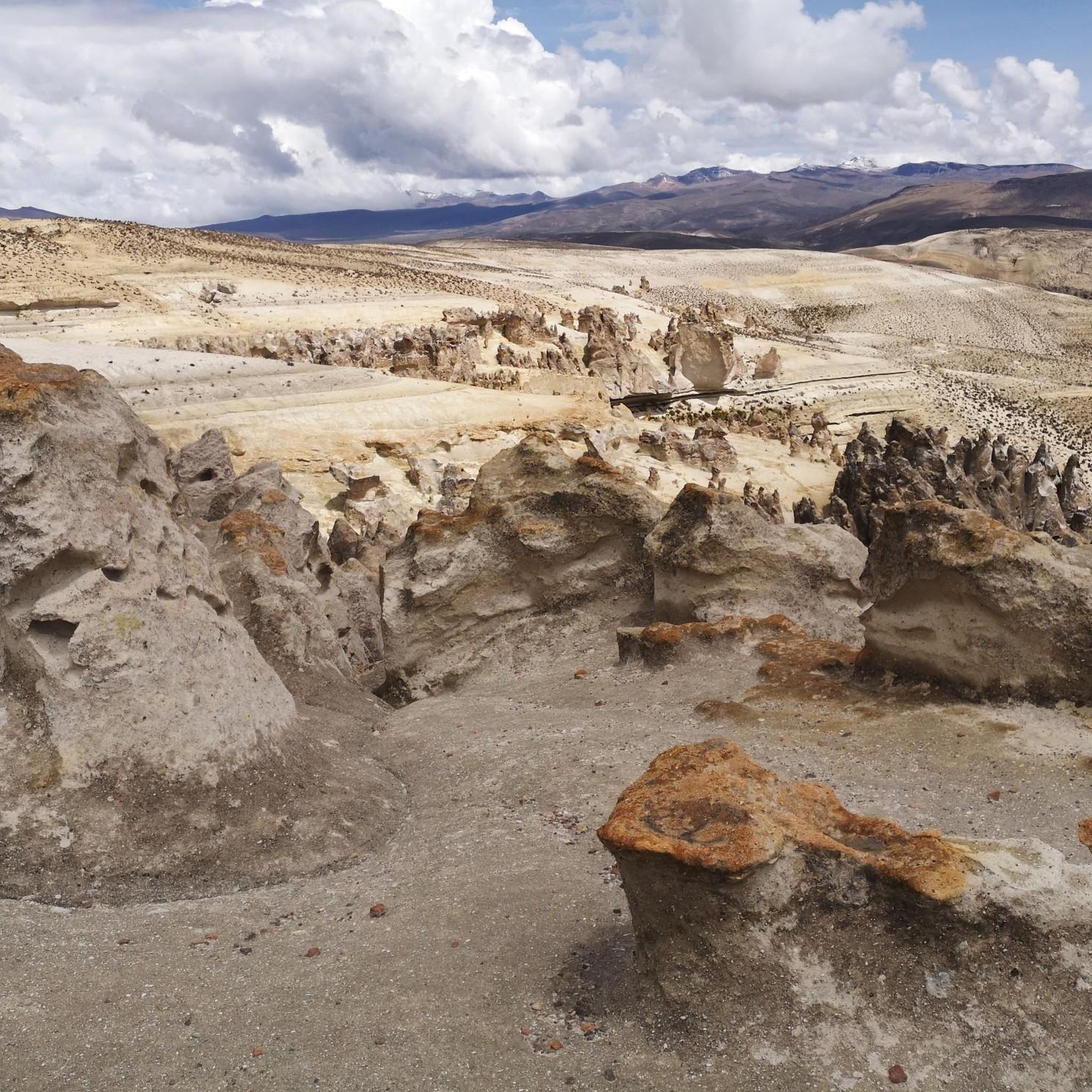
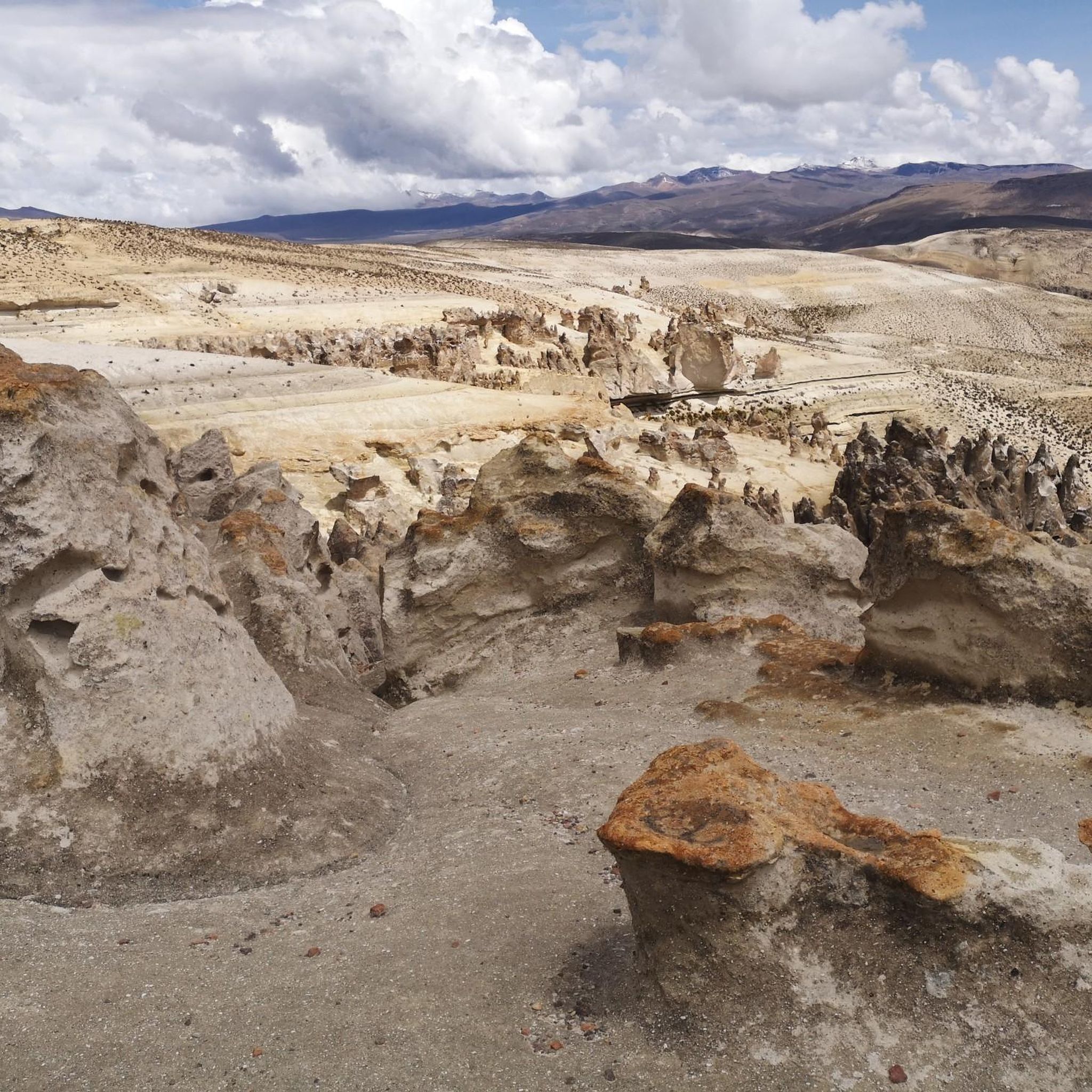
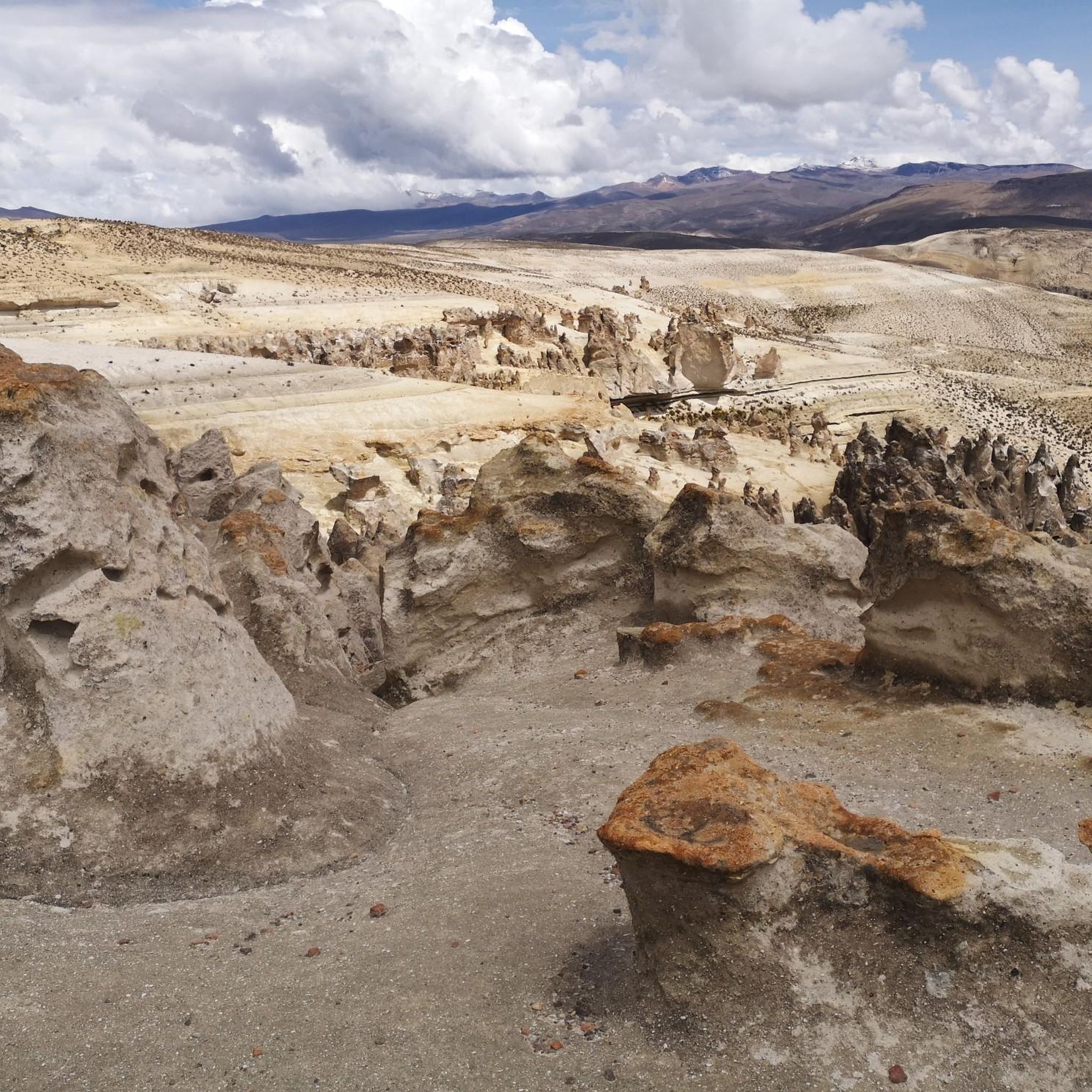
Beyond the volcanoes, Arequipa is close to several unique geological formations. The Imata Stone Forest features fascinating rock formations sculpted by erosion. Additionally, the region is home to the Colca Canyon and the even deeper Cotahuasi Canyon, both offering immense geographical scale and dramatic landscapes.
What are the options for day trips from Arequipa?
Arequipa serves as an excellent base for day trips. The most popular is a visit to the Colca Canyon, one of the world's deepest canyons, where you can spot Andean condors. Other options include the Salinas and Aguada Blanca National Reserve for wildlife viewing, or the Sillar Route to see the volcanic stone quarries. For adventure seekers, whitewater rafting on the Chili River is also an option.
What makes Arequipa's architecture unique?
Arequipa's architecture is distinctive due to its widespread use of 'sillar,' a white volcanic stone. This material gives the city its famous 'White City' moniker and contributes to the unique aesthetic of its colonial buildings, including the Basilica Cathedral and the Santa Catalina Monastery. The intricate carvings and Baroque facades, such as those on the Church of the Society of Jesus, showcase the artistry applied to this local stone.
Where can I see Andean camelids like alpacas and llamas?
You can interact with and learn about South American camelids, including alpacas, llamas, vicuñas, and guanacos, at Mundo Alpaca. This site offers an educational and engaging experience for visitors interested in these iconic animals and their role in Andean culture.
Most popular routes in Arequipa

Get inspired with the komoot mobile app


Didn’t find what you were looking for?
Are you keen on exploring more awesome places nearby? Browse our guides:
Explore more
Still not found the Highlight you’re looking for? See guides of the top attractions in other regions:
