Top 19 Caves around Hacklberg
Best caves around Hacklberg, a district of Passau in Lower Bavaria, Germany, are found within a region known for its natural beauty and geological formations. The wider Lower Bavaria area and neighboring parts of Bavaria offer opportunities for underground exploration. This area is characterized by karst landscapes, which have led to the formation of numerous caves. Visitors can explore a variety of cave types, from dripstone formations to significant archaeological sites.
Best caves around Hacklberg
- The most popular caves is Friedrichsruh Cave, a cave that features a large grotto with a bench. This grotto is approximately 12 meters high and 18 meters wide, offering a space for observation.
- Another must-see spot is Klamm Cave near Einthal, a natural monument. This quite large cave is located just above a small path and was inhabited by people in the Stone Age.
- Visitors also love Klösterl Hermitage and Cave Church, a unique rock church. This site includes a small monastery dating back to 1454, featuring a rock church and St. Nicholas Chapel.
- Hacklberg is known for rock shelters, grottoes, and cave churches. The region offers a variety of caves to see and explore, from geological formations to historical sites.
- The caves around Hacklberg are appreciated by the komoot community, with 609 photos and 874 upvotes shared by users.
Last updated: August 11, 2026
Klösterl Hermitage and Cave Church
Highlight • Religious Site
Translated by Google •
Tip by

Friedrichsruh Cave
Highlight • Cave
Translated by Google •
Tip by

Sign up now to discover places like this
Get recommendations on the best single tracks, peaks, & plenty of other exciting outdoor places.
Sign up for free
Monastery Cave
Highlight • Cave
Translated by Google •
Tip by

Klausen Caves
Highlight • Cave
Source / more information:
de.wikipedia.org/wiki/Klausenh%C3%B6hle
Translated by Google •
Tip by
Klamm Cave near Einthal
Highlight • Cave
Translated by Google •
Tip by
Sign up for free to discover even more caves around Hacklberg.
Sign up for free
Already have an account?
Start today with a free account
Your next adventure awaits.
Login or Signup
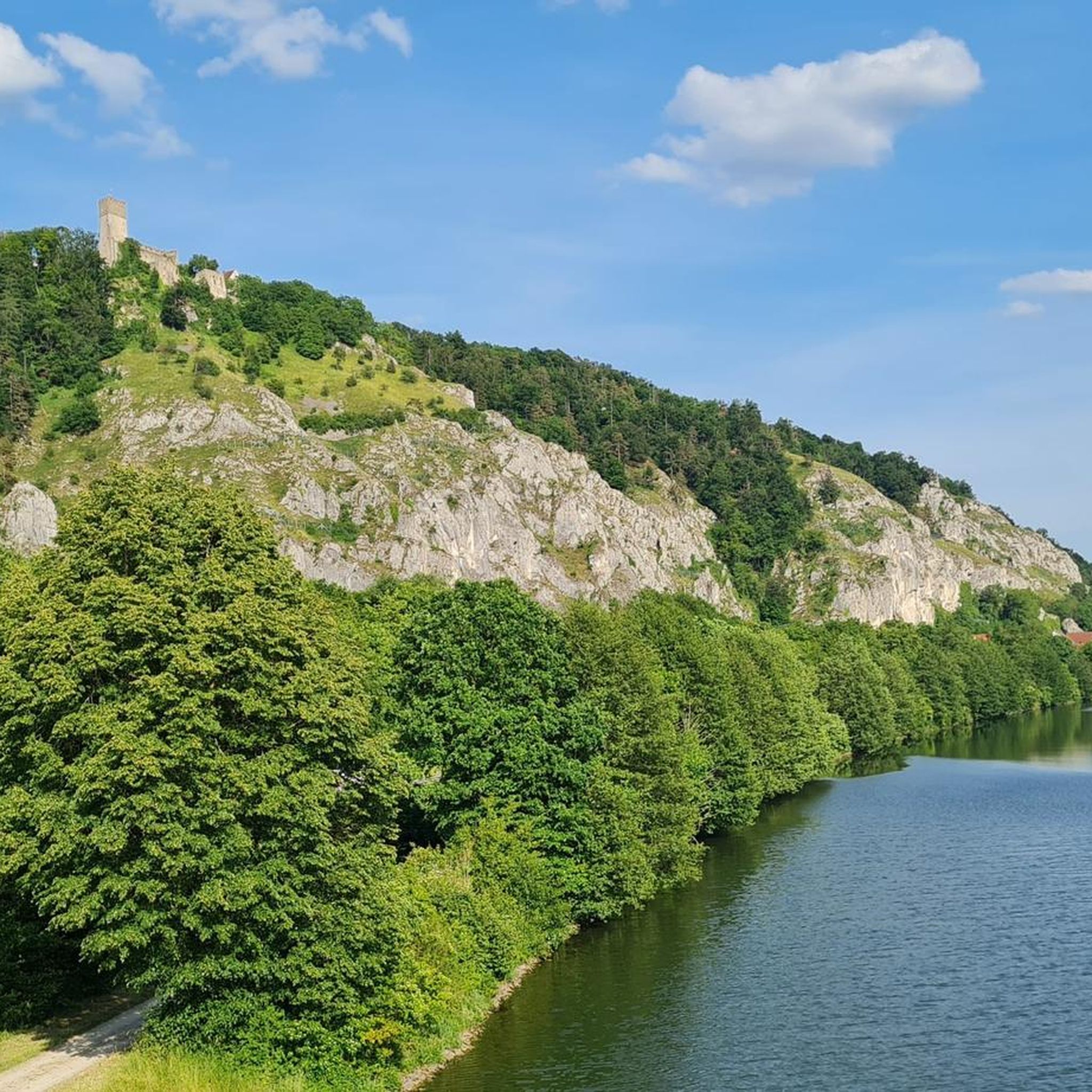
Tips from the Community

It's not far from Prunn Castle to get to the grotto. There is climbing in the grotto. If you walk a little further you will come to a very nice viewpoint. But take good care of the children.
2
0

Smaller caves can often be found in the rock.
5
0

The settlement history of the Altmühl valley began at the beginning of the last ice age, in the so-called Würm ice age, about 80,000 years ago. On the other hand, there are no archaeological finds from the oldest phase of the Paleolithic, i. H. from the Günz, Mindel or early Rißeiszeit 500,000 - 120,000 years ago, but this is more likely due to the change in river systems. The Danube flowed through the Lower Altmühltal until about 200,000 years ago. Therefore, no older finds could be deposited in caves or rock overhangs. In the Würm Ice Age, around 100,000 - 10,000 years ago, there are first indications of people who stayed in the caves or under rock protection roofs, so-called rock shelters, in the Lower Altmühl Valley. At that time the climate here is similar to that of the tundra today. The ice-free Altmühltal was a favorable hunting ground, where mammoths, rhinos, reindeer, and later also horses, bison and primal lived. The Klausen Caves are a system of several caves nested one on top of the other: Lower Klause, Klausen Niche, Middle and Upper Klause. Except for the Lower Hermitage, tools and equipment from the Old, Middle and Upper Palaeolithic periods were found in the other caves. From the Klausen niche comes z. B. a deciduous incisor of a Neanderthal. In the middle hermitage, archaeologists from the Magdalenian layer were able to salvage a single-row harpoon, bone spikes and a perforated staff made of reindeer antlers, which is decorated with fantasy creatures. A limestone slab with incised lines of a wild horse document the first art products. In 1913, archaeologists found the skeleton of a Homo sapiens. The approximately 30-year-old man died about 18,000 years ago. His dead body was wrapped in a mighty red chalk pack. Fragments of mammoth tusks lay in the area of the skull. https://www.herzstueck.bayern/ attraction/07-station-klausenhoehlen-e617ad20c7
8
1


Somewhat hidden but worthwhile caves. However, it should be noted that access is closed from October 1st to April 30th to protect bats living in the caves.
2
0

Interesting cave up and down. It's worth taking a look.
2
0

Beautiful, easy-to-walk caves that were probably used in earlier times as living caves and for protection from the weather. You should take a lamp with you when visiting.
7
1
Frequently Asked Questions
What types of caves can I explore around Hacklberg?
The region around Hacklberg offers a variety of caves, from dripstone formations to significant archaeological sites. You can find rock shelters, grottoes, and even cave churches. Examples include the Friedrichsruh Cave with its large grotto, and the unique Klösterl Hermitage and Cave Church.
Are there any historically significant caves in the Hacklberg region?
Yes, the region is rich in historical caves. The Klamm Cave near Einthal was inhabited by people in the Stone Age. Further afield, the Klausen Caves are crucial Ice Age sites in Bavaria, where artifacts from various Palaeolithic periods and the oldest known burial of an anatomically modern human in Germany were found. The Schulerloch also shows evidence of Neanderthal habitation.
Which caves are suitable for families with children?
Several caves are family-friendly. The Klamm Cave near Einthal is noted as very interesting for children. The Monastery Cave has stone steps, making it explorable with children. The Klausen Caves are also considered family-friendly, with visitors noting the 'exciting darkness' that children love.
Can I explore caves on my own, or are guided tours available?
Some caves, like the Klausen Caves, are public and can be explored independently. However, many of the larger, more intricate caves like the Schulerloch, König-Otto-Tropfsteinhöhle, and Teufelshöhle primarily offer guided tours to highlight their geological and historical significance.
What are some unique geological features to look for in the caves?
The caves in the region boast diverse geological formations. The Schulerloch features unique stalactites, stalagmites, and a rare 'cup-shaped stalagmite.' The König-Otto-Tropfsteinhöhle is known for its impressive dripstone formations, sinter pools, and distinct water level lines. The Binghöhle, further afield, showcases exquisite calcite crystals and a 'Giant's Column' stalagmite.
Are there hiking opportunities near the caves around Hacklberg?
Yes, the area around Hacklberg and the caves offers numerous hiking opportunities. You can find trails like the Juraerlebnispfad Essing (Jura Adventure Trail Essing) or the Tatzlwurm Wooden Footbridge loop from Essing. For more options, explore the Hiking around Hacklberg guide.
What makes the <a href="https://de.wikipedia.org/wiki/K%C3%B6nig-Otto-Tropfsteinh%C3%B6hle" target="_blank" rel="noopener">König-Otto-Tropfsteinhöhle</a> a notable visit?
The König-Otto-Tropfsteinhöhle near Velburg is considered one of Germany's most beautiful dripstone caves. It features stunning stalagmites, stalactites, stalagnates, and water-filled sinter pools. Its Advent Hall, discovered in 1972, adds to its allure with unique speleothems like dogtooth spars and cave pearls, offering a visually spectacular experience.
What should I wear when visiting caves in the Hacklberg area?
Caves generally maintain a cool, constant temperature year-round, regardless of the outside weather. It's advisable to wear layers, including a light jacket or sweater, and comfortable, sturdy shoes with good grip, as surfaces can be uneven and damp.
Are there any caves that offer a unique cultural experience, like concerts?
Yes, the Schulerloch cave hosts concerts in its largest chamber during summer, known for its excellent acoustics. Further afield, the Sophienhöhle in Franconian Switzerland also holds regular cave concerts in its impressive chambers, especially during summer and autumn evenings.
How long does it typically take to explore the caves?
The duration of a cave visit varies. Smaller, public caves like the Klausen Caves might take 30-60 minutes to explore. Larger caves with guided tours, such as the Schulerloch or König-Otto-Tropfsteinhöhle, typically involve tours lasting 45 minutes to an hour, depending on the specific route and commentary.
What other outdoor activities can I combine with a cave visit?
The Hacklberg area is excellent for combining cave exploration with other outdoor activities. You can find numerous routes for mountain biking and running. For example, explore the MTB Trails around Hacklberg or the Running Trails around Hacklberg guides for detailed routes.
Is there a best time of year to visit the caves around Hacklberg?
Caves generally maintain a stable internal temperature, making them accessible year-round. However, the surrounding areas and access trails are best enjoyed during spring, summer, and autumn when the weather is milder for outdoor activities. Some caves, like the Schulerloch, host special events like concerts during the summer months.
Most popular routes around Hacklberg
Most popular attractions around Hacklberg

Get inspired with the komoot mobile app


Explore more
Extend your search for the best caves by checking out these guides of the top ones around Hacklberg:
