Top 20 Castles around Sonnefeld
Best castles around Sonnefeld are found in the surrounding region, offering a rich historical landscape. While Sonnefeld itself is home to the significant historical site of Kloster Sonnefeld, the broader area features numerous fortifications. These range from formidable hilltop fortresses to elegant moated castles and city residences. The region's castles provide insights into centuries of architectural and military history.
Best castles around Sonnefeld
- The most popular castles is Coburg Fortress, a castle known as the "Franconian Crown." This fortress…
Last updated: June 22, 2026
Coburg Fortress
Highlight • Castle
Translated by Google •
Tip by

Coburg Castle Square
Highlight • Historical Site
Translated by Google •
Tip by

Sign up now to discover places like this
Get recommendations on the best single tracks, peaks, & plenty of other exciting outdoor places.
Sign up for free
Ehrenburg Palace
Highlight • Castle
Translated by Google •
Tip by

Mitwitz moated castle
Highlight • Castle
Translated by Google •
Tip by

⚔️ Festung Rosenberg
Highlight • Castle
Translated by Google •
Tip by

Sign up for free to discover even more castles around Sonnefeld.
Sign up for free
Already have an account?
Start today with a free account
Your next adventure awaits.
Login or Signup
Tips from the Community

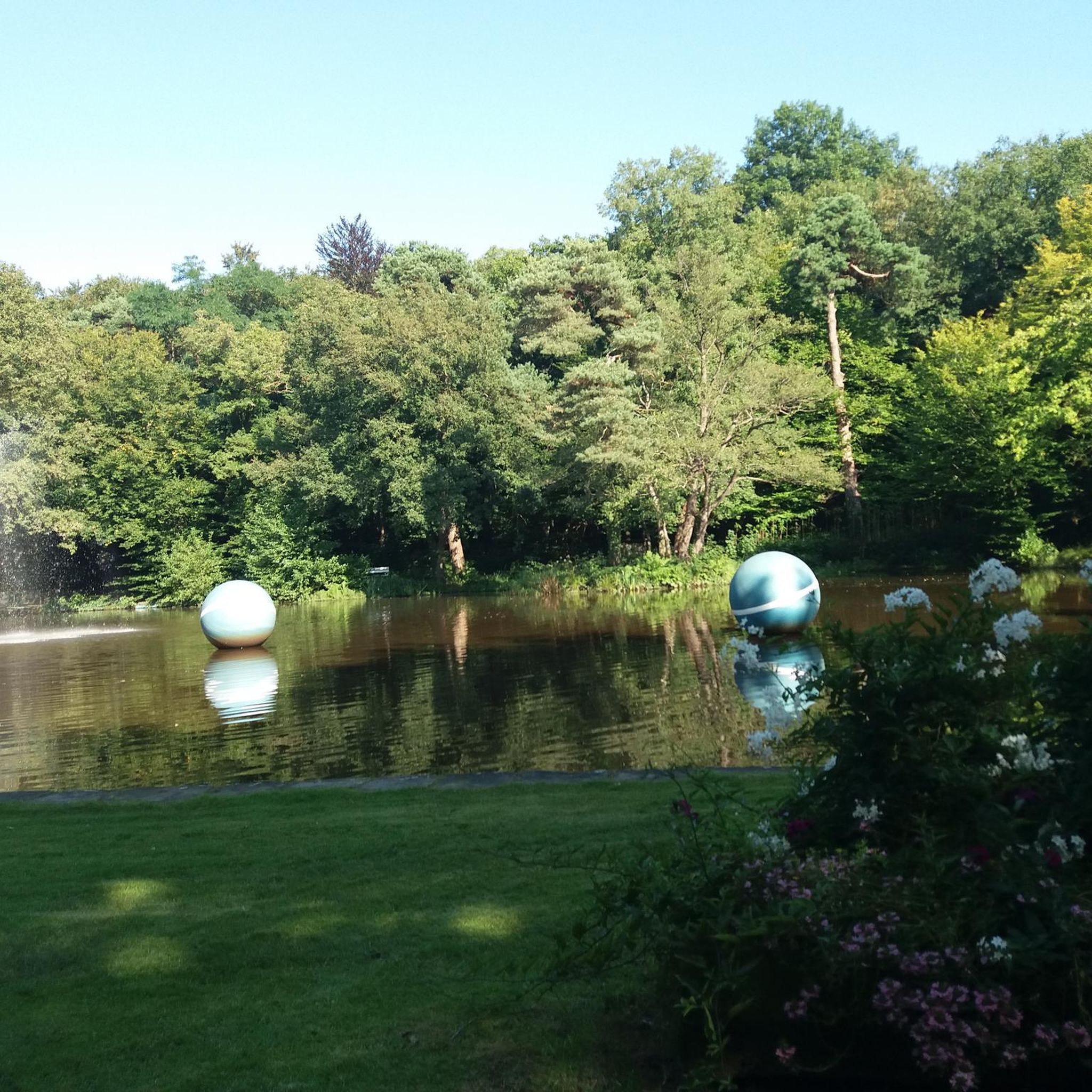
Water castle in Mitwitz. Well-kept outdoor areas and many events characterize this place.
6
0

A beautiful place in the middle of the city. The concerts in the Coburg summer take place there in a special setting.
10
1

In 1543, Duke Johann Ernst of Saxony decided to move his court from the Veste Coburg down into the city and chose the site of the dissolved Franciscan monastery, along which the city wall ran to the east. The monastery was in the area of the former middle courtyard. Recent research attributes the architectural design to the Saxon architect Nikolaus Gromann.[1] The building shows clear stylistic parallels with the work of Gromann, who may also have been close to the building project in organizational terms as the appointed court architect of Johann Ernst's half-brother, Elector Johann Friedrich. The complex was built until around 1547 under the construction management of Caspar Vischer. A complex was created around two square courtyards, which could be entered from the south via Steingasse.[2] The buildings of the first courtyard with the stair tower, the corner bay window and the dormer windows from this period are still preserved.[3] Between the courtyards was the three-storey princely building, which was accessed via another large stair tower on the north side and had a large hall and a dining room. The palace chapel and other living quarters were located around the second courtyard on the east side, the kitchen on an irregular floor plan to the north and other subordinate rooms to the west. This complex can still be seen with various subordinate extensions on Bieler's floor plan from 1679. It is unclear whether the third courtyard with the stables had already begun in 1543. Only paid craftsmen were employed for the construction and not, as was usual at the time, serf laborers. This special feature is said to have been the reason for the visit of Emperor Charles V in 1547. Charles is said to have given the newly occupied complex the name Ehrenburg on this occasion. The new city palace was inhabited as the residence of a ruling duke until the death of Johann Ernst in 1553 and was then only used extensively.
8
2
The Coburg Castle Square is one of the most remarkable square designs in Bavaria. The spacious square is designed as a forecourt to Ehrenburg Castle and is located in the center of the former royal residence of Coburg. The Castle Square was created under Duke Ernst I from 1825 with the demolition of the eastern houses of Grafengasse and the subsequent demolition of the old commercial and auxiliary buildings of the castle, which were located to the north of it, in 1835. It was created in its current design as a representative square by 1849 in the historical and classicist style with the participation of Karl Friedrich Schinkel and Peter Joseph Lenné. Until the beginning of the First World War, the III. Battalion of the 6th Thuringian Infantry Regiment No. 95, stationed in Coburg, used the Castle Square for its parades. A military band played on Sunday afternoons.[1] In the 1920s, the Castle Square was often a meeting place for demonstrators, such as on Bloody Saturday in Coburg. Today, cars can be parked on the Schlossplatz in the evenings during performances at the State Theater. It is also used as an event space, for example for open-air concerts. The first plans for an underground car park on the Schlossplatz were made in 1977, but in 1988 the highest building authority in Munich did not approve it for cost and monument protection reasons. Source: Wikipedia
10
0

Coming from the Hofgarten you have the best view of the Schlossplatz above the arcades. On the left the Ehrenburg, in the middle the view of the old town, on the right the theater. The square is regularly used for events and is also the ideal starting point for getting to Veste Coburg. A little tip on the side - the sunset from the Hofgarten with a view of the Schlossplatz is a special highlight. The best opportunity to experience a sunset with a great backdrop close to the center!
7
0

Really nice old buildings.
6
0

It was never conquered, never subdued: Rosenberg Fortress is one of the most beautiful and largest fortresses in Europe. The former Bamberg bishop's castle and later state fortress rises steeply above the old town of Kronach on the Rosenberg hill. The oldest surviving document mentioning the name "Rosenberg" dates from 1249. The various construction phases are clearly visible, from the medieval keep through the walls and towers of the 15th and 16th centuries to the late Baroque pentagon, illustrating the ever-changing demands of defensive construction throughout the centuries. The juxtaposition of medieval, Renaissance, and Baroque fortification architecture gives the complex its significant place in the history of German military construction. The renowned architects Maximilian von Welsch and Balthasar Neumann were involved in the expansion of the fortress. The fortress was never captured or defeated by enemies. In 1888, the city acquired the castle as a property without military significance. The underground tunnel system, which can be visited as part of the fortress tours, is also of particular interest.
10
0
The early baroque fortress gate, one of the most beautiful in Germany, was probably built by Antonio Petrini.
9
0
Frequently Asked Questions
What historical sites, beyond traditional castles, can I visit near Sonnefeld?
While Sonnefeld itself doesn't have traditional castles, it is home to the significant historical site of Kloster Sonnefeld. This former Cistercian monastery, established in the 13th century, features the 14th-century Marienkirche with magnificent gravestones and a preserved Kapitelsaal. Today, it serves as a modern event and conference center.
Which castles near Sonnefeld are known for their historical significance and art collections?
The Coburg Fortress, also known as the "Franconian Crown," boasts an impressive art collection, including works by Lucas Cranach and Old German masters. Ehrenburg Palace in Coburg, a former ducal residence, also houses art by Dutch and Flemish masters.
Are there any unconquered fortresses in the region?
Yes, both Coburg Fortress and Rosenberg Fortress in Kronach are famous for never having been conquered by force. Coburg Fortress only surrendered once during the Thirty Years' War due to a forged letter, while Rosenberg Fortress has a continuous history of resisting capture.
What kind of architectural styles can I expect to see in the castles around Sonnefeld?
The region showcases a diverse range of architectural styles. You'll find medieval elements, Renaissance structures, and Baroque fortifications, especially at Rosenberg Fortress. Ehrenburg Palace features a magnificent neo-Gothic facade from the 19th century, while Kloster Sonnefeld's Marienkirche displays German late Gothic style.
Are there family-friendly castles to visit near Sonnefeld?
Many castles in the region are suitable for families. Coburg Fortress, Mitwitz Moated Castle, and Rosenberg Fortress are all listed as family-friendly. They often offer tours and grounds that are interesting for all ages.
What outdoor activities can I combine with a castle visit near Sonnefeld?
The region offers various outdoor activities. You can find numerous hiking trails, such as the 'Göritzen Spring – Wetland at the Bieberbach loop from Sonnefeld', or explore mountain biking and road cycling routes. For more details on routes, check out the Hiking around Sonnefeld, MTB Trails around Sonnefeld, and Road Cycling Routes around Sonnefeld guides.
Are there hiking trails near the castles around Sonnefeld?
Yes, there are several hiking trails that can be combined with castle visits. For example, the 'Mitwitz moated castle – Steinach Weir loop from Mitwitz' is an easy 4.9 km hike. You can find more options in the Hiking around Sonnefeld guide.
What is the best time of year to visit the castles near Sonnefeld?
Spring and autumn generally offer pleasant weather for exploring the castles and their surroundings, with milder temperatures and beautiful foliage. Summer is also popular, though it can be warmer. Some castles, like Mitwitz Moated Castle, offer specific castle tours from May to September.
Can I find cafes or restaurants near the castles?
Yes, several castles, including Coburg Fortress and Rosenberg Fortress, have restaurants or cafes on site or nearby, allowing visitors to enjoy refreshments during their visit.
Are there any moated castles in the area?
Yes, Mitwitz Moated Castle is a prominent example. It's a landmark of Mitwitz and is highly recommended for its original furnishings and picturesque setting surrounded by water.
What do visitors enjoy most about the castles around Sonnefeld?
Visitors frequently appreciate the rich history and well-preserved architecture. The art collections at Coburg Fortress are particularly noteworthy, and the unconquered status of both Coburg and Rosenberg Fortress adds to their appeal. The original furnishings at Mitwitz Moated Castle also receive high praise.
Is there parking available at the major castles like Veste Coburg?
Yes, parking is generally available near major attractions. For Veste Coburg, there are designated parking areas to accommodate visitors, though it's always advisable to check local signage for specific instructions and fees.
Most popular routes around Sonnefeld
Most popular attractions around Sonnefeld

Get inspired with the komoot mobile app


Explore more
Looking for the best castles somewhere else? Discover other guides around Sonnefeld:
