Top 14 Castles around Zandt
Best castles around Zandt are found in a municipality in Bavaria, Germany, a region rich in history and natural landscapes. Zandt is situated in a historical area, offering a glimpse into centuries of Bavarian heritage. While Schloss Zandt itself serves as a care facility, the surrounding area provides numerous historical sites for exploration. Visitors can admire the exterior of Schloss Zandt and discover other historical structures nearby.
Best castles around Zandt
- The most popular castles is Schwarzenburg Castle Ruins,…
Last updated: July 1, 2026
Schwarzenburg Castle Ruins
Highlight • Castle
Translated by Google •
Tip by

Runding Castle Ruins
Highlight • Castle
Translated by Google •
Tip by

Sign up now to discover places like this
Get recommendations on the best single tracks, peaks, & plenty of other exciting outdoor places.
Sign up for free
Buchberg Castle Ruins
Highlight (Segment) • Castle
The first representative of the Puchbergs, who can certainly be referred to this place, was Otto I, first mentioned in 1196. The family originally belonged to the …
Translated by Google •
Tip by

Ödenturm (Ruins of Chameregg Castle)
Highlight • Castle
Translated by Google •
Tip by

Neuhaus Castle Ruins
Highlight • Castle
Neuhaus was first documented in 1254 as the property of "Otto de novo castro." He likely descended from the Sattelbogen family, whose ancestral castle was located a …
Translated by Google •
Tip by
Sign up for free to discover even more castles around Zandt.
Sign up for free
Already have an account?
Start today with a free account
Your next adventure awaits.
Login or Signup
Tips from the Community

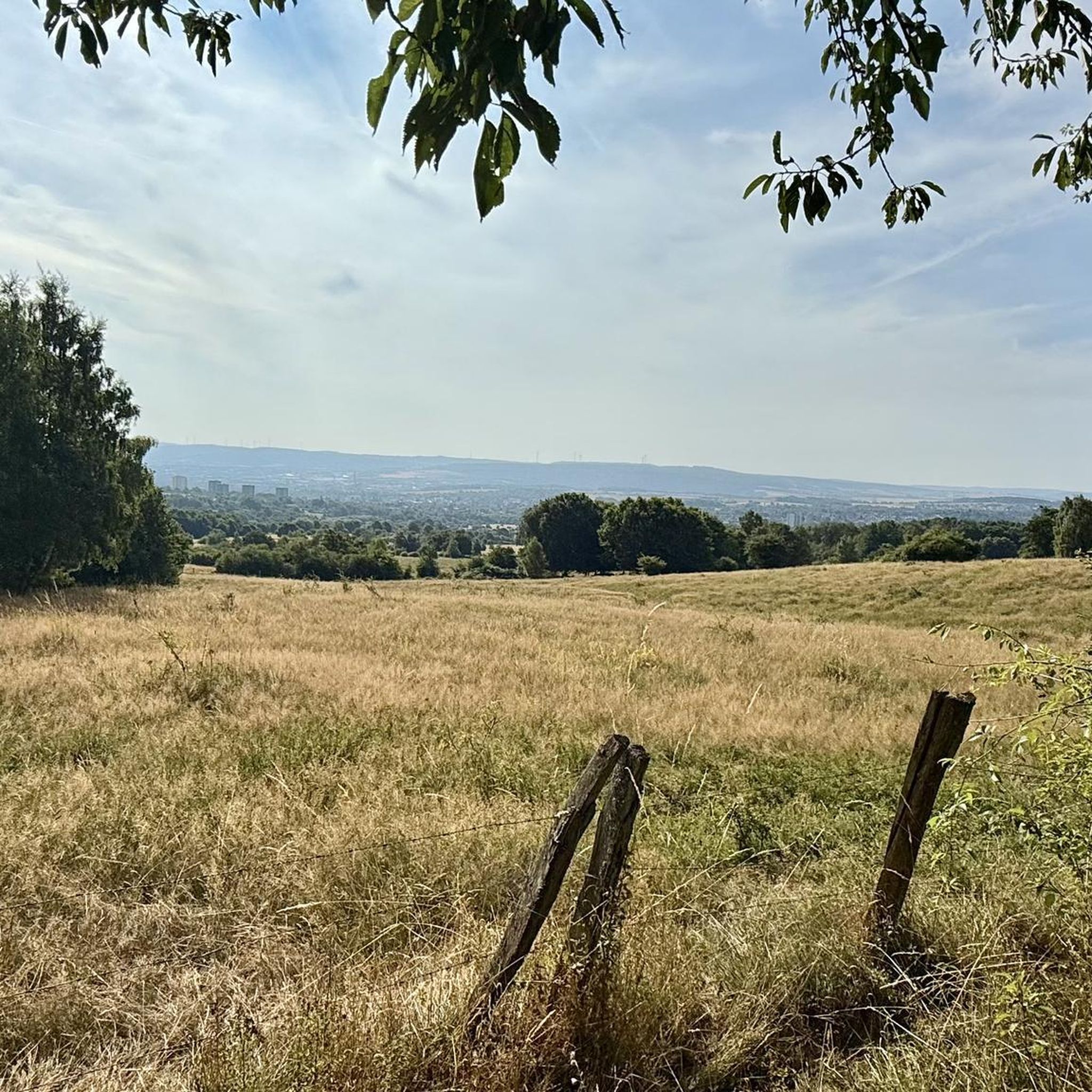
The destination isn't worthwhile. The remains of the ruins are completely overgrown. Therefore, you don't get a complete overview and have no long-distance view.
0
0

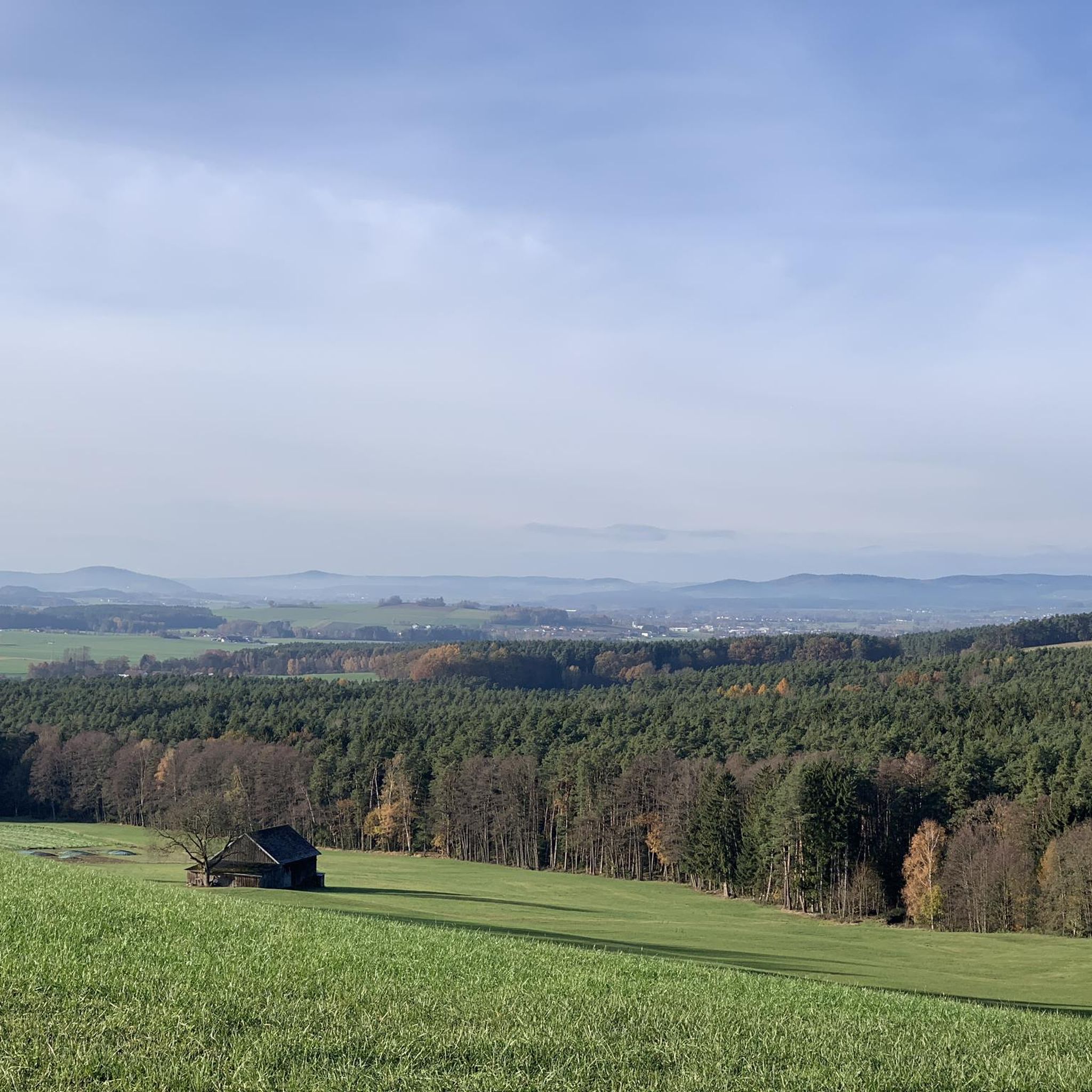
Magnificent view from up there. Definitely worth a detour.
0
0

Neuhaus Castle Ruins Neuhaus was first documented in 1254 as the property of "Otto de novo castro." He likely descended from the Sattelbogen family, whose ancestral castle was located a few kilometers east of the town; today, it is only documented as a castle ruin. The name "Neuhaus" itself indicates the status of a later-founded "branch." Originally, the Sattelbogers were ministeriales of the Counts of Bogen, then of the Bavarian dukes. Especially in the 14th century, the family spread to many surrounding castles, including Lichteneck, Zandt, and Thierlstein. Milot and Jakob "von dem Newnhaus" provide evidence for Friedrich Sattelboger in 1320. Friedrich was an influential ministeriale of the Bavarian dukes and guardian of Cham. By 1351, Konrad Sattelboger was the owner of Neuhaus. In 1373, part of the castle passed to Seitz Buchberger, and in 1481 to the Hohenstaufen von Ehrenfels, who administered the castle as a Bavarian Hofmark. In 1573, the Sattelbogen family died out, and the owners of Neuhaus changed frequently during this time. The castle was destroyed during the Thirty Years' War and never rebuilt. In 1829, it was acquired by the House of Thurn and Taxis, now privately owned. All that remains of the medieval castle are the outer walls of the tower-like palace, parts of the rampart, and the moat walls. The palace windows on the second floor have seating niches, making it likely that they were built in the late Middle Ages. To the north, parts of buildings can still be identified today. Based on Apian's depiction, two main buildings with a courtyard between them can be assumed. The ruins lie on a hill, at the foot of which a second circular wall with semicircular towers and a circular moat were built, something probably unique in Bavaria. The moat could have been flooded by a stream. A half-covered, round tower with a wall thickness of 1.5 m stands outside the main castle at the foot of the hill in the moat wall. It is unclear whether it can be considered a keep or—more likely—a later added wall tower. The many modern additions detract from the overall appearance. Source: Excerpts from www.burgenseite.de
2
0
Chameregg Castle Ruins The castle may have been built as early as the 12th century; an iron kingdom of Chameregg is mentioned in a document from 1322, but the castle itself is not mentioned for the first time until 1352. At that time, Konrad von Chameregg was the owner; he came from the highly wealthy Chamerauer family. In the 14th century, the Chamerauers assumed important offices for the Duke of Lower Bavaria/Straubing – the four brothers Peter, Heinrich, Ulrich, and Friedrich were chamberlains, captains, vicars, and city administrators. In 1365, they lost all these high offices for breach of trust and revenue evasion. Whether this was justified is unclear, but they were gradually rehabilitated. Later, however, the family's fortunes declined rapidly; the horrendous expenses for representation and luxury could no longer be covered, and debts and mortgages piled up. In 1446, two unnamed Chamerauers were even executed by Duke Albrecht in Straubing for robbery and murder. Like so many other knights during this period, they had resorted to robber barons. In 1452, the last of the Chamerauers, Peter, died heavily in debt, and his remaining possessions went to creditors. Chameregg passed through many hands, perhaps abandoned decades earlier and falling into disrepair – the new lords had moved to a moated castle in the valley. In the 15th century, the Polling family still appears as owners, but then news of it ceases. The castle was renovated in the 1980s. Essentially, only part of the former keep remains of the small castle. The "halved" tower clearly shows how a medieval keep is constructed: four stories with vaults are clearly visible. The entrance is about 9 meters high. The wall consists of a shell of carefully hewn bossed ashlars on the outside, a rubble stone filling, and smaller, smooth ashlars on the inside. The rooms had an area of only 13 m². As usual, the lowest floor was only accessible from above through a so-called "fear hole." The careful construction suggests that it was built as early as the 12th century. In the northwest corner, traces of the wall of the entrance area can still be found, which was probably protected by a gate tower. The complex was surrounded by a surrounding moat, much of which can still be seen. Source: www.burgenseite.de
2
0

This is a fantastic castle ruin with a great view. The ruin is very impressive and has lots of information boards. There are several hiking trails to this ruin, short or long, anything is possible! In the ruin there are several comfortable places to sit and take a break. There is also a wonderful viewing point with a bench. Access is always possible and free!
0
0
Buchberg Castle Ruins The first representative of the Puchbergs, who can certainly be referred to this place, was Otto I, first mentioned in 1196. The family originally belonged to the Diepoldinger ministeriality, and from 1204 to the Wittelsbacher. Relationships with the Bogeners arose from the widely scattered family property. In 1301, Hildebrand II sold the last remaining share of the castle to Duke Otto III of Lower Bavaria. The focus of the family's possessions now shifted to southern Lower Bavaria. The ancestral castle is said to have been pledged by the dukes to Rudlant Göttlinger in 1320. It was last mentioned in 1331 during the division of Lower Bavaria. It was then possibly used by the Göttlingers as a starting point for raids and destroyed or abandoned by the citizens of Cham. As early as 1347, grazing and usage rights were mentioned on the Buchberg, and in 1470 forests and a former castle. After its abandonment or destruction after 1331, it served as a quarry until recently. The oval complex, with a total length of 150 m and a maximum width of 60 m, is divided into an outer and main castle. The former occupies the highest peak covered with granite blocks at the southern end of the castle hill. To the north-northwest it is secured by a moat up to 12 m wide with an outer rampart, some of which has been preserved. The egg-shaped interior of the main castle measures approx. 50 x 40 m. The lower western part was protected by a ring wall that made clever use of the terrain, a 17 m long section of which has been preserved. The higher part of the castle was surrounded by its own ring wall, some of which can be seen. The southern part of the area was occupied by a large, multi-room building. At the highest point is the base of the keep. To the north-northwest, the main castle is adjoined by a plateau up to 20 m wide. In front of this is a ditch-like structure about 70 m long. It runs into the slope in the east and leaves the access to the main castle free in the west. Overall, the structure of the complex is not easy to understand due to the heavy vegetation. After 1997, the few remaining parts were secured. Source: Extracts from www.ebidat.de
4
0

The Buchberg castle ruins, also known as Schlossberg, are located on a 563-meter-high hill on the Buchberg. The Counts of Bogen built the castle in the 12th century and the Lords of Puchberg joined them later. The castle was destroyed in the 14th century and today only the stump of the keep and the remains of the walls remain.
2
0

Very informative and beautiful castle ruins. The walk is worth it.
0
0
Frequently Asked Questions
What are some notable castle ruins to visit near Zandt?
The region around Zandt offers several impressive castle ruins. Schwarzenburg Castle Ruins are among the largest in Bavaria, offering beautiful views. You can also explore Buchberg Castle Ruins, located on a 563-meter-high hill, where you'll find the stump of the keep and remains of 12th-century walls. Another significant site is Neuhaus Castle Ruins, first documented in 1254, which retains outer walls of its tower-like palace and parts of its rampart.
Is Schloss Zandt itself open to the public for tours?
While Schloss Zandt is a protected historical monument with a history dating back to 1122, it has served as a retirement and nursing home operated by the Bavarian Red Cross since 1949. This means it is not generally open to the public as a traditional tourist attraction for interior tours. You can, however, admire its distinctive exterior architecture.
Are there family-friendly castle ruins in the Zandt area?
Yes, several castle ruins are suitable for families. Schwarzenburg Castle Ruins are categorized as family-friendly, offering an engaging experience with its extensive ruins and great views. Ödenturm (Ruins of Chameregg Castle) is also listed as family-friendly, providing a tower with a small rest area.
Can I find good viewpoints at the castles around Zandt?
Absolutely. Many of the castle ruins in the Zandt region offer excellent viewpoints. Schwarzenburg Castle Ruins are particularly noted for their beautiful views. Ödenturm (Ruins of Chameregg Castle) also provides scenic vistas, dominating the Regen and Chambtal valleys.
What kind of historical context do the castles near Zandt offer?
The castles around Zandt provide a deep dive into Bavarian heritage, with histories often stretching back to the 12th century. They reflect periods of powerful noble families, medieval conflicts, and architectural evolution. For example, Buchberg Castle Ruins was built by the Counts of Bogen, while Neuhaus Castle Ruins was destroyed during the Thirty Years' War, showcasing the turbulent past of the region.
Are there hiking opportunities around the castles near Zandt?
Yes, the Zandt region is excellent for combining castle visits with hiking. You can find numerous trails that lead to or pass by these historical sites. For specific hiking routes, explore the Hiking around Zandt guide, which includes routes like the 'Small Pond – Bench by the Stream loop from Zandt' or the 'Landgasthof Pfahlhof – View of Hohenbogen loop from Zandt'.
What other outdoor activities can I do near Zandt's castles?
Beyond hiking, the area around Zandt offers various cycling opportunities. You can find road cycling routes in the Road Cycling Routes around Zandt guide, including routes like 'The Red Biertor of Cham – Thierlstein Castle loop from Miltach'. For more general cycling, check the Cycling around Zandt guide, which features routes such as the 'Sattelpeilnstein Castle – Hochholz Chapel loop from Zandt'.
What is the best time of year to visit the castles around Zandt?
The best time to visit the castles and explore the surrounding nature is generally during spring, summer, and early autumn. These seasons offer pleasant weather for hiking and enjoying the outdoor ruins. Spring brings blooming landscapes, summer provides warmth for longer days, and autumn showcases beautiful foliage, enhancing the scenic views from the castle sites.
Are there any accessible castle ruins for visitors with mobility challenges?
Information on specific accessibility for wheelchairs at the castle ruins near Zandt is limited. Many ruins involve uneven terrain, stairs, or natural paths that may not be fully accessible. It is advisable to check specific site conditions or contact local tourist information for detailed accessibility information before planning your visit.
What do visitors particularly enjoy about the castles in this region?
Visitors frequently praise the beautiful views offered by the castle ruins, especially from sites like Schwarzenburg Castle Ruins. The historical atmosphere and the opportunity to explore ancient structures are also highly appreciated. Many enjoy the combination of historical exploration with outdoor activities like hiking, making for a well-rounded experience.
How long does it typically take to visit a castle ruin near Zandt?
The time required to visit a castle ruin can vary. For sites like Schwarzenburg Castle Ruins, which are extensive, you might spend 1-2 hours exploring the ruins and enjoying the views. Smaller ruins or those that are more overgrown, like parts of Buchberg Castle Ruins, might take less time, especially if combined with a longer hike.
Are there options for food and drink near the castle ruins?
While specific cafes or pubs directly adjacent to every ruin might be rare, the towns and villages in the Zandt region, such as Cham or Miltach, offer various dining options. For example, the Ödenturm (Ruins of Chameregg Castle) is located near the inn "Zum Ödenturm".
Are dogs allowed on trails around the castle ruins?
Generally, dogs are welcome on public hiking trails in Bavaria, including those leading to castle ruins, provided they are kept on a leash and owners clean up after them. However, specific rules may apply within the immediate vicinity of certain historical sites or nature reserves. It's always best to check local signage.
Most popular attractions around Zandt

Get inspired with the komoot mobile app


Explore more
Looking for the best castles somewhere else? Discover other guides around Zandt:
