Top 20 Castles around Duggendorf
Best castles around Duggendorf are found in the Regensburg district of Bavaria, Germany. This region features a mix of well-preserved medieval castles, historic ruins, and unique castle-related sites. The landscape offers diverse settings for these historical structures, from rock cones to river valleys. Visitors can explore centuries of history within a short distance of Duggendorf.
Best castles around Duggendorf
- The most popular castles is Ehrenfels Castle Ruins, a castle that stands on the summit of a castle hill near…
Last updated: October 9, 2026
Wolfsegg Castle
Highlight • Castle
Translated by Google •
Tip by

Ehrenfels Castle Ruins
Highlight • Castle
Translated by Google •
Tip by

Sign up now to discover places like this
Get recommendations on the best single tracks, peaks, & plenty of other exciting outdoor places.
Eichhofen Castle Brewery
Highlight • Pub
Translated by Google •
Tip by

Loch Cave Castle Ruins
Highlight • Castle
Translated by Google •
Tip by

Hohenfels Castle Ruins and Forellenbach Fountain
Highlight • Castle
The Knights of Hohenfels are a branch of the Raitenbuch family. They had their ancestral castle in the hamlet of Hausraitenbuch and were ministerials of the Bishop …
Translated by Google •
Tip by

Sign up for free to discover even more castles around Duggendorf.
Already have an account?
Start today with a free account
Your next adventure awaits.
Tips from the Community

First mentioned in 1367 and still well preserved today https://www.burg-wolfsegg.de
0
0

The Höhlenburg Loch > a geotope The Höhlenburg Loch is one of only two cave castles in Bavaria (the second is in Stein an der Traun in Upper Bavaria). The lower, flatter part of the castle complex lies in slab dolomites belonging to the Velburg Horizon. The steep wall, at the base of which the (residential) caves appear, is formed by mass dolomites of the Middle Franconian Alb Formation. Bavarian State Office for the Environment (LfU). https://www.umweltatlas.bayern.de/standortauskunft/rest/reporting/sb_geotope/generate?additionallayerfieldvalue=375A026
1
0

Wolfsegg Castle is a well-preserved medieval castle, with origins dating back to the late 13th century. Today, the castle houses a museum that offers insights into medieval life, including everyday objects, archaeological finds and military equipment. The Knights' Hall is decorated with wall paintings from the 15th century. The castle is also regularly used for cultural events. According to an old legend, the "White Lady" is said to haunt the castle walls, a mysterious apparition that always gives rise to mysterious stories.
4
0

Hohenfels Castle Ruins The Knights of Hohenfels are a branch of the Raitenbuch family. They had their ancestral castle in the hamlet of Hausraitenbuch and were ministerials of the Bishop of Regensburg. At the end of the 12th century, the Raitenbuch family moved their headquarters to nearby Hohenfels and called themselves "von Hohenfels" ever since. They owned their castle in Hohenfels as independent property, and later they were also found in Falkenstein and Helfenberg. One Hohenfelser even achieved international fame: On December 28, 1250, Konrad von Hohenfels attempted to murder King Konrad IV on behalf of the Bishop of Regensburg, but had to flee after the failed assassination attempt. King Konrad IV had the castle destroyed, but the attack initially did little harm to the Hohenfelsers: another Konrad even became mayor of the imperial city of Regensburg in 1258. They owe their downfall to another, less spectacular development: the impoverishment of the knights at the end of the 14th century. During this time they repeatedly tried to improve their finances with feuds and raids. In 1366 they placed their rule under the Bohemian king as a fief. The corresponding document speaks of the castle and town of Hohenfels, so the place at the foot of the castle had developed well. Nevertheless, money was still lacking. In 1375 the Hohenfelsers mortgaged their castle to the Palatinate. In 1383 they had to sell it for good: Count Palatine Ruprecht paid them 17,700 guilders. In 1393 the last Hohenfelser Hilpolt died. The castle was occupied by the Palatinate Wittelsbachs with guardians. In 1427 it was destroyed by the Hussites. It was rebuilt, but subsequently lost all practical significance. In 1804 the Hohenfels guardianship was dissolved, the intact castle was sold for demolition and used as a quarry. The 100-meter-long Romanesque castle complex had two keeps. The round keep, built on a rocky peak on the east side to protect the castle entrance, with a high entrance made of quarry stone at a height of over 10 meters, is the only castle building that has survived. Several square castle buildings from the period between 1250 and 1427 were grouped around the square keep, which protected the entrance to the main castle. A Gothic vault that was found in the rubble probably comes from the castle chapel. Source: Excerpts from www.burgenseite.de / www.wikipedia.de
2
0
Eichhofen Castle One of the special features of Bavarian country castles is the so-called hammer castles, which were built from the 16th to the 18th century, primarily in the Upper Palatinate, as representative residential buildings for hammer mill owners. Eichhofen Castle is one of these. Eichhofen Castle was built around 1560 by the influential Sauerzapf family as a late Gothic, rectangular and three-storey gabled building, with stepped gables facing north and south. There is a Romanesque chapel on the west side. In 1866, the property was redesigned in a neo-Gothic style, and the onion domes were probably removed. The eaves side building on a slope is characterized by a protruding tower on the northeast side and a bay window on the southeast side. Inside, the generous three-room layout from the time of construction has been preserved. The hallway on the ground floor is a vaulted corridor, with rooms on two sides. The late Gothic planked beam ceiling and the solid fittings from the 18th century have also been preserved. There is a pavilion from the 19th century in the garden. The castle was pretty much destroyed in the Thirty Years' War and rebuilt in the middle of the 16th century. The former iron hammer ceased operations in 1848 and the grain mills built by the Regensburg wholesaler Wilhelm von Neuffer have been idle since 1970. The Eichhofen Castle Brewery, however, which is run independently by the Schönharting family, can look back on a brewing tradition spanning more than 400 years. According to even older documents, the brewery is one of the oldest breweries in Bavaria, as the brewery was mentioned as early as the beginning of 1300. In recent years, the castle and the surrounding farm buildings have been extensively renovated. With the establishment of a workshop and exhibition space for artists on the upper floor of the former mill, Eichhofen also became a small, private cultural center that has been able to present a series of exhibitions to the public in recent years. The castle is listed in the Nittendorf community's monument list as a protected architectural monument and is now privately owned by the family of Dr. Günther and Ingeborg Schönharting. Source: Excerpts from www.wikipedia.de / Castles tell stories... - Book & Art Publishers Oberpfalz
3
0
Loch Castle Ruins Loch Castle was probably built by the Rammelsteiners, the lords of a nearby estate. They were first mentioned in the 12th century and were ministerials of the burgraves of Regensburg and later of the Bavarian dukes. Their castle in Loch was probably only built after 1300 to protect an iron hammer mill in the Laber Valley. A "Hugo vom Loch" is mentioned in a fief book of the Regensburg monastery of St. Emmeram at this time. Jakob Rammelsteiner vom Loch was district judge in Sulzbach in 1388 and court master to the Duke of Ingolstadt, Ludwig the Bearded, in 1413. His descendants Dietrich and Wolfgang took part in the knights' revolts of the Böckler and Löwler, but this did not cause any lasting damage to the family. After 1500, the lords of the castle also gained control of the Schönhofen and Eichhofen castles. When the last Rammelsteiner Sebastian died in 1556, the complex passed to his nephew Wolf Heinrich Sauerzapf in 1573 after long inheritance disputes. The Sauerzapf - a very successful family of hammer lords - gave up their seat in 1625 at the latest and resided in Schönhofen. In 1714, the last Sauerzapf Christoph bequeathed Loch Castle, already in ruins, to the Carthusian monastery of Prüll in Regensburg. The former Loch Castle, although it remained historically insignificant, offers many interesting features. The shape of the cave castle is extremely rare. The entrance was in the north, where a moat, still clearly visible today, separates the castle terrace. A gatehouse with a drawbridge can be clearly seen in the 1718 depiction, as can the residential buildings, which lean against the steep wall in the east in front of several cave rooms. At the southern end of the terrace stands the well-preserved keep, which is 23 meters high. It has 2 m thick walls, a toilet bay and large windows on the top floor. The structural design of the keep, which was built from roughly hewn rubble stone and was designed to be relatively comfortable with large windows and a toilet bay, clearly points to the 14th century. Clearly visible remains of built-in features have been preserved in the largest cave. It is surprising that such an uncomfortable and defensively unfavourable location was chosen for a castle in the late Middle Ages. It was extremely vulnerable to attack from the plateau above. The reason for the choice of location was probably solely the nearby hammer mill. Source: Excerpts from www.burgenseite.de
3
0

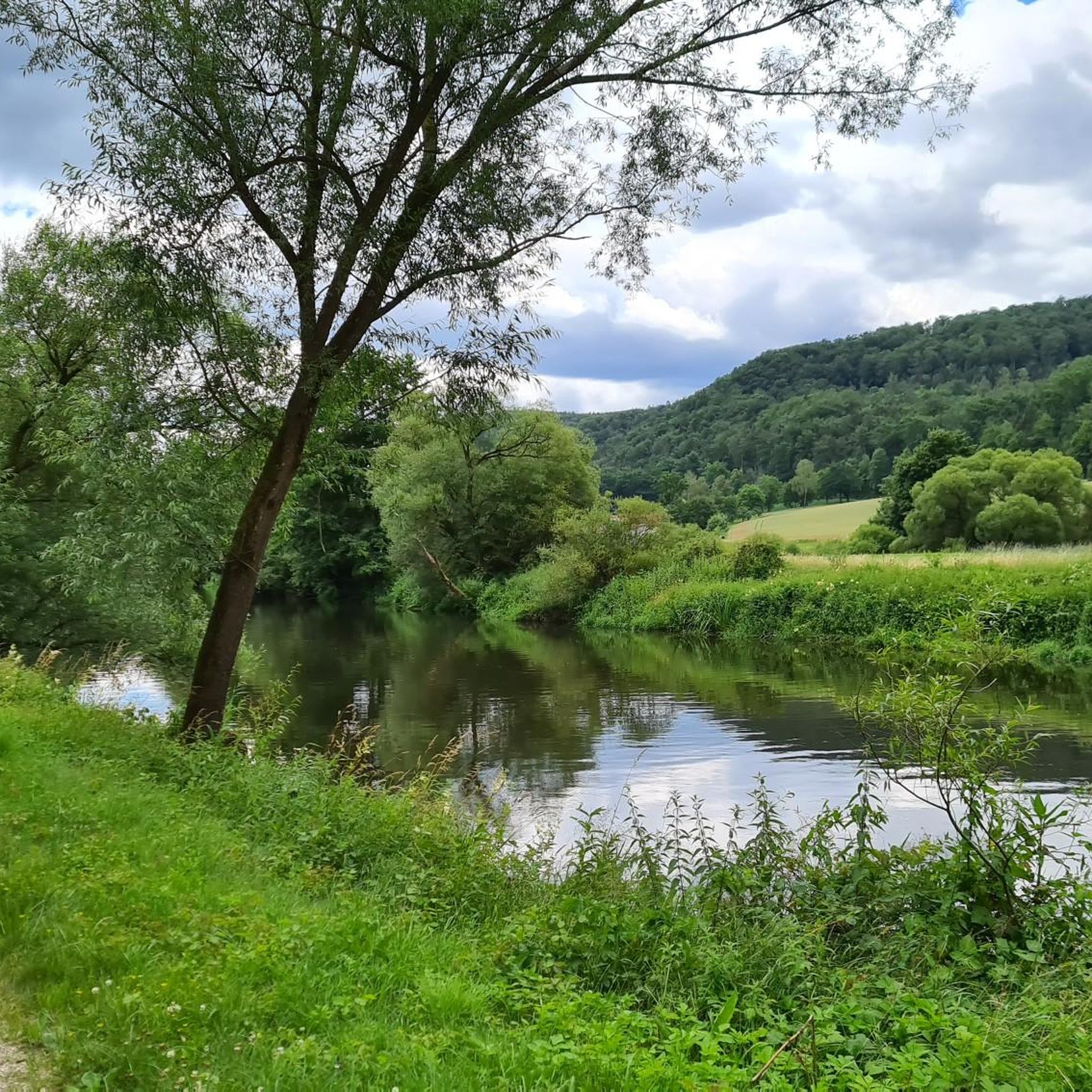
No matter what the weather or light, it is always beautiful to look at and take photos of. A visit to the castle is also recommended. It is best to check the opening times online beforehand
0
0

In the town of Wolfsegg, the castle of the same name sits on a rock. From the beginning of May to the beginning of October, you can visit the castle on weekends and public holidays. You might even see the "White Lady". You can find more information about the castle, opening times, prices and events at https://www.burg-wolfsegg.de/.
1
0
Frequently Asked Questions
Which castles near Duggendorf offer a deep dive into medieval history?
For a true journey back in time, visit Wolfsegg Castle. This well-preserved medieval castle, dating back to the late 13th century, houses a museum with insights into medieval life, including everyday objects, archaeological finds, and military equipment. The Knights' Hall features 15th-century wall paintings. Another historical site is Ehrenfels Castle Ruins, which offers a glimpse into a former stronghold with its ramparts, moats, and remnants of towers.
Are there any unique castle experiences beyond traditional tours?
Absolutely. You can visit Eichhofen Castle Brewery, a privately-owned castle brewery with a brewing tradition spanning over 400 years. It offers fantastic beers and an associated inn focusing on local ingredients and traditional dishes. While not a traditional tour, it provides a unique cultural and culinary experience within a historic castle setting.
What are the opening hours and ticket information for Wolfsegg Castle?
Wolfsegg Castle is typically open from the beginning of May to the beginning of October, on weekends and public holidays. For the most current information on opening times, prices, and events, it's best to check their official website directly at burg-wolfsegg.de.
Are there family-friendly activities at the castles around Duggendorf?
Yes, both Wolfsegg Castle and Eichhofen Castle Brewery are considered family-friendly. Wolfsegg Castle's museum and the legend of the 'White Lady' can captivate younger visitors, while the brewery offers a pleasant atmosphere for families to enjoy local food and drinks. The nearby settlement of Kallmünz marketplace also offers ice cream and a youth campground accessible to families.
Can I find hiking trails near the castles?
Yes, the region around Duggendorf offers numerous hiking opportunities. For example, the area around Ehrenfels Castle Ruins features trails on the castle hill. You can explore various routes, including the 'Klosterwirtschaft Pielenhofen – Narrow forest trail in the Naab Valley loop from Duggendorf' or the 'Girnitztal Valley – House without a Roof (Kallmünz) loop from Duggendorf'. Find more details on these and other hiking routes in the Hiking around Duggendorf guide.
What kind of natural features can I explore near these castles?
The castles are set within a diverse landscape. Wolfsegg Castle is situated on a rock cone, and beneath it lies a 500-meter-long cave system. The Ehrenfels Castle Ruins are located on a castle hill, offering scenic views. The region also features river valleys like the Labertal and Naab Valley, providing beautiful natural backdrops for your visit.
Are there options for mountain biking or gravel biking near the castles?
Yes, the Duggendorf area is well-suited for cycling. You can find various mountain biking trails, such as the 'Jurasteig Forest Trail – Snakeline singletrack loop from Duggendorf'. For gravel biking, routes like the 'View of Kallmünz Castle Ruins – Kallmünz Stone Bridge loop from Pielenhofen' are available. Explore more options in the MTB Trails around Duggendorf and Gravel biking around Duggendorf guides.
What is the story behind the 'White Lady' at Wolfsegg Castle?
According to an old legend, the 'White Lady' is a mysterious apparition said to haunt the walls of Wolfsegg Castle. This captivating legend adds a spooky allure to the site and is a popular part of the castle's folklore, often mentioned by visitors and locals alike.
Can I visit Duggendorf Castle itself?
Duggendorf also has its own castle, Duggendorf Castle. Currently, it is primarily utilized as an event venue. While specific historical details and public access for touring are less prominent, its function as an event venue suggests it offers a unique backdrop for gatherings within the municipality.
What are some amenities or places to eat near the castles?
Near Eichhofen Castle Brewery, you'll find an associated inn that focuses on local ingredients and traditional dishes. The nearby Kallmünz marketplace is an idyllic place with art galleries, beer gardens, cafes, and restaurants, offering plenty of places to stop for refreshments, from pizza to traditional Bavarian fare.
Is there a castle that is currently closed to visitors?
Yes, the Loch Cave Castle Ruins are currently closed and cannot be visited. This is an extremely rare cave castle, where two caves in the slope were connected and walled to create living quarters inside the rock.
What makes Kallmünz marketplace a good stop when visiting castles in the area?
Kallmünz marketplace is an ideal destination or starting point for exploring the region. It's an idyllic place with art galleries, beer gardens, narrow streets, and sights like Brunntor and the Steinerne Brücke. It offers numerous places to eat, from pizza to cafes, and is a great spot to relax by the Naab river.
Most popular routes around Duggendorf
Most popular attractions around Duggendorf

Get inspired with the komoot mobile app


Explore more
Looking for the best castles somewhere else? Discover other guides around Duggendorf:
