Top 20 Natural Monuments around Ahorntal
Best natural monuments around Ahorntal are primarily characterized by dramatic rock formations and fascinating cave systems. Ahorntal, nestled in Franconian Switzerland, offers unique insights into geological history. The landscape features picturesque valleys with distinctive rock towers and dolomite cliffs. These natural features provide opportunities for exploration and connection with the natural world.
Best natural monuments around Ahorntal
- The most popular natural monuments is Oswald Cave, a cave that is a karst cave on the Hollow Mountain, east of Muggendorf.…
Last updated: May 13, 2026
Oswald Cave
Highlight • Cave
Translated by Google •
Tip by

Quackenschloss
Highlight • Cave
Translated by Google •
Tip by
Sign up now to discover places like this
Get recommendations on the best single tracks, peaks, & plenty of other exciting outdoor places.
Sign up for free
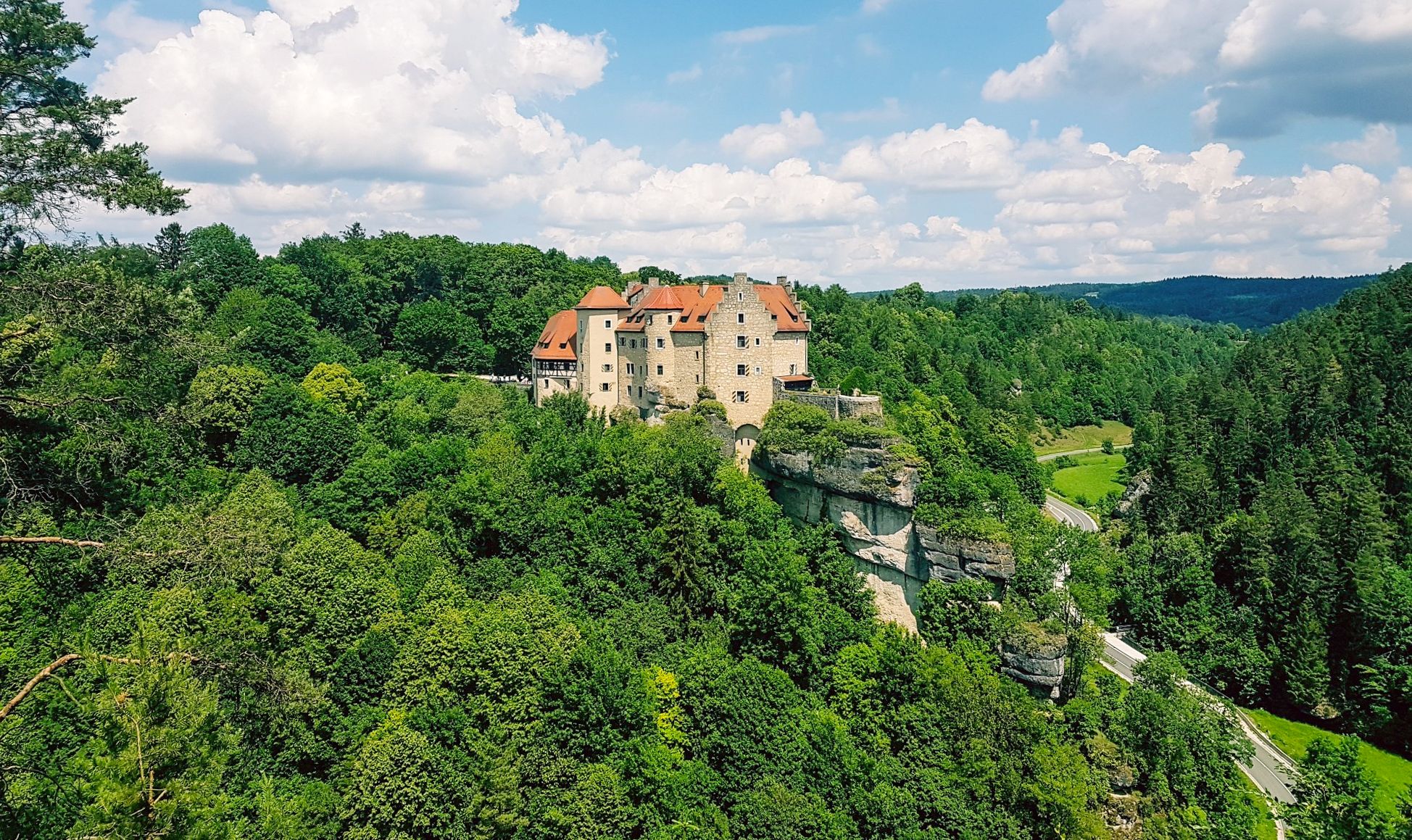
Ruins of Neideck Castle
Highlight • Castle
Translated by Google •
Tip by

Riesenburg Collapse Cave
Highlight • Cave
Translated by Google •
Tip by
View over the Wiesent Valley
Highlight • Viewpoint
Translated by Google •
Tip by

Sign up for free to discover even more natural monuments around Ahorntal.
Sign up for free
Already have an account?
Start today with a free account
Your next adventure awaits.
Login or Signup
Popular around Ahorntal
Ultratrail Fränkische Schweiz – 2 Days Burgen, Wälder, Trails
Hikes for tiny boots – VGN recreational activities for families
Franconian Switzerland — on the trace of the Purity Law
Hiking around Ahorntal
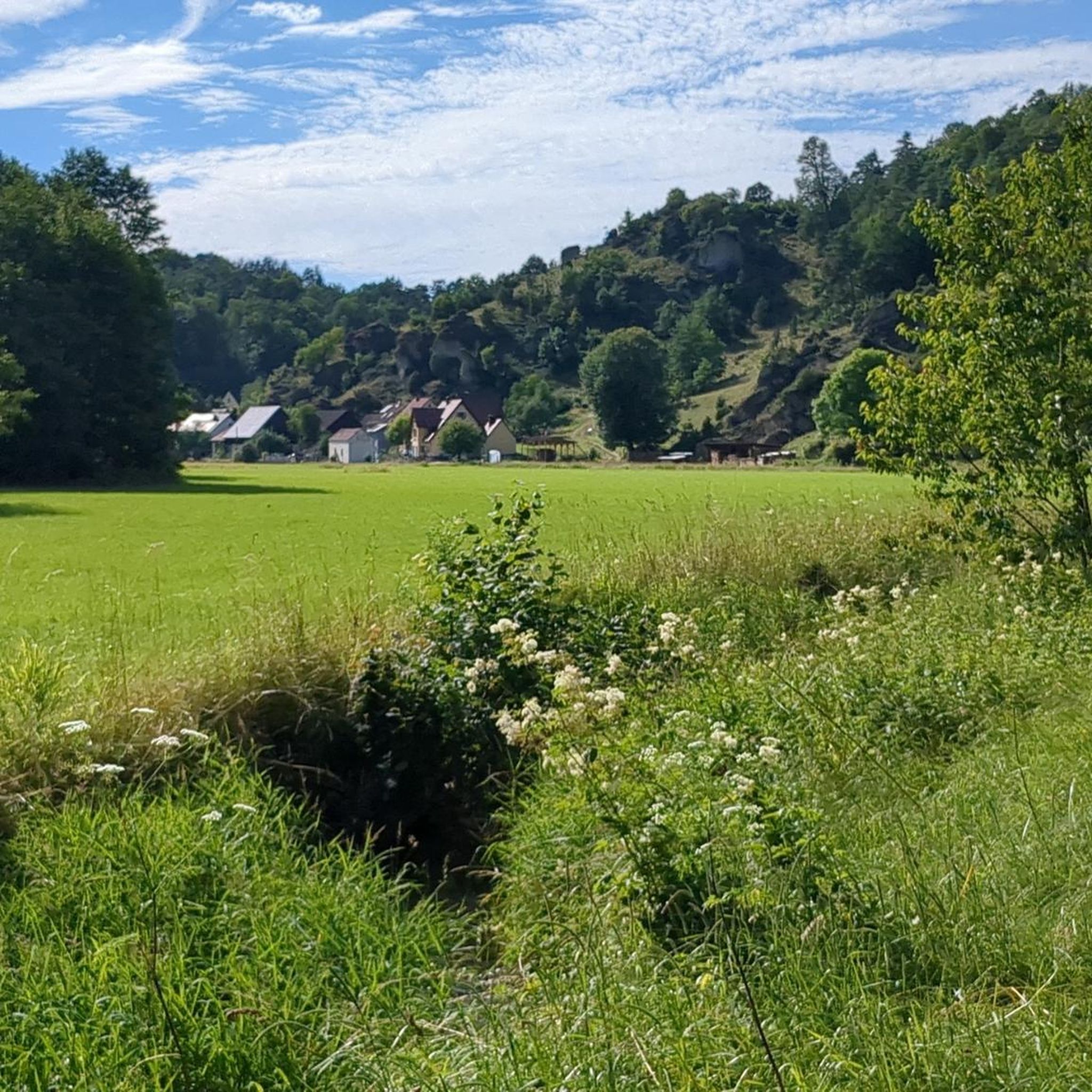
Cycling around Ahorntal
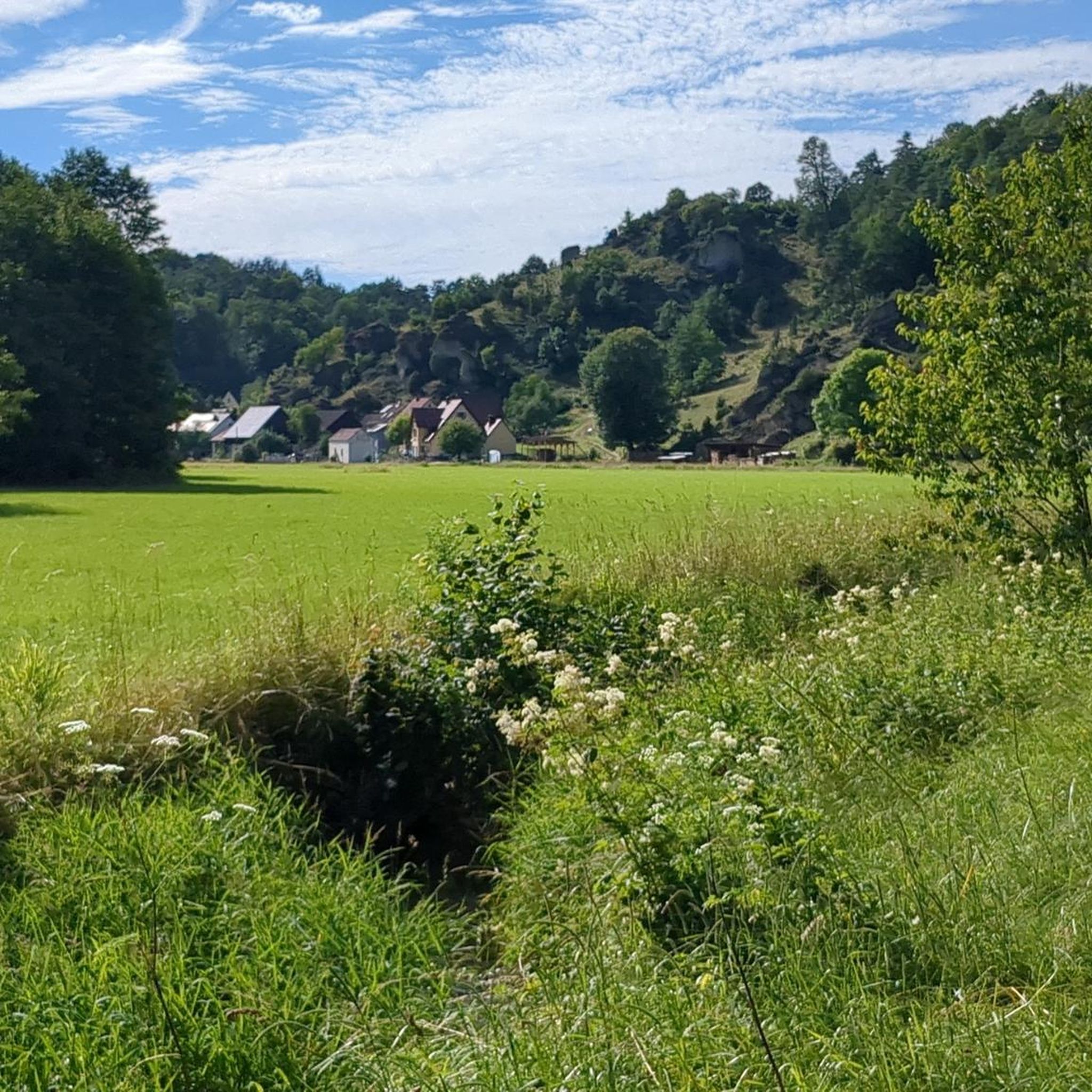
MTB Trails around Ahorntal
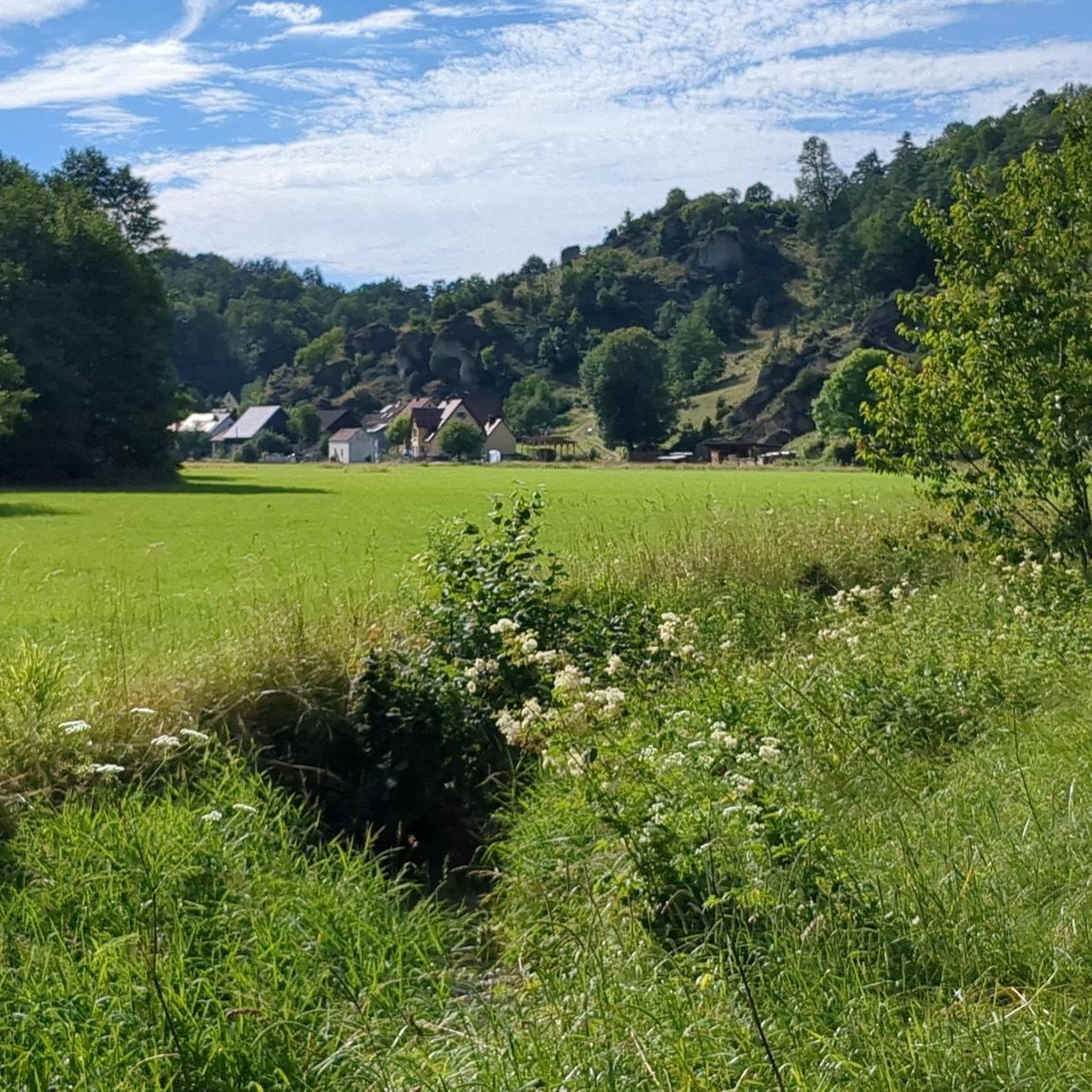
Road Cycling Routes around Ahorntal
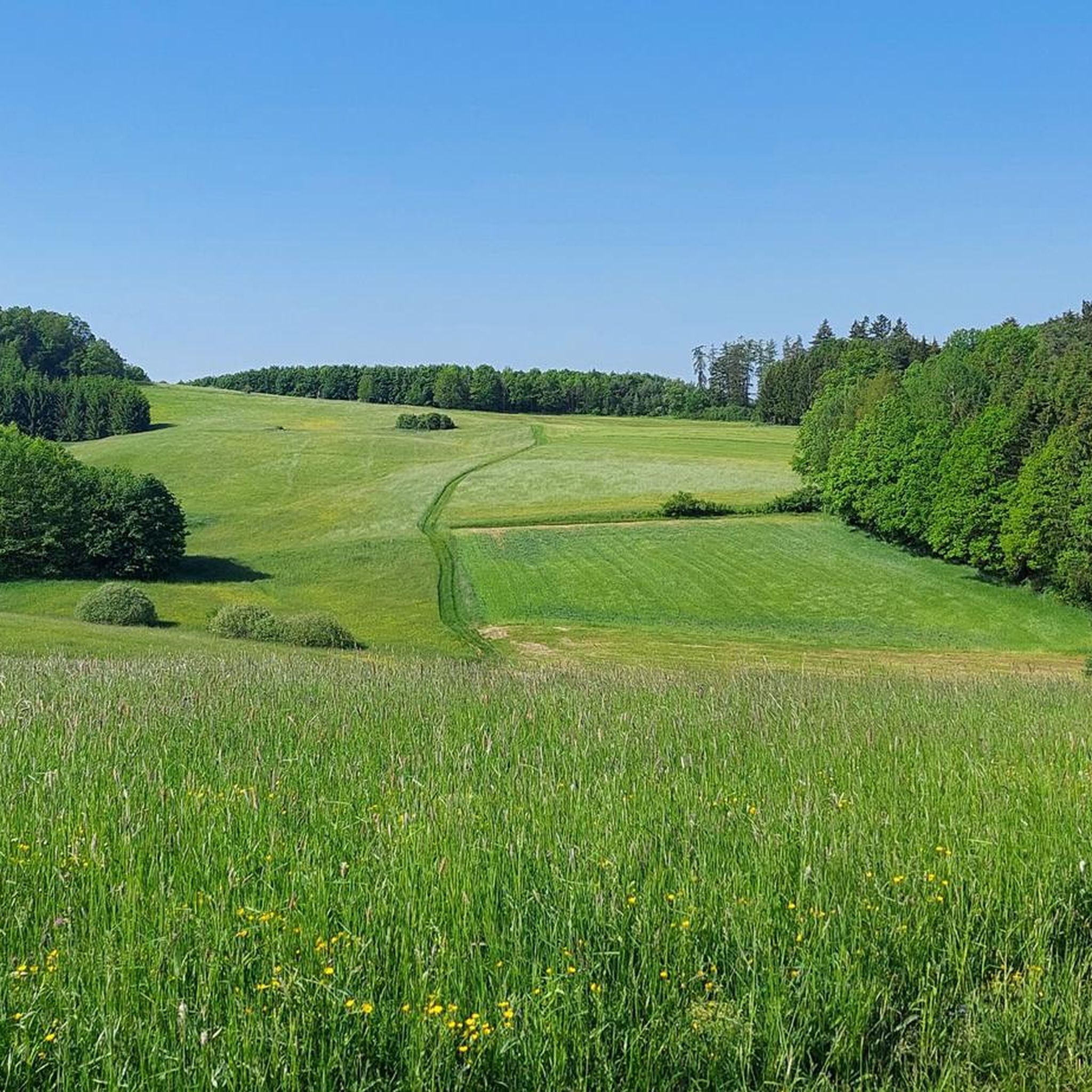
Running Trails around Ahorntal
Gravel biking around Ahorntal
Mountain Hikes around Ahorntal
Other adventures around Ahorntal


Tips from the Community

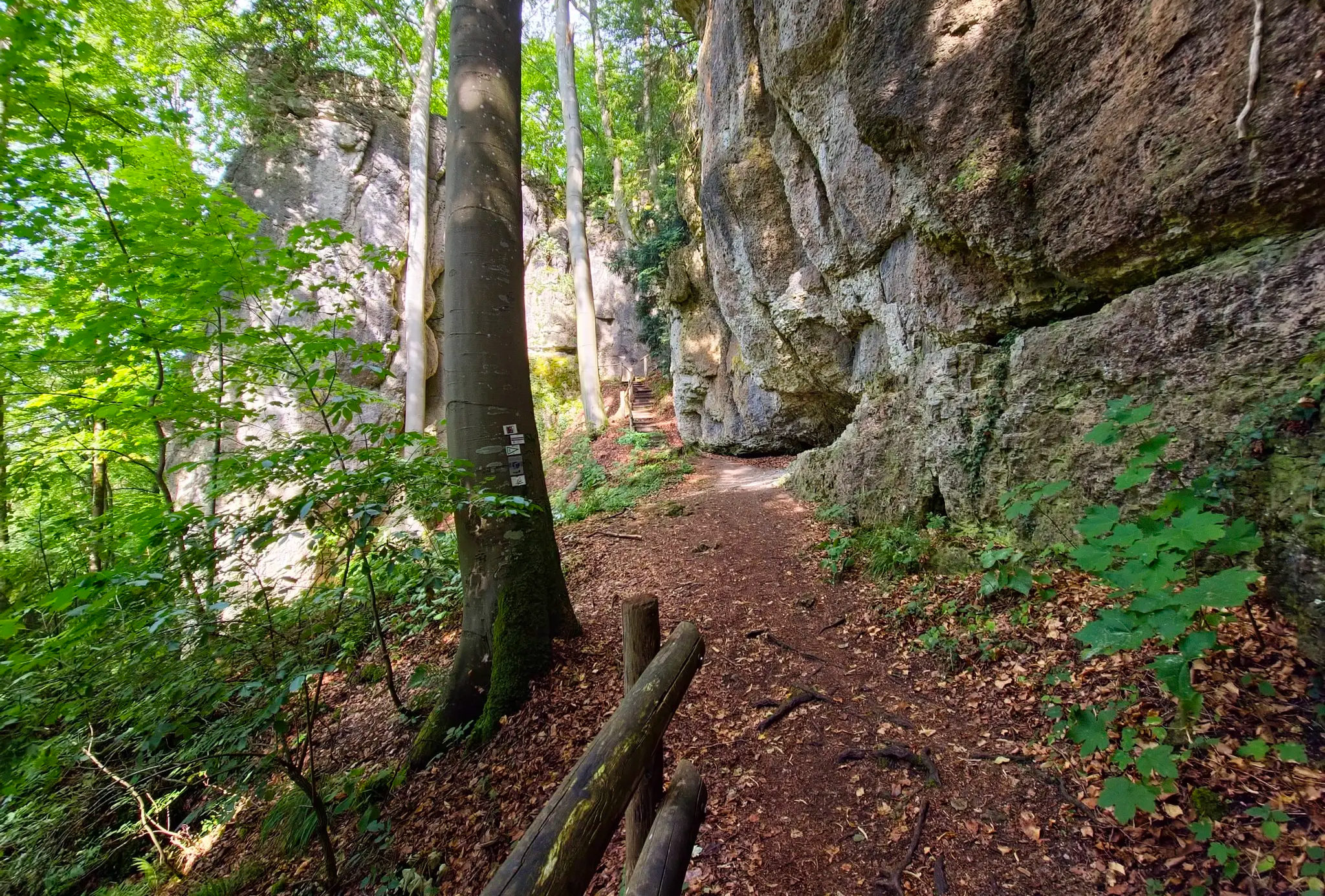
The Quackenschloss is a passage cave about 18 meters long. It is the remains of a very old and high-lying cave system. The rock wall has a patchy appearance due to the weathering of individual shells. The cave probably gets its name from this rock composition. The type of stone with holes in it (smokewacke) is called quacke here. The oblique oval shape of the cave is determined by two longitudinal fissures and two diagonally sloping bank joints. Two larger fissures cross the passage. One portal is about 7 meters wide and 2.5 meters high, the other, divided by a rock pillar, is about 9 meters wide and 5 meters high. The cave is registered as C 4 in the Franconian Alb Cave Register (HFA). It has been designated by the Bavarian State Office for the Environment as an important geotope (474R060)[1] and as a natural monument (ND-04580). The cave, which is easily accessible via hiking trails, is one of the most frequently visited destinations in the Franconian Jura, also because of its scenic location. There is a sport climbing area next to the cave. Source: Wikipedia
17
0

The Quackenschloss is a cave ruin, the remains of which belong to a very high (505 meters) and therefore very old cave system. The rock grotto, which is about three meters high and six meters wide, is open on two sides and can be safely entered from the east side. In the gallery cave, which takes its name from the enclosed fossils, the so-called Quacken, the remains of a 17-meter-long cave system can be explored.
16
0

A small steep path leads to the roof of the Quakenschloss. Great view from above.
13
0
The Oswald cave is a passage cave that can be crossed effortlessly.
18
0

The Oswald cave is a beautiful passage cave, you should take a flashlight with you because of the height, it is accessible all year round.
20
1

Nice hiking route. Very slippery in bad weather because the ground consists of many roots, stones and sometimes a lot of mud. Hiking poles are recommended.
11
0

A must-see, large "cave" and not for nothing one of the 100 most beautiful geotopes in Bavaria. The extensive karst cave was created by the collapse (collapse) of the former cave ceiling. The steep climb is worth it.
22
1
Definitely worth seeing through cave with partly only 1.5m high. You should definitely have a flashlight with you to safely find the 15m long passage through the Oswaldhöle. An exciting "G`schicht" not only for children.
23
1
Frequently Asked Questions
What are some of the most impressive natural monuments to visit in Ahorntal?
Ahorntal is rich in dramatic rock formations and fascinating cave systems. Highly recommended are the Oswald Cave, a passage cave that's easy to cross, and the Quackenschloss, a unique karst cave ruin known for its geological age and fossil content. The Riesenburg Collapse Cave is also an impressive sight, showcasing powerful erosive forces.
Are there any notable cave systems in Ahorntal that are particularly beautiful or significant?
Yes, Ahorntal is home to several significant caves. The Sophienhöhle (Sophie's Cave) is considered one of the most beautiful dripstone caves in Southern Germany, featuring immense chambers and rich stalactite formations. The Oswald Cave is a popular passage cave, and the Quackenschloss is a high-lying cave ruin with unique rock formations and fossils.
Can I explore historical sites alongside natural monuments in Ahorntal?
Absolutely. The Ruins of Neideck Castle is a prominent landmark that combines historical significance with stunning natural views over the Wiesenttal. Additionally, near Ludwigshöhle, you can find remnants of a 130-meter-long stone wall from an ancient Celtic hilltop settlement, blending natural formation with human history.
What kind of rock formations and valleys can I expect to see in Ahorntal?
Ahorntal is characterized by its dramatic rock formations and picturesque valleys. The Ailsbachtal (Ailsbach Valley) is a prime example, featuring distinctive rock towers, dolomite cliffs, and narrow riverside meadows. You'll encounter striking geological features throughout the region, offering dramatic scenery.
Are the natural monuments around Ahorntal suitable for families?
Many natural monuments in Ahorntal are family-friendly. For instance, the Oswald Cave is described as an exciting experience for children. The Ruins of Neideck Castle is also a great spot for families to explore, with plenty to discover and great views.
What is the best time of year to visit the natural monuments in Ahorntal?
The natural monuments in Ahorntal can be enjoyed throughout much of the year. Spring and autumn offer pleasant temperatures for hiking and exploring the outdoor rock formations and valleys. Summer is ideal for cave visits, which offer a cool escape, while the surrounding landscapes are lush. Always check specific opening times for caves, especially during off-peak seasons.
Are there hiking opportunities near these natural monuments?
Yes, Ahorntal offers excellent hiking opportunities that often lead to or past its natural monuments. You can find various routes, such as the 'Sophien Cave – Wiesent River loop' or the 'Schneider Cave – Ludwig Cave loop' from Burg Rabenstein. For more hiking options, explore the hiking guide for Ahorntal.
What is the difficulty level of trails leading to Ahorntal's natural monuments?
The difficulty varies. Some trails, like the passage through Oswald Cave, are considered easy. Others, such as the climb to the Riesenburg Collapse Cave or certain viewpoints like the View over the Wiesent Valley, can be intermediate to challenging due to steep sections or numerous steps. Always check route details before you go.
Can I find other outdoor activities like cycling near the natural monuments?
Beyond hiking, Ahorntal offers various cycling routes. You can find road cycling paths like the 'Hummeltal–Mistelgau Cycle Path' or explore MTB trails such as the 'View of Ahorntal loop from Kirchahorn'. For detailed routes, refer to the road cycling guide or the MTB trails guide for Ahorntal.
Is public transport available to reach the natural monuments in Ahorntal?
While specific public transport connections directly to every natural monument might be limited, Ahorntal is part of Franconian Switzerland, which has some regional bus services. For detailed information on routes and schedules to specific locations, it's advisable to check local transport providers or the official tourism website for Franconian Switzerland.
What do visitors enjoy most about the natural monuments in Ahorntal?
Visitors frequently praise the impressive geological formations, the unique experience of exploring caves, and the stunning panoramic views. The blend of natural beauty with historical elements, such as the Ruins of Neideck Castle, also adds to the appeal. The opportunity for active exploration and connecting with nature is highly valued.
Most popular routes around Ahorntal
Most popular attractions around Ahorntal

Get inspired with the komoot mobile app


Explore more
Extend your search for the best caves by checking out these guides of the top ones around Ahorntal:
