Top 20 Caves around Ralingen
Best caves around Ralingen are found in the Müllerthal region, often referred to as "Little Switzerland," characterized by its unique rock formations and historical sites. This area offers a landscape shaped by natural erosion and ancient human activity, providing diverse geological and historical points of interest. The caves here include former Roman quarries, medieval mining sites, and natural rock shelters. The region's terrain makes it a destination for exploring these subterranean features.
Best caves around Ralingen
- The most popular caves…
Last updated: October 9, 2026
Huel Lee (Hohllay Cave)
Highlight • Cave
Translated by Google •
Tip by

Genoveva Cave
Highlight • Cave
Translated by Google •
Tip by

Sign up now to discover places like this
Get recommendations on the best single tracks, peaks, & plenty of other exciting outdoor places.
Klausen Cave (Hermit's Cave)
Highlight • Cave
Showing Translation
Tip by

Roman copper mine and quarry Pützlöcher
Highlight • Historical Site
Translated by Google •
Tip by

Breechkaul Amphitheater
Highlight • Cave
Translated by Google •
Tip by

Sign up for free to discover even more caves around Ralingen.
Already have an account?
Start today with a free account
Your next adventure awaits.


Tips from the Community

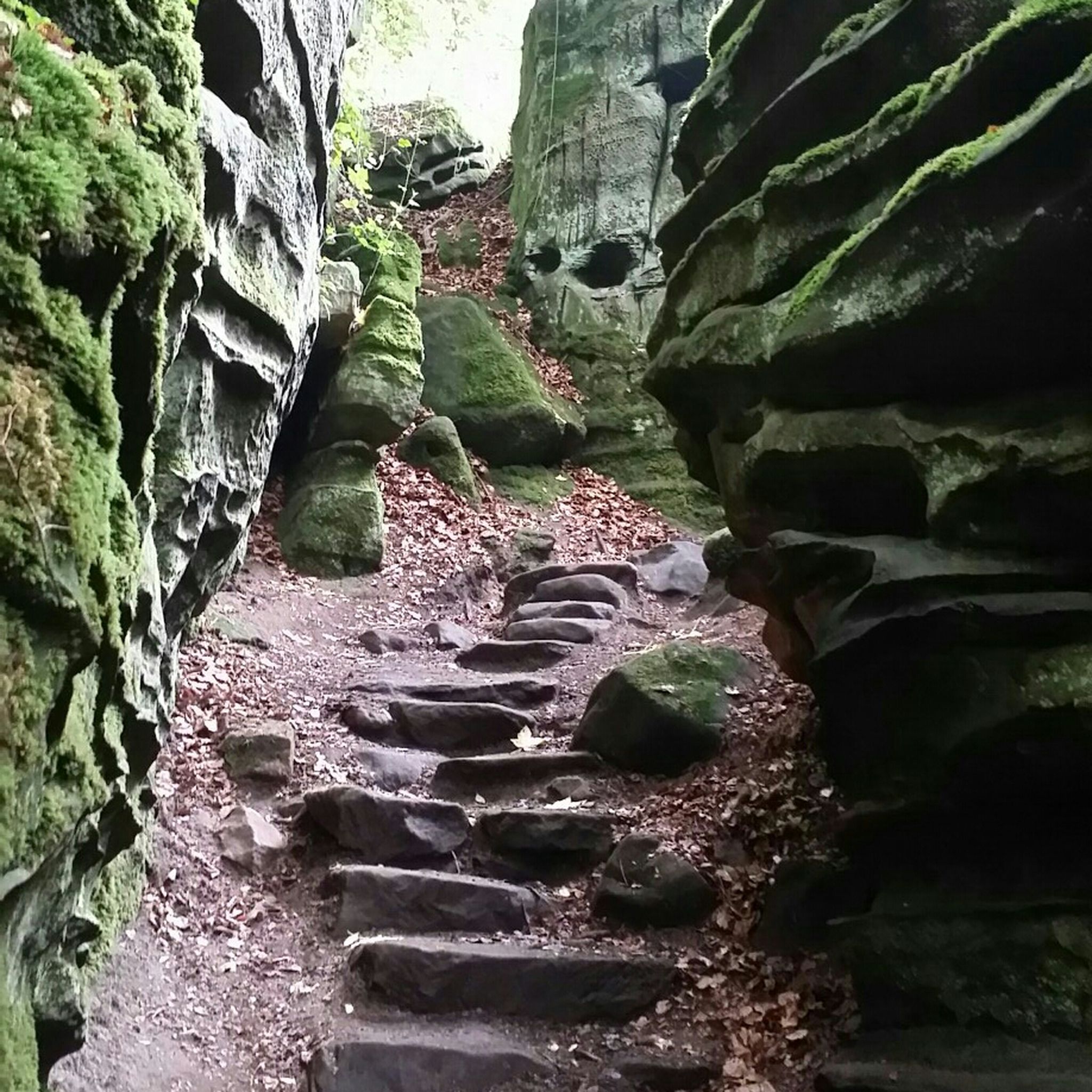
The amphitheater "Breechkaul" was established in 1979 in a rock hollowed out in the Middle Ages for the extraction of millstones. In summer, well-attended concerts of all kinds are held there. Known and loved far beyond the borders is the "Berdorfer Hubertusmesse" (Haupeschmass) on the first Sunday after November 2nd at 10:45 AM. (Regio Mullerthal)
4
0

The Klausenhöhle was inhabited in the 18th century by a hermit. Access is via ladders. Particularly impressive is the view through a natural rock opening, which reveals a view of the surrounding landscape. With its exceptional location and special atmosphere, the cave is one of the region's most appealing photo motifs.
44
0
Even today, blocks of stone with Roman numerals and inscriptions can be found in the mine. It is believed that quarrying continued into the 3rd century, as a coin of Emperor Maximinus Thrax was found in the tunnel. Much later, in the 18th century, the search for ore and copper resumed using state-of-the-art blasting techniques, creating new tunnels approximately 114 meters deep. However, the main tunnel collapsed during this process. Source: https://eifelfuehrer.de/touristische-ziele/geschichtliche-zeugnisse/puetzloecher
37
0
The Roman copper mine "Pützlöcher," located between Kordel and Butzweiler, is one of the oldest in Germany and means "waterhole." Here, in the 2nd century, ores such as malachite and azurite were mined at a depth of 20 meters. However, these ores were not found in large deposits, so the Romans later focused on the nearby quarry. The stones from this quarry were used, among other things, for the construction of the Porta Nigra. Source: https://eifelfuehrer.de/touristische-ziele/geschichtliche-zeugnisse/puetzloecher
46
0
The Huel Lee can be hiked via the local hiking trail E1 and the Berdorf auto-pedestrian hiking trail and is located on route 2 of the Mullerthal Trail. Nearest bus stop: Berdorf, Hotel Pérékop (500m) Nearest parking: Huel Lee/Amphitheater (200m) Source: https://www.visitluxembourg.com/de/attraktion/felsformation-huel-lee-hohllay
17
0

Beautiful amphitheater where events take place from time to time.
4
0

Great, impressive photo opportunity 🎨📸👍🏻👌🏼 Klausenhöhle KORDEL Visit the Klausenhöhle on the Eifelsteig and Römerpfad premium hiking trails and let the past come to life again. In the 18th century, a Klausener, a hermit, who sought to achieve eternal salvation through a life in complete isolation, probably lived in the Klausenhöhle. It's gigantic to see😵👌🏼
15
0
The Porta Nigra in Trier, the Cologne Cathedral and the Reichstag in Berlin have something in common! The building blocks come from the same area near Butzweiler near Trier. "Pützlöcher" is the popular name for a Roman quarry in which the large blocks for the construction of the Porta Nigra were cut out of the rock. Previously, copper ore was mined here.⚒️
13
1
Frequently Asked Questions
What kind of historical significance do the caves around Ralingen hold?
The caves in the Ralingen area are rich in history, particularly from Roman times and the Middle Ages. Sites like Huel Lee (Hohllay Cave) were used by Romans for quarrying stones and later for mining millstones. The Roman copper mine and quarry Pützlöcher is an impressive site where Romans mined copper ores and quarried stones, some of which were used for the Porta Nigra. Genoveva Cave also has a history of past human habitation.
Are there any unique natural formations or geological features to see in the Ralingen caves?
Yes, the region, often called "Little Switzerland," is known for its unique rock formations. Huel Lee (Hohllay Cave) features intricate tunnels and distinctive rock formations, with visible tool traces from ancient quarrying. At Klausen Cave (Hermit's Cave), visitors are fascinated by the natural 'faces' in the rock.
Are there family-friendly caves to explore in Ralingen?
Yes, the Breechkaul Amphitheater, which is a cave formed from millstone mining, is listed as family-friendly. It's an open cave where concerts are held in the summer. Genoveva Cave is also suitable for families, offering a short hike through geological history with an information board about past inhabitants.
What is the Breechkaul Amphitheater, and how is it related to the caves?
The Breechkaul Amphitheater is a unique open-air venue created from a former millstone quarry, similar to how other caves in the region were formed by human activity. It was established in 1979 and hosts various concerts during the summer months, offering a cultural experience within a historical cave setting.
What kind of outdoor activities can I do near the caves around Ralingen?
The Ralingen area offers a variety of outdoor activities. You can find numerous cycling routes, including the Bitburg Airfield Cycle Path and routes around the Ralinger Tunnel. For hiking enthusiasts, there are trails like the 'Hiking loop from Ralingen' and routes exploring the Olker Bach Waterfalls. You can find more details on these activities in the Cycling around Ralingen and Hiking around Ralingen guides.
Are there hiking trails that lead to or past these caves?
Yes, many hiking trails in the Müllerthal region incorporate these caves. For instance, the area around Huel Lee (Hohllay Cave) is part of popular routes. Genoveva Cave is accessible via a short hike. You can explore various hiking options in the Hiking around Ralingen guide.
What do visitors enjoy most about the caves in Ralingen?
Visitors frequently highlight the unique blend of natural beauty and historical significance. The intricate rock formations and tunnels of Huel Lee, along with the visible tool marks from Roman and medieval mining, are particularly appreciated. The secluded and tranquil atmosphere of Klausen Cave is also a favorite, as is the impressive scale and historical evidence at the Roman copper mine and quarry Pützlöcher.
How accessible are the caves around Ralingen for general exploration?
Many of the caves, such as Huel Lee and Klausen Cave, are described as easily accessible. They are often integrated into hiking paths, making them suitable for general exploration. While some sites involve short hikes, they are generally considered intermediate in difficulty, making them approachable for most visitors.
Can I see evidence of Roman engineering in the Ralingen caves?
Absolutely. The Roman copper mine and quarry Pützlöcher is a prime example, showcasing the remarkable scale of Roman engineering. You can still observe blocks of stone with Roman numerals and inscriptions, providing tangible evidence of their mining operations. Huel Lee also bears traces of Roman quarrying.
What is the best time of year to visit the caves in Ralingen?
The caves in Ralingen can be visited year-round. However, the surrounding Müllerthal region is particularly beautiful during spring and autumn, when the weather is mild for hiking and the foliage is vibrant. Summer offers pleasant conditions for exploring and enjoying outdoor events at places like the Breechkaul Amphitheater.
Are there any caves that offer a particularly secluded or tranquil experience?
Yes, Klausen Cave (Hermit's Cave) is specifically noted for being a "truly beautiful place, wonderfully secluded and yet easily accessible." Its hidden nature makes it an ideal spot for those seeking a peaceful retreat and a quiet connection with nature.
Most popular routes around Ralingen
Most popular attractions around Ralingen

Get inspired with the komoot mobile app


Explore more
Extend your search for the best caves by checking out these guides of the top ones around Ralingen:
