The best running trails in Jongenbos
4.2
(267)
21,253
runners
1,016
runs
Jogging in Jongenbos offers a tranquil and engaging environment for outdoor enthusiasts. The region is characterized by 100 hectares of forest, including oak stands and riparian forests, situated in the transitional zone between the sandy Kempen and loamy Haspengouw. This diverse landscape features water elements like the Mombeek and a castle pond, contributing to a rich ecosystem. The terrain is largely flat, providing easily accessible and well-maintained paths suitable for various fitness levels.
Best jogging routes in Jongenbos
- The most…
Last updated: July 4, 2026
10
runners
15.4km
01:40
80m
80m
Hard run. Very good fitness required. Mostly paved surfaces. Suitable for all skill levels.
10
runners
Moderate run. Good fitness required. Mostly paved surfaces. Suitable for all skill levels.

Sign up for free
17
runners
Moderate run. Good fitness required. Mostly paved surfaces. Suitable for all skill levels.
9
runners
6.22km
00:39
30m
30m
Moderate run. Good fitness required. Mostly paved surfaces. Suitable for all skill levels.
7
runners
8.05km
00:54
20m
20m
Moderate run. Good fitness required. Mostly paved surfaces. Suitable for all skill levels.
Get access to more routes and recommendations from other explorers.
Sign up for free
Already have an account?
Our route recommendations are based on thousands of hikes, rides, and runs completed by other people on komoot.
Start today with a free account
Your next adventure awaits.
Login or Signup

Tips from the Community

Wintershoven was first mentioned in writing in 976, as Villa Wintreshovo. The suffix -hoven indicates a Frankish origin. Wintres would refer to a proper name: the farm of Winidahari. The Roman presence is evident from the fact that the main road from Tongeren crossed the territory of the later Wintershoven in a northerly direction. Partly due to the activities in the seventh century of evangelists such as Bavo of Ghent, Amandus, and their followers, Wintershoven became an important ecclesiastical center in the early Middle Ages. Many of them were canonized (the Saints of Wintershoven) and have been venerated since then. Administratively, Wintershoven was an allodium, which, however, was part of the County of Loon. The patronage right of the parish, which traditionally belonged to the St. Bavo's Abbey in Ghent, passed to the Counts of Loon at the beginning of the 13th century, who ceded it to the Lords of Kortessem. In 1225, the patronage right passed to the then-established chapter of Kortessem. Part of the tithe right passed to the Abbey of Herkenrode in 1232. Wintershoven, located at a crossroads, originally developed as a linear village. In 1904, the Kortessem-Tongeren tram line was built, with a tram station near Kasteel Dessener. The tram line has disappeared, but the name Stationsstraat remained. Ribbon development occurred along this street.
4
0
The water castle of Schoonbeek is a Renaissance castle built in a U-shape with a large garden. Next to the castle is a pond that flows into a moat, over which a drawbridge leads to the entrance gate. The oldest core of the castle dates back to the Middle Ages: in 1333 the castle belonged to the County of Loon. Herman Typots, bailiff of the Land of Grevenbroek and castellan of the Prinsenhof in Kuringen, married Margriet van Chiney, daughter of Dirk van Chiney, lord of Schoonbeek and Anna Vandenbosch of Gors-op-Leeuw. In 1573 their grandson Hendrik Typots was still lord of the castle of Schoonbeek. The Preston family from Ireland bought it in 1780. The next owner was the de Renesse family. Count Theodore de Renesse was mayor of Beverst and governor of the province of Limburg. Another descendant, Frédéric Alexandre Jean Marie Ghislain, Count de Renesse, born in Brussels on January 3, 1904, died unmarried in the castle on November 18, 1990. In 1991 the castle became the property of Count Thierry de Hemricourt de Grunne.
3
0
The water castle of Schoonbeek is a U-shaped Renaissance castle with a large garden. Next to the castle is a pond that flows into a moat, over which a drawbridge leads to the entrance gate. The oldest part of the castle dates back to the Middle Ages: in 1333, the castle belonged to the county of Loon. Herman Typots, drossard of the Land of Grevenbroek and castellan of the Prinsenhof in Kuringen, married Margriet van Chiney, daughter of Dirk van Chiney, lord of Schoonbeek and Anna Vandenbosch of Gors-op-Leeuw. In 1573, their grandson Hendrik Typots was still lord of the castle of Schoonbeek. The Preston family from Ireland bought it in 1780. The next owner was the de Renesse family. Count Theodore de Renesse was mayor of Beverst and governor of the province of Limburg. Another descendant, Frédéric Alexandre Jean Marie Ghislain, count de Renesse, born in Brussels on January 3, 1904, died unmarried in the castle on November 18, 1990. In 1991, the castle became the property of count Thierry de Hemricourt de Grunne.
3
0

At the junction with the Kleineweg stands this charming chapel, in a place where a house of prayer has belonged for centuries. An earlier chapel was lost during the French period, but the tradition lived on. In 1818, Jan Coenen, farmer of the nearby Mersenhovenhoeve, had a new chapel built here, dedicated to Our Lady. It is striking that he used the same bricks for it as for the farmhouse, which creates a beautiful and recognizable whole. A small place with a great story, where past and devotion come together.
5
0
Het Jongenbos is an estate complex that originally belonged to the Jongenbos Castle in Vliermaalroot. It currently consists of 20 ha of castle park, 100 ha of forest and 180 ha of arable land and pasture. From 1995 onwards, 73 ha of the forest has been designated as a forest reserve. The area is protected by Europe as part of the Natura 2000 area 'Forests and calcareous grasslands of Haspengouw' (BE2200038). @https://nl.wikipedia.org/wiki/Jongenbos
4
0
This is not the Donnea castle, the Donnea castle is located on the Tongersesteenweg in Guigoven: https://www.komoot.com/nl-nl/plan/@50.8369945,5.4012574,18.095z?sport=hike&constitution=2&waypoint=poi:6YOUd
4
0
This castle, also known as 't Rood Kasteel (Red Castle), was the former residence of the Lords of Guigoven and is one of the few buildings built on the marshy soil of the Mombeek alluvial plain. Early sources mention it as early as the 13th century. The oldest parts of the complex (the house to the left of the gatehouse: 1619) date from the first half of the 17th century and were built in the Maasland Renaissance style. The 18th- and 19th-century renovations were generally carried out in the Classical and Neoclassical styles. Originally, it was a moated castle with a drawbridge as the only access. The current pond is a remnant of the former moat.
5
0

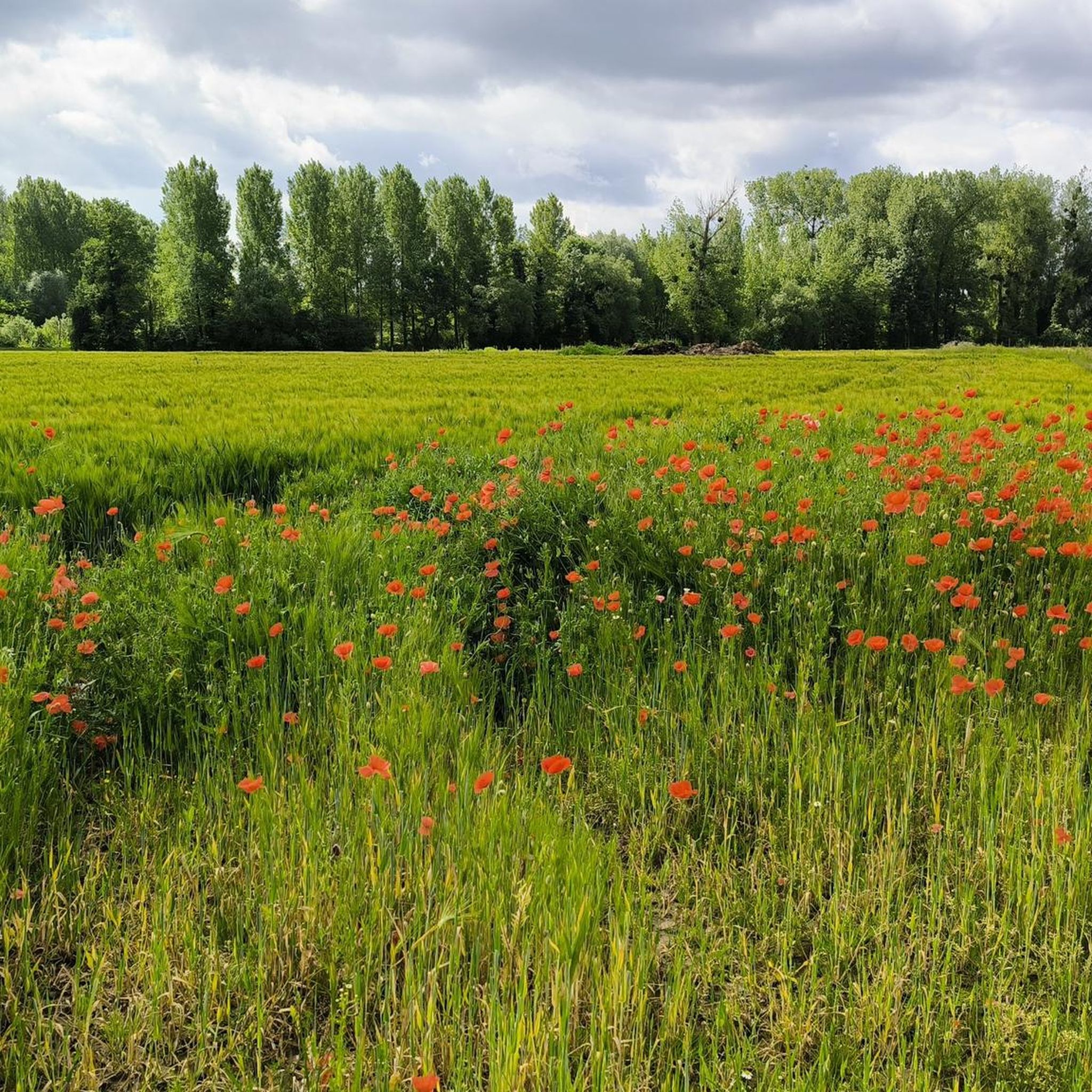
The Jongenbos forest lies northeast of the center of Vliermaalroot, in the northern part of Humid Haspengouw. The terrain is almost flat. This historically stable forest served as a park and hunting preserve for the eponymous Loon fiefdom. The builder of the current castle is said to have planted seventy thousand trees to compensate for the felling of the deciduous forest, which was necessary for the castle's construction (including for firewood in the brickworks' kilns). The pond behind the castle is the result of clay extraction for bricks. The landscape around the forest has an agricultural character.
2
0
Frequently Asked Questions
How many running routes are available in Jongenbos?
Jongenbos offers a wide selection of running routes, with over 880 tours available. This includes a variety of options suitable for different fitness levels, from easy paths to more challenging trails.
What is the terrain like for running in Jongenbos?
The terrain in Jongenbos is largely flat, making it ideal for running. It features easily accessible and well-maintained paths through 100 hectares of diverse forest, including oak stands and riparian forests. The area is known for its tranquil environment and varied landscapes.
Are there easy running routes suitable for beginners or families in Jongenbos?
Yes, Jongenbos has numerous easy running routes perfect for beginners or families. The mostly flat terrain and well-maintained paths ensure a pleasant experience. For example, the Running loop from Vliermaalroot is a moderate 5.1 km path that is very accessible.
Can I bring my dog on the running trails in Jongenbos?
While the guide does not specify dog-friendly rules for every route, Jongenbos is generally recognized as a versatile area for various outdoor pursuits, including walking and running. It's always recommended to keep dogs on a leash and respect local signage regarding pet access in specific areas, especially near nature reserves or private property.
What natural features or landmarks can I see while running in Jongenbos?
Jongenbos is rich in natural beauty and historical landmarks. You can explore dense woodlands, semi-open border areas, and water elements like the Mombeek and a pond behind the castle. A central attraction is Kasteel Jongenbos, a historic castle with a scenic park. You might also encounter the Avenue with a view of Jongenbos Castle, offering impressive vistas.
Are there any circular running routes in Jongenbos?
Yes, many of the running routes in Jongenbos are circular, offering convenient starting and ending points. A popular example is the Molenvijver – Vissersclub De Karper loop from Vliermaalroot, an 8.1-mile trail that takes you through varied landscapes.
Where can I park when visiting Jongenbos for a run?
While specific parking locations are not detailed in the guide, Jongenbos is situated on the border of Diepenbeek and Kortessem. It is advisable to look for designated parking areas in these nearby towns or at trailheads. Local information or mapping services can often provide precise parking details for specific starting points.
Is Jongenbos accessible by public transport?
The guide does not provide specific public transport information. However, given its location near Diepenbeek and Kortessem, it is likely that public transport options such as local buses serve these towns. You may need to check regional public transport schedules for routes that connect to the vicinity of Jongenbos.
What is the best time of year to go running in Jongenbos?
Jongenbos is beautiful year-round, but early spring is particularly special. The forest floor is adorned with a vibrant display of colorful flora such as wood anemone and wild hyacinth, making for a picturesque running experience. The diverse ecosystem ensures interesting sights in any season.
What kind of wildlife might I encounter in Jongenbos?
Jongenbos is a haven for diverse wildlife. You might spot various bird species, including buzzards, wood warblers, nuthatches, marsh tits, and black woodpeckers. The area also hosts rare species like the brown argus butterfly and provides a habitat for stone martens and Bechstein's bats in its older parts.
Are there any cafes or places to eat near the running routes in Jongenbos?
The guide mentions 'The Little Café loop from Kasteel Jongenbos', suggesting there might be a cafe near the castle or in the nearby towns of Vliermaalroot, Diepenbeek, or Kortessem. These towns are good places to look for amenities like cafes, pubs, or restaurants after your run.
What do other runners say about the trails in Jongenbos?
The running routes in Jongenbos are highly rated by the komoot community, with an average score of 4.3 stars from over 220 reviews. Runners often praise the varied terrain, the tranquility of the woodlands, and the well-maintained paths that cater to different ability levels.
Are there any longer or more challenging running routes for experienced runners?
Yes, Jongenbos offers routes for more experienced runners seeking a challenge. For instance, the Mersenhoven Chapel – Jongenbos Castle loop from Vliermaalroot is a difficult 15.4 km route with more significant elevation changes, providing a good workout while exploring historical sites.
Most popular routes in Jongenbos
Most popular attractions in Jongenbos

Get inspired with the komoot mobile app


Explore more
Browse the best Running Trails & Routes in other regions.
