The best MTB trails in Réserve Naturelle Des Sept-Îles
4.3
(136)
607
riders
32
rides
Mountain bike trails in Réserve Naturelle Des Sept-Îles are not found within the protected archipelago itself, which is a crucial bird sanctuary with insular, rocky geography. However, the surrounding mainland areas, particularly along the Pink Granite Coast, offer diverse mountain biking opportunities. This region is characterized by its distinctive granite rock formations, coastal paths, and varied terrain, providing routes that range from gentle coastal rides to more challenging inland trails.
Best mountain bike trails in Réserve Naturenelle Des Sept-Îles
- The…
Last updated: July 18, 2026
2.5
(2)
9
riders
19.6km
01:06
150m
150m
Easy mountain bike ride. Great for any fitness level. Suitable for all skill levels.
4
riders
13.3km
00:51
110m
110m
Easy mountain bike ride. Great for any fitness level. Suitable for all skill levels.

Sign up for free
4.1
(21)
74
riders
Moderate mountain bike ride. Good fitness required. Suitable for all skill levels.
15
riders
67.1km
04:30
800m
800m
Moderate mountain bike ride. Good fitness required. Advanced riding skills necessary.
18
riders
31.5km
01:53
300m
300m
Hard mountain bike ride. Great for any fitness level. Advanced riding skills necessary. Some portions of the route may require you to push your bike.
Get access to more routes and recommendations from other explorers.
Sign up for free
Already have an account?
Our route recommendations are based on thousands of hikes, rides, and runs completed by other people on komoot.
Start today with a free account
Your next adventure awaits.
Login or Signup
Tips from the Community

The Oratory of Saint-Guirec was built in the 12th century on the beach where, according to legend, Saint Guirec landed from Wales in the 6th century. He is said to have sailed in a granite trough. However, his arrival in a curragh, a boat made of wooden slats covered with leather, is historically documented. The trough proved extremely useful on board, serving as ballast, a hearth, and a storage container. Over the centuries, legends arose about Breton saints, based on more or less verifiable facts and Celtic traditions, which were later adopted by the Church. Inside the oratory is the granite statue of Saint Guirec. Young girls would come and stick a needle into it, and if it got stuck, they would get married within a year. Saint Guirec was also invoked to help children learn to walk by placing them in the Gwele of Saint Guirec, a hollow rock behind the Calvary.
1
0

One of the most beautiful beaches on the Pink Granite Coast.
0
0

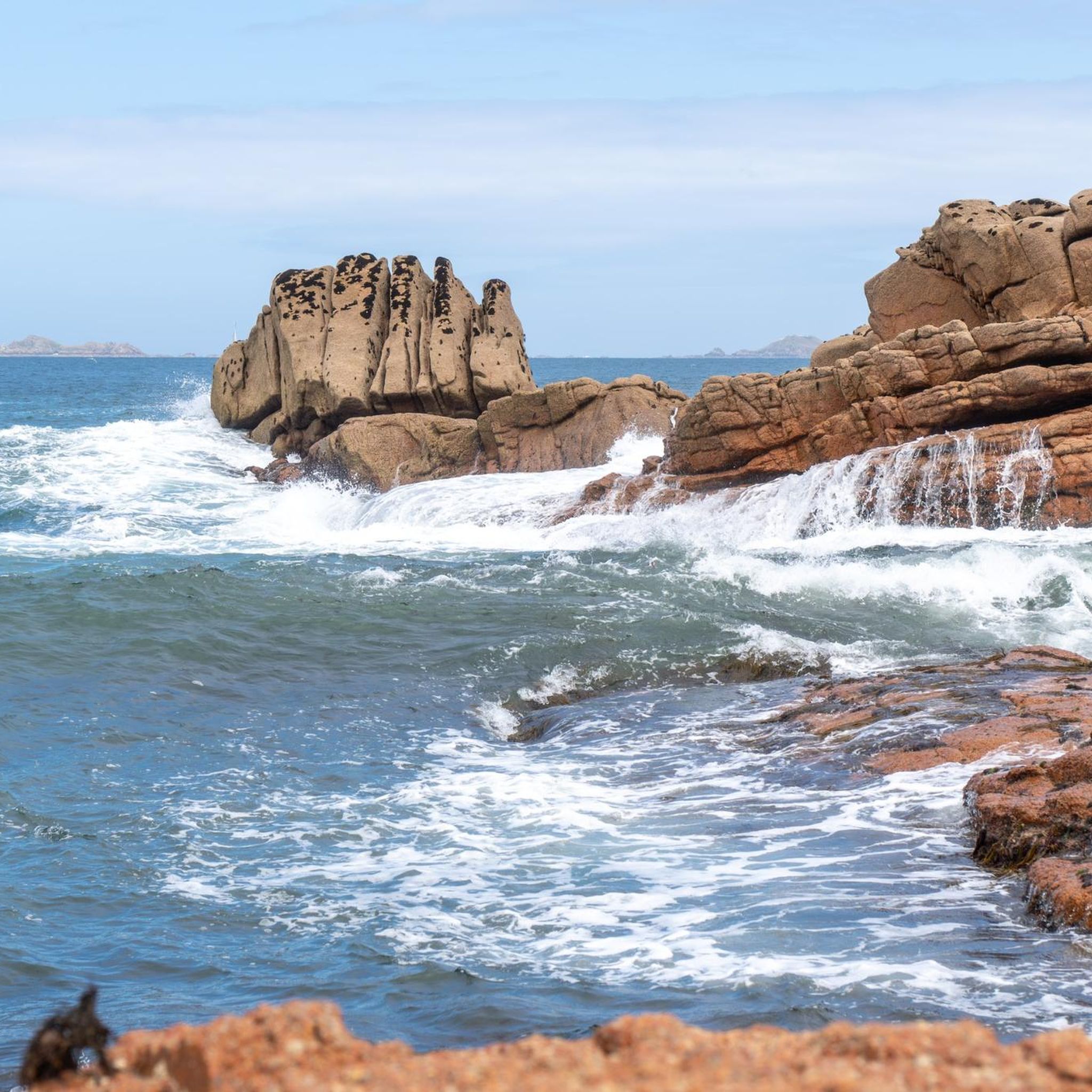
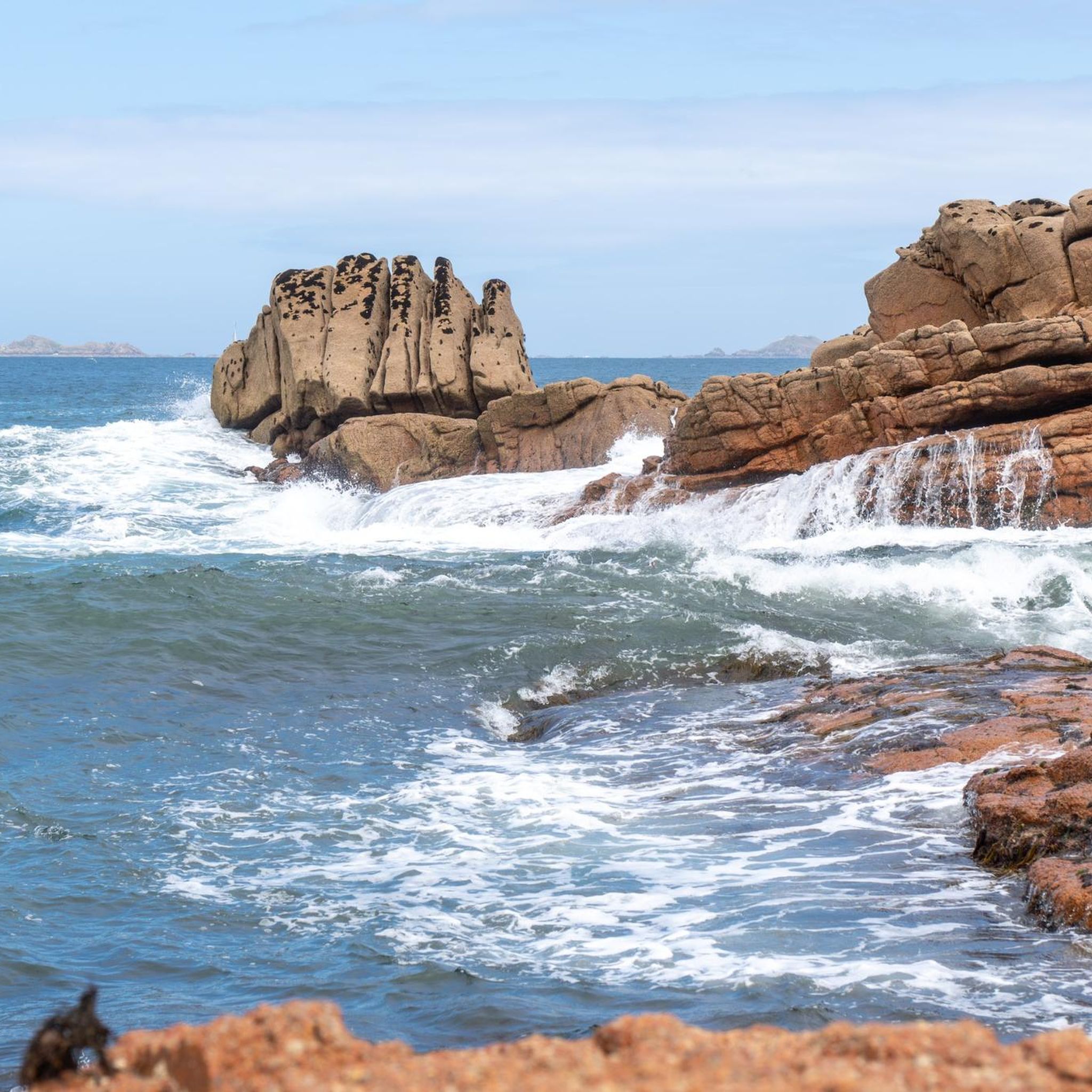
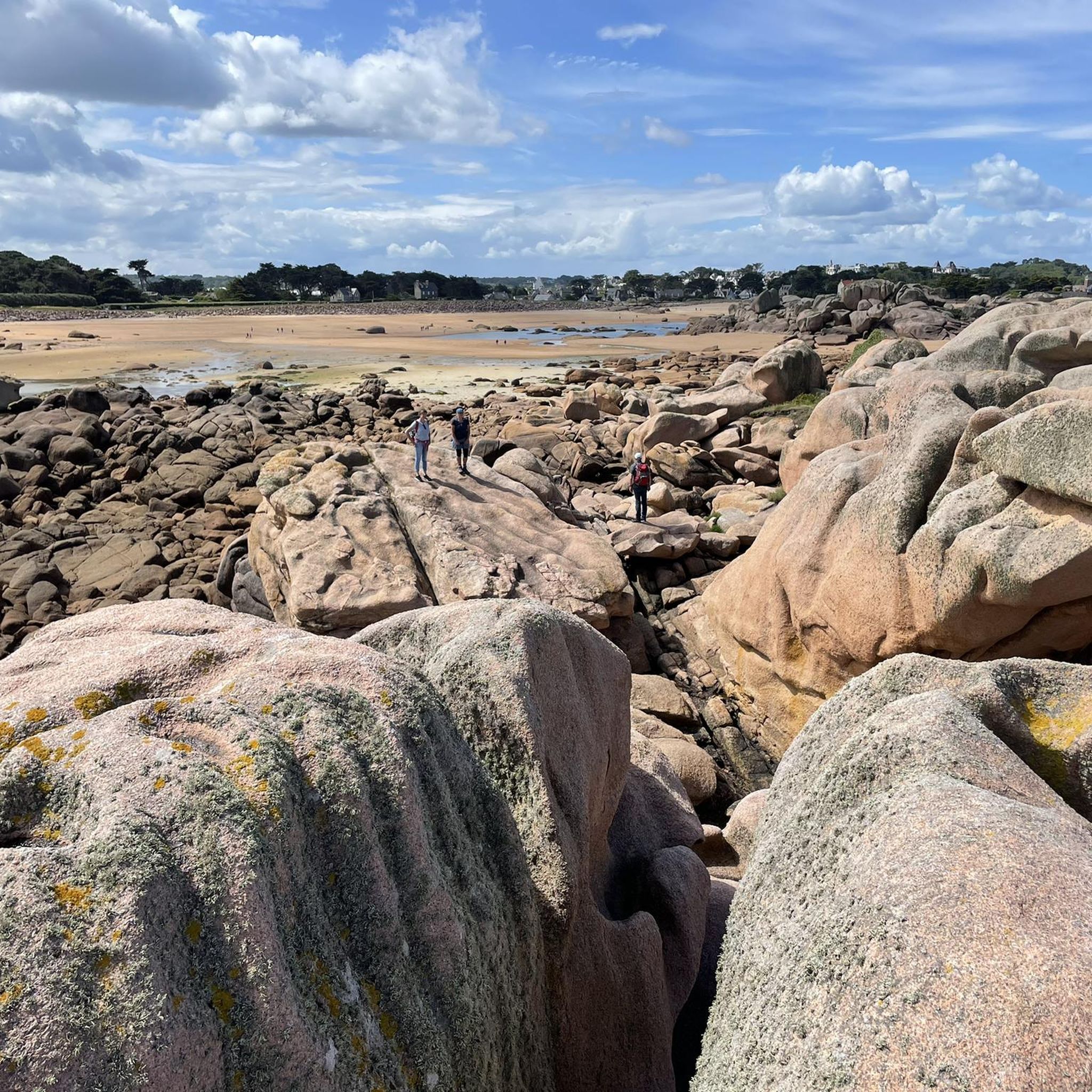
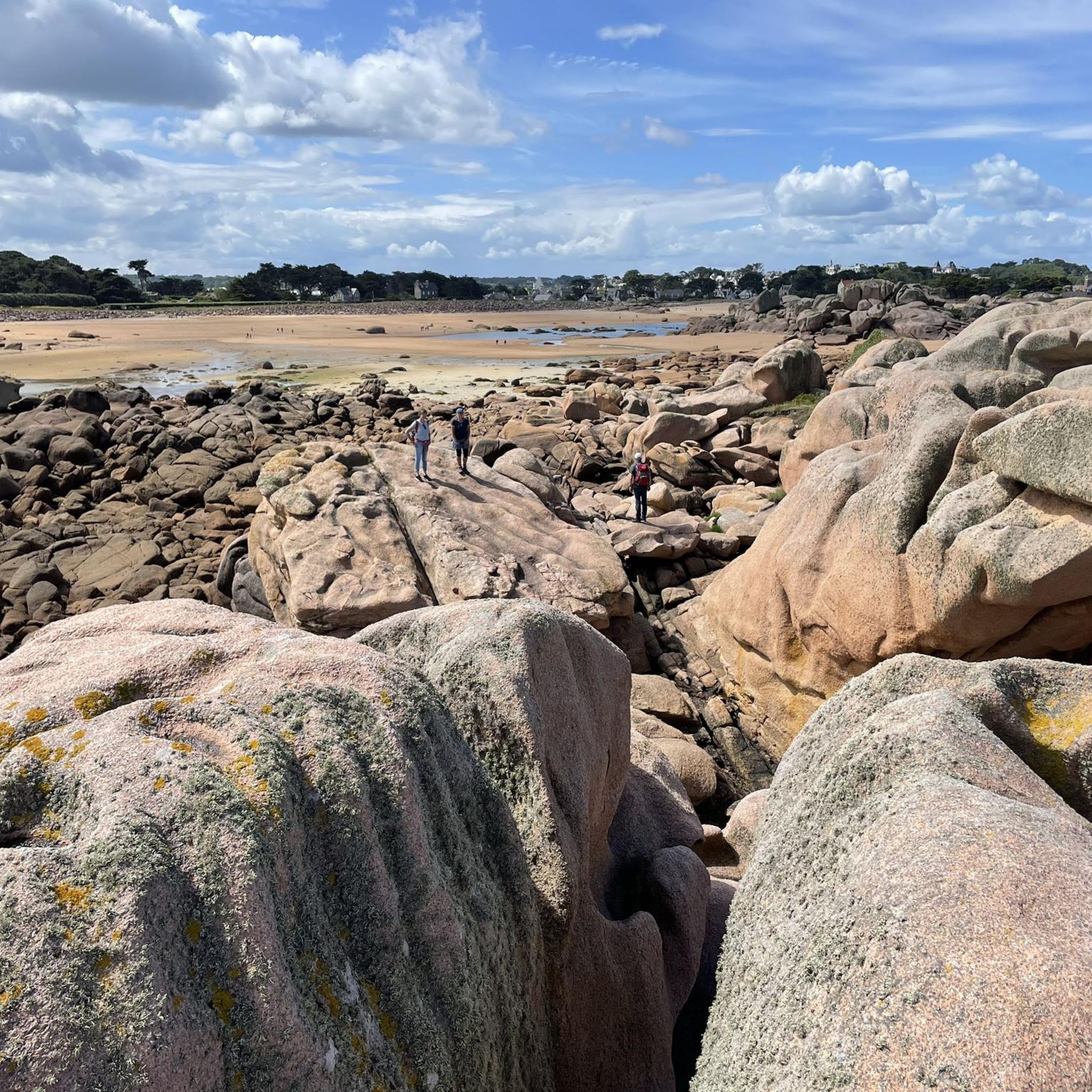
Saint-Guirec beach is picturesquely situated among the pink granite cliffs of the Côte de Granit Rose (Pink Granite Coast). Highlights include the Saint-Guirec Oratory on the beach with its marriage legend, a small chapel nearby, the Château de Costaérès offshore, and the GR34 coastal hiking trail, which runs directly along the beach and offers spectacular views.
1
0
The Oratory of Saint-Guirec dates back to the 12th century. A statue of Saint Guirec is housed in a small niche. For centuries, women, especially, have made pilgrimages here to pray for their husbands' safety at sea or to wish for a husband. According to an old tradition, unmarried women place a pine needle in the statue's nose; if it remains stuck during the next high tide, it is considered a sign of an impending wedding. The original 14th-century wooden statue was moved to the Chapel of Saint-Guirec in 1904, while the granite statue that replaced it was partially damaged in 1934.
2
0
The Chapelle Saint-Guirec is a small Romanesque church dating back to the 12th century. According to legend, it was built on the spot where Saint Guirec landed in the 6th century to spread Christianity. The chapel contains the original 14th-century wooden statue of the saint, which once stood in the oratory. It has been a destination for pilgrims for centuries.
2
0
The fine sandy beach slopes gently into the turquoise sea, inviting you to linger. At low tide, a fascinating mudflat area is revealed. On the shore stands the small oratory of Saint-Guirec, a chapel to which pilgrims have flocked for centuries to pray for the safety of sailors or to seek a husband. The stone statue standing there today dates from 1904.
1
0

The roof table measures 5.75 m long, 3.55 m wide and 0.75 m thick. The orthostat on the north side measures 2 m high, 1.50 m wide and 0.20 m thick. It continues to the west with a dry stone wall which does not appear to be original. The orthostat on the west side is slightly domed. It measures 2.55 m wide by 2.305 m high with a thickness between 0.40 m at the base and 0.30 m at the top. The southern orthostat is backed by the slope. It measures 2.50 m wide, 2.40 m high and 0.35 m thick. The internal chamber measures 5 m long by 3 m wide with a height under the slab of 2 m
1
0
A very beautiful sandy beach with clear water. The surf is quite gentle here. There's a beautiful view of the Château de Costaérès.
1
0
Frequently Asked Questions
Can I mountain bike directly within the Réserve Naturelle Des Sept-Îles?
No, mountain biking is not permitted within the Réserve Naturelle Des Sept-Îles itself. This area is a highly protected marine bird and seal sanctuary, and its insular, rocky geography is not suitable for mountain biking. The focus of the reserve is on wildlife observation and conservation.
Where can I find mountain bike trails near the Réserve Naturelle Des Sept-Îles?
While the reserve itself is off-limits for mountain biking, the surrounding mainland areas, particularly along the Pink Granite Coast (Côte de Granit Rose) near towns like Perros-Guirec and Trégastel, offer numerous trails. Komoot lists over 30 mountain bike routes in the broader region.
Are there any easy mountain bike trails suitable for beginners or families in the area?
Yes, the region offers several easy mountain bike trails. For example, the Étang des Cygnes loop from Phare de Mean Ruz is an easy 15 km route. Another family-friendly option is the Saint-Guirec Beach loop from Phare de Mean Ruz, also around 15 km.
What kind of terrain can I expect on mountain bike trails near the Réserve Naturelle Des Sept-Îles?
Trails in the surrounding area, particularly along the Pink Granite Coast, often feature a mix of coastal paths, forest tracks, and some paved sections. You can expect varied terrain with some elevation changes, offering scenic views of the sea and the unique granite rock formations.
Are there any circular mountain bike routes available?
Yes, many of the mountain bike routes in the area are circular. For instance, the Étang des Cygnes loop from Phare de Mean Ruz and the Saint-Guirec Beach – Tourony Beach loop from Phare de Mean Ruz are both excellent circular options.
What are the best times of year for mountain biking in this region?
The spring and autumn months generally offer the most pleasant conditions for mountain biking, with milder temperatures and fewer crowds. Summer can also be enjoyable, but trails may be busier, especially near popular coastal towns.
Are dogs allowed on the mountain bike trails near the Réserve Naturelle Des Sept-Îles?
Regulations regarding dogs can vary by specific trail and municipality. It's generally advisable to keep dogs on a leash, especially in natural areas, and to check local signage. Within the highly protected Réserve Naturelle Des Sept-Îles itself, access for dogs is very restricted to protect wildlife.
What landmarks or viewpoints can I see while mountain biking in the area?
While mountain biking, you can enjoy stunning views of the Pink Granite Coast, its unique rock formations, and the distant Réserve Naturelle Des Sept-Îles. Coastal towns like Perros-Guirec and Trégastel offer picturesque sights. The Prajou Menhir Alley – Allée Couverte of Île Grande loop passes by historical megalithic sites.
Where can I find parking for mountain bike trails?
Parking is typically available in or near the coastal towns that serve as starting points for many routes, such as Perros-Guirec, Trégastel, and Ploumanac'h. Look for designated parking areas near beaches or trailheads.
Are there any challenging mountain bike routes for experienced riders?
Yes, the region also offers more challenging routes. For instance, the Prajou Menhir Alley – Allée Couverte of Île Grande loop from Aquarium Marin de Trégastel is rated as difficult, covering over 24 km with significant elevation changes.
What do other mountain bikers enjoy most about the trails in this region?
The komoot community rates the trails in this region highly, with an average score of 4.4 stars. Reviewers often praise the breathtaking coastal scenery, the unique Pink Granite formations, and the variety of routes available for different skill levels.
Are there places to eat or stay near the mountain bike trails?
Yes, the coastal towns of Perros-Guirec, Trégastel, Ploumanac'h, and Trébeurden offer a wide range of cafes, restaurants, and accommodation options, from hotels to guesthouses, perfect for refueling and resting after your ride.
Most popular routes in Réserve Naturelle Des Sept-Îles

Get inspired with the komoot mobile app


Explore more
Browse the best MTB trails in other regions.
