The best MTB trails around Immerath
4.5
(1082)
3,654
riders
281
rides
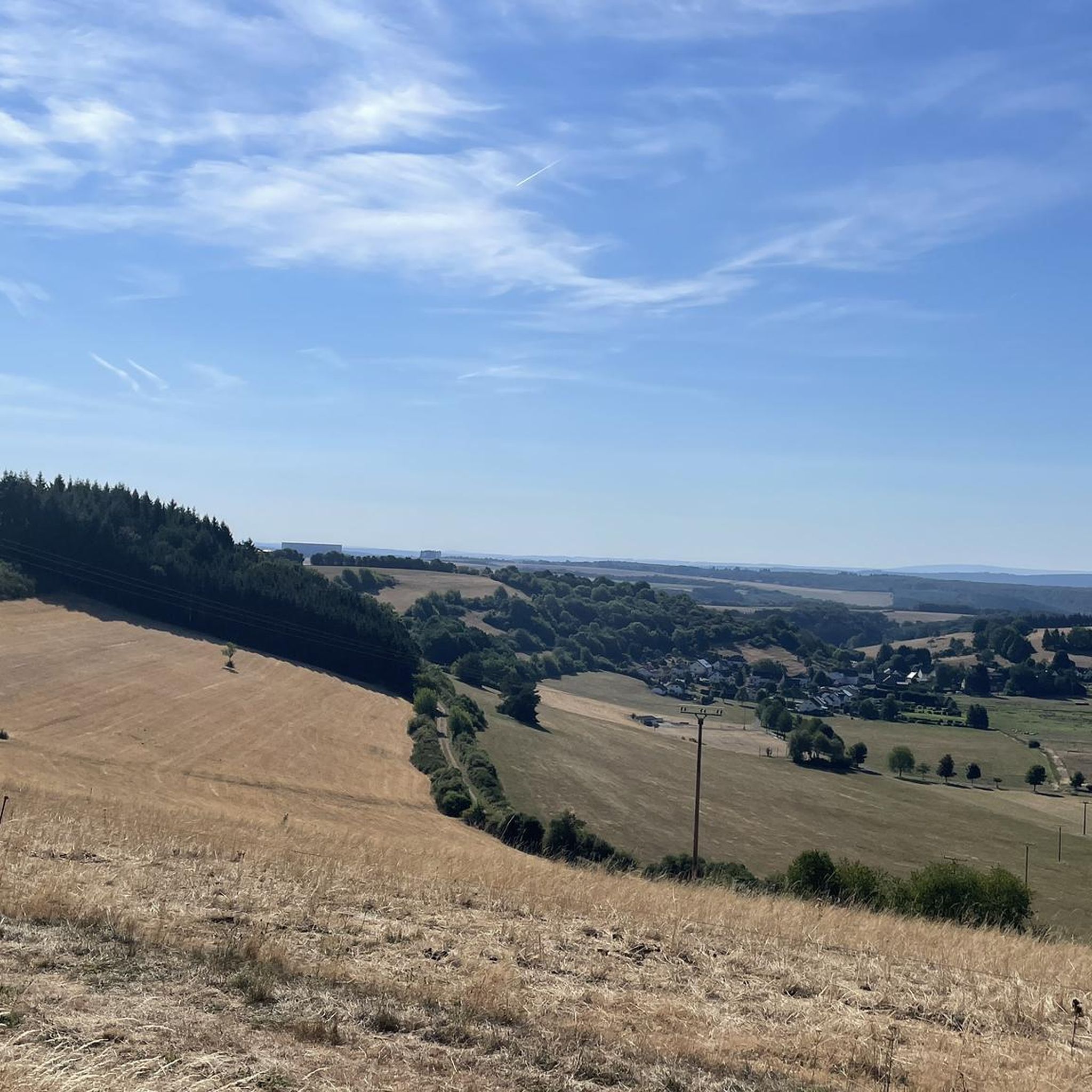
Mountain biking around Immerath offers diverse terrain shaped by its volcanic past within the Vulkaneifel region. The landscape features numerous crater lakes, rolling hills, and dense forests, providing varied environments for mountain bike trails. Riders can expect a mix of challenging ascents and scenic paths through valleys like the Üssbachtal, with routes often leading past prominent maars. This geological heritage creates a dynamic setting for outdoor activities, including extensive mountain biking.
Best mountain bike trails around Immerath
- The most popular…
Last updated: May 2, 2026
4.7
(78)
199
riders
Moderate mountain bike ride. Good fitness required. Advanced riding skills necessary.
4.5
(31)
118
riders
44.0km
03:59
860m
860m
Moderate mountain bike ride. Good fitness required. Suitable for all skill levels.

Sign up for free
4.2
(14)
63
riders
37.8km
03:10
640m
640m
Moderate mountain bike ride. Good fitness required. Suitable for all skill levels.
4.7
(25)
63
riders
46.6km
03:46
680m
680m
Hard mountain bike ride. Good fitness required. Advanced riding skills necessary. Some portions of the route may require you to push your bike.
4.9
(14)
28
riders
32.8km
02:37
460m
460m
Moderate mountain bike ride. Good fitness required. Advanced riding skills necessary.
Get access to more routes and recommendations from other explorers.
Sign up for free
Already have an account?
Our route recommendations are based on thousands of hikes, rides, and runs completed by other people on komoot.
Start today with a free account
Your next adventure awaits.
Login or Signup
Other adventures around Immerath

Tips from the Community

The Ulmen Maar lies 420 meters above sea level today, covers an area of 5.5 hectares, and is 36 meters deep. The bubbles at the maar's edge demonstrate that volcanism is still active. They bear witness to a turbulent past—but rest assured, there's no eruption in sight! A wall of various rocks and ash, up to 20 meters thick, surrounds the cone. For those interested, these testimonies to this explosive past are beautifully displayed in St. Matthias Church. This unique wall, with its different colored layers and rounded inclusions, is worth seeing for more than just geologists. The slopes of the maar basin are covered with a beautiful forest, which can be explored on a circular walk. A detour to the medieval castle ruins, from which the Crusaders once launched their campaigns, is recommended. The view from the crater rim over the maar and the Eifel beyond will take your breath away. Whether after a sweaty hike or a long drive, the blue of the Ulmer Eifel lake is all too tempting in summer. However, bathing in the maar is prohibited because it is designated as a nature and water protection area.
6
0

Beautiful circular path in the shade suitable for wheelchairs/strollers
0
0

Weinfelder Maar - Impressive Evidence of Explosive Geological History The Weinfelder Maar – also known as Totenmaar – is one of the three so-called Daun Maars. It is located about 2 kilometers from our district town of Daun, near the municipality of Schalkenmehren, between the Gemünden and Schalkenmehren Maars. It has a diameter of approximately 525 meters and a depth of 51 meters, making it the deepest of the three Daun Maars. It is the youngest and, at 487 meters above sea level, the highest of the three closely adjacent maars, which formed between 20,000 and 30,000 years ago. Text / Source: Natur- und Geopark Vulkaneifel GmbH, Mainzer Str. 25, Daun https://www.geopark-vulkaneifel.de/eifel/landschaft/maare-und-kraterseen/weinfelder-maar.html
12
0
Weinfelder Maar The Weinfelder Maar, formed by volcanic activity around 20,000 to 30,000 years ago, is the highest of the three Daun Maars at 487 meters above sea level. The lake is 51 meters deep and has a diameter of 396 to 429 meters. An almost melancholic atmosphere surrounds the maar. Many legends surround the tranquil Eifel eye. A castle is said to have once stood on the site of the crater, where a count lived with his wife and only child. After returning home from a hunt, the castle had sunk as punishment for the woman's nastiness, and he found only a lake where a cradle miraculously floated his child safely to the shore. If you look at the dark surface of the water long enough, it is said that you can make out the outline of the castle. The German landscape painter Fritz von Wille was so fascinated by the Weinfelder Maar that he repeatedly immortalized it in his paintings. Among his favorite motifs was the small chapel on the north bank, dedicated to Saint Martin. It was once the parish church of the village of Weinfeld, which was ravaged by the plague in the 16th century. Anyone who rings the bells inside by pulling the ropes can make a wish. To this day, the associated cemetery is maintained and used by the local community of Schalkenmehren. This is also where its second name, Totenmaar, comes from. Donkeys and goats have been introduced to the Weinfelder Maar to regulate vegetation. The maar's unique flora and fauna are protected. Swimming and other water sports are prohibited in the Weinfelder Maar, but a nearly two-kilometer-long path makes it a wonderful place to explore on foot. Parking: Guests can park along the L64 either in the parking lot at the Weinfelder Maar or on the Maarsattel between the Weinfelder Maar and the Schalkenmehrener Maar. Text / Source: GesundLand Vulkaneifel GmbH, Leopoldstr. 9 A, 54550 Daun https://www.eifel.info/a-weinfelder-maar
12
0

A great trail! A few rocks, steps, long and flowy—everything's perfect 👍🏻 But watch out for hikers!
0
0
Great trail! It has everything you need: roots, rocks, flow. Watch out for hikers—respect is key.
0
0

Simply experience a wonderful piece of nature.
0
0

A real photo opportunity: The viaduct in Daun impresses with its imposing architecture and blends perfectly into the nature of the Volcanic Eifel. The view from below is particularly beautiful - ideal for a short break or a snapshot. If you take your time, you can enjoy the atmosphere. Perfect as a stopover for hikers and cyclists!
5
0
Frequently Asked Questions
How many mountain bike trails are there around Immerath?
There are over 280 mountain bike routes available around Immerath, offering a wide range of options for different skill levels. You'll find approximately 40 easy routes, over 170 moderate trails, and around 60 challenging paths to explore.
What kind of terrain can I expect on mountain bike trails in Immerath?
The terrain around Immerath is shaped by its volcanic past within the Vulkaneifel region. You can expect a dynamic mix of crater lakes, rolling hills, and dense forests. Trails often feature challenging ascents, scenic paths through valleys like the Üssbachtal, and routes passing prominent maars. Some areas, like the 'Trail Eldorado Bad Bertrich', are known for ambitious single-trails with rising lava rock formations.
Are there any family-friendly mountain bike routes in Immerath?
Yes, Immerath offers routes suitable for families. While the region provides a mix of gentle hills and steep climbs, there are approximately 40 easy routes that are generally more suitable for family outings. These trails allow you to enjoy the scenic volcanic landscape without overly technical challenges.
Can I bring my dog on the mountain bike trails around Immerath?
Generally, dogs are welcome on most public trails in the Vulkaneifel region, including those around Immerath. However, it's always best to keep your dog on a leash, especially in nature reserves or areas with wildlife, and to check for any specific local regulations or signage on individual trails.
Are there circular mountain bike trails in Immerath?
Yes, many mountain bike routes around Immerath are designed as circular trails, allowing you to start and end at the same point. An example is the Strohner Lava Bomb – Strohner Switzerland loop from Gillenfeld, a moderate 32.8 km route that offers a great experience of the local landscape.
What are some notable viewpoints or attractions along the mountain bike trails?
The region is rich in natural and geological attractions. You can find stunning views of the maars, such as the View of Schalkenmehrener Maar – View of the maar loop from Gillenfeld. The Dronke Tower on the Mäuseberg also offers spectacular panoramic views over the numerous maars. Additionally, you might encounter highlights like the Elf Grotto and Elbesbach Waterfall or the Falkenlay Stone Age Caves.
Where can I find parking for mountain bike trails in Immerath?
Parking is generally available at trailheads and in the villages surrounding Immerath, such as Gillenfeld or Strotzbüsch, which serve as common starting points for many routes. Specific parking information is often provided on individual route descriptions on komoot.
Is it possible to reach mountain bike trailheads by public transport?
While the Vulkaneifel region has some public transport options, direct access to all mountain bike trailheads might be limited. It's advisable to check local bus schedules for connections to main villages like Immerath, Gillenfeld, or Strotzbüsch, and plan your route accordingly. Some routes may require a short ride from the nearest public transport stop.
What is the best time of year for mountain biking in Immerath?
The Vulkaneifel region is generally enjoyable for mountain biking from spring through autumn. Spring offers lush greenery and blooming landscapes, while autumn provides vibrant foliage. Summer is also popular, but trails can be busier. Winter riding is possible, but be prepared for potentially muddy or icy conditions, especially on higher elevations or shaded forest paths.
What do other mountain bikers enjoy most about mountain biking in Immerath?
The mountain bike trails around Immerath are highly rated by the komoot community, with an average score of 4.5 stars from over 1,100 reviews. Riders frequently praise the diverse volcanic landscape, the extensive network of trails, and the mix of challenging ascents and scenic paths through forests and past maars. The unique geological features and varied terrain are often highlighted as key attractions.
Are there any challenging mountain bike routes for experienced riders?
Yes, Immerath and the surrounding Vulkaneifel region offer plenty of challenging routes. Approximately 60 routes are classified as difficult, featuring significant elevation changes and technical sections. For example, the Lieserpfad Trail – Ruland hut loop from Strohn is a difficult 26.6 km route with substantial climbs. The steep paths leading to the Dronke Tower are also known for their challenging ascents.
Are there dedicated bike parks or singletracks in the area?
Yes, the region caters to mountain bikers with dedicated facilities. The Vulkaneifel Trail Park boasts over 750 kilometers of signposted trails, including technically challenging routes. You can also find the 'Trail Eldorado Bad Bertrich' for ambitious single-trails and the smaller Trail Park Koulshore near the deepest maar of the Vulkaneifel.
Most popular attractions around Immerath

Get inspired with the komoot mobile app


Explore more
Browse the best MTB trails in other regions.
