Sunset Crater Volcano National Monument
Sunset Crater Volcano National Monument
Attractions and Places To See in Sunset Crater Volcano National Monument - Top 4
Best attractions and places to see in Sunset Crater Volcano National Monument showcase a unique landscape shaped by volcanic activity about 900-1000 years ago. This area near Flagstaff, Arizona, features dramatic scenery, including a prominent cinder cone and extensive lava flows. Visitors can explore a variety of natural features that offer insight into the region's geologic history. The monument also holds cultural significance, with evidence of Ancestral Puebloan habitation and its use for NASA astronaut training due to its moon-like…
Last updated: July 19, 2026
Sunset Crater
Highlight • Volcano
Tip by

Lava Flow Trail, Sunset Crater Volcano National Monument
Highlight • Trail
Tip by

Sign up now to discover places like this
Get recommendations on the best single tracks, peaks, & plenty of other exciting outdoor places.
Sign up for free
View of Sunset Crater Volcano
Highlight • Volcano
Tip by

Wupatki and Sunset Crater Loop Road
Highlight (Segment) • Cycleway
Make sure to bring …
Tip by

Start today with a free account
Your next adventure awaits.
Login or Signup
Popular around Sunset Crater Volcano National Monument
Tips from the Community

This is a stunning stretch of road that begins after the Visitor Center. It takes you through an unusual, moon-like landscape and across a high desert. Make sure to bring plenty of water and food, as the area is desolate and lacks cell service in many spots.
0
0

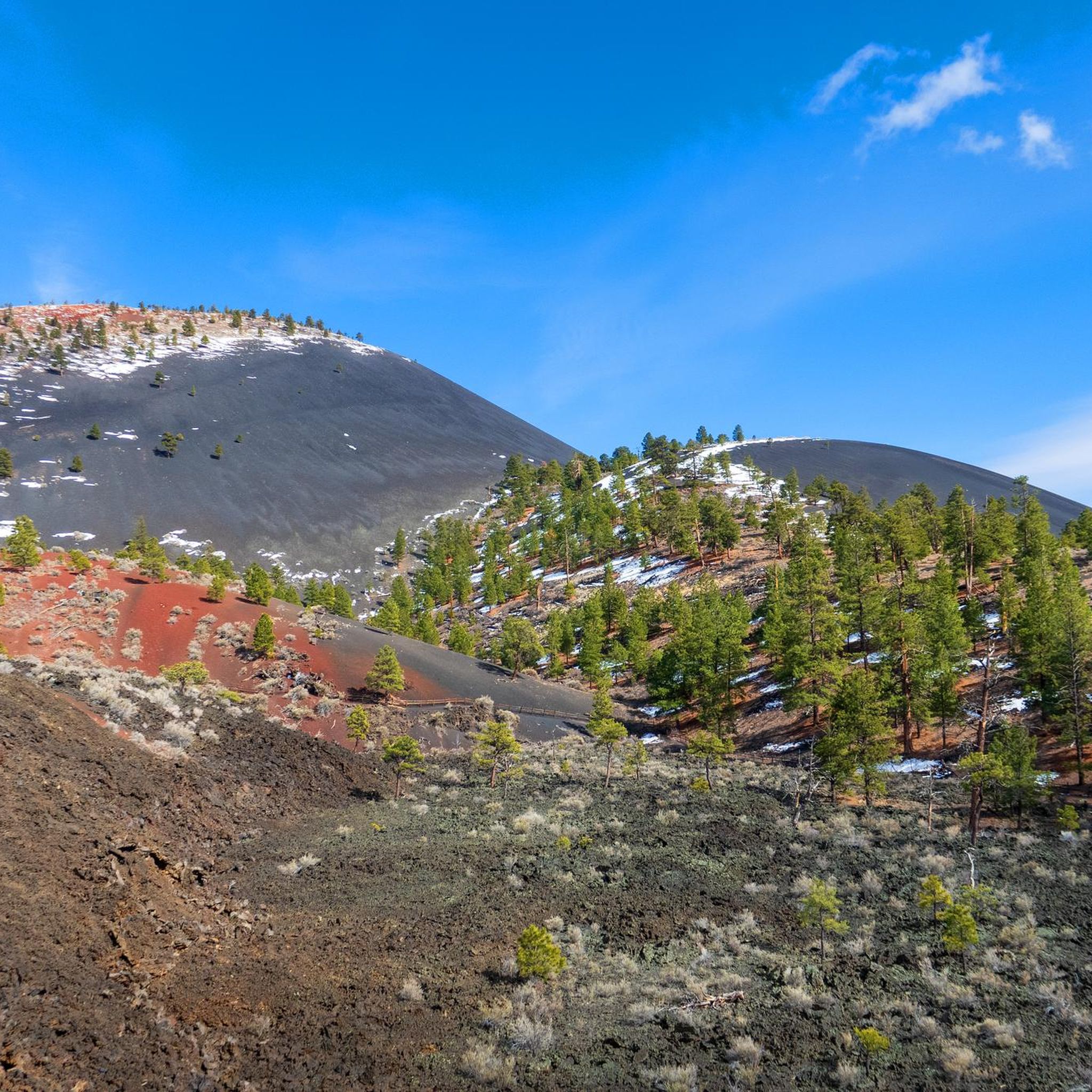
In relation to the other volcanoes in the area making up the history of the San Francisco Peaks, Sunset Crater is the youngest. The eruption of this volcano nearly 1000 years ago lead to the lands in the surrounding 900 miles being covered in volcanic lava and ash, forever changing the landscape we see today.
2
0

The Lava Flow Trail is a moderate loop that takes you closer to the Sunset Crater and through a breathtaking red and black landscape shaped by lava.
2
0
Sunset Crater is a volcanic crater. Around year 1085 the ground began to shake, and lava spewed high into the air. You cannot hike into the crater itself, and the fee for a car is $25; there are, however, days you can enter for free: https://www.nps.gov/planyourvisit/fee-free-parks.htm
7
0

This is one of the most-surprising views in Arizona. It looks like something out of a movie set: a cinder cone volcano, a huge lava flow, splatter cones, hornitos and a massive expanse of volcanic cinders. It's an amazing view no matter which direction you look!
0
0
Frequently Asked Questions
What are the main natural features to explore in Sunset Crater Volcano National Monument?
The monument is defined by its volcanic landscape. You can see the striking Sunset Crater, a cinder cone rising 1,000 feet, and extensive lava flows like the prominent Bonito Lava Flow. The area also features numerous other cinder cones and volcanic ash deposits, creating a unique red and black, moon-like terrain.
Are there any accessible trails for visitors to experience the volcanic landscape?
Yes, the Lava Flow Trail, Sunset Crater Volcano National Monument is a popular and accessible loop trail at the base of Sunset Crater. It takes you through the stark lava fields, offering close-up views of the volcanic features. Another easy option is the Bonito Vista Trail, a paved loop with great views of Sunset Crater.
What hiking opportunities are available in Sunset Crater Volcano National Monument?
Beyond the Lava Flow Trail, you can explore the Lenox Crater Trail, a moderate 1.4-mile loop offering views of Sunset Crater. For a longer hike, the Lava's Edge Trail is a 3.6-mile round trip that follows the Bonito Lava Flow. You can find more details on various routes, including easy and moderate options like the 'Lenox Crater and Lava Flow Trail Loop', on the Hiking in Sunset Crater Volcano National Monument guide.
Can I hike to the summit of Sunset Crater?
No, hiking to the summit of Sunset Crater is no longer permitted due to erosion. However, trails at its base, such as the Lava Flow Trail, offer excellent views and a chance to experience the volcanic landscape up close.
What is the historical and cultural significance of the area?
The eruption of Sunset Crater around 1085 CE significantly impacted the Ancestral Puebloans (Sinagua people) who lived here, forcing them to abandon their settlements. Evidence of their pithouses has been found beneath layers of ash. The monument is also connected to Wupatki National Monument, which features well-preserved prehistoric villages. Interestingly, the volcanic field was used by NASA to train astronauts for the Apollo 11 moon landing due to its moon-like terrain.
Is there a scenic drive through the monument?
Yes, the Wupatki and Sunset Crater Loop Road is a stunning scenic drive that connects Sunset Crater Volcano National Monument with Wupatki National Monument. This road offers a unique journey through a high desert and volcanic landscape, providing panoramic views.
What do visitors particularly enjoy about Sunset Crater Volcano National Monument?
Visitors are often amazed by the unique geological formations and the dramatic, moon-like landscape. The View of Sunset Crater Volcano is frequently highlighted for its surprising vistas of the cinder cone, lava flows, and volcanic cinders. The Lava Flow Trail is also very popular for offering close-up experiences with the volcanic features.
Are there any family-friendly activities or considerations for visiting with children?
The monument offers several easy trails suitable for families, such as the Lava Flow Trail and the Bonito Vista Trail, which provide engaging experiences with the volcanic landscape. The Visitor Center also offers valuable information and exhibits that can be educational for children. Remember to bring plenty of water and sun protection, as the environment can be harsh.
What is the best time to visit Sunset Crater Volcano National Monument?
The monument offers unique experiences year-round. Spring and fall generally provide pleasant temperatures for hiking. Summer evenings are popular for night sky programs, as the monument is an International Dark Sky Park. Winter visits can offer a stark, beautiful landscape, sometimes with snow, but check weather conditions as roads can be affected.
Where can I find more information about the monument's geology and history?
The Visitor Center, located near the park entrance, is an excellent starting point. It provides valuable information about the geology of the volcanic field, exhibits, and even a seismograph station. It's a great place to gain context before exploring the trails and features.
Are there any unique geological formations besides the main crater and lava flows?
Yes, beyond the main Sunset Crater and extensive lava flows, the monument features smaller cinder cones, splatter cones, hornitos, and vast expanses of volcanic ash and cinders. These formations collectively showcase the powerful volcanic activity that shaped the region approximately 900-1000 years ago.
What kind of wildlife can be found in Sunset Crater Volcano National Monument?
Despite the stark volcanic landscape, the unique environment supports diverse flora, including ponderosa pine forests, which in turn host a variety of wildlife. While specific sightings vary, you might encounter deer, coyotes, various bird species, and smaller mammals adapted to the high desert and volcanic terrain.
Most popular routes in Sunset Crater Volcano National Monument

Get inspired with the komoot mobile app


Explore more
Still not found the Highlight you’re looking for? See guides of the top attractions in other regions:
