Top 20 Castles around Bad Bibra
Best castles around Bad Bibra are found in the surrounding region, particularly within the Saale-Unstrut-Triasland Nature Park. This area is characterized by its historical significance and diverse landscapes, offering insights into medieval and Baroque architecture. The region's topography, with hills and river valleys, provided strategic locations for these historical structures. Exploring these sites allows visitors to connect with the rich past of central Germany.
Best castles around Bad Bibra
- The most popular castles is Neuenburg Castle (Freyburg), a castle…
Last updated: July 6, 2026
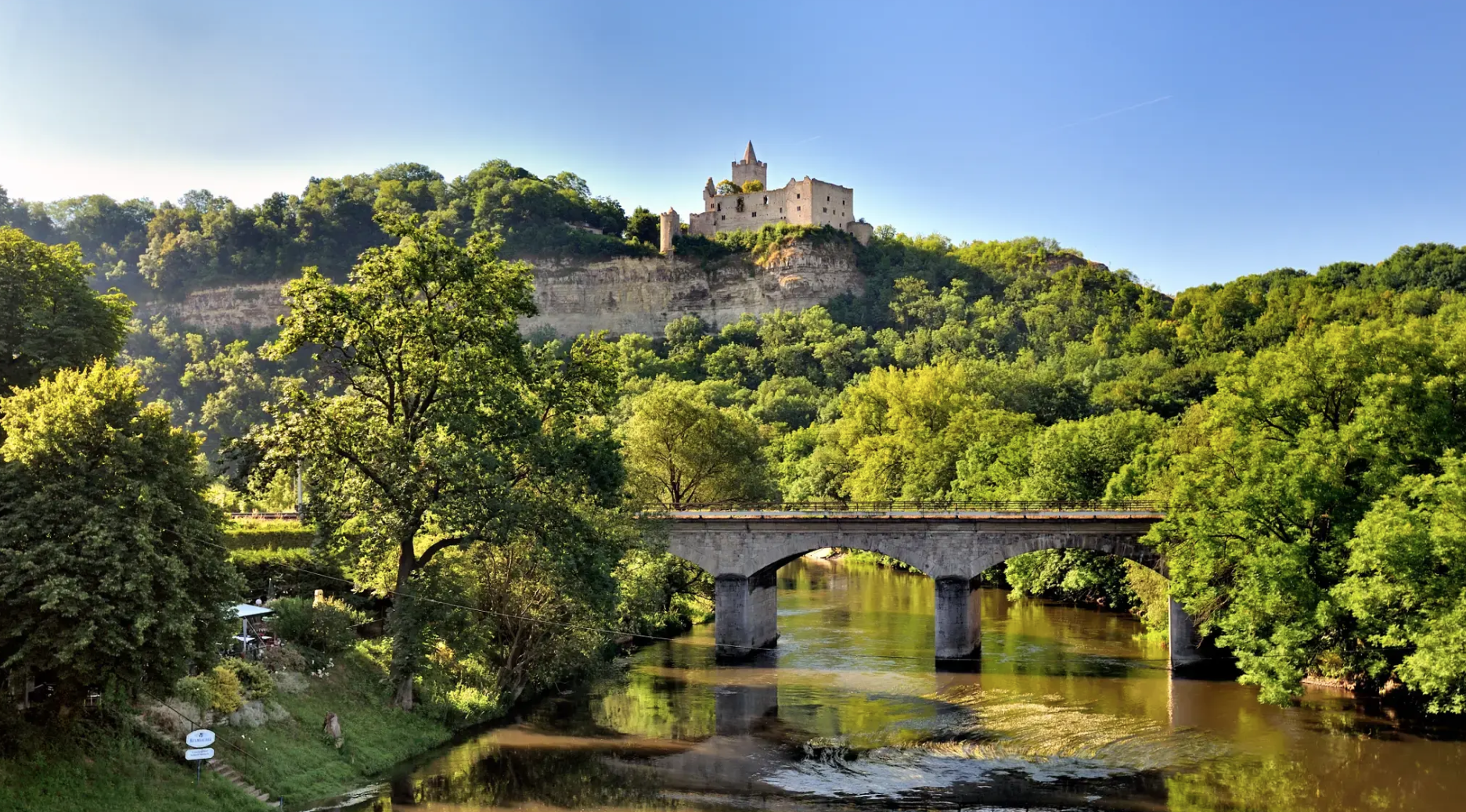
Ducal Vineyard below Neuenburg Castle
Highlight • Structure
High above the wine-growing town of Freyburg lies Neuenburg, the sister castle of Wartburg, founded around 1090 by the Thuringian Count Ludwig the Springer. The first mighty …
Translated by Google •
Tip by

Neuenburg Castle (Freyburg)
Highlight • Castle
Translated by Google •
Tip by

Sign up now to discover places like this
Get recommendations on the best single tracks, peaks, & plenty of other exciting outdoor places.
Sign up for free
Dicker Wilhelm, Neuenburg Castle
Highlight • Castle
Translated by Google •
Tip by

Waldschlösschen Wangen
Highlight • Restaurant
Translated by Google •
Tip by
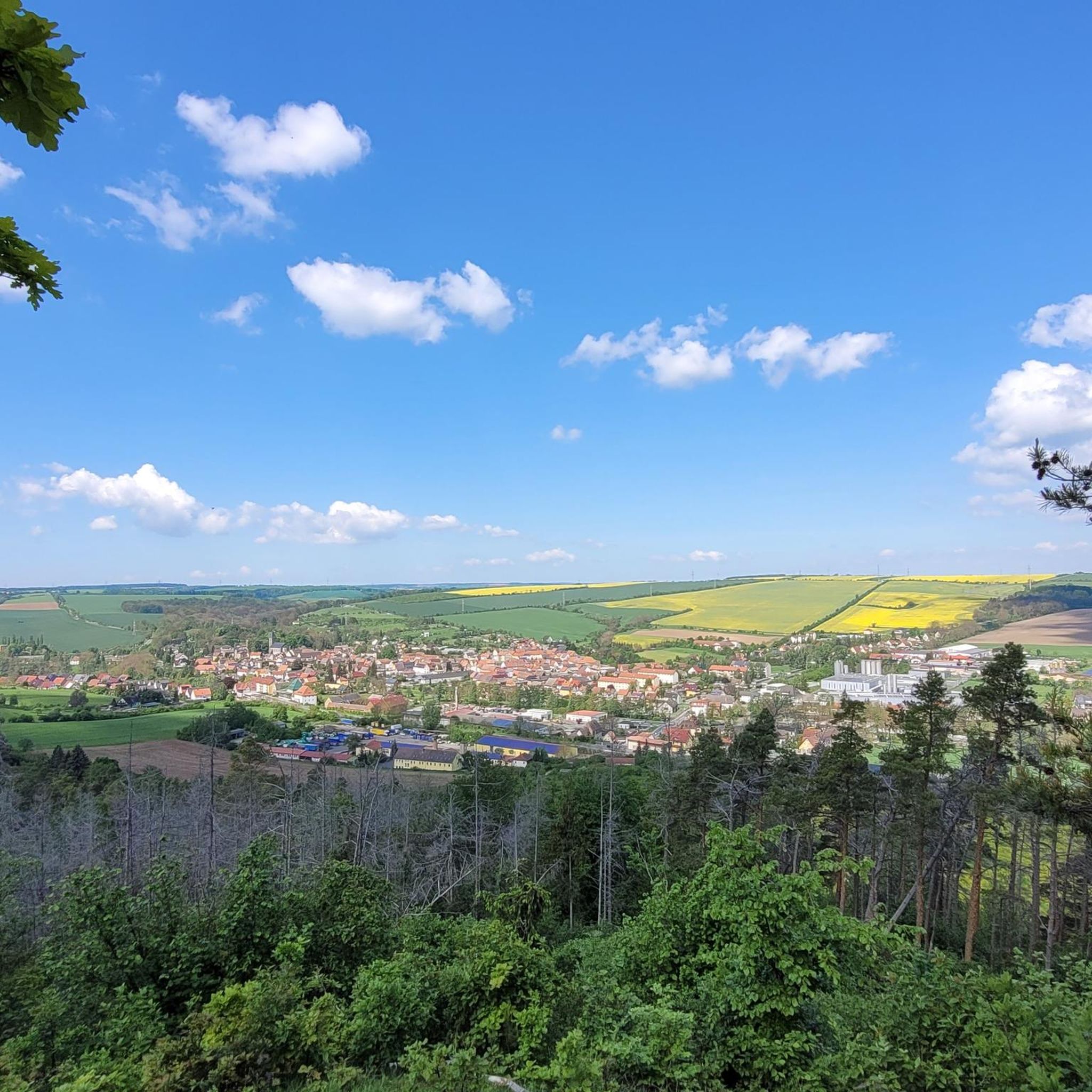
View of Wendelstein Castle
Highlight • Viewpoint
Showing Translation
Tip by

Sign up for free to discover even more castles around Bad Bibra.
Sign up for free
Already have an account?
Start today with a free account
Your next adventure awaits.
Login or Signup
Other adventures around Bad Bibra

Tips from the Community

The "Fat William" has only been called that since the 20th century. The only surviving of the original three keep towers was probably built starting in 1150. Its diameter is 14 meters; in the Romanesque period, it was at least 23 meters high. Due to its interior, it is more likely to be considered a residential tower than a pure keep. It is highly likely that the tower served as the seat of the Burgraves of Neuenburg from the House of Meinheringen in the 13th century, who are documented as "Praefectus de Nuenburg, Burggravius de novo castro" from 1215 to 1297.
18
0
The hilltop castle complex of Neuenburg Castle, located on the Romanesque Road, was once the largest castle of the Landgraves of Thuringia. Its construction, under the direction of Count Ludwig von Schauenburg of Ludowingen, known as Ludwig the Springer (1042 to 1123), began around 1090 with the first circular walls, which still stand today up to a height of eight meters in the inner castle. Over the next hundred years, the castle was reinforced and expanded in several stages. From around 1400, the castle underwent extensive rebuilding in the Gothic style, and large parts of the Romanesque structure were lost. After losing its military importance, the castle was converted into a hunting lodge for the Dukes of Saxe-Weissenfels, for which purpose a zoo and pleasure garden were created in the forest to the east. Today, Neuenburg Castle is managed by the Saxony-Anhalt Cultural Foundation.
24
0

Museum & Exhibitions High above the wine-growing town of Freyburg lies Neuenburg, the sister castle of Wartburg, founded around 1090 by the Thuringian Count Ludwig the Springer. The first mighty complex was built by 1150. The rise of the Landgraves of Thuringia was accompanied by further magnificent expansion. By 1230, Neuenburg was already around three times as large as Wartburg! The Romanesque double chapel built around 1170/75 is still an architectural gem today. On behalf of Hermann I, Heinrich von Veldeke completed the Eneasroman around 1185, the first Middle High German knightly-courtly verse epic ever. Neuenburg experienced the end of its high medieval heyday under Landgrave Ludwig IV and his wife, Saint Elisabeth.
13
0

The origin of Neuenburg is linked to Count Ludwig the Springer of Schauenburg, who was also responsible for the founding of Wartburg. One theory is that the name Neuenburg was chosen to distinguish it from the somewhat older Wartburg. The son of Ludwig the Springer was Ludwig I, the first Landgrave of Thuringia, from 1131 onwards, and during the 116 years of the Ludowinger Langraves, the castle was an important part of the court and some of the building structure dates from that time. With the extinction of the Ludowingers in 1247 and after the subsequent War of Succession, the Landgraviate passed to the Wettins, who were already Margraves of Meissen and later Dukes and Electors of Saxony at that time. Neuenburg was therefore no longer an outstanding place of residence within the Saxon state territory. Nevertheless, there was a lot of building activity and use as a hunting lodge in the 15th and 16th centuries.
6
0

Outdoor area with animals and play areas
8
0
The absolute highlight in Freyburg and one of the most beautiful castles in Central Germany, comparable to the Wartburg Neuenburg Castle is once the largest castle and one of the oldest and most important castles of the Landgraves of Thuringia. For Saxony-Anhalt, these are so far the only reliably verifiable above-ground stone buildings from the first half of the 12th century in castles. But the large stock of preserved masonry from the end of the 11th to the beginning of the 13th century is also of great importance beyond the Central German region. A special architectural gem is the double chapel built around 1180 with its extraordinary architectural decoration. The castle is clearly divided into two parts: on the one hand the inner castle with the so-called castle building and the kitchen master's office and on the other hand the older outer castle, which is framed by gallery wings. Source: Wikipedia
12
0

Only closed on Mondays, I must have always been there on Mondays until now🤭😉, for €1.50 you can marvel at Fat Wilhelm from the inside. It's worth it 💪
14
1

Passing the mill in Bottendorf, Wendelstein Castle soon faces us gloomily. The scenery is cinematic: every medieval film could take place here, so fortified, eerie it sits enthroned on the rock.
3
0
Frequently Asked Questions
What are the most significant castles to visit near Bad Bibra?
The most prominent castle in the region is Neuenburg Castle (Freyburg), often called the "sister castle of Wartburg." It's a very well-preserved ring castle from the early 12th century, once the largest castle of the Landgraves of Thuringia. Another notable site is View of Wendelstein Castle, offering a perspective of Wendelstein Castle situated on a 30-meter high hill directly on the Unstrut river.
Are there family-friendly castles around Bad Bibra?
Yes, Neuenburg Castle (Freyburg) is considered family-friendly, offering a museum and exhibition space within its historical grounds. The Ducal Vineyard below Neuenburg Castle also provides a pleasant setting for families to enjoy views of the castle.
Can I find good viewpoints of castles in the region?
Absolutely. The area offers several excellent viewpoints. Besides the View of Wendelstein Castle, you can also find fantastic panoramic views of Neuenburg Castle from spots like the Ducal Vineyard below Neuenburg Castle and the View of Neuenburg Castle highlight, which offers an unbeatable panorama over Freyburg and its castle.
What kind of historical insights do the castles near Bad Bibra offer?
The castles provide deep insights into medieval and Baroque architecture and regional history. Neuenburg Castle, for instance, showcases a well-preserved ring castle from the early 12th century, including a Romanesque double chapel and the impressive "Dicker Wilhelm" keep. Other sites like Eckartsburg, though partially ruined, offer a glimpse into medieval defensive structures, while Schloss Bucha presents Baroque elegance.
Are there hiking opportunities near these castles?
Yes, the region around Bad Bibra is excellent for hiking. You can find numerous trails that pass by or offer views of castles. For example, there are several routes in the Hiking around Bad Bibra guide, including routes like the "Himmelsleiter (Forst Bibra) – View of the Old Quarry loop from Bad Bibra" which can be combined with exploring the historical landscape.
What is the best time of year to visit the castles around Bad Bibra?
The castles and their surroundings are beautiful throughout the year. Spring and autumn offer pleasant temperatures for exploring the grounds and nearby trails, with vibrant foliage or blooming landscapes. Summer allows for longer days and outdoor activities, while winter can provide a unique, serene atmosphere, especially for walks around the castle exteriors.
Are there any partially ruined castles worth exploring?
Yes, Eckartsburg is a notable partially ruined castle in the broader area. It features thick walls and a tall tower, offering a fascinating glimpse into medieval defensive architecture and a sense of its past grandeur, despite its current state.
What are some unique features of Neuenburg Castle?
Neuenburg Castle is unique for its status as a very well-preserved ring castle from the early 12th century. It boasts a Romanesque double chapel built around 1170/75 and the impressive "Dicker Wilhelm" keep, constructed in 1150, with walls 2.85 meters thick. It was once three times larger than Wartburg Castle and served as the seat of the Landgraves of Thuringia.
Are there Baroque castles in the vicinity of Bad Bibra?
Yes, Schloss Bucha is described as a Baroque castle in the surrounding area. It features its own Baroque garden, offering a different architectural style and historical period compared to the more medieval fortresses in the region.
What outdoor activities can I combine with a castle visit?
The region offers a variety of outdoor activities. You can combine castle visits with hiking, as detailed in the Hiking around Bad Bibra guide, or explore mountain biking trails from the MTB Trails around Bad Bibra guide. Many routes offer scenic views of the castles and the surrounding natural landscape of the Saale-Unstrut-Triasland Nature Park.
How long should I plan for a visit to a castle like Neuenburg?
For a comprehensive visit to Neuenburg Castle, including exploring the museum, exhibitions, and the grounds, you should plan for at least 2-3 hours. If you wish to combine it with a walk around the vineyards or nearby viewpoints, allocate half a day.
Are there easy walking trails near the castles?
Yes, there are easy walking trails suitable for a relaxed exploration. The Easy hikes around Bad Bibra guide lists several routes, such as the "Tröbsdorf Switzerland – Bridge Over the Biber loop from Golzen," which are ideal for those looking for less strenuous walks while enjoying the scenery.
What should I wear when visiting castles and their surroundings?
Given that many castles involve walking on uneven terrain, stairs, and often include outdoor exploration, comfortable walking shoes are highly recommended. Layered clothing is advisable to adapt to changing weather conditions, especially if you plan to hike or spend extended time outdoors. A light jacket or rain gear can be useful depending on the season.
Most popular routes around Bad Bibra
Most popular attractions around Bad Bibra

Get inspired with the komoot mobile app


Explore more
Looking for the best castles somewhere else? Discover other guides around Bad Bibra:
