The best gravel rides around Benasau
4.4
(6)
82
riders
8
rides
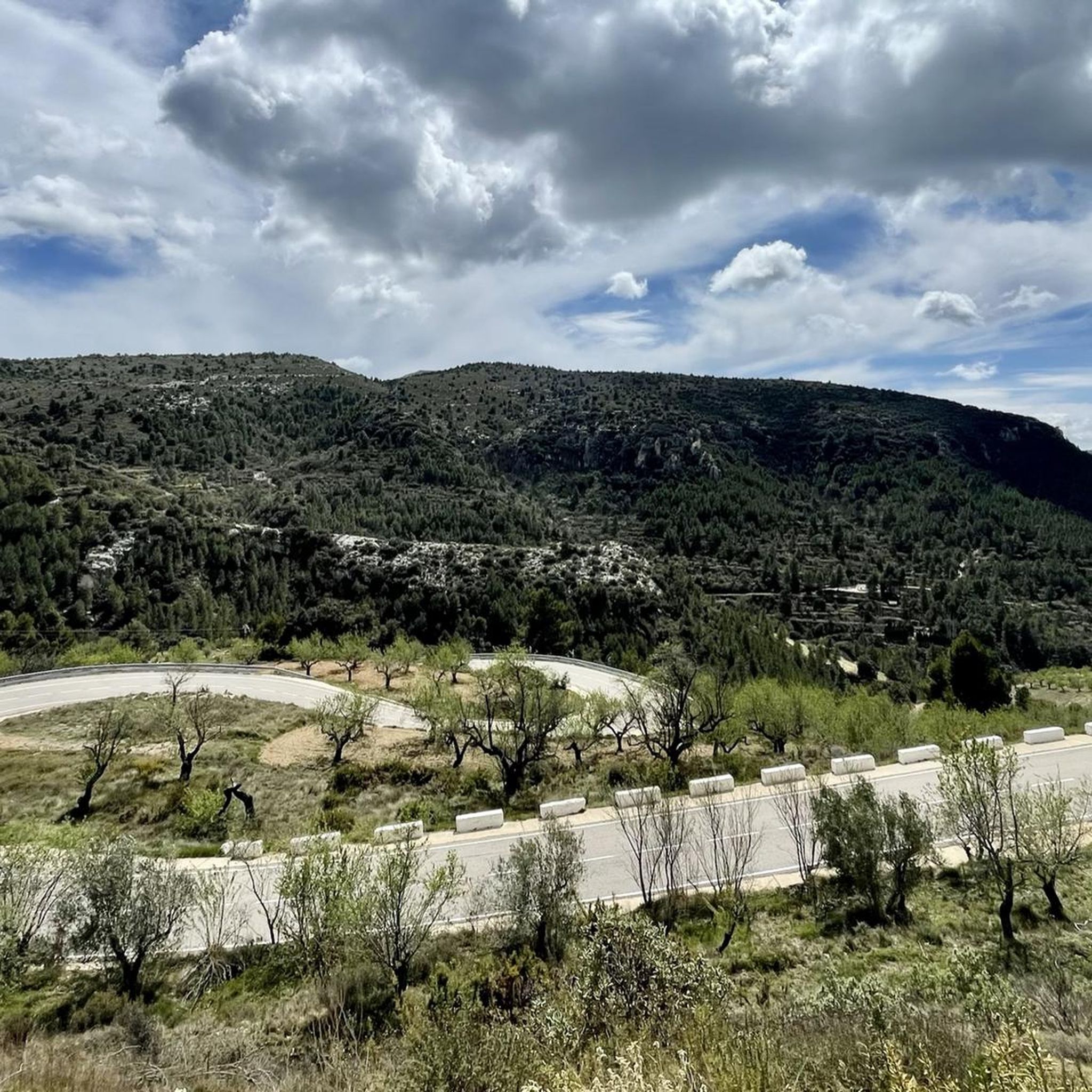
Gravel biking around Benasau features a landscape characterized by significant elevation changes and varied terrain. The region's routes often include challenging climbs and descents, traversing areas that can range from open paths to more technical sections. The presence of features like tunnels and passes suggests a diverse environment for gravel cyclists. This area provides a robust setting for those seeking demanding off-road cycling experiences.
Best gravel bike trails around Benasau
- The most popular gravel bike trail is L'Estepar Tunnel –…
Last updated: May 11, 2026
4.7
(3)
19
riders
37.5km
02:47
520m
520m
Hard gravel ride. Very good fitness required. Mostly paved surfaces. Suitable for all skill levels.
12
riders
38.9km
03:07
650m
640m
Hard gravel ride. Very good fitness required. Mostly paved surfaces. Suitable for all skill levels.

Sign up for free
3.0
(1)
13
riders
73.9km
06:10
2,240m
2,240m
Hard gravel ride. Very good fitness required. Mostly paved surfaces. Suitable for all skill levels.
5.0
(1)
9
riders
40.4km
03:05
550m
550m
Hard gravel ride. Very good fitness required. Mostly paved surfaces. Suitable for all skill levels.
3
riders
31.3km
02:25
710m
710m
Hard gravel ride. Very good fitness required. Mostly paved surfaces. Suitable for all skill levels.
Get access to more routes and recommendations from other explorers.
Sign up for free
Already have an account?
Our route recommendations are based on thousands of hikes, rides, and runs completed by other people on komoot.
Start today with a free account
Your next adventure awaits.
Login or Signup
Tips from the Community

This is one of the best-preserved tunnels with light sensors on the via verde Ibi Gandia or Alcoi via verde Agost.
1
0

Fageca, also known as Facheca in Valencian, is a small and charming mountain village in the El Comtat region of Alicante province. Nestled in the Vall de Seta, it is surrounded by dramatic mountain ranges such as the Sierra de la Serrella and Sierra de Alfaro. With just over one hundred inhabitants, Fageca is a place where time moves slowly, and peace and nature take center stage. The village consists of a compact network of narrow streets lined with whitewashed houses, terracotta roofs, and small squares. At its heart stands the Parroquia de la Purísima Concepción, a modest yet atmospheric church that dominates the village skyline. Traditional architecture is well preserved, with many houses featuring original wooden doors, stone thresholds, and balconies adorned with blooming geraniums. The surroundings of Fageca are a paradise for hikers, cyclists, and nature lovers. Several walking routes start from the village, leading through almond groves, olive trees, terraced hillsides, and spectacular mountain scenery. In spring, the valley bursts into white and pink with almond blossoms; summers bring dry, sunny days, while autumn offers cooler air and crystal-clear views of the rocky peaks. The local economy still relies heavily on agriculture — almonds, olives, and grapes are the main crops — alongside small-scale rural tourism. A few country-style accommodations and eateries serve traditional dishes such as olleta de blat, borreta, and pericana, often prepared from family recipes passed down through generations. Fageca has a strong sense of community. Annual village festivals, dedicated to the local patron saint, bring music, dancing, and communal meals to the streets. These summer festivities attract not only residents but also former villagers and visitors from the surrounding areas. Although it is not part of the official Ruta 99, Fageca lies close to several Ruta 99 villages, including Famorca, Benimassot, and Tollos. This makes it an excellent starting point or stopover for anyone exploring the authentic inland of Alicante. In short, Fageca is a place where peace, nature, and tradition meet — an ideal destination for those looking to escape the busy coast and experience the true soul of Mediterranean mountain life.
1
0
Tollos is a peaceful mountain village along the Ruta 99, a scenic route connecting the smallest villages of the Valencian Community. It’s a perfect turnaround point for cyclists riding from Alcalalí or the Vall de Pop. The approach from Fageca offers a quiet, steady climb, mostly shaded in the morning. Tollos itself is small but charming, and cyclists love stopping here for a classic bocadillo at the local bar — simple, delicious and authentic. For those looking to add an extra challenge, you can continue from Tollos to the Muro de Tollos, a steep climb that rewards you with stunning views. From the top, you can descend towards Beniaia, opening up loop options through the Vall d’Alcalà.
3
0
Ruta 99 – An Ode to Alicante’s Forgotten Villages ⚠️ Ruta 99 is not an official cycling route, but many sections can be explored by road bike or gravel bike. Ideal for cyclists seeking quiet, off-the-beaten-path roads through inland Alicante. Ruta 99 is a circular long-distance hiking route connecting the 24 smallest villages in the province of Alicante — each with fewer than 100 inhabitants. Created by the regional government of Valencia, the route draws attention to the cultural and historical value of these remote communities, and promotes sustainable rural tourism. Whether on foot or by bike, Ruta 99 is a journey into silence, heritage, and raw Mediterranean landscapes. ⸻ 🏞 What to Expect The route weaves through the lesser-known inland regions of Marina Alta, El Comtat, L’Alcoià, and Vall d’Albaida, taking you through rugged mountains, almond groves, and centuries-old villages clinging to the hillsides. Highlights include: • Tollos – with fewer than 40 residents, one of the quietest villages in Spain • Fageca, Benimassot, Famorca, and La Vall d’Alcalà – rich in Moorish heritage • Sempere – the smallest village in the entire Valencian Community • Castell de Castells, Alcoleja, and Quatretondeta – with breathtaking views of the Serrella and Aitana mountain ranges ⸻ 🚶 For Hikers • Total distance: Approx. 450 km, divided into 20 stages • Waymarked: Yes, with distinctive Ruta 99 signage • Passport: Available to collect stamps in each village, similar to the Camino de Santiago • Accommodation: Local guesthouses, small hotels, and rural lodges ⸻ 🚴 For Adventurous Cyclists While Ruta 99 is designed for hiking, many of its paved segments are ideal for road or gravel biking. The route offers: • Quiet roads with almost no traffic • A chance to discover authentic inland villages • A mix of long climbs, rolling hills, and open landscapes Keep in mind: • Services (shops, cafés) are sparse — bring water, snacks, and tools • Some segments are unpaved or in poor condition, so check your route in advance • A gravel bike offers the most flexibility ⸻ 🌿 More Than a Route Ruta 99 is not just a trail — it’s a tribute to resilience, memory, and slow travel. These villages may be small, but they are full of stories. Whether you’re hiking or cycling, you’ll experience a different side of Alicante — one of silence, tradition, and raw natural beauty.
2
0

Carrying light, one of the long tunnels, does not work
0
0

short VIDEOs about this hike could be found at the following links at my youTUBE channel: https://www.youtube.com/watch?v=77nMyRJvnZw https://www.youtube.com/watch?v=WVZN57p8yuA https://www.youtube.com/watch?v=7QFmKmQYq4U
0
0

A very recommendable route from Alcoy for the whole family by bike or on foot (it is advisable to bring a light)
0
0
Frequently Asked Questions
Are there many easy gravel bike trails in Benasau?
Benasau is known for its challenging gravel biking terrain. While there is one moderate route available, the majority of the 12 routes in the region are classified as difficult, featuring significant elevation changes and technical sections.
What are some of the longer gravel bike routes in the Benasau area?
For those seeking longer rides, consider the Comptador Pass – Port de Tudons loop from Penàguila, which spans 73.9 km. Another substantial option is the Senda Mauro Reig – Mariola Restaurant loop from Cocentaina, covering 61.1 km.
Are there any circular gravel bike routes in Benasau?
Yes, many of the gravel bike routes in Benasau are designed as loops. Examples include the L'Estepar Tunnel – L'Estepar Rest Area loop from Cocentaina and the Alt del Forner de Verda – Cava de la Pedrera loop from Cocentaina, both offering varied terrain and scenic views.
What kind of natural monuments can I see along the gravel bike trails?
The region around Benasau offers several natural highlights. You might encounter the Rabosa Pass, the Pla de la Casa Summit, or the unique geological formation of Forat de la Aitana. There are also natural springs like Font de Partegat and Font Major (Sella).
Are there any historical sites or castles to explore near the gravel routes?
Yes, the Benasau area is rich in history. You can find several castles and historical sites, such as El Castell de Guadalest, the Penya Castellet Summit and Castle Ruins, and Castell de Penella. Many routes offer scenic views of these landmarks, including a scenic view of Guadalest and its cliffside castle.
What do other gravel bikers enjoy most about riding in Benasau?
The komoot community rates the gravel biking in Benasau highly, with an average score of 3.9 stars. Riders often praise the challenging climbs, varied natural terrain, and the exploration of passes and tunnels that define the region's routes.
Are there any routes that pass by the Old Lorcha Railway Station?
Yes, the View of Perputxent Castle – Old Lorcha Railway Station loop from Cocentaina is a difficult 42.3 km route that includes the Old Lorcha Railway Station as a point of interest, along with views of Perputxent Castle.
What is the best time of year for gravel biking in Benasau?
Given the region's significant elevation changes and varied terrain, spring and autumn generally offer the most pleasant conditions for gravel biking in Benasau, with milder temperatures. Summers can be hot, and winters may bring colder weather to higher elevations.
Are there any routes that feature tunnels?
Yes, the L'Estepar Tunnel – L'Estepar Rest Area loop from Cocentaina is a notable route that includes a distinct tunnel section, adding a unique element to the ride.
How many gravel bike trails are available in the Benasau region?
There are 12 gravel bike trails available in the Benasau region, offering a range of challenging experiences for riders. Most of these routes are classified as difficult.
What kind of challenges can I expect on Benasau's gravel bike trails?
Benasau's gravel bike trails are characterized by significant elevation changes, including challenging climbs and descents. Riders can expect varied terrain, from open paths to more technical sections, often traversing passes and tunnels.
Most popular attractions around Benasau

Get inspired with the komoot mobile app


Explore more
Browse the best Gravel rides in other regions.
