The best gravel rides around Gensac-La-Pallue
4.6
(15)
211
riders
35
rides
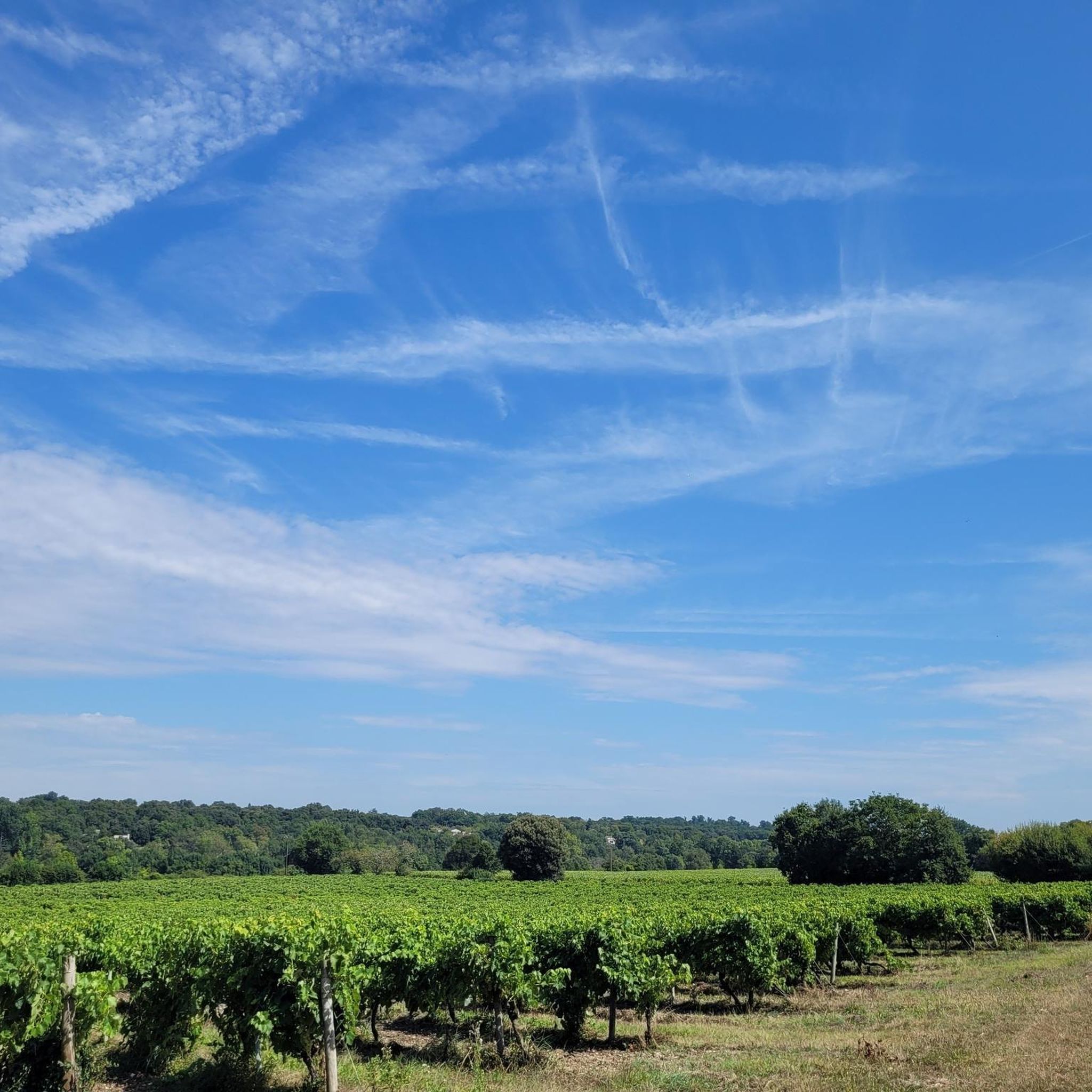
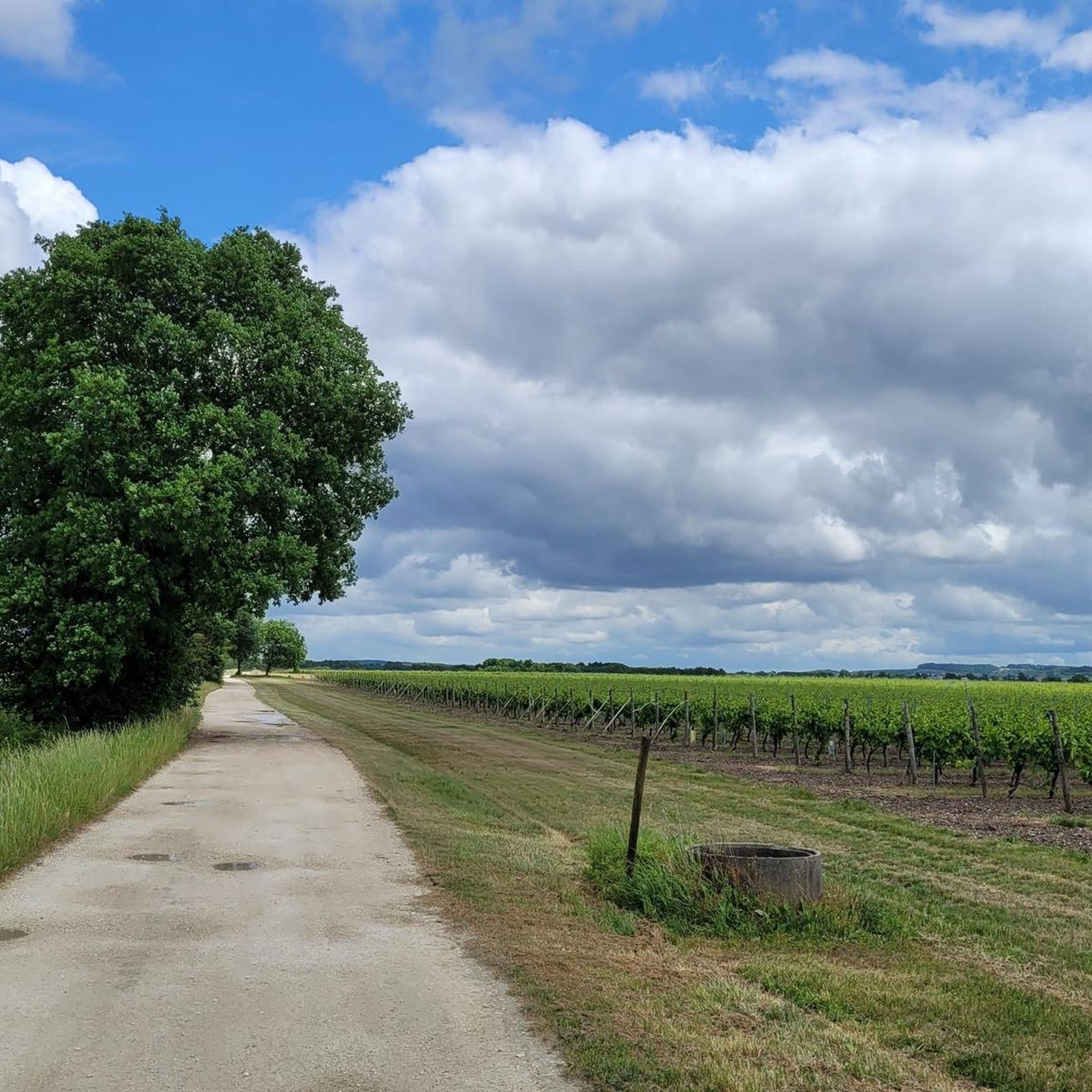
Gravel biking around Gensac-La-Pallue offers routes through the Charente region's diverse landscapes. The area is characterized by extensive vineyards, rolling countryside, and the meandering Charente River. Cyclists encounter a mix of "chemins blancs calcaires" (white limestone paths) and tracks, alongside shaded forest trails and open fields. The terrain is generally accessible, providing varied surfaces and elevation changes suitable for gravel biking.
Best gravel bike trails around Gensac-La-Pallue
- The most popular gravel bike trail is Vinade-Bassac bridge – Pont d'Angeac loop…
Last updated: August 26, 2026
4.7
(3)
39
riders
59.1km
03:37
280m
280m
Moderate gravel ride. Good fitness required. Mostly paved surfaces. Suitable for all skill levels.
19
riders
84.5km
06:20
610m
610m
Hard gravel ride. Very good fitness required. Mostly paved surfaces. Suitable for all skill levels.

Sign up for free
4.3
(4)
34
riders
34.4km
02:08
120m
120m
Moderate gravel ride. Good fitness required. Mostly paved surfaces. Suitable for all skill levels.
18
riders
81.4km
05:16
250m
250m
Hard gravel ride. Very good fitness required. Mostly paved surfaces. Suitable for all skill levels.
4.2
(5)
32
riders
34.4km
02:03
150m
150m
Moderate gravel ride. Good fitness required. Mostly paved surfaces. Suitable for all skill levels.
Get access to more routes and recommendations from other explorers.
Sign up for free
Already have an account?
Our route recommendations are based on thousands of hikes, rides, and runs completed by other people on komoot.
Start today with a free account
Your next adventure awaits.
Login or Signup
Tips from the Community

The Chaniers ferry (Charente-Maritime) is one of the last traditional river ferries still in operation in France. It allows crossing the Charente River between Chaniers and Courcoury, a few kilometers downstream from Saintes. A crossing used for centuries History of the Chaniers ferry The ferry crossing at Chaniers is very old: it dates back to the Middle Ages. In the mid-17th century, it was already an important crossing point on the Charente. It was not only used to cross the river: it also allowed residents to access the meadows on the other side, particularly for agricultural activities. In the early 20th century, the Chaniers ferry was part of a much larger network of crossings on the Charente. In 1909, thirteen ferries were still recorded in Charente-Inférieure, including the one in Chaniers. Ferries were essential at the time before the proliferation of bridges. Why "chain ferry"? The principle consists of holding the ferry on a chain connecting the two banks. The ferryman uses this chain to move the boat forward and keep it on its course despite the current. In Chaniers, the current ferry is motorized, unlike the ferry in Dompierre-sur-Charente, which is operated manually. The Tourist Office, however, still describes it as a "chain ferry," and the municipality as the traditional crossing method connecting Chaniers to Courcoury. The ferry today The crossing takes place between Le Communal in Chaniers and the Courcoury bank. It is free and can transport pedestrians, cyclists, and motorized vehicles. Its operation depends in particular on the flow of the Charente River. The municipality of Chaniers officially presents "the port of Chaniers and its chain ferry" as an element of its local heritage. Important point: I am correcting my previous message: the Chaniers ferry is not simply a "19th-century ferry." The crossing has been attested since the Middle Ages; it is its mode of operation and its equipment that have evolved over the centuries.
0
0


Washhouse with two sloping stone curbstones. It is located along the road, 1.5 km from St-Cybardeaux, sheltered by trees. The washhouse's water comes from a small circular stone fountain, while the water flows on the other side under a bridge once crossed by the Petit Rouillac.
0
0

I really enjoyed this ride. I’m 46, I did it on a 40 year old road bike, it’s more suited to a cyclocross bike!
1
0


HISTORY OF THE HOUSE OF HINE In 1791, Thomas Hine (1775-1822), then aged 16, left his native land on the south coast of England to go to France… in the middle of the French Revolution. He went to Jarnac, Charente, where he was hired as a clerk in the Ranson et Delamain trading house, which produced his father’s favourite cognac. James Delamain (1738-1800), a Huguenot who had emigrated from Ireland, founded the trading house in 1763 with his father-in-law Jean-Isaac Ranson. On 3 October 1797 (13 Brumaire Year VI), Thomas Hine married Françoise Élisabeth Delamain, daughter of James Delamain and Marie Ranson. In 1817, the Ranson et Delamain house was liquidated, the heirs having been unable to agree on the succession. The eponymous son-in-law founded Thomas Hine & Co, and his cousins Paul Roullet and Henri Delamain (James' grandson) founded the Maison Roullet et Delamain seven years later, which would become Delamain et Cie. The links between the two Protestant Jarnac families remained close, and Thomas Hine's great-granddaughter, Adrienne Hine (1850-1922) married Philippe Delamain (1847-1902) - they had sons Jacques and Robert Delamain. Today, as in Thomas Hine's time, the Hine establishments line the banks of the Charente in Jarnac. The logo is inspired by Hine's speaking arms, hind meaning doe in Old English. He is lying down, his head turned backwards, symbolically looking towards England2. In 1962, Hine was granted the Royal Warrant of Her Majesty Queen Elizabeth II, and became the official supplier of cognac to the Court of England. In 1987, the company was bought by Moët Hennessy. In 2003, it became the property of the CL Financial group, which emerged from the Angostura group. The House was bought in 2013 by the Edv company. TYPOLOGY OF HINE EAUX DE VIE The House of HINE is located on the banks of the Charente, in the heart of the Cognac region. In the cellars, which ensure the protection of the precious vintages under seal, little has changed in more than 260 years. From the neighboring quays once began the journey of HINE cognacs around the world. This house is one of the oldest in Jarnac. Cognacs exclusively from the Grande and Petite Champagne vintages, a distillation with the lees, and an aging in fine grains with a light to moderate heating. Here, every manufacturing detail will be revealed to you. > To find out more: - https://hine.com/fr - Address: 16 quai Orangerie 16200 Jarnac - 05 45 35 59 59 - Visits, Tasting and Purchases possible - Opening periods: From 01/04 to 31/12 Monday, Tuesday, Wednesday, Thursday and Friday from 9 a.m. to 5:30 p.m. Excluding public holidays. Full price: from €20. Free for children under 18. (Subject to change)
0
0

The Charente in this sector is lined with many castles, the area is rich thanks to the production of Cognac and Pineau.
0
0

Bourg-Charente castle is a 17th century mansion. Nestled on a rocky promontory, it is located a few kilometers from Cognac. It also houses the remains of a medieval fortress. Acquired in the 20th century, this château houses cellars for producing Grand Marnier. It can be visited from Monday to Friday from 8 a.m. to 5 p.m.
0
0
Frequently Asked Questions
How many gravel bike trails are available in Gensac-La-Pallue?
There are over 40 gravel bike trails around Gensac-La-Pallue, offering a wide variety of options for different skill levels and preferences. The komoot community has explored more than 200 routes in the area.
What kind of terrain can I expect on gravel bike trails in Gensac-La-Pallue?
The terrain around Gensac-La-Pallue is diverse, featuring extensive vineyards, rolling countryside, and paths along the meandering Charente River. You'll encounter a mix of 'chemins blancs calcaires' (white limestone paths), shaded forest trails, and open fields. The landscape offers varied surfaces and elevation changes, making for engaging gravel rides.
Are there gravel routes suitable for different skill levels?
Yes, Gensac-La-Pallue offers routes for all abilities. You'll find 6 easy trails, 28 moderate routes, and 10 more challenging difficult trails, ensuring there's something for everyone from beginners to experienced gravel bikers.
What historical sites or landmarks can I see along the gravel bike trails?
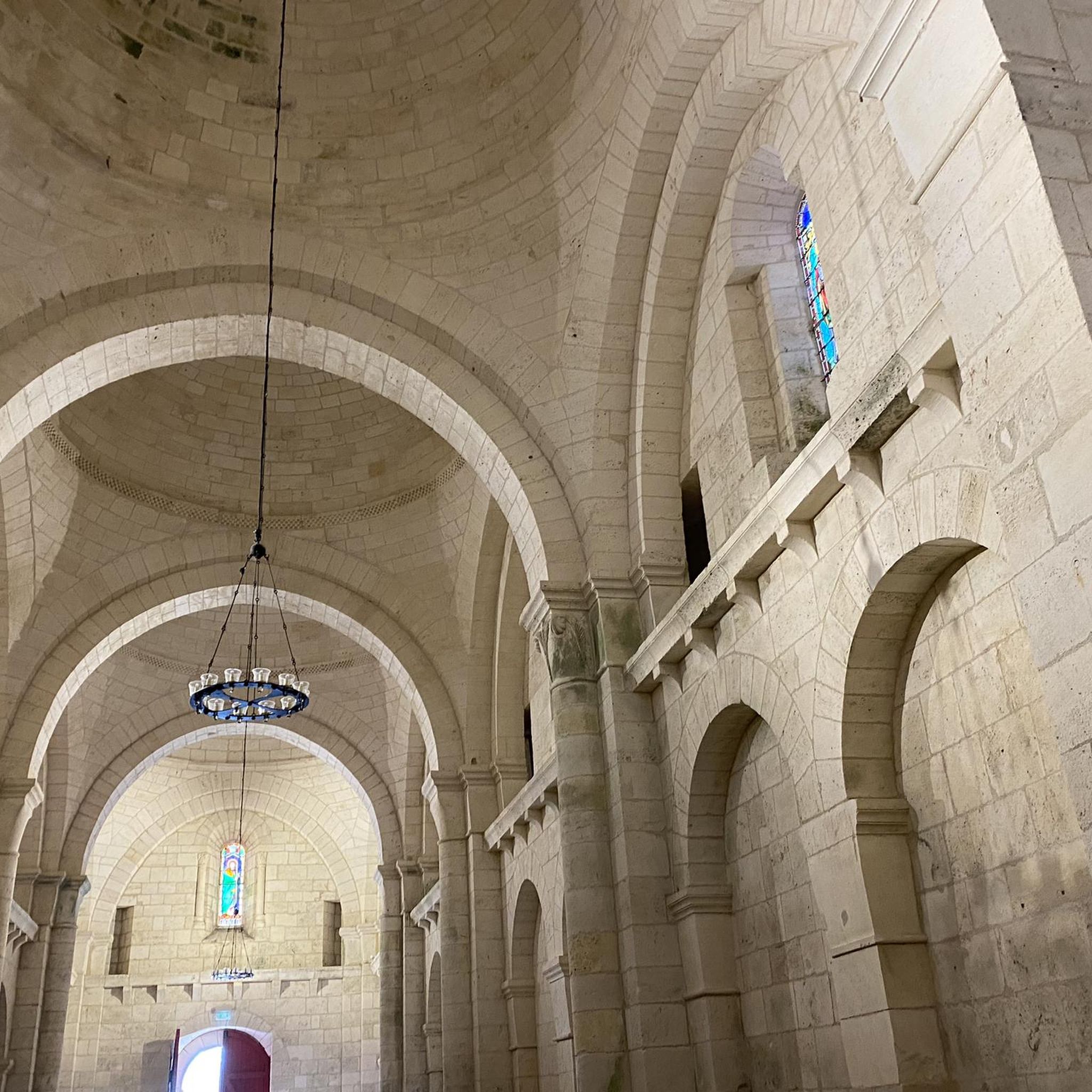
The region is rich in history. You can explore several castles and historical buildings. Notable attractions include the 17th-century Bourg-Charente Castle, the impressive Chateau des Chabannes, and the Saint-Brice Castle. The Abbaye de Bassac is also a significant religious building worth visiting.
Are there opportunities to learn about Cognac production while cycling?
Absolutely. Gensac-La-Pallue is in the heart of the Cognac wine region. Many prestigious Cognac houses, such as Hennessy and Rémy Martin, offer guided tours and tastings. You can cycle through vineyards and past historical sites like the Bourg-Charente Castle, which houses cellars for Grand Marnier production, integrating cultural exploration into your ride.
What do other gravel bikers enjoy most about the trails in Gensac-La-Pallue?
The trails in Gensac-La-Pallue are highly rated by the komoot community, with an average score of 4.4 stars from more than 10 reviews. Riders often praise the diverse landscapes, including the vineyards and river paths, and the variety of terrain that keeps rides interesting.
Are there any circular gravel bike routes in the area?
Yes, many of the gravel routes around Gensac-La-Pallue are designed as loops, allowing you to start and finish in the same location. Examples include the The Jarnac Quays – Chateau des Chabannes loop from Jarnac-Charente and the Saint-Brice Castle – The Jarnac Quays loop from Cognac.
What is a good easy gravel route for beginners?
For beginners, a moderate route like the Saint-Brice Castle – The Jarnac Quays loop from Cognac is a great option. It's 21.5 miles (34.6 km) long and takes you through the scenic Cognac wine region, offering a taste of the area's beauty without being overly challenging.
Is Gensac-La-Pallue suitable for family-friendly gravel biking?
The generally accessible landscape and the presence of easier routes make Gensac-La-Pallue suitable for families. While specific family-designated trails are not highlighted, the varied terrain and numerous paths offer options for less strenuous rides, especially along the riverbanks or through less hilly vineyard sections.
Can I bring my dog on the gravel bike trails?
While many outdoor areas in France are dog-friendly, it's always best to check local regulations for specific trails or protected areas. Generally, dogs on a leash are welcome on public paths, but ensure they are well-behaved and that you clean up after them.
When is the best time of year for gravel biking in Gensac-La-Pallue?
The Charente region, including Gensac-La-Pallue, is pleasant for cycling from spring through autumn. Spring offers blooming vineyards, while autumn provides beautiful colors and harvest activity. Summers can be warm, so early mornings or late afternoons are ideal. Always check local weather conditions before heading out.
Where can I find places to eat or stay near the trails?
Being in a popular wine region, Gensac-La-Pallue and its surrounding towns like Cognac and Jarnac offer various options for dining and accommodation. You'll find local restaurants, cafes, and guesthouses. Many Cognac houses also have facilities for visitors, including tasting rooms.
Are there options for longer, more challenging gravel rides?
Yes, for those seeking a greater challenge, routes like The Jarnac Quays – Chateau des Chabannes loop from Jarnac-Charente offer a difficult 51.7 miles (83.2 km) path with varied terrain and significant elevation changes, perfect for experienced gravel bikers.
Most popular routes around Gensac-La-Pallue
Most popular attractions around Gensac-La-Pallue

Get inspired with the komoot mobile app


Explore more
Browse the best Gravel rides in other regions.
