The best gravel rides around Les Rouges-Eaux
4.0
(7)
39
riders
8
rides
Gravel biking around Les Rouges-Eaux offers diverse landscapes within the Vosges mountains, characterized by deep forests and varied terrain. Riders can expect a mix of flowy forest trails, shaded switchbacks, and both challenging hills with varied gradients and rolling descents. The region features natural forests, scenic pathways along rivers like La Mortagne, and areas with century-old firs and beeches. This environment provides an immersive nature experience for gravel cyclists.
Best gravel bike trails around Les Rouges-Eaux
- The most popular gravel…
Last updated: July 15, 2026
5
riders
30.2km
02:02
450m
450m
Moderate gravel ride. Good fitness required. Mostly paved surfaces. Suitable for all skill levels.
4.0
(2)
9
riders
31.8km
02:11
480m
480m
Hard gravel ride. Very good fitness required. Mostly paved surfaces. Suitable for all skill levels.

Sign up for free
5
riders
44.3km
03:20
910m
910m
Hard gravel ride. Very good fitness required. Mostly paved surfaces. Suitable for all skill levels.
4.0
(1)
5
riders
Moderate gravel ride. Good fitness required. Mostly paved surfaces. Suitable for all skill levels.
22.4km
01:34
380m
380m
Moderate gravel ride. Good fitness required. Mostly paved surfaces. Suitable for all skill levels.
Get access to more routes and recommendations from other explorers.
Sign up for free
Already have an account?
Our route recommendations are based on thousands of hikes, rides, and runs completed by other people on komoot.
Start today with a free account
Your next adventure awaits.
Login or Signup

Tips from the Community

yes up there you have a good view
2
0

As some in the area are not, this one is conveniently located and at least works. We even could use it to repair a tubeless tire.
0
0

too many bicycles on busy roads
0
0


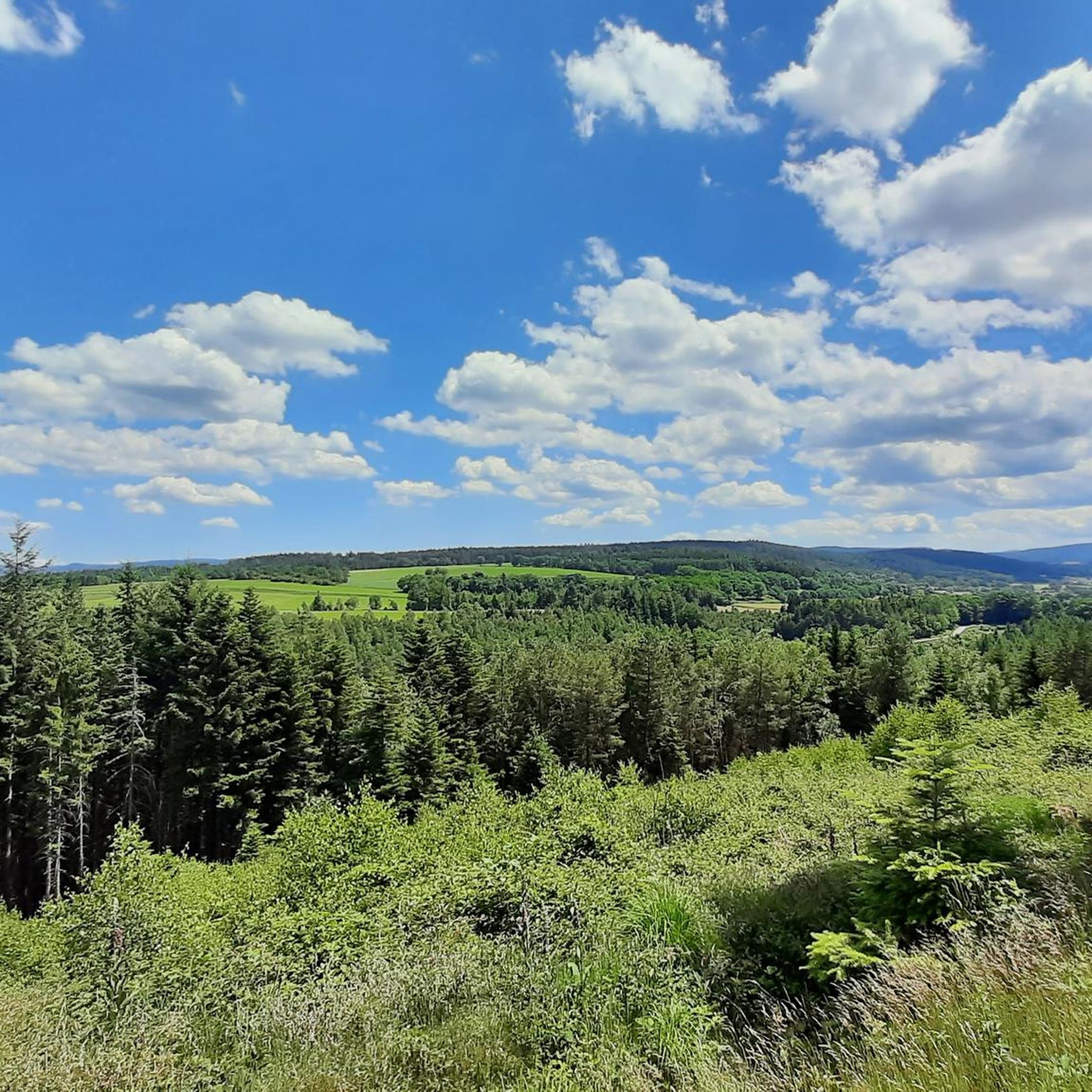
The foothills of the Vosges offer perfect terrain for mountain biking. In addition to the hilly terrain dotted with paths and trails, there are beautiful views, such as here over the Meurthe Valley.
0
0

Since the 13th century, a hospice was maintained there by the church. and welcomed pilgrims, travelers and the city's sick. At the request of the inhabitants of this suburb, a church was built there, while a new, more spacious hospital was erected on the right bank of the Meurthe. The church was dedicated to Saint-Martin and was consecrated in 1728. On July 14, 1895, during the National Day fireworks display, the church was set on fire by a rocket which hit the roof covered with fir twigs and burned to the ground. According to the plans of the Parisian architect Heubès, a new Vosges sandstone church was built in the "floral Romanesque" style and consecrated on August 13, 1902.
3
0

Magnificent Roche St Martin
3
1

As early as the 7th century, Deodatus (French Dieudonné), who was revered by the people as a saint, is said to have founded a monastery here, from which a community of canons then developed in the 10th century. At that time the church wore the patron saint of St. Mauritius. The diocese of Saint-Dié was only established in 1777 by Pope Pius VI. († 1799) built. The church building, which was built in different architectural styles, was blown up by the Germans in 1944, destroying the entire nave and the choir area along with their vaults. The reconstruction lasted until 1974; in this year the church was newly consecrated. Most of the stained glass windows were made and inserted in the 1980s. https://en.wikipedia.org/wiki/Cathedral_of_Saint-Di%C3%A9
3
0
Frequently Asked Questions
How many gravel bike trails are available around Les Rouges-Eaux?
There are 5 gravel bike trails around Les Rouges-Eaux listed on komoot, offering a variety of experiences through the Vosges mountains. These routes cater to both moderate and more challenging skill levels.
What kind of terrain can I expect on gravel bike trails in Les Rouges-Eaux?
The terrain around Les Rouges-Eaux is diverse, featuring a mix of flowy forest trails, shaded switchbacks, and both challenging hills with varied gradients and rolling descents. You'll often find yourself on quiet forest roads, sometimes alongside rivers like the La Mortagne, and through areas with century-old firs and beeches, providing a truly immersive nature experience.
Are there options for different skill levels among the gravel trails?
Yes, the trails around Les Rouges-Eaux offer options for various skill levels. You'll find 3 moderate routes, perfect for those looking for a balanced ride, and 2 more difficult trails for experienced riders seeking a greater challenge.
What natural features or viewpoints can I discover along the gravel routes?
Many routes traverse deep forests and offer scenic pathways. You can expect to encounter high-altitude and glacial lakes, and enjoy panoramic views from elevated points. For specific viewpoints, consider exploring areas near La Roche Saint-Martin and View of Saint-Dié or Roche d'Anozel.
Are there any historical sites or landmarks to explore while gravel biking?
Yes, the region offers intriguing historical sites. A notable one is the La Bure Celtic Camp, a fortified plateau with archaeological findings dating back to the Neolithic period. You might also pass by significant religious buildings like the Saint-Dié Cathedral or Saint Martin Church.
Are there any circular gravel bike routes available?
Yes, several routes are designed as loops. For example, you can try the Ant Mountain – I See Life in Vosges loop from Laveline-devant-Bruyères, which is a popular moderate trail, or the more challenging Gravelicious 🤩😂 – Usine Le Corbusier loop from Saint-Dié-des-Vosges.
What do other gravel bikers say about the trails in Les Rouges-Eaux?
The gravel biking experience around Les Rouges-Eaux is highly rated by the komoot community, with an average score of 4.0 stars from over 6 reviews. More than 30 gravel bikers have explored these varied terrains, often praising the deep forests, varied gradients, and serene natural environments.
Is it possible to find parking for cyclists in Les Rouges-Eaux?
While specific parking areas for cyclists are not detailed, Les Rouges-Eaux and nearby villages like Laveline-devant-Bruyères and Saint-Dié-des-Vosges typically offer public parking options suitable for visitors. It's advisable to check local signage upon arrival.
Can I reach Les Rouges-Eaux by public transport with my bike?
Public transport options to Les Rouges-Eaux, particularly with a bike, may be limited. The Vosges region is generally more accessible by car. For specific train or bus services that accommodate bicycles, it's best to consult regional transport providers directly for their current policies and schedules.
Are the gravel trails around Les Rouges-Eaux dog-friendly?
Many natural trails in the Vosges region are generally dog-friendly, especially forest roads and paths. However, it's always recommended to keep dogs on a leash, especially in areas with wildlife or near agricultural land, and to check for any specific local regulations or protected areas that might have restrictions.
What is the best time of year to go gravel biking in Les Rouges-Eaux?
The Vosges mountains offer a great experience for gravel biking from spring through autumn. Spring brings lush greenery, while autumn provides stunning fall foliage. Summers are generally pleasant, though some trails might be busier. Winters can be challenging due to snow and ice, making other seasons more ideal for gravel biking.
Are there family-friendly gravel biking options in the area?
For families, the moderate routes are a good starting point. Trails that follow riverbeds or traverse less steep forest roads, such as the Laveline-devant-Bruyères – Camping Domaine de Messires loop, offer a more accessible and enjoyable experience for a wider range of ages and abilities.
Most popular routes around Les Rouges-Eaux
Most popular attractions around Les Rouges-Eaux

Get inspired with the komoot mobile app


Explore more
Browse the best Gravel rides in other regions.
