The best gravel rides around Waldighofen
4.6
(35)
191
riders
30
rides
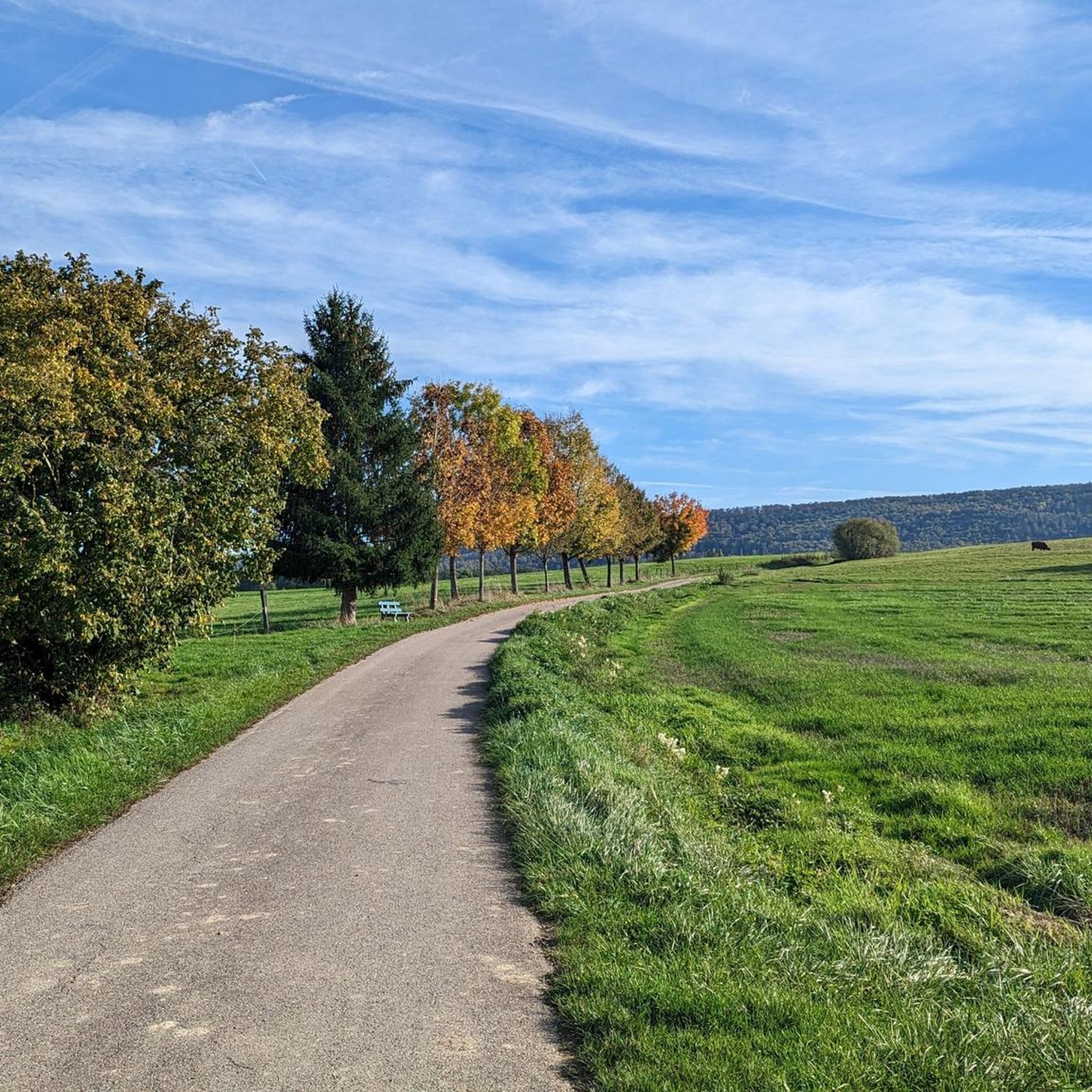
Gravel biking around Waldighofen offers diverse terrain within the Sundgau region of Alsace, France. The area is characterized by its hilly topography, featuring extensive pine, beech, and oak woods, alongside orchards, pastures, and agricultural fields. Riders will encounter a dense network of quiet farm and forest tracks, with over half of the routes traversing these off-road surfaces. The proximity to the Alsatian Jura foothills adds distinctive clayey hills and winding roads to the landscape.
Best gravel bike trails around Waldighofen
…Last updated: November 16, 2026
4.7
(6)
34
riders
80.1km
06:52
1,130m
1,140m
Hard gravel ride. Very good fitness required. Mostly paved surfaces.
5.0
(2)
35
riders
54.5km
04:04
490m
480m
Hard gravel ride. Very good fitness required. Mostly paved surfaces.

5.0
(3)
15
riders
67.5km
05:36
1,170m
1,180m
Hard gravel ride. Very good fitness required. Mostly paved surfaces.
4.3
(3)
19
riders
42.4km
03:21
530m
530m
Hard gravel ride. Very good fitness required. Mostly paved surfaces.
4.7
(3)
18
riders
55.3km
04:26
660m
670m
Hard gravel ride. Very good fitness required. Mostly paved surfaces.
Get access to more routes and recommendations from other explorers.
Already have an account?
Our route recommendations are based on thousands of hikes, rides, and runs completed by other people on komoot.
Start today with a free account
Your next adventure awaits.
Tips from the Community

The chapel Notre-Dame du Grunenwald probably dates back to the 15th century and has been an important place of pilgrimage for centuries. According to legend, children found a statue of Mary in the forest, whereupon a first chapel was built at this spot. In the 16th century, it was expanded by the Order of Saint John/Knights of Malta and later rebuilt, including in 1705. During the First World War, the chapel was severely destroyed by artillery fire. The current chapel was built between 1930 and 1933. The historical statue of Mary and some stones from the previous building have been preserved to this day.
0
0

The inscription and history are interesting. The remains themselves are of a relatively ordinary appearance. They resemble classic house foundations. The notion of a bath or Roman style is not obvious to a novice.
0
0
Beautiful half-timbered houses. Few public benches. Those in front of the church and in the adjacent playground are not sheltered from the wind. If you have a picnic area to recommend, go for it, thank you.
0
0

Oltingue is a quiet village in the Sundgau with a late-classical village ensemble around the church of Saint-Martin (1827–1831), the rectory and the former school. The Callinet organ (1843), the double staircase of the rectory and the facade details are striking. There are several historic houses in the village, including half-timbered houses from 1695 and a farm from the 16th century. To the east lies the chapel of Saint-Brice, a former place of pilgrimage with a baroque altar and an outdoor pulpit.
10
0
This former mother church of Oltingue and three disappeared villages dates from the 13th and 14th centuries. The location is idyllic: surrounded by fields, an old cemetery and often with storks on the roof in the spring. Inside you will discover surprisingly well (?) preserved wall paintings, including a rare representation of the sacrifice of Melchisedech and a Last Supper from 1741. In the choir you will also find a wall tabernacle and a niche for liturgical objects, silent witnesses of medieval rituals. The Gothic arched windows and the neo-Gothic vault are reminders of later restorations, while archaeological excavations in 1989 revealed traces of older sanctuaries and tombs from the early Middle Ages. simple but full of character.
11
0
The white stork (Ciconia ciconia) is one of the most recognisable and beloved symbols of Alsace.
9
0
Raedersdorf is located in the southernmost part of Alsace, in the hilly landscape of the Sundgau, close to the Swiss border. The village is surrounded by forests, springs and hiking trails leading to heritage sites such as the Église Saint-Étienne with its baroque interior and Callinet organ, and the Mariabrunn chapel in the forest. Its location between French-speaking and German-speaking Switzerland makes Raedersdorf a place where cultures come together.
8
0
The church of Raedersdorf was built in its present form between 1807 and 1811, on the foundations of an older church, the tower of which has been partly preserved. The interior was richly decorated in 1811 by sculptor Joseph Antoine Feuerstein, with a harmonious baroque ensemble. The organ was also built in the same year by Jean Frantz. The church was finally consecrated in 1851. It is located in the centre of the village, close to the town hall, and is a silent witness to religious art and village history in the south of Alsace.
10
0
Frequently Asked Questions
How many gravel bike trails are there in Waldighofen?
The Waldighofen area offers a wide selection of gravel bike trails, with over 35 routes available for exploration. These routes cater to various preferences, ranging from moderate to difficult.
What kind of terrain can I expect on gravel bike trails around Waldighofen?
The Sundgau region, where Waldighofen is located, is known for its diverse and undulating terrain. You'll encounter a mix of quiet farm and forest tracks, with over half of the routes traversing these off-road surfaces. The landscape features hilly topography, extensive pine, beech, and oak woods, orchards, pastures, and agricultural fields. Proximity to the Alsatian Jura foothills also means distinctive clayey hills and winding roads.
What is the best time for gravel biking in the Sundgau region?
The Sundgau region is generally pleasant for gravel biking throughout much of the year. Spring and autumn offer mild temperatures and beautiful scenery with changing foliage or blooming nature. Summer is also suitable, though it can be warmer. The extensive path network allows for flexible route adjustments depending on seasonal conditions.
Are there options for different skill levels on the gravel trails?
Yes, the routes around Waldighofen cater to different ability levels. While many trails are rated as moderate to difficult, the extensive path network allows for flexibility. The local Sundgau Tourist Office also provides specialized routes designed by cycling experts, offering a mix of low-traffic roads, scenic white forest and agricultural paths, and smooth, rolling trails suitable for various skill sets.
What natural features or landmarks can I see along the gravel bike trails?
You'll find a wealth of natural beauty and historical sites. The region is dotted with numerous carp-filled ponds, and you can explore the source of the iconic Ill River near Winkel. Notable natural features include the Dwarves' Grotto and the Loechle Rock. The area also features the pleasant Courtavon lake (Plan d'eau de Courtavon) at the foot of the Alsatian Jura.
Are there historical sites to explore while gravel biking?
Absolutely. The Sundgau region is rich in history. You can encounter charming Alsatian villages with traditional half-timbered houses, historic chapels like the Saint-Brice Chapel, and prominent bell towers. The impressive Ferrette Castle and the ruins of Morimont castle are significant historical landmarks that can be part of longer tours like the Tour du Sundgau Gravel.
Are there any loop gravel bike trails in the area?
Yes, many of the gravel bike trails in the Sundgau region are designed as loops, allowing you to start and finish in the same location. A prime example is the impressive Tour du Sundgau (TDS) Gravel, a nearly 185-kilometer loop that connects numerous tourist sites. For a shorter option, consider The upper Ill valley, which offers a scenic circular route.
Is there parking available for gravel bikers in Waldighofen?
Yes, parking is generally available in and around Waldighofen, particularly in the villages that serve as common starting points for routes. Many routes begin near accessible parking areas, making it convenient to unload your bike and start your adventure. Specific parking details can often be found on individual route descriptions.
Are there cafes or places to eat along the routes?
The charming Alsatian villages you'll pass through often offer opportunities for local food and accommodation. The region is known for its culinary specialty, 'Carpe frite' (fried carp), which you might find in local eateries. While specific cafes vary by route, many villages provide options for refreshments and meals.
What do other gravel bikers enjoy most about gravel biking in Waldighofen?
The area is highly rated by the komoot community, with an average score of 4.7 stars from over 19 reviews. Reviewers often praise the diverse terrain, the extensive network of quiet farm and forest tracks, and the authentic tranquility of the Sundgau region. The blend of undulating hills, dense woodlands, and expansive agricultural fields provides a rewarding experience for gravel enthusiasts.
Are there family-friendly gravel trails around Waldighofen?
While many routes are rated moderate to difficult, the extensive path network in the Sundgau region allows for flexible adjustments. For families, look for routes that utilize the smoother, rolling trails and low-traffic country roads. The local Sundgau Tourist Office may also offer specific recommendations for less strenuous options suitable for a family outing.
Can I bring my dog on the gravel bike trails?
Generally, dogs are welcome on many of the outdoor trails in the Sundgau region, especially on forest and farm tracks. However, it's always best to keep your dog on a leash, especially when passing through agricultural areas, near livestock, or in nature reserves. Be mindful of local regulations and ensure your dog is well-behaved and doesn't disturb wildlife or other trail users.
How can I access the gravel bike trails using public transport?
While Waldighofen is a tranquil base, public transport options in rural Alsace might be limited compared to larger cities. It's advisable to check local bus schedules or regional train connections to nearby towns that might offer better access points to the trail network. Planning your route in advance with public transport in mind is recommended.
Most popular routes around Waldighofen
Most popular attractions around Waldighofen

Get inspired with the komoot mobile app


Explore more
Browse the best Gravel rides in other regions.
