Top 20 Castles around Holsbeek
Best castles around Holsbeek offer a glimpse into historical architecture set within the region's varied landscape. The area features moated castles and residential towers, often situated in green valleys or alongside lakes. These historical sites provide opportunities for exploration, showcasing centuries of regional heritage. The diverse collection of castles reflects different architectural periods and functions.
Best castles around Holsbeek
- The most popular castles is Horst Castle, a castle that is an idyllic moated castle from the 13th century. It…
Last updated: May 7, 2026
Horst Castle
Highlight • Castle
Translated by Google •
Tip by

Ter Heyden Keep
Highlight • Castle
Tip by

Sign up now to discover places like this
Get recommendations on the best single tracks, peaks, & plenty of other exciting outdoor places.
Sign up for free
Ter Heiden Tower
Highlight • Castle
Translated by Google •
Tip by

Arenberg Castle
Highlight • Castle
Translated by Google •
Tip by

Kwabeek Castle and Park
Highlight • Castle
Translated by Google •
Tip by

Sign up for free to discover even more castles around Holsbeek.
Sign up for free
Already have an account?
Start today with a free account
Your next adventure awaits.
Login or Signup


Tips from the Community


After the gruesome murder of the last owner, Baroness Thérèse Ernst de Bunswyck, the municipality purchased part of the estate, including the castle, which now serves as Boutersem's town hall. Other lots went to different owners, so the heritage's unity is somewhat lost, with several buildings besides the castle itself. However, there's much more than meets the eye.
6
0
The castle's core dates back to 1718, modified several times during the 19th century, and eclectically renovated after 1922; the castle and its outbuildings are surrounded by a 16.5-hectare park, originally a high courtyard with a watermill and mill pond; a classic 18th-century valley floor site, redeveloped in an early landscape style around 1830-1835; redeveloped around 1900 in a late landscape style; municipally owned since 1980; ice and vegetable cellars, numerous old trees. Inventory of Immovable Heritage: Kwabeek Castle Estate, https://id.erfgoed.net/erfgoedobjecten/41588
7
0
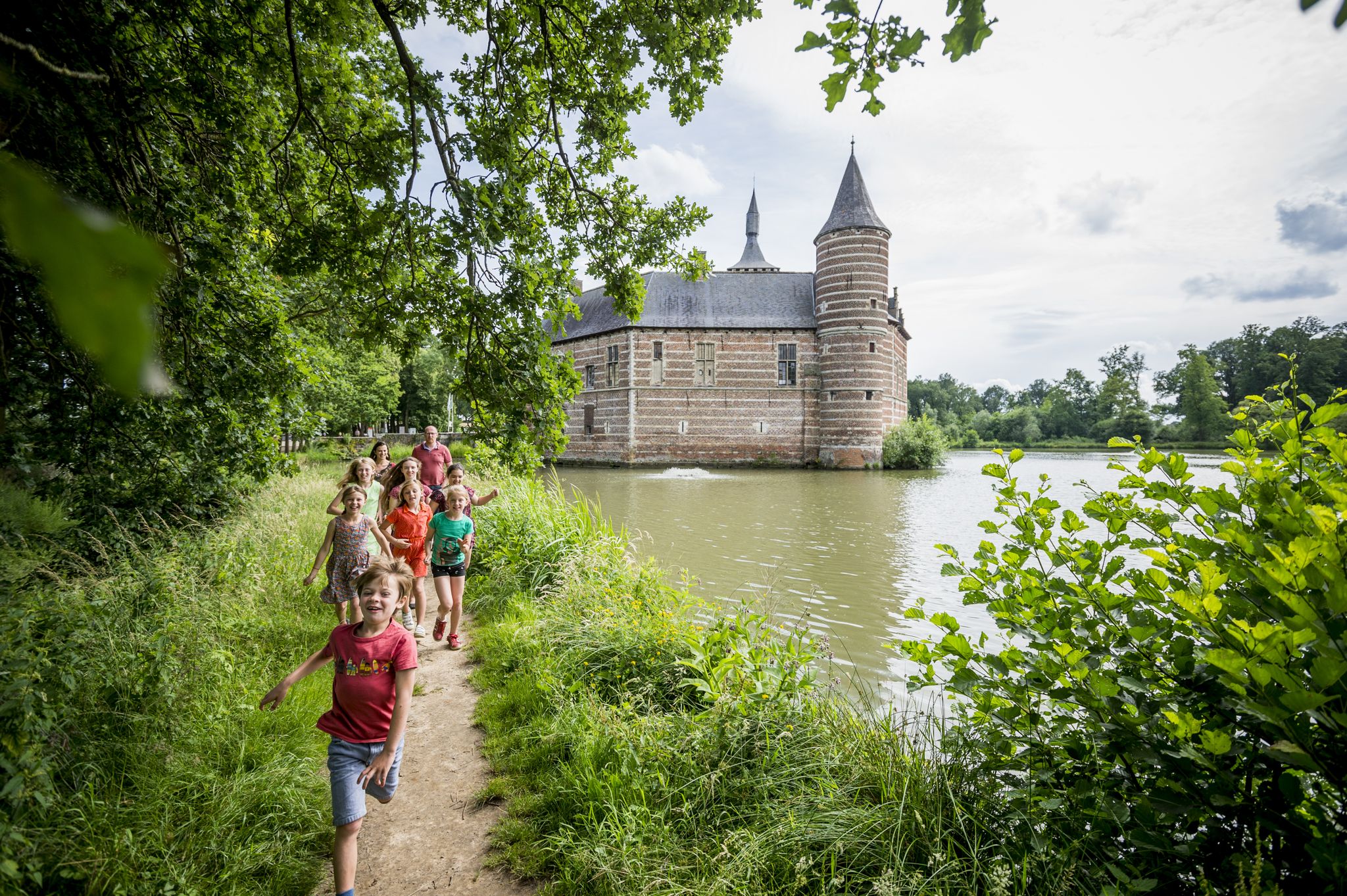
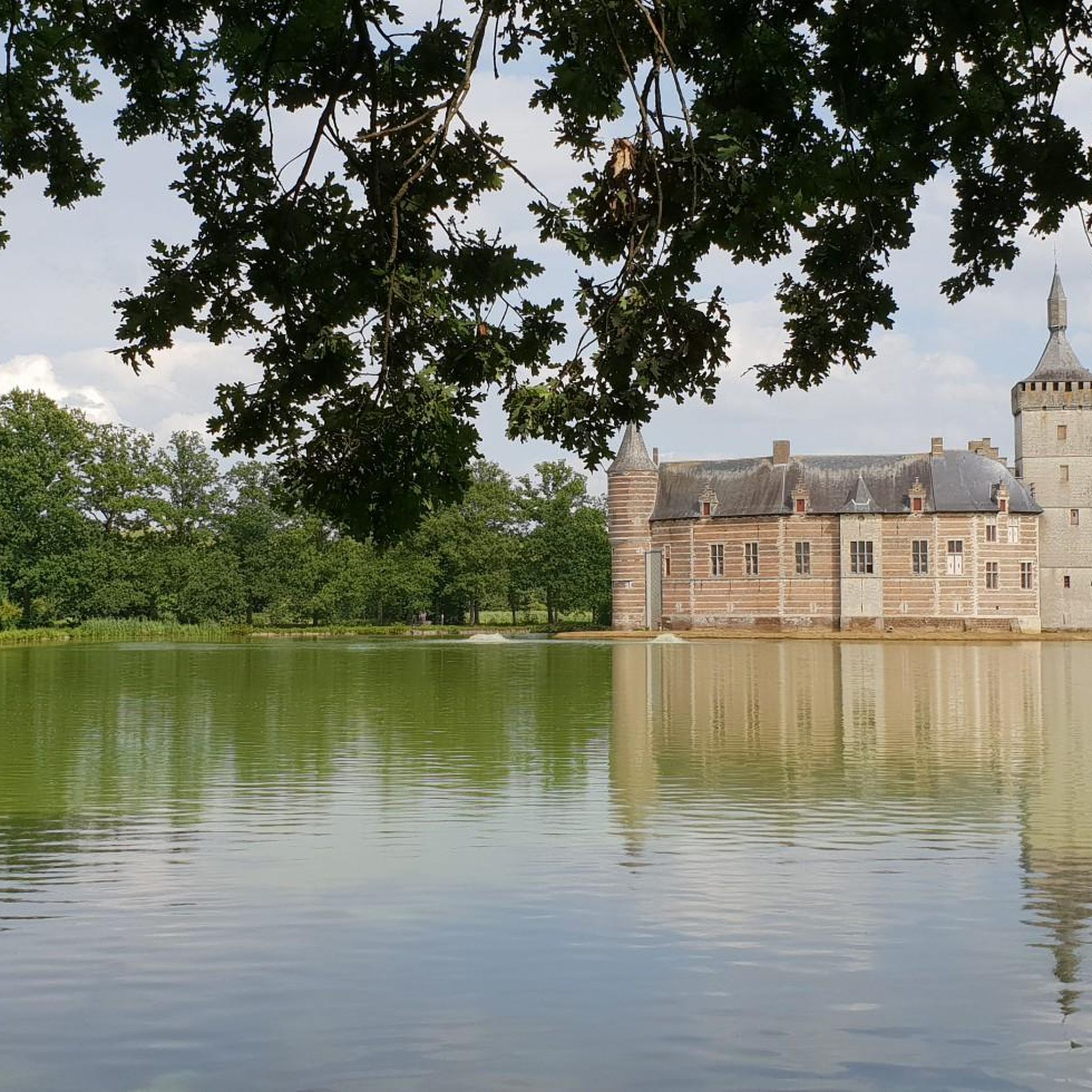
The core of Horst Castle probably dates back to the 13th century and is characterised by a square keep. The keep probably belonged to the oldest core that was further expanded into a fortified castle in the 15th century. During the troubles under Maximilian of Austria in 1489, the castle of Horst was taken by the people of Leuven and set on fire. According to literary sources, only the keep, part of the entrance gate and a defensive wall remained standing. The residential and east wing were renovated and expanded in the 16th century. The round tower also dates from this period. The outer wall was provided with a rectangular bay window. The castle lost its military character and became more of a pleasant residential area with a view of the moat, the ponds and the inner courtyard. Brick construction with sandstone layers characterise these buildings. In 1587, however, the castle was set on fire again during the raids of the Geuzen. It was not until the beginning of the 17th century that restoration work began. It is difficult to deduce from the available sources to what extent this involved restoration or an embellishing conversion of the castle complex. Presumably nothing changed in the internal structure, but only after the structurally necessary repairs were the interiors completely refinished. Maria-Anna Van den Tympel had a new chapel built against the keep in the 17th century. At the beginning of the 19th century, the complex must have been damaged by plundering and neglect, and it is possible that it also suffered from plundering during the Brabant Revolution of 1830. Around 1850, the castle must have been habitable again, but the castle buildings only served as a farm. In the land registry, the site around the castle is called "De Notelaren Boomgaerd". Around that time, the most dilapidated part must have been demolished, namely the southern part and the superstructure of the gate. The rest of the complex was probably restored with reused demolition material and in traditional style. The castle was divided in 1880, with one part being registered as a school house. In 1897, a further division followed, with two plots being designated as houses. Several restoration campaigns followed in the 20th century. Inventory of Immovable Heritage: Horst Castle, https://id.erfgoed.net/erfgoedobjecten/43619
6
0
Since December, there has been a spire on the castle again after the unstable spire was removed more than four years ago and could be viewed on a wooden platform in the pond. Now it is back. And the other works are also progressing quickly. More about the replaced spire on https://www.vrt.be/vrtnws/nl/2024/12/10/torenspits-staat-weer-op-kasteel-van-horst-holsbeek/
6
0

The Donjon Ter Heyden, also known as the tower of Ter Heyden, is a residential tower in the Belgian town of Rotselaar (province of Flemish Brabant) from the mid-fourteenth century. The donjon was built between 1350 and 1363 by order of Gerard van der Heyden, the then bailiff of the Duchy of Brabant, when he acquired the status and funds through a marriage with a noblewoman to erect a building of such calibre.
3
0
The watermill at Arenberg Castle was probably rebuilt around 1636 on a watermill site known before 1286, which was then equipped with two waterwheels. Major repairs were carried out on the locks around 1722-23 and 1733-35, and images of the mill also indicate modifications to the mill building in the 18th century. Around 1875, the watermill underwent a facade restoration and extension according to the then prevailing views, under the direction of architect Claes. At the same time (1870-80), the mill was equipped with a new bluestone lock and two wooden waterwheels. The waterwheels were replaced by metal wheels at the end of the 19th century, and the locks were also modified in the early 20th century. In 1940, the mill was demolished and the mill was converted into a drawing room; externally the mill was preserved, as well as the lock and the two water wheels. Source and more information: https://inventaris.onroerenderfgoed.be/erfgoedobjecten/42570
7
0
Frequently Asked Questions
Are there family-friendly castles to visit around Holsbeek?
Yes, several castles in the Holsbeek area are suitable for families. Horst Castle is a popular choice, known for its idyllic moated setting. Ter Heyden Keep, a residential tower set in an artificial lake, also welcomes families. Additionally, Kwabeek Castle and Park offers a 16.5-hectare park for exploration, and Arenberg Castle, now part of a university campus, is also considered family-friendly.
Which castles around Holsbeek offer scenic viewpoints?
Horst Castle is noted for its picturesque setting, offering beautiful views of the moated castle itself and the surrounding Hagelands hills. Arenberg Castle also provides scenic views within its extensive park grounds.
Are there parking options available near the castles?
Yes, parking is available at some locations. Horst Castle has designated parking facilities. Kwabeek Castle and Park also offers parking for visitors.
Can I visit castles around Holsbeek with my dog?
Dogs are generally allowed on the castle grounds at Horst Castle, but they are not permitted inside the castle building itself. It's always advisable to check specific rules for other castle estates before your visit.
Are any castles around Holsbeek wheelchair accessible?
Arenberg Castle is noted as being wheelchair accessible, particularly its park areas. However, Horst Castle is described as difficult to access for wheelchair users and buggies due to its historical structure.
What outdoor activities can I do near the castles in Holsbeek?
The region around Holsbeek offers various outdoor activities. You can find numerous routes for gravel biking, hiking, and road cycling. Many of these routes pass by or near the historical sites, allowing you to combine castle visits with active exploration of the landscape.
Are there hiking trails near the castles in Holsbeek?
Yes, there are several hiking trails in the vicinity of Holsbeek's castles. For example, the Hagelandse Vallei trails offer various distances and difficulties. You can find detailed information and routes in the Hiking around Holsbeek guide.
What do visitors enjoy most about the castles around Holsbeek?
Visitors frequently appreciate the historical architecture set within the region's green landscapes. The idyllic moated setting of Horst Castle and its connection to the cartoon character De Rode Ridder are often highlighted. The peaceful atmosphere of places like Kwabeek Castle and Park, perfect for a rest during a walk, is also a common positive remark.
Are there cafes or places to eat near the castles?
At Horst Castle, you can find the Brasserie Wagenhuis, which is ideal for a stop if you're looking for refreshments or a meal. For other castles, it's recommended to check local establishments in nearby towns or villages.
What is the history behind Ter Heyden Keep?
Ter Heyden Keep, also known as Ter Heiden Tower, is a residential tower built between 1350 and 1363. It was commissioned by Gerard van der Heyden, the then bailiff of the Duchy of Brabant. Originally intended as a status symbol rather than purely military, it stands uniquely in an artificial lake and has a rich history, including a period as a brewery site.
What is the best time of year to visit the castles around Holsbeek?
The castles around Holsbeek can be enjoyed throughout the year. Spring and summer offer pleasant weather for exploring the grounds and parks. Autumn provides beautiful foliage, while winter can offer a unique, serene atmosphere, though it's advisable to check specific opening hours during colder months.
How long should I plan for a visit to the castles?
The duration of your visit depends on the castle and your interests. For larger sites like Horst Castle, including exploring the grounds and potentially having a meal, you might spend 2-3 hours. Smaller keeps or those primarily viewed from the exterior, like Ter Heyden Keep, might only require 30-60 minutes. If you plan to combine visits with hiking or cycling, allocate a full day.
Most popular routes around Holsbeek
Most popular attractions around Holsbeek

Get inspired with the komoot mobile app


Explore more
Looking for the best castles somewhere else? Discover other guides around Holsbeek:
