The 13 Most Amazing Peaks around Ypres
Best mountain peaks around Ypres are primarily historically significant hills and rises, rather than conventional mountains. This region in West Flanders, Belgium, features elevations that played crucial roles during World War I. These landmarks offer insights into the area's past and provide diverse outdoor experiences. The subtle rises in elevation around the city formed a crucial "saucer lip" that was heavily contested during the war.
Best mountain peaks around Ypres
- The most popular mountain peaks is Mont Noir (West),…
Last updated: July 4, 2026
Mont Noir (West)
Highlight • Summit
Translated by Google •
Tip by

Hill 60 preserved Battlefield (World War I)
Highlight • Historical Site
Translated by Google •
Tip by

Sign up now to discover places like this
Get recommendations on the best single tracks, peaks, & plenty of other exciting outdoor places.
Sign up for free
French Soldiers' Memorial (1914–1918), Kemmelberg
Highlight • Monument
Translated by Google •
Tip by

IGM Kemmelberg Summit Marker
Highlight • Monument
About 2,500 years ago, a Celtic community belonging to the Hallstatt culture settled on the Kemmelberg. The Celts built a fortress and maintained a trading relationship with the …
Translated by Google •
Tip by

Lijstermolen on the Baneberg
Highlight • Monument
The top of the slope is between the Rodeberg and the Vidaigneberg. Near the top there is a thrush mill. There is a chairlift (Cordoba) between the Baneberg …
Translated by Google •
Tip by

Sign up for free to discover even more peaks around Ypres.
Sign up for free
Already have an account?
Start today with a free account
Your next adventure awaits.
Login or Signup
Popular around Ypres
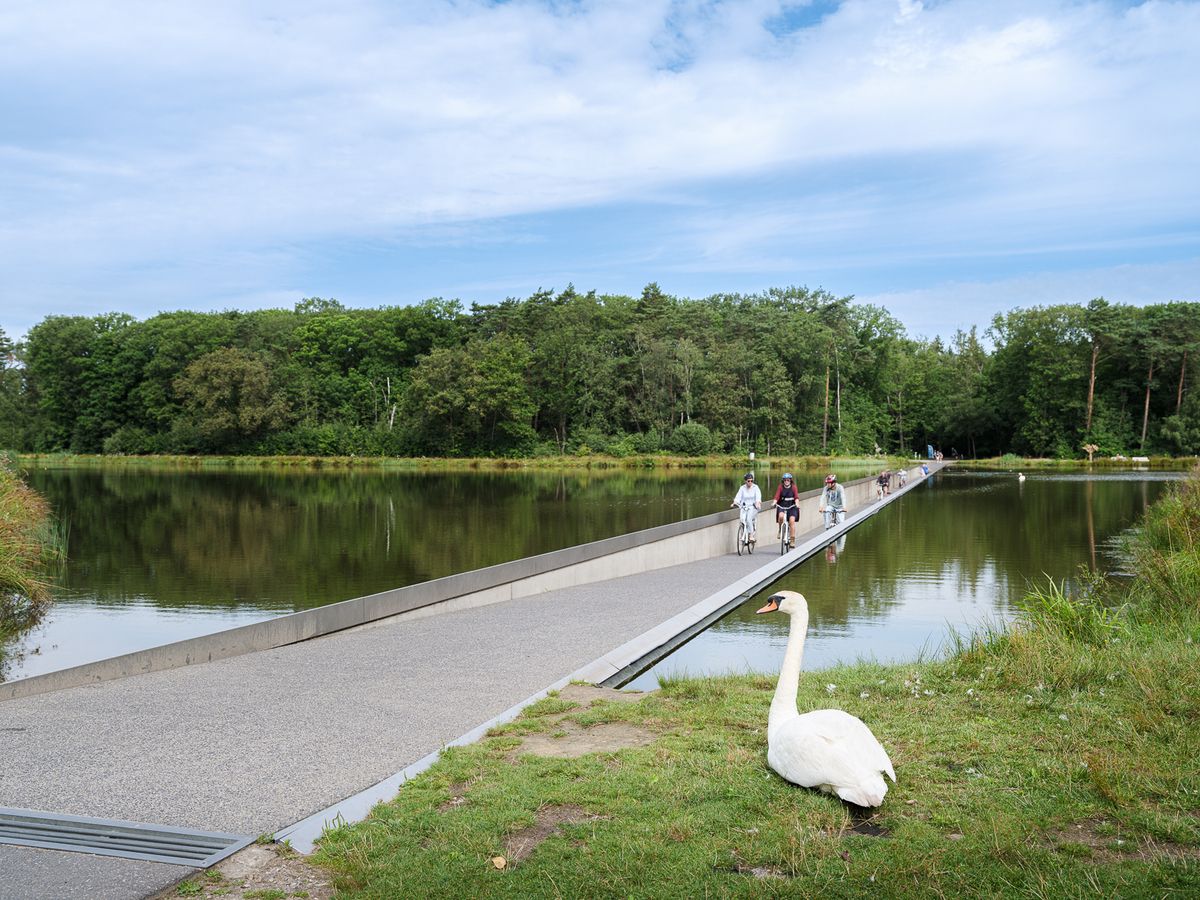
Flanders' Finest Cycle Routes: routes to discover Flemish nature and heritage
London to Brussels – through Flanders Fields
Time travel on foot — historical walks in Flanders
Hiking around Ypres
Running Trails around Ypres
Cycling around Ypres
MTB Trails around Ypres
Road Cycling Routes around Ypres
Gravel biking around Ypres
Other adventures around Ypres


Tips from the Community


The summit of the slope lies between the Rodeberg and the Vidaigneberg. Near the summit stands the Lijstermolen (Listers Mill). A chairlift runs between the Baneberg and the Vidaigneberg, gliding over the saddle valley between the two "mountains" and the vineyards of the Entre-Deux-Monts, offering panoramic views of northern France and the Belgian coastal plain. The summit is 140 meters high. The name comes from the Bane family, who owned the mountain in the 13th and 14th centuries. The slope is also sometimes called Gildestraat (Gilde Street). https://nl.wikipedia.org/wiki/Baneberg
0
0


At the top of the Belgium mountains. Hard climb up a cobbled street but worth the effort
0
0


Very nice walk with a beautiful view at the finish
0
0

Frequently Asked Questions
What are the most historically significant peaks around Ypres?
The region around Ypres is renowned for its historically significant hills, primarily due to their strategic importance during World War I. Key sites include Hill 60 preserved Battlefield (World War I), known for its preserved craters and trenches, and Kemmelberg, the highest point in West Flanders and a site of intense fighting. Mont des Cats Abbey also holds historical significance, having hosted Marshal Ferdinand Foch during WWI.
Can I find viewpoints with panoramic scenery near Ypres?
Yes, several peaks offer excellent panoramic views. Kemmelberg, for instance, features the Belvédère Tower, providing expansive views of the entire region, and on clear days, even the coast. Mont des Cats Abbey also offers great views, and from the Baneberg, a chairlift provides vistas over Northern France and the Belgian coastal plain.
Are there any cycling routes that include these peaks?
Absolutely. Mont Noir (West), located on the Belgian-French border, is particularly popular and has been part of the famous Gent-Wevelgem cycling route multiple times. The area around Mont des Cats Abbey is also described as a challenging but fun area for riding.
What kind of historical monuments can I expect to see on these peaks?
The peaks around Ypres are rich in historical monuments, especially related to World War I. On Kemmelberg, you'll find the Monument Aux Soldats Français, a 17-meter-high column dedicated to French soldiers, and a former Cold War command bunker now serving as a war museum. Hill 60 preserved Battlefield (World War I) is itself a memorial site with preserved bunkers, trenches, and mine craters, serving as a poignant reminder of the battles fought there.
Are there any forest areas for walking or exploring?
Yes, Mont Noir (West) is known for its distinctive black pine forests, which give the peak its name. Kemmelberg was also replanted with deciduous tree species after the extensive fighting during WWI, offering forested areas for exploration.
What outdoor activities are available near the peaks around Ypres?
The region offers a variety of outdoor activities. For mountain biking, you can explore trails like the 'Scherpenberg Forest Trail' or 'Gravel track along the Huikerbossen'. Gravel biking enthusiasts can try routes such as 'The Palingbeek & Kemmelberg loop from Ypres' or 'Mont des Cats – Mont Noir (West) loop from Heuvelland'. Running trails are also available, including loops around 'Caterpillar Crater' and 'The Bluff Memorial and Crater'. You can find more details on these activities in the MTB Trails around Ypres, Gravel biking around Ypres, and Running Trails around Ypres guides.
Is there a specific peak known for its unique natural features?
Hill 60 preserved Battlefield (World War I) stands out for its unique, tortured landscape, which is a direct result of the intense warfare it witnessed. The site features massive craters from underground mine explosions, offering a stark and powerful natural monument shaped by history.
Are there any peaks that are particularly challenging for hikers or cyclists?
While the 'mountains' around Ypres are generally hills, some offer more challenging experiences. Mont des Cats Abbey is described as a challenging 'mountain' for the region, particularly enjoyable for cyclists due to its climbs and descents. Some gravel biking routes, such as the 'West-Vlaamse Heuvels Red MTB Loop' and loops involving Mont Noir and Mont des Cats, are also rated as difficult.
What can I find at the summit of Kemmelberg?
At the summit of Kemmelberg, you'll discover several points of interest. These include the Belvédère Tower, offering extensive views, the Monument Aux Soldats Français dedicated to French soldiers, and the former Cold War command bunker, which now functions as a war museum. The area also holds archaeological significance with evidence of a Celtic community from 2,500 years ago.
Are there any family-friendly options among the peaks?
Many of the peaks, while historically significant, are accessible for families. The general area around Ypres, with its subtle rises and historical sites, can be explored at a leisurely pace. While specific 'family-friendly' categories aren't listed for individual highlights, the historical and natural aspects of sites like Kemmelberg and Hill 60 preserved Battlefield (World War I) offer educational and engaging experiences for all ages, provided the historical context is handled appropriately for younger visitors.
What is the significance of the Baneberg?
The Baneberg is a hill located between the Rodeberg and Vidaigneberg, reaching an elevation of 140 meters. It is notable for the Lijstermolen (Listers Mill) near its summit and a chairlift that connects it with the Vidaigneberg, offering scenic views over vineyards, Northern France, and the Belgian coastal plain. Historically, it was owned by the Bane family in the 13th and 14th centuries.
What makes Mont Noir (West) a popular destination?
Mont Noir (West) is popular for several reasons. Its location on the Belgian-French border makes it a unique cross-border experience. It's known for its distinctive black pine forests, which inspired its name. The peak has also gained fame as a recurring part of the Gent-Wevelgem cycling route. Additionally, it offers shops and catering establishments, making it a lively spot, especially on weekends.
Most popular attractions around Ypres

Get inspired with the komoot mobile app


Explore more
See even more amazing summits around Ypres with these guides:
