The best waterfall hikes and walks around Parco Nazionale della Val Grande
4.5
(18583)
79,056
hikers
3
hikes
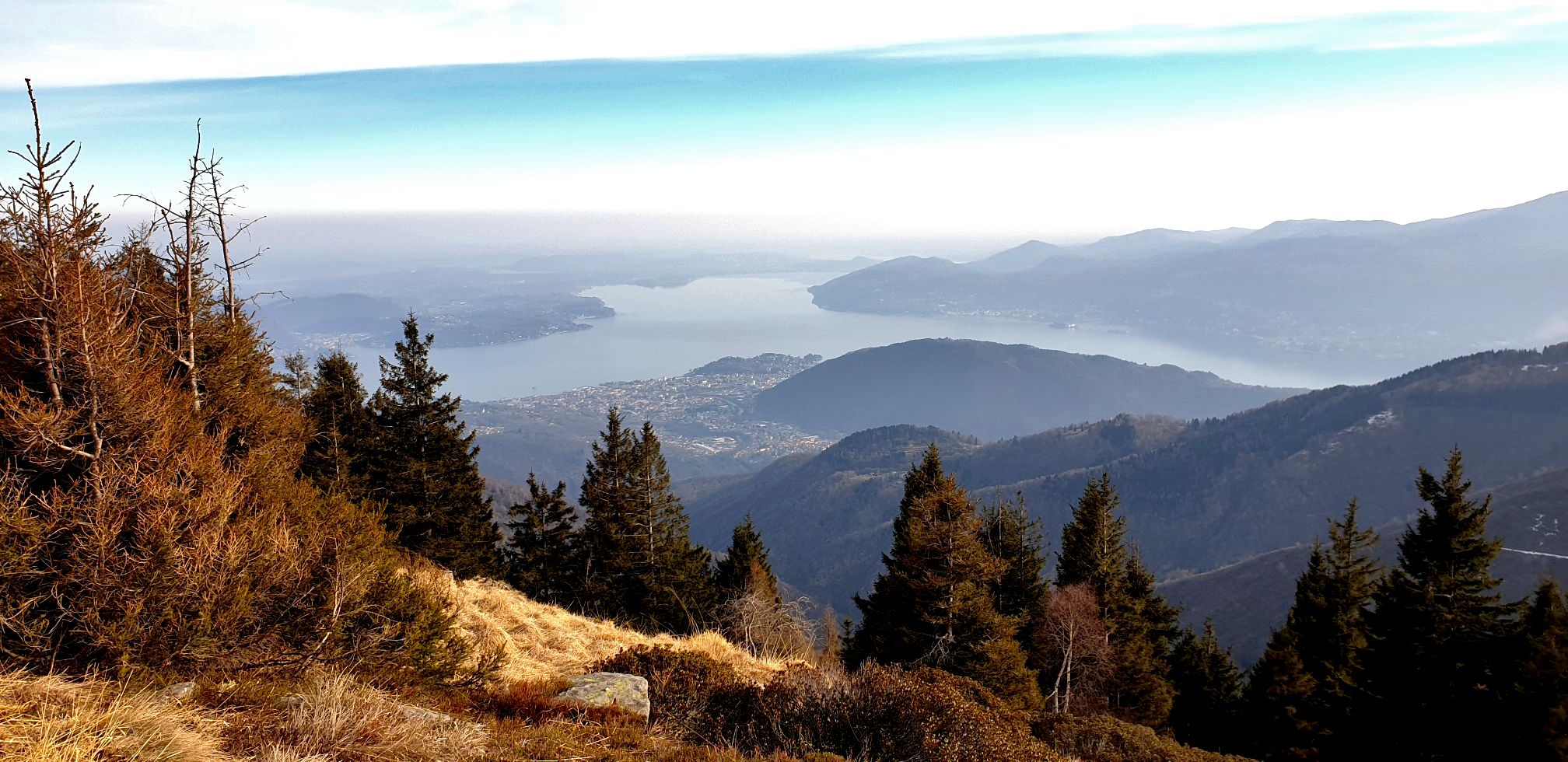
Waterfall hiking trails around Parco Nazionale della Val Grande traverse Italy's largest wilderness area, characterized by rugged and varied terrain. The region features steep, densely forested valleys, deep gorges, and towering peaks of the Lepontine Alps. Numerous streams and rivers carve impressive canyons throughout the park, creating a landscape rich with cascades and natural water features. This protected area offers a diverse environment for hikers seeking trails with waterfalls.
Best waterfall hiking trails around Parco Nazionale della Val Grande
- The most popular waterfall hiking route is View of the Cascade of Loana – Cascata del Rio Loana loop from Malesco, a 3.2 miles (5.1 km) trail that takes 2 hours 13 minutes to complete. This moderate path offers views of the Rio Loana cascade within a forested setting.
- Another top favourite among local hikers is Ford of the Torrent – Cascata della Froda loop from Porto Valtravaglia, a moderate 9.1 miles (14.6 km) path. This route leads through varied terrain to the Cascata della Froda, offering a longer exploration of the park's water features.
- Local hikers also love the Pira Waterfalls – Cascata della Froda loop from Castelveccana, a 4.7 miles (7.6 km) trail leading through forested areas to the Pira Waterfalls and Cascata della Froda, often completed in about 2 hours 16 minutes.
- Hiking around Parco Nazionale della Val Grande is defined by rugged terrain, steep valleys, and dense forests, with trails often following rivers and streams. The network offers options for different ability levels, from moderate walks to more challenging ascents.
- The routes in Parco Nazionale della Val Grande are highly rated by the komoot community with an average score of 4.5 stars from over 4000 reviews. More than 19000 hikers have used komoot to explore Parco Nazionale della Val Grande's varied terrain.
Last updated: July 21, 2026
4.5
(2)
3
hikers
9.80km
04:17
790m
790m
Moderate hike. Good fitness required. Mostly accessible paths. Sure-footedness required.
2
hikers
5.01km
02:12
450m
450m
Moderate hike. Good fitness required. Mostly accessible paths. Sure-footedness required.

Sign up for free
4
hikers
14.1km
03:59
300m
300m
Moderate hike. Good fitness required. Easily-accessible paths. Suitable for all skill levels.
4.3
(15)
58
hikers
7.64km
02:30
310m
310m
Moderate hike. Good fitness required. Mostly accessible paths. Sure-footedness required.
4.3
(3)
24
hikers
9.13km
02:41
250m
250m
Moderate hike. Good fitness required. Mostly accessible paths. Sure-footedness required.
Our route recommendations are based on thousands of hikes, rides, and runs completed by other people on komoot.
Start today with a free account
Your next adventure awaits.
Login or Signup
Popular around Parco Nazionale della Val Grande
Other adventures around Parco Nazionale della Val Grande

Tips from the Community

The Cascata della Froda waterfall, in Castelveccana, is a cascade of water about 100 meters high originating from Mount Cuvignone. It can be reached by a walk through the woods starting from the hamlet of Nasca. This pleasant trail, also suitable for families, passes streams, ancient trout ponds, and old mills.
2
0

You can park your car at the end of the trail. There's room for 4-5 cars.
0
0

Beautiful town with bars and restaurants.
24
0

The city of Roman origin lies on the Toce in the center of the Val Ossolane (Ossola Valley) on the route from the Simplon Pass to Lake Maggiore, in a valley widening into which various side valleys flow, on a large alluvial fan that the Bogna, the right tributary of the Toce, has created here. Today, Domodossola has 17,684 inhabitants (as of December 31, 2022). As the (formerly) largest Italian city whose name begins with "D", Domodossola is used in Italian spelling tables for this letter ("D come Domodossola"). Source: https://de.wikipedia.org/wiki/Domodossola In addition to the weekly market on Saturday, the Sacro Monte di Domodossola is particularly worth visiting. It is part of the Sacri Monti. The Sacri Monti in Piedmont and Lombardy have been part of the UNESCO World Heritage Site in northern Italy since 2003. Finally, you should enjoy the Italian flair in the town. In summer, be sure to eat an ice cream or stop off at a café or pizzeria, it's worth it.
3
0

Small port overlooking Lake Maggiore.
10
0

Chiesa Maria Ss. Immacolata, Nasca,(Castelveccana) Church of Maria Santissima Immacolata - Nasca,(Castelveccana) XVI (construction of the entire property) The first mention of the sacred building in the hamlet of Nasca dates back to 1523 and coincides with the introduction of a weekly mass celebrated by the parish priest of the rectory of S. Vittore, to whose maintenance the inhabitants of the place committed themselves with a special instrument. It is not known what shapes and dimensions this primitive church had; it is certain that, being built in times of plague, it was originally named after S. Rocco. The church overlooks the central district of the hamlet of Nasca. The need to adapt to an already established urban layout led to the anomalous exposure of the altar, which was oriented to the north. In short, the desire to adapt to criteria of accessibility and urban decency prevailed. The beautiful façade, completed in the mid-18th century and characterized by large light backgrounds on which pilasters and darker stone frames stand out, contributed to this last aspect by remaining aesthetically still indebted to the happy formulas of the 17th century, widespread in the middle Verbano area. The church extends over a large and single-aisled nave, ending in a polygonal apse of equal width. The nave is divided into three bays, each covered by a "clawed" barrel vault. In the central bay there are two chapels, one on each side. The perception of the airy 18th century plan is partially spoiled by a lively pictorial decoration, created during an intervention in the first decades after the Second World War. To the left of the entrance is the niche of the baptistery. In the choir on the counterfaçade is the organ, an instrument built by a still anonymous workshop and installed at the beginning of the twentieth century. The bell tower rises on the east side, near the presbytery. Text / Source: Municipality of Castelveccana https://www.comune.castelveccana.va.it/c012045/zf/index.php/servizi-aggiuntivi/index/index/idtesto/20050
10
0
Cascata de la Froda Nasca,(Castelveccana) Castelveccana: Froda Waterfall The Froda waterfall is one of the hidden beauties of the province of Varese. Although it offers a truly spectacular show, in reality it is not as well known and reported as it deserves. But this makes it even more special for those who decide to discover it. After taking the path on the edge of the SP7, you will immediately immerse yourself in a very fascinating natural setting. The route is suitable for everyone and the children will certainly enjoy feeling like little explorers. It is advisable to wear mountain boots: along the path you will have to pass a short ford. In winter, special attention must be paid to ice. Once you arrive under the waterfall, you will be amazed: with its height of about 100 meters, it is a real wonder not to be missed, especially after heavy rains. But even with a slender jet it will amaze you ... An iron rope allows you to approach the waterfall without slipping. Text / Source: cascatetrekking.com https://www.cascatetrekking.com/cascate/italia/lombardia/varese/castelveccana-cascata-della-froda/
10
0
Frequently Asked Questions
How many waterfall hiking trails are available in Parco Nazionale della Val Grande?
Parco Nazionale della Val Grande, Italy's largest wilderness area, offers a selection of hiking trails that feature impressive waterfalls and cascades. This guide highlights several routes specifically designed to showcase these natural water features, providing diverse options for exploration.
What kind of terrain can I expect on waterfall hikes in Parco Nazionale della Val Grande?
The terrain in Parco Nazionale della Val Grande is rugged and varied, characterized by steep, densely forested valleys, deep gorges, and towering peaks of the Lepontine Alps. Waterfall trails often follow rivers and streams, leading through woodlands and sometimes requiring navigation over uneven paths. Expect moderate difficulty levels on most routes.
Are there any circular routes that feature waterfalls?
Yes, several waterfall hikes in the region are circular, allowing you to start and end at the same point. For example, the View of the Cascade of Loana – Cascata del Rio Loana loop from Malesco is a moderate 3.2-mile (5.1 km) route, and the Ford of the Torrent – Cascata della Froda loop from Porto Valtravaglia offers a longer 9.1-mile (14.6 km) exploration of water features.
What are some notable natural features or viewpoints along waterfall trails?
Beyond the waterfalls themselves, the park is known for its untamed landscapes. You'll encounter extensive beech and chestnut woodlands, alpine meadows, and dramatic gorges carved by rivers. Some trails offer views of the Lepontine Alps. For a broader natural experience, consider exploring the Pogallo River Natural Pools or the impressive San Bernardino Gorge.
What historical sites can be found near waterfall hikes in Val Grande?
The Val Grande is rich in history, with traces of human presence including abandoned villages like Alpe Prà and Pogallo. You might also encounter old shelters, passages for livestock, terraces, votive chapels, and even military fortifications from the 'Cadorna Line' along the trails. These remnants offer a glimpse into the region's past and create a unique atmosphere.
Are there any family-friendly waterfall hikes in Parco Nazionale della Val Grande?
While many trails in Val Grande are rugged, some moderate routes can be suitable for families with older children who are accustomed to hiking. The View of the Cascade of Loana – Cascata del Rio Loana loop from Malesco is a shorter, moderate option at 3.2 miles (5.1 km) that could be considered.
What do other hikers enjoy most about the waterfall trails in Parco Nazionale della Val Grande?
The area is highly rated by the komoot community, with an average score of 4.5 stars from over 4000 reviews. Hikers often praise the untouched and remote nature of the park, the dramatic landscapes, and the refreshing experience of discovering the numerous cascades and river features within this wilderness area.
Is it possible to stay overnight near the waterfall hiking areas?
Within the park's remote boundaries, there are very few human settlements. However, for trekkers, several rustic bivouacs and four shelters are available for overnight stays. These are often basic and unstaffed, so planning ahead is essential. You can find more information about these options in the Huts and Cabins around Parco Nazionale della Val Grande guide.
What is the best time of year to visit Parco Nazionale della Val Grande for waterfall hikes?
The best time to visit for waterfall hikes is generally during spring and early summer when snowmelt contributes to fuller, more impressive cascades. Autumn also offers beautiful scenery with changing foliage. Summer can be warm, but the shade of the dense forests and the cool spray from waterfalls provide relief. Always check local weather conditions before heading out.
Are there any specific safety considerations for hiking near waterfalls in this region?
Given the rugged and untamed nature of Parco Nazionale della Val Grande, it's important to be well-prepared. Trails can be steep and uneven, especially near water features. Always wear appropriate hiking footwear, carry sufficient water and supplies, and be aware of changing weather conditions. For those unfamiliar with the challenging terrain, hiking with local expert guides is recommended.
Where can I find information centers for the Val Grande National Park?
Information centers are typically located in the villages surrounding the park, such as Cicogna, which is the only village within the park boundaries. These centers can provide guidance, maps, and up-to-date information on trail conditions and regulations. You can also find general information about the park on the National Parks Association website.
Most popular routes around Parco Nazionale della Val Grande
Most popular attractions around Parco Nazionale della Val Grande

Get inspired with the komoot mobile app


Explore more
Browse the best Hikes in other regions.
