The best gravel rides around Murillo El Cuende
5.0
(1)
38
riders
4
rides
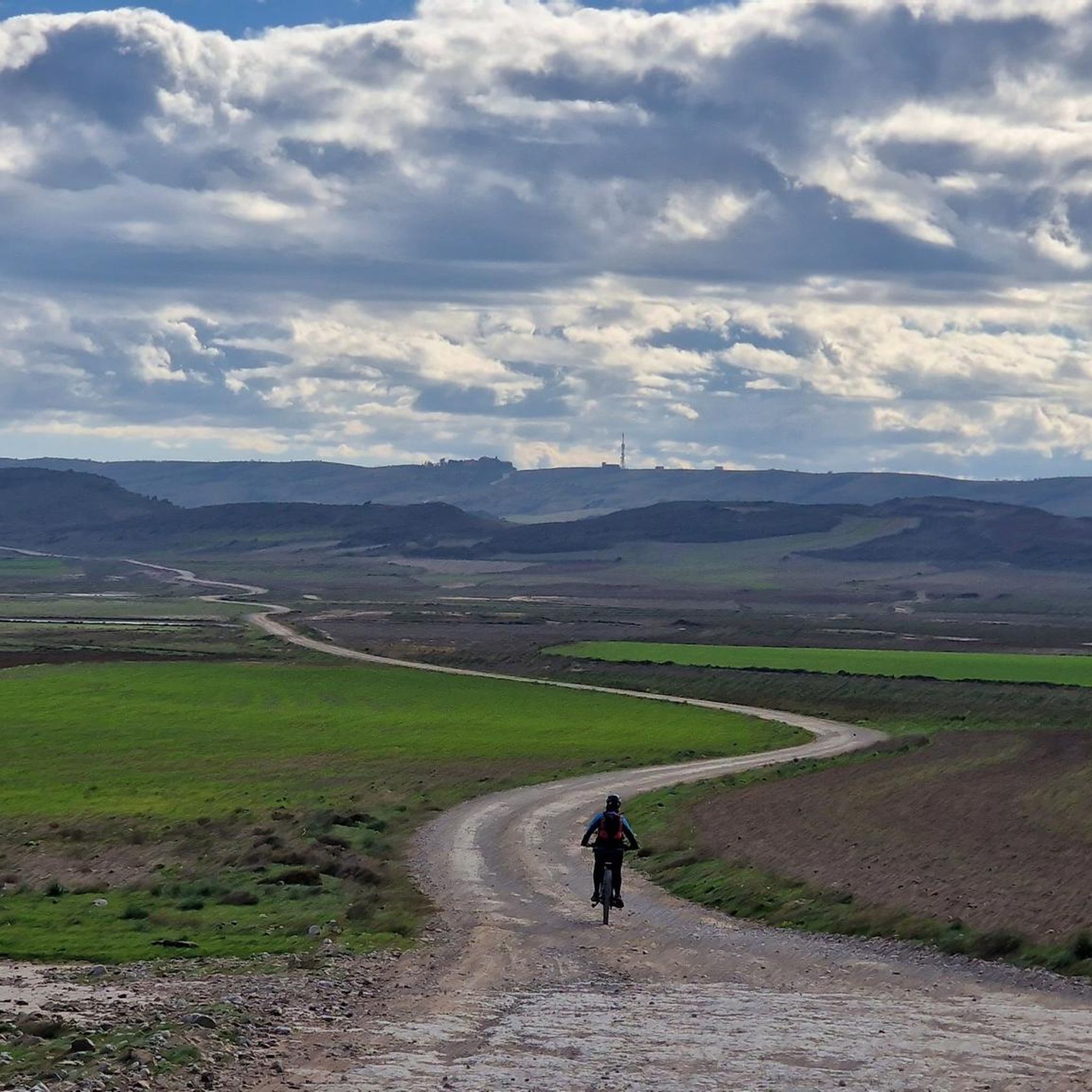
Gravel biking around Murillo El Cuende offers diverse terrain, ranging from open, semi-arid landscapes near the Bardenas Reales to routes passing by reservoirs and historical sites. The region features rolling hills with moderate elevation gains, providing varied challenges for gravel cyclists. Paths often traverse agricultural areas and natural spaces, characterized by a mix of gravel tracks and unpaved roads. This environment is suitable for exploring on a gravel bike, with routes connecting natural features and cultural landmarks.
Best gravel bike…
Last updated: May 12, 2026
8
riders
40.6km
03:29
300m
300m
Moderate gravel ride. Good fitness required. Mostly paved surfaces. Suitable for all skill levels.
5.0
(1)
7
riders
8.83km
00:44
60m
60m
Easy gravel ride. Great for any fitness level. Mostly paved surfaces. Suitable for all skill levels.

Sign up for free
4
riders
Moderate gravel ride. Good fitness required. Mostly paved surfaces. Suitable for all skill levels.
5
riders
90.8km
06:27
1,100m
1,100m
Hard gravel ride. Very good fitness required. Mostly paved surfaces. Suitable for all skill levels.
3
riders
38.6km
02:25
360m
360m
Moderate gravel ride. Good fitness required. Mostly paved surfaces. Suitable for all skill levels.
Our route recommendations are based on thousands of hikes, rides, and runs completed by other people on komoot.
Start today with a free account
Your next adventure awaits.
Login or Signup
Tips from the Community

Unfortunately, the Romanesque church cannot be visited.
2
0
There is a lively atmosphere around the bars and restaurants on the square, with beautiful palazzos here.
1
0

Olite is worth a visit!
0
0

The west façade of the Church of Santa María de Olite was restored between 2015 and 2017. The project, funded by the Government of Navarre and the Gondra Barandiarán Foundation, was ambitious and complex. It focused on its spectacular painted portal, built alongside the façade during the first third of the 14th century. The successive layers of polychromy had been preserved thanks to a large portico, removed at the end of the 19th century. It was necessary to clean all the elements, determine the causes of alteration, stabilize the existing damage, and protect the result to ensure its proper preservation. The work garnered the dedication and interest of specialists in architecture, restoration, archaeology, history, art, and viticulture. Thus, this necessarily multidisciplinary book was born. The portal of Santa María de Olite, in its most striking uniqueness, unites Christian iconography, art, and viticulture on a single plane, in a journey "from vine to stone," which is still understandable and coherent today. Information taken from https://www.culturanavarra.es/es/la-portada-de-santa-maria-de-olite-de-la-vid-a-la-piedra
0
0

The ruins consist of a small central tower that served as a watchtower and accommodation for a small garrison and a walled area around it. Today only the ruins of the tower remain.
0
0
Originally a Roman fortress in a strategic location, the fortress is both a castle and a palace, although it was originally built as a court building to fulfil a military function. Since the 13th century, the Castle of Olite has been called the Palace of the King of Navarre.
2
0
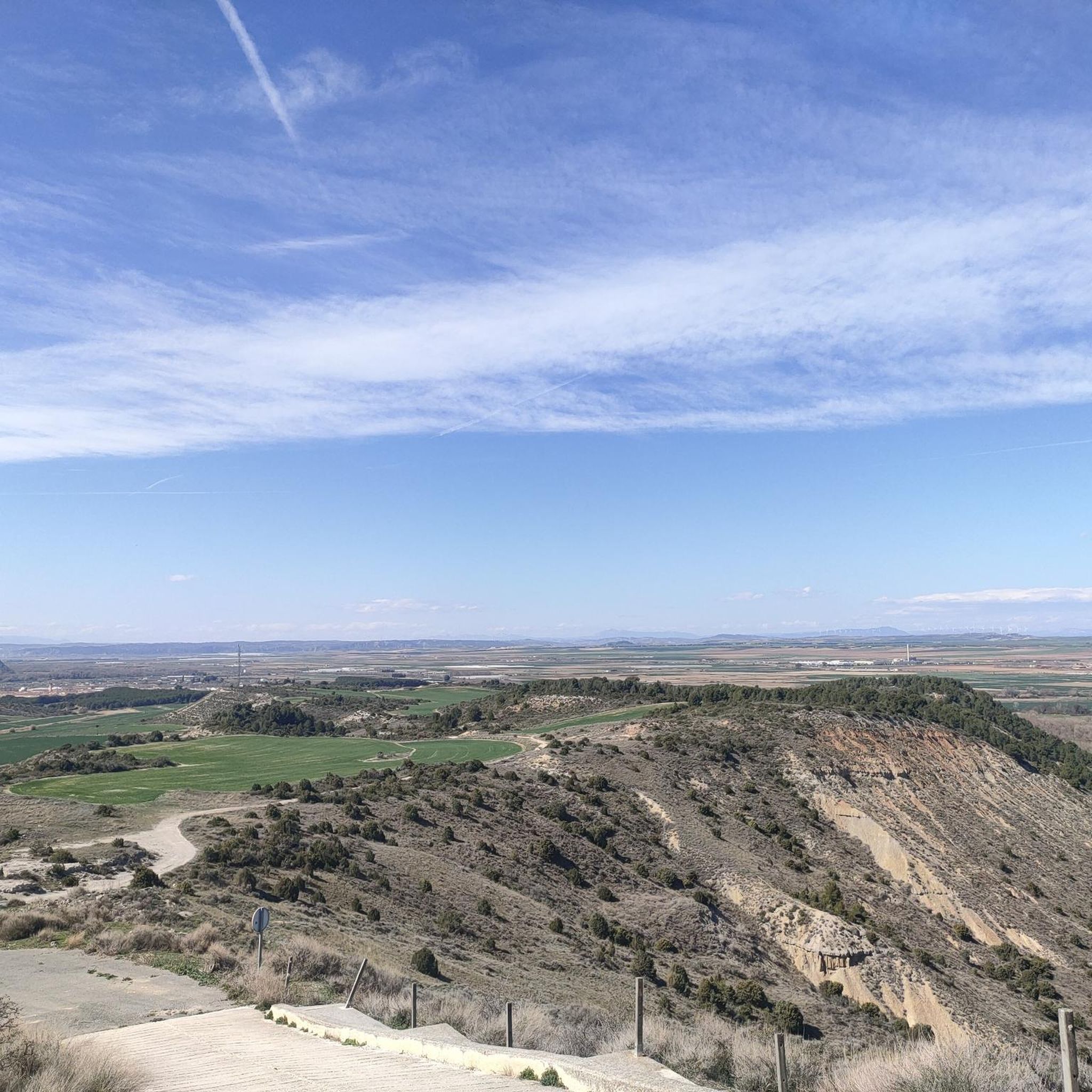
During the winter months, thousands of sheep graze here.
6
0
According to scientists, this was an immense inland sea millions of years ago. Fossils of crocodiles and sea turtles are the evidence.
6
0
Frequently Asked Questions
What kind of terrain can I expect on gravel bike trails around Murillo El Cuende?
The region offers diverse terrain, from open, semi-arid landscapes near the Bardenas Reales to routes passing by reservoirs and historical sites. You'll encounter rolling hills with moderate elevation gains, traversing agricultural areas and natural spaces on a mix of gravel tracks and unpaved roads.
Are there gravel bike routes suitable for beginners in Murillo El Cuende?
Yes, there are options for different ability levels. For an easier ride, consider the Ferial Reservoir loop from Barranco Salado, which is 8.8 km long and features minimal elevation gain.
What are some of the more challenging gravel bike routes in the area?
For a more demanding ride, the Views towards Ujué – Ujué loop from Santacara is a difficult 56.1 km route with significant climbs, offering expansive views.
Can I find routes that explore the Bardenas Reales badlands?
Absolutely. The View of the Bardenas Reales – Bardenas Reales Badlands loop from El Ferial is a moderate 43.2 km path specifically designed to explore the unique badlands terrain with varied gravel surfaces.
Are there any historical sites or landmarks accessible by gravel bike?
Yes, several routes pass by historical sites. For instance, the Royal Palace of Olite – Church of Santa María la Real loop from Olite leads through historical areas and open countryside, connecting to landmarks like the Royal Palace of Olite and the Church of Santa María la Real.
What is the best time of year for gravel biking in Murillo El Cuende?
Given the semi-arid landscapes, spring and autumn generally offer the most pleasant temperatures for gravel biking. Summers can be very hot, especially in open areas like the Bardenas Reales, while winters can be cooler and potentially wet.
What kind of views can I expect on the gravel trails?
You can expect expansive views of the semi-desert landscape, particularly on routes near the Bardenas Reales. Other trails offer sights of reservoirs, agricultural fields, and rolling hills, with some routes providing panoramic viewpoints like the Deer Pass.
Are there any routes that feature castles or ancient structures?
Yes, the region is rich in historical architecture. You can find routes that pass near or offer views of several castles, including Peñaflor Castle, Royal Palace of Olite, and Marcilla Castle.
How many gravel bike routes are available in Murillo El Cuende?
There are 4 curated gravel bike routes available in Murillo El Cuende, ranging from easy to difficult, offering diverse experiences across the region's unique landscapes.
What do other gravel bikers say about the routes in Murillo El Cuende?
The area is highly rated by the komoot community, with an average score of 5.0 stars. Reviewers often praise the unique semi-arid landscapes and the variety of routes that connect natural features with cultural landmarks.
Are there any gravel routes that offer views of the Bardenas Reales?
Yes, the View of the Bardenas Reales loop from Rada is a popular 40.6 km route that provides expansive views of the Bardenas Reales semi-desert landscape.
Most popular routes around Murillo El Cuende
Most popular attractions around Murillo El Cuende

Get inspired with the komoot mobile app


Explore more
Browse the best Gravel rides in other regions.
