The best MTB trails around Lion-Devant-Dun
4.5
(2)
24
riders
12
rides
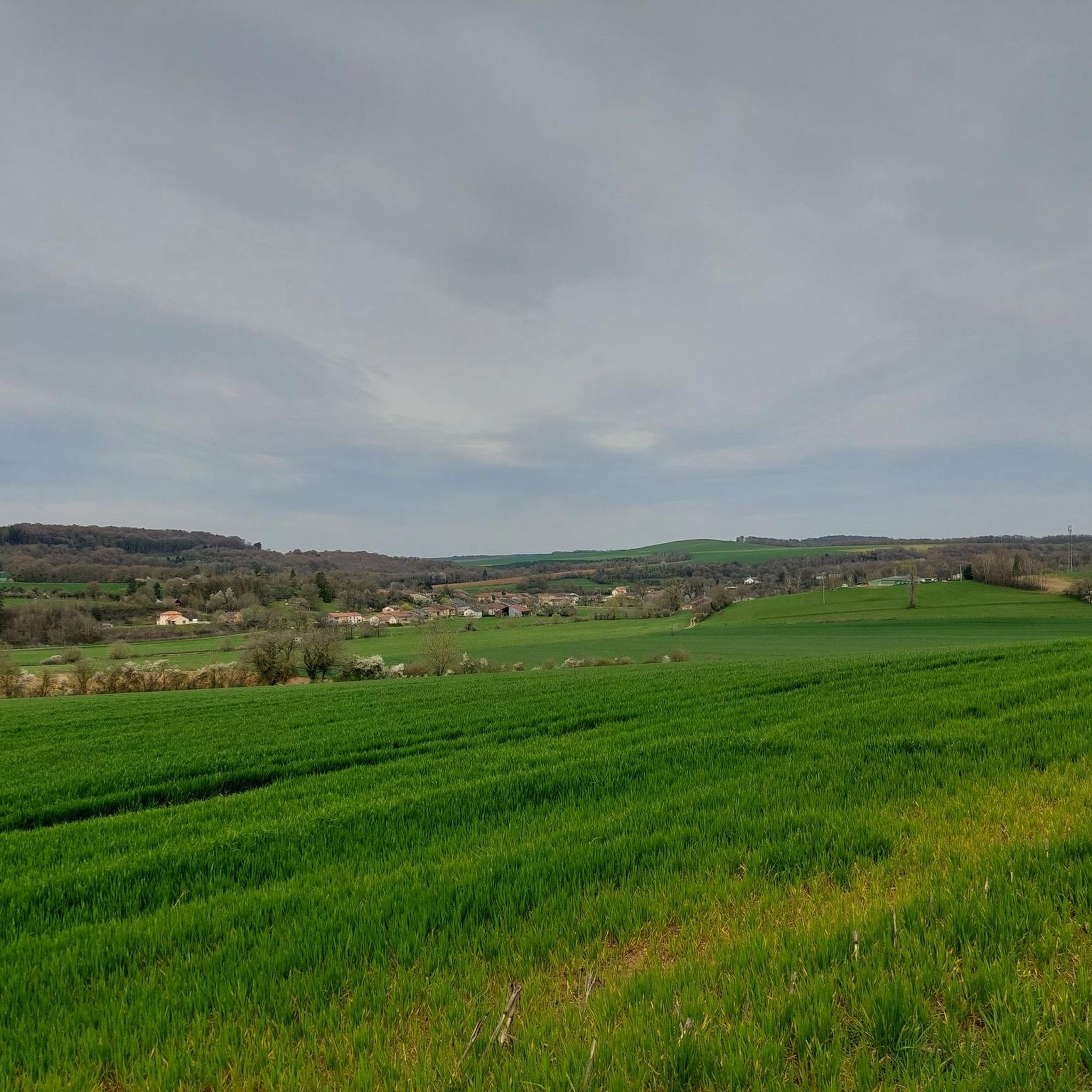
Mountain bike trails around Lion-Devant-Dun offer diverse terrain in France's Meuse department. The region features a mix of dense forests, rolling hills, and river valleys, with elevations ranging from 171 to 340 meters. Prominent features include the Côte Saint-Germain, a significant hill providing varied inclines, and the "Old Meuse" area, suggesting unique geographical features. This landscape provides a natural setting for mountain biking across different skill levels.
Best mountain bike trails around Lion-Devant-Dun
- The most popular mountain bike trail is…
Last updated: June 29, 2026
4.5
(2)
6
riders
30.8km
02:33
580m
580m
Moderate mountain bike ride. Good fitness required. Suitable for all skill levels.
1
riders
19.4km
01:40
360m
360m
Moderate mountain bike ride. Good fitness required. Suitable for all skill levels.

Sign up for free
1
riders
48.0km
03:43
680m
680m
Hard mountain bike ride. Good fitness required. Advanced riding skills necessary. Some portions of the route may require you to push your bike.
1
riders
32.4km
02:18
260m
260m
Moderate mountain bike ride. Good fitness required. Suitable for all skill levels.
2
riders
23.0km
01:59
460m
460m
Moderate mountain bike ride. Good fitness required. Suitable for all skill levels.
Get access to more routes and recommendations from other explorers.
Sign up for free
Already have an account?
Our route recommendations are based on thousands of hikes, rides, and runs completed by other people on komoot.
Start today with a free account
Your next adventure awaits.
Login or Signup



Tips from the Community

You can walk all the way around the ramparts. We found it unique and impressive. The museum was also interesting.
0
0

Magnificent citadel to visit absolutely!
0
0

The Saint-Martin de Montmédy church is the church of the Saint-Martin parish in the upper town of Montmédy. The church we see today is not the first to be built on this location. Indeed, a sanctuary surrounded by a cemetery would have been present in the upper part of Montmédy as early as the 11th century. Its origins are rather vague, but historians are certain that from 1156 there was a religious building on the site of the current church2. This monument was quite small and had a single, quite slender tower. According to several old plans of Montmédy, researchers can confirm that it occupied approximately the location between the interior pillars of the current building3. In the 18th century, when Vauban strengthened the fortifications, the rear of the church was shortened to allow the widening of the adjacent rampart. The current church was built on the foundations of a more modest church that probably dates from the 12th century.
0
0

The Saint-Martin church in Montmédy is a majestic church which dominates the Montmédy citadel. You can admire its symmetrical facade with two square towers, its richly decorated altar with a half-canopy, and its statue of the Virgin and Child dating from the 14th century. You can also enjoy the sound of the restored organ, which dates from the late 17th century and had not been played for almost a century. The church is also a cultural space which hosts exhibitions, conferences and concerts. It is a mecca for hiking that will impress you with its beauty and charm.
2
0

A Montmédy washhouse dated 1853 a freestone construction
6
0
Built between 1753 and 1757, the Saint-Martin church dominates the ramparts of the citadel of Montmédy, renovated by Vauban. This stone building is located on the site of an ancient shrine of which only the chapel of Malandry remains. Bulky, ideal for the large military site it is next to. The classical architecture is specific to the churches of fortified towns, highlighting two imposing square bell towers, as well as a style of remarkable finesse that invites visits. The bronze bell cast in 1558 is one of fifty in the Meuse dating from before the Revolution. On the facade, the remains of the coat of arms of Albert de Meuldre, abbot of Orval, hammered during the Revolution, are a reminder that the church was largely financed by the powerful Cistercian abbey. Inside the nave there is always a canopy above the choir. You can also admire a 17th century painting of Flemish inspiration, depicting the adoration of the shepherds in Bethlehem, and a statue: Virgin and Child from the 14th century. The organ with specific technical details was restored by an association and inaugurated in October 2013. The instrument had not sounded for 97 years!
3
0
Louppy-sur-Loison is a small village in the Meuse, in the Grand Est region. It has a number of interesting sights that you can visit, such as: Louppy-sur-Loison Castle: This is one of the largest Renaissance castles in Lorraine. It was built in the 16th century by the De Louppy family, who had ties to the Dukes of Lorraine. The castle has a beautiful facade, a courtyard, a chapel and a park. You can visit the castle by appointment or during special events. The Church of Saint-Martin: This church dates from the 12th century and has a Gothic style. It has a remarkable portal, a bell tower and an organ. Inside you can admire frescoes, statues and stained glass windows. The Old Mill: This is an old water mill that was formerly used to grind grain. It is located on the banks of the Loison and has a wooden wheel. It is now a private residence, but you can still see it from the outside.
7
0

Municipality located in the Meuse department and crossed by the Loison. The village is known for its castle, the Château de Louppy-sur-Loison: one of the most surprising examples of the Renaissance style in the Lorraine region.
0
0
Frequently Asked Questions
How many mountain bike trails are available in Lion-Devant-Dun?
There are over 10 mountain bike trails around Lion-Devant-Dun, offering a range of experiences. The region's diverse terrain, including dense forests and rolling hills, provides a natural setting for various skill levels.
What kind of terrain can I expect on mountain bike trails in Lion-Devant-Dun?
The terrain around Lion-Devant-Dun is quite varied. You'll find a mix of dense deciduous and conifer forests, gently rolling hills, and river valleys. The prominent Côte Saint-Germain offers challenging inclines and descents, with elevations ranging from 171 to 340 meters within the commune, providing diverse riding environments.
Are there mountain bike trails suitable for beginners or families in Lion-Devant-Dun?
Yes, the area offers options for various skill levels, including easy routes. While specific dedicated family trails are being developed, the region's natural landscape allows for less strenuous rides. Local events have featured family MTB circuits of 5 to 10 km, often starting from the Côte Saint-Germain, indicating suitable terrain for less experienced riders.
What are some notable natural features or points of interest along the mountain bike routes?
You can explore the prominent Côte Saint-Germain, which offers challenging inclines and panoramic views of the Woëvre plain. The area also features the 'Old Meuse,' suggesting unique geographical features along its former river path. While riding, you might also encounter the Pershing Bridge of Dun-sur-Meuse or the Beautiful castle, church and ancient fortifications nearby.
Can I find circular mountain bike routes in Lion-Devant-Dun?
Yes, many of the mountain bike routes in the area are designed as loops. For example, you can try the Le Moulin de Loison – Village view loop from Han-lès-Juvigny, a moderate 19.1-mile (30.8 km) trail, or the Menhir dit la Hotte du Diable loop from Fontaines-Saint-Clair, which is 12.0 miles (19.3 km).
What is the best time of year to go mountain biking in Lion-Devant-Dun?
The region's diverse forests and rolling hills are enjoyable throughout much of the year. Spring and autumn generally offer pleasant temperatures and beautiful scenery, with vibrant foliage or blooming flora. Summer can also be good, especially in the shaded forest sections, but always check local weather conditions before heading out.
Are dogs allowed on the mountain bike trails in Lion-Devant-Dun?
While specific regulations for dogs on mountain bike trails in Lion-Devant-Dun are not detailed, generally in France, dogs are often permitted on trails if kept on a leash, especially in natural areas and forests. It's always best to observe local signage and be respectful of wildlife and other trail users.
Where can I park when accessing mountain bike trails in Lion-Devant-Dun?
Parking availability will vary depending on the specific trailhead. Many routes start from villages or designated parking areas near natural sites. For example, events often originate from locations like Mouzay or Lion-Devant-Dun itself, suggesting parking facilities are available in these communes.
What are some of the more challenging mountain bike trails in the area?
For experienced riders seeking a challenge, the area offers difficult routes. The Au Cornillat loop from Lissey is a notable option, covering 29.8 miles (48.0 km) through varied forest and hill landscapes. The Côte Saint-Germain also features steep ascents, which can be incorporated into more athletic routes.
What do other mountain bikers enjoy most about mountain biking in Lion-Devant-Dun?
The area is highly rated by the komoot community, with an average score of 4.5 stars. Reviewers often praise the diverse terrain, including dense forests and rolling hills, and the options available for different skill levels. The challenging inclines of features like the Côte Saint-Germain are also frequently highlighted by those seeking more athletic rides.
Are there any long-distance cycling routes that pass through or near Lion-Devant-Dun?
While Lion-Devant-Dun focuses on local trails, the broader Meuse department is home to the Meuse Cycle Route. This long-distance path covers over 1,000 km across three countries. While generally flat, some segments in the wider Grand Est region may be unpaved and more challenging, requiring good fitness. You can find more information on France Vélo Tourisme.
Most popular routes around Lion-Devant-Dun
Most popular attractions around Lion-Devant-Dun

Get inspired with the komoot mobile app


Explore more
Browse the best MTB trails in other regions.
