Top 20 Natural Monuments around Andenne
Natural monuments around Andenne, a town located in the Meuse valley in Belgium, offer diverse natural beauty and geological interest. The region features significant prehistoric sites and areas of rich natural heritage. Its landscape provides opportunities to explore geological formations, ancient history, and varied outdoor activities.
Best natural monuments around Andenne
- The most popular natural monument is Modave Castle, a castle and natural monument that dominates the Hoyoux valley. It is situated in the heart of a nature reserve, offering views and a medieval keep.
- Another must-see spot is Moha Castle, a medieval feudal castle built on a rock at the confluence of the Mehaigne and Fosseroule rivers. This site was strategically important in the Middle Ages, with its ruins still visible today.
- Visitors also love Trou Manto, a collection of four caves, two of which are closed off as bat roosts. This limestone cave features a complex network of tunnels and is an impressive karst phenomenon.
- Andenne is known for its caves, historic castles situated on natural rock formations, and protected natural reserves. These offer diverse opportunities to explore geological features and natural landscapes.
- The natural monuments around Andenne are appreciated by the komoot community, with more than 370 upvotes and over 170 photos shared.
Last updated: October 13, 2026
Modave Castle
Highlight • Castle
Translated by Google •
Tip by

Moha Castle
Highlight • Castle
Translated by Google •
Tip by

Sign up now to discover places like this
Get recommendations on the best single tracks, peaks, & plenty of other exciting outdoor places.
Trou Manto
Highlight • Cave
Translated by Google •
Tip by

View of Famelette Castle
Highlight • Viewpoint
Translated by Google •
Tip by

Seron Tumulus I
Highlight • Historical Site
The three tumuli are listed on Ferraris' maps of 1777 (map 135Ab) as "Tombs of Buhay", while on current IGN maps (map 41/5S) they are listed as " tombs at Seron”. The southern tumulus (T1) and the central tumulus (T2) are juxtaposed and separated by about 35 meters. The third (T3) is isolated to the north. Their respective diameters are 25.25 meters for T1, 28.30 meters for T2 and 25.80 meters for T31.
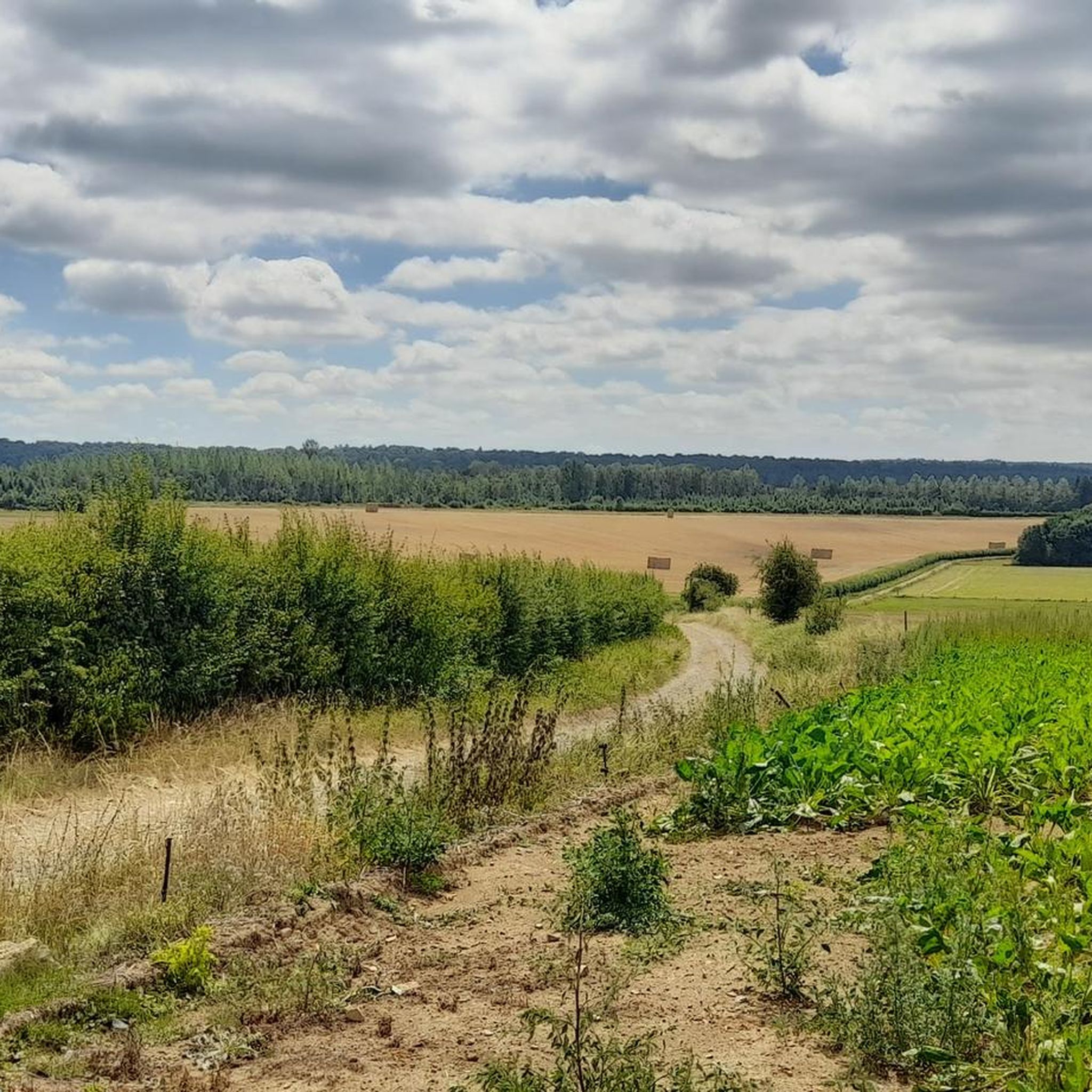
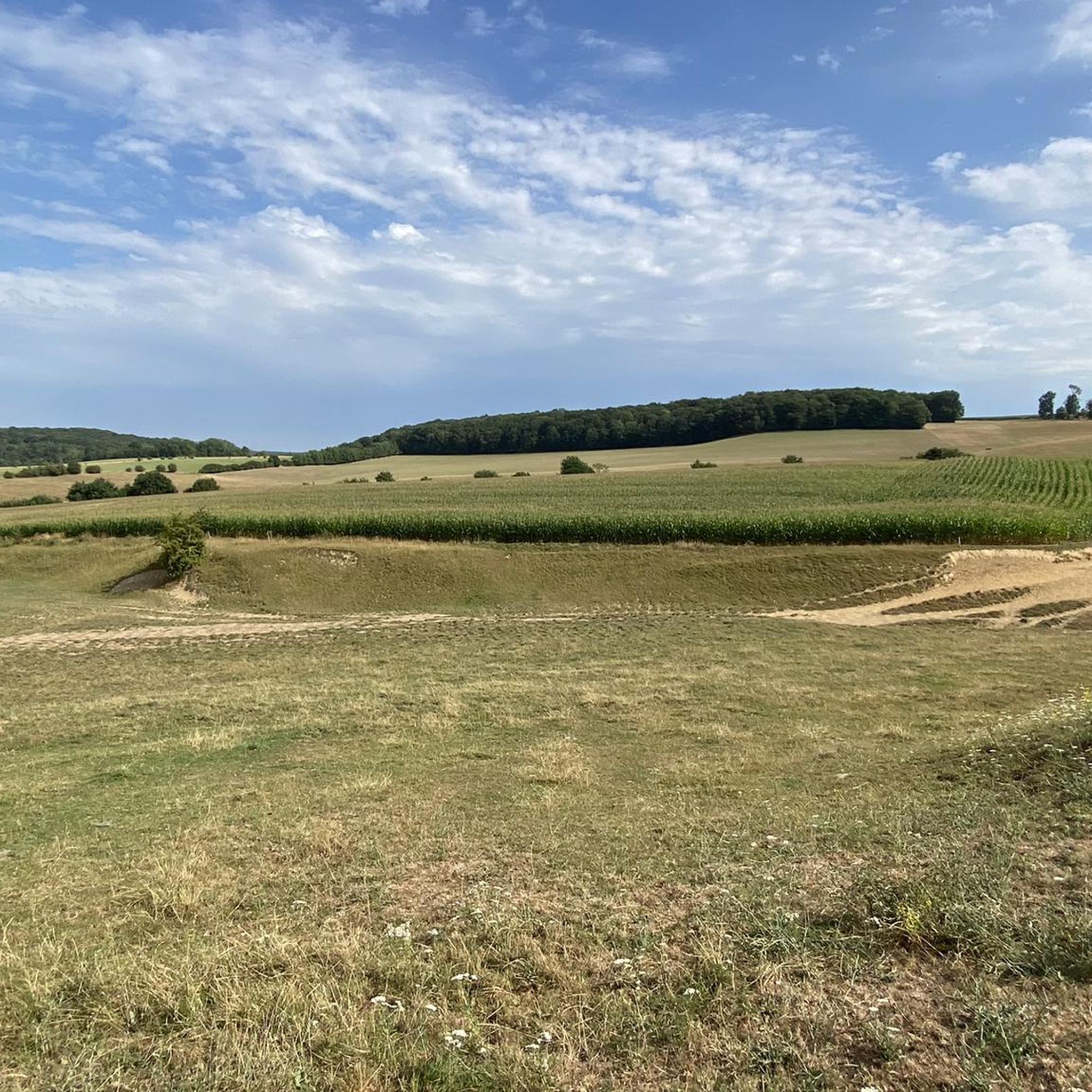
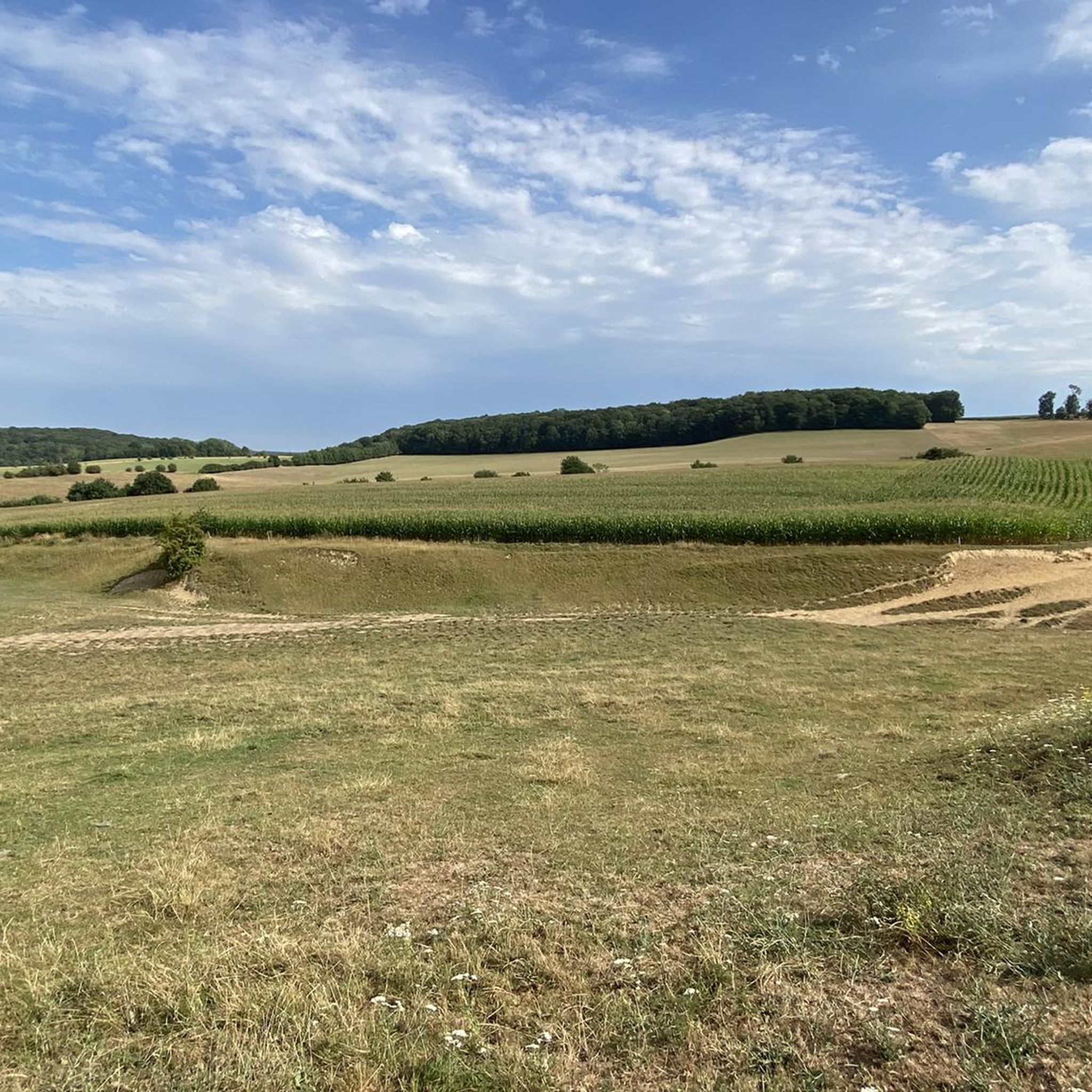
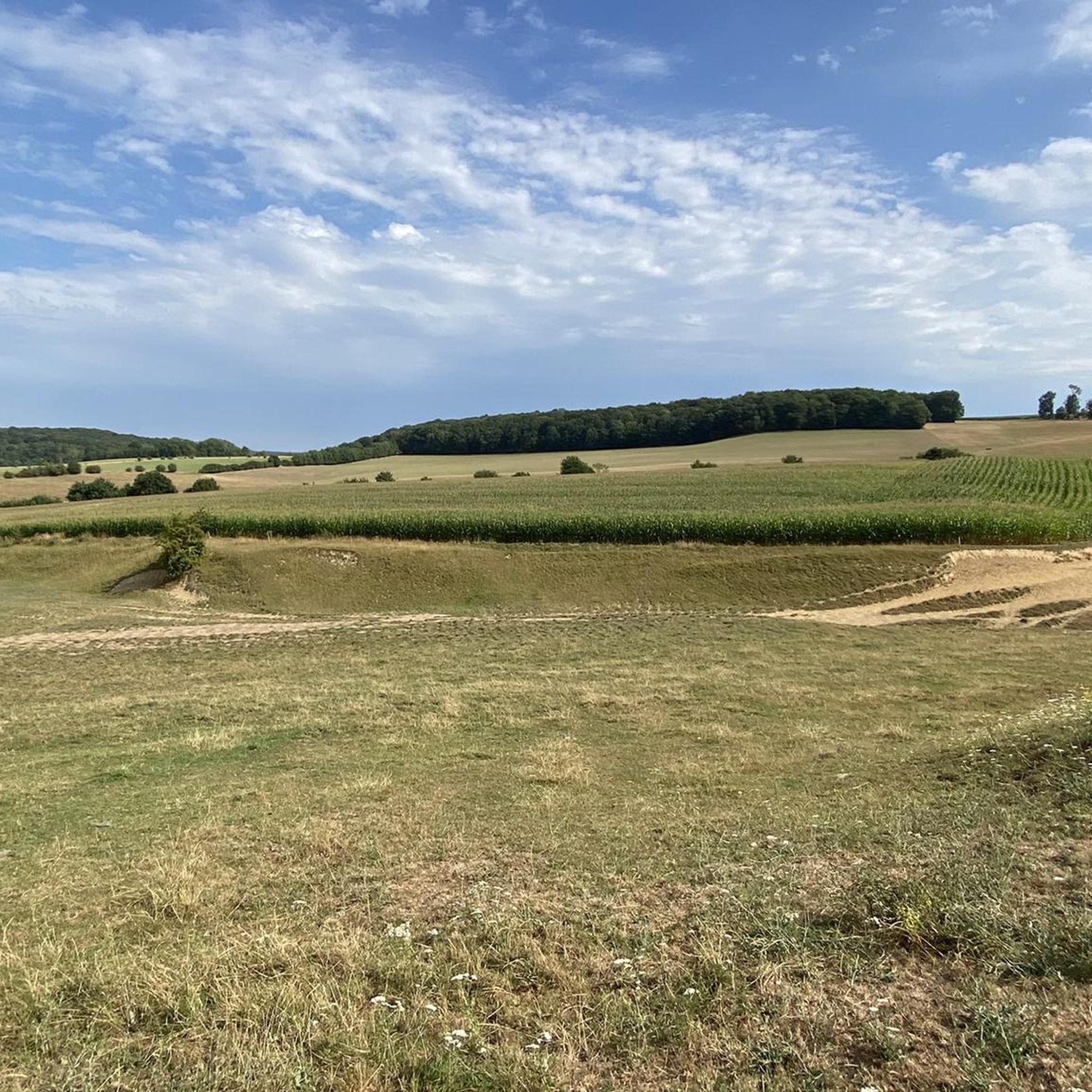
The tumuli stand on the plateau of Forville culminating at 165 m. This plateau is located at the hinge between the alluvial plains of the Méhaigne to the north and the low plateaus which dominate the Meuse valley to the south. The site is remarkably visible and gives a distant view of the landscapes of Hesbaye Namur.
Some tumuli are placed along the main roads, others along secondary roads. Those of Seron stand in the countryside with no connection to a known close communication route2. They are however distributed along a dirt road and along the small road which joins the village of Meeffe to that of Forville of which Seron is one of the villages.
excavations
In November 1854 and in the spring of 1855, excavations were carried out under the aegis of the Archaeological Society of Namur by its president Eugène del Marmol. The excavation of the T1 tumulus revealed nothing. On the other hand, that of the other two has made it possible to discover various objects: pottery, oil lamps, bottles, funerary urns, fragments of calcined human bones as well as a sestertius of Hadrian which made it possible to date the tombs to the 2nd century. All these objects are in the Archaeological Museum of Namur. The study of the archaeological material makes it possible to place tumulus II (in the center of the group of 3) in a chronological range going from 110 to 150, that is to say the first half of the 2nd century. The sestertius of Hadrian provides the oldest date, between 119 and 121 CE. The majority of the objects collected are found in the usual Roman tombs. The exception, however, is a few beautiful glassworks from Seron II which stand out by the artistic taste they bear witness to and their precious character. No doubt this is the sign of a higher social level2. In spite of the diversity of the found material, it is necessary to announce the presence of a “service” of twelve rooms in the tumulus of Seron II. The presence of a lamp in the same tumulus is explained by the belief of the ancients in the power of lamps: to ward off evil spirits and to enlighten the soul on its journey to the afterlife. Among the objects deposited is also a ribbed glass urn which is probably the container that contained the remains of the cremation of the deceased3.
Translated by Google •
Tip by

Sign up for free to discover even more natural monuments around Andenne.
Already have an account?
Start today with a free account
Your next adventure awaits.



Tips from the Community

The first descriptions of this Trou Manto date back to 1833. The name refers to the prophetess Manto, daughter of Tiresias of Thebes, who was brought to Delphi after her birthplace was conquered by the Epigoni. From there she traveled to Asia Minor, where she married the Cretan Rhacius, with whom she had Mopsus, and founded a temple of Apollo in Claros. According to legend, she spent her last days in Italy. What the link between this cave and the legend from Greek antiquity is, is unclear. It is a fossil cave. In 1964, a narrow passage was made to the adjacent 'Grotte Sint-Etienne'. This junction is called the "birth" by speleologists. It is, along with the 10m deep shaft, the most difficult segment of the cave. The cave is not accessible to the public and has never been developed for tourism. Only with a membership card of the Belgian Speleological Union and a key can you access the limestone passages. To protect the site, it was decided to close the entrances with massive doors equipped with padlocks. However, as bats had been regularly present during their hibernation since 1970, the entrances to the two caves were only screened in 1990 to facilitate their entry and exit. Observations of these small mammals by NATAGORA led to the identification of several regionally endangered species, such as the lesser horseshoe bat and the Bechstein's bat. Vincent Poitier, a pioneer of the 4th Baden Powell unit of the Collegiate Church of Huy, organized several visits to the cave system together with scout leader Jean-Louis Cuvelier. Some entered through the Trou-Manto cave, while others, the more adventurous, went directly through the Trou St-Etienne cave. source: wikihuy.be
2
1
Excavations are conducted year-round at Moha Castle, making it unique in Belgium. When I visited, two archaeologists were uncovering a wall that runs beneath the visible castle and likely dates back to the 12th century.
2
0
The castle is free to visit. At the foot of the rock, there's a visitor center where you can pick up a badge to open the gate. For €4, you can also get a brochure with information about the most important points. The castle is only open to visitors starting in April, but the friendly man at the visitor center let me in on February 27th... as far as you can even call it "inside" at this ruin ;-)
2
0

The exact origins of the medieval County of Moha remain unknown. It is likely that the county was formed during the fragmentation of the Carolingian Empire and the Hesbaye region at the end of the 9th century. The first known count, Albert of Moha, is mentioned in a document dated 1026 or 1028. The first defensive stone walls also date from the first half of the 11th century. Having no male heir, Albert of Moha married his daughter to Henry I of Dasbourg around 1050, thus linking the county's destiny to that of this powerful family of Alsatian origin. Initially, it is highly unlikely that the Counts of Dasbourg regularly resided in Moha, entrusting the county's administration to trusted men and a small garrison. However, the situation changed with Hugh II (1130-1180) and his son Albert II (d. 1212), who decided to become more involved in the region's politics. Albert II, in particular, chose to align his interests with those of his nephew, Duke Henry I of Brabant, whose policies he would follow until the end of the 12th century. In 1204, Count Albert III, having lost hope of having a son, chose the Prince-Bishop of Liège as his heir. But the late birth of his daughter Gertrude would jeopardize these agreements. Quickly betrothed to Thibaut of Lorraine, who died in 1219, she then married Thibaut of Champagne, who repudiated her, and subsequently Simon of Linange. At 19, she died childless. On March 19, 1225, the Prince-Bishop of Liège, Hugues de Pierrepont, took possession of Moha. Under the Prince-Bishops, Moha became a prison for political prisoners and a fortification tasked with controlling the city of Huy and blockading merchants. This policy was deeply unpopular and led to reprisals: the people of Huy besieged Moha in 1255. The fortress of Moha was considered impregnable. It was therefore through trickery that the people of Huy, taking advantage of a request for a truce, seized the castle on May 6, 1376. After the attack on the castle, the site's history is largely unknown. Mass is still celebrated twice a year in the castle chapel. During the 18th century, the ruins served as a refuge for a hermit. The castle's stones were gradually plundered, notably to build the surrounding houses. In 1889, the ruins of the castle were purchased by the Belgian state. Source: https://chateaumoha.be/histoire
6
0

The "Rocher du Château de Moha" is a limestone outcrop rising from the Mehaigne valley. It was a strategically important site in the Middle Ages, when more castles were built on rocks. This made the site difficult to besiege, and it was well-placed as a control point over the valley. The rock is very recognizable in the landscape. The ruins on the rock are still clearly visible, and the medieval structures are still easily recognizable.
7
0
Located in the Solières valley near Huy, the Trou Manto cave is a limestone cave with a complex network of tunnels. Access is via a steep path supported by a rope. The cave has three levels with magnificent stalactites, a sloping floor with collapses, and twelve large columns supporting the vaults. The entire structure is an impressive karst phenomenon, approximately 600 meters long and 48 meters deep. The cave is protected and fenced off due to vandalism and to protect bats; visits are only possible with a guide or a caving association. The cave is known for its diverse hydrological phenomena and the legend of the Nutons, gnome-like helper beings from folklore. This combination of nature, history, and mythology makes Trou Manto a special place.
5
0
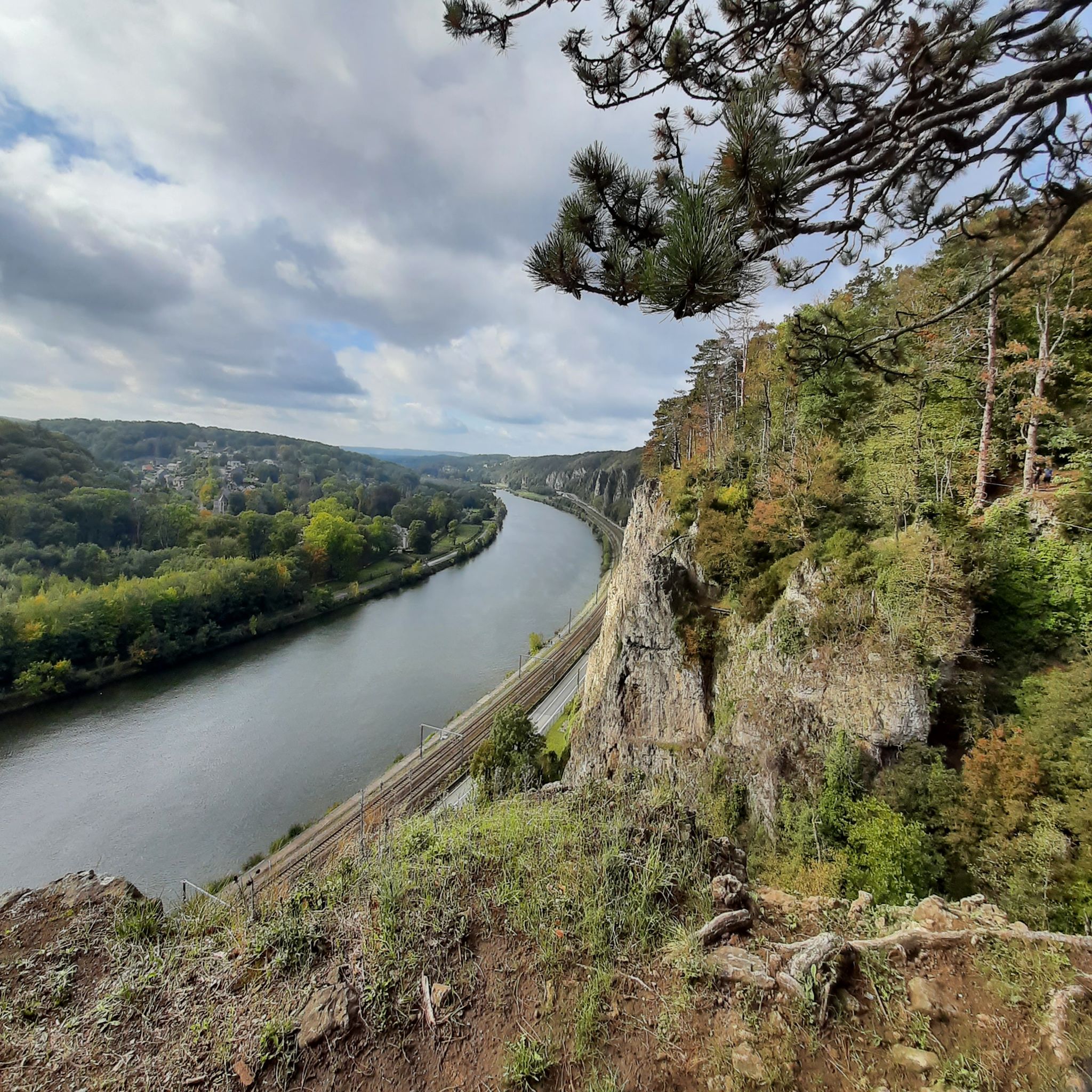
A collection of four caves, two of which are closed off as bat roosts. A steep climb or descent over a rocky path is definitely worth it.
4
0
The Château de Moha is a medieval feudal castle in Wanze, built on a rock at the confluence of the Mehaigne and Fosseroule rivers. Dating back to the 7th century, the castle served as a defense for the region. It became the property of the Prince-Bishops of Liège, who used it as a fortress and prison. In 1376, the castle was captured by the inhabitants of Huy through deception, marking the end of its military function. The castle subsequently fell into disrepair, but the ruins have been preserved and are open to the public.
7
0
Frequently Asked Questions
What are the most popular natural monuments to visit around Andenne?
Among the most appreciated natural monuments are Modave Castle, which is set in a nature reserve overlooking the Hoyoux valley, and Moha Castle, a medieval feudal castle built on a strategic rock formation. Visitors also frequently explore Trou Manto, an impressive karst cave system.
Are there family-friendly natural monuments in the Andenne region?
Yes, several natural monuments are suitable for families. Modave Castle offers beautiful grounds and a castle visit that can be engaging for all ages. The Seron Tumuli, ancient Gallo-Roman burial mounds, provide an interesting historical outdoor experience. Additionally, the Samson Valley is ideal for family strolls and enjoying nature.
What kind of natural features can I expect to see around Andenne?
The region is rich in diverse natural features. You can explore significant cave systems like Trou Manto and the prehistoric Grotte Scladina. There are also impressive rock formations that host historic castles, such as Moha Castle. The Samson Valley offers picturesque landscapes with rivers and forests, while the Sclaigneaux Nature Reserve provides opportunities to observe local flora and fauna.
Are there any historical or archaeological sites among the natural monuments?
Absolutely. The Grotte Scladina is a major prehistoric site where you can explore an extensive cave system and learn about Neanderthal life through archaeological finds and guided tours. Moha Castle, a medieval feudal castle, is built on a prominent rock formation and offers a glimpse into the region's strategic past. The Seron Tumuli are ancient Gallo-Roman tombs with historical significance.
What outdoor activities can I do near the natural monuments in Andenne?
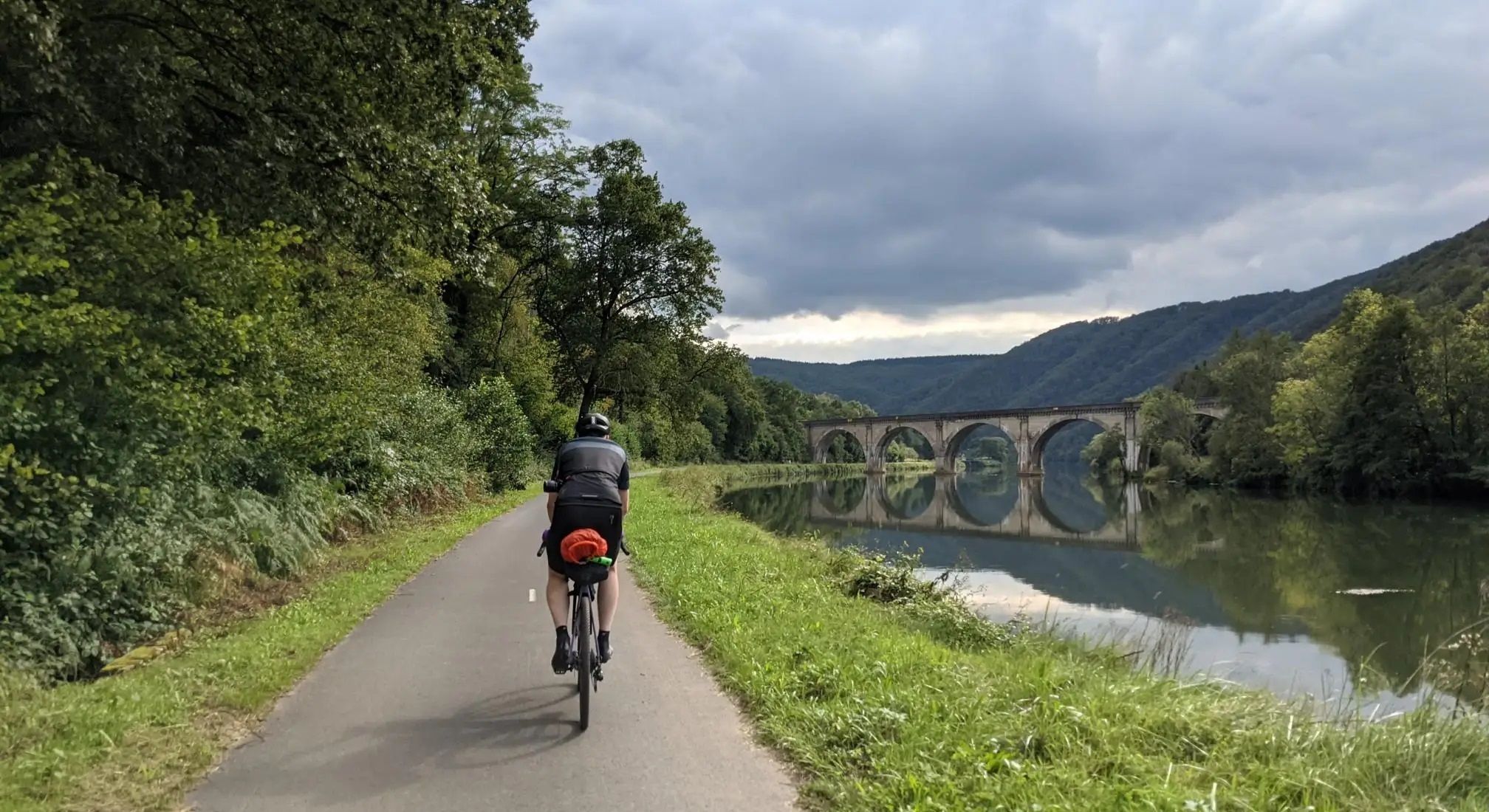
The area around Andenne is excellent for various outdoor activities. You can enjoy cycling along the Meuse River with routes like the 'Tour d'Andenne' or explore challenging MTB trails such as the 'Cliff Edge and Forest Path' loop. For more options, check out the guides for Cycling around Andenne, Road Cycling Routes around Andenne, and MTB Trails around Andenne.
Are there hiking opportunities near these natural monuments?
Yes, the Samson Valley is known for its numerous trails, perfect for walking and discovering the natural beauty. While specific hiking routes for individual natural monuments are not detailed, the broader region offers many paths. For cycling routes that often include scenic paths, you can refer to the Cycling around Andenne guide, which may provide inspiration for walks.
What is the best time of year to visit the natural monuments around Andenne?
Many sites, like Modave Castle, are open from spring (March/April) to mid-November, making these seasons ideal for exploring. The pleasant weather during spring and autumn is also perfect for outdoor activities in the Samson Valley and Sclaigneaux Nature Reserve. Some caves, like Grotte Scladina, offer guided tours year-round, but it's always best to check specific opening hours.
Can I visit caves in the Andenne area?
Yes, the region is known for its caves. The Grotte Scladina is a significant prehistoric cave offering guided tours. Trou Manto is another impressive karst cave system, though access is often restricted to guided visits or caving associations due to its protected status and bat roosts. The Arville Cave is primarily for geological interest and not open to the public.
What do visitors enjoy most about the natural monuments in Andenne?
Visitors frequently appreciate the blend of natural beauty and historical significance. The stunning views from sites like Modave Castle and Moha Castle are highly rated. The unique geological formations of the caves and the tranquility of areas like the Samson Valley also receive positive feedback. The komoot community has shared over 170 photos and given more than 370 upvotes for these natural monuments.
Where can I find more information about nature and parks in the Andenne region?
For more details on the natural heritage and parks in the area, you can visit the official tourism website for Andenne. They provide information on various natural sites and activities. You can find more information at andennetourisme.be.
Are there any viewpoints among the natural monuments?
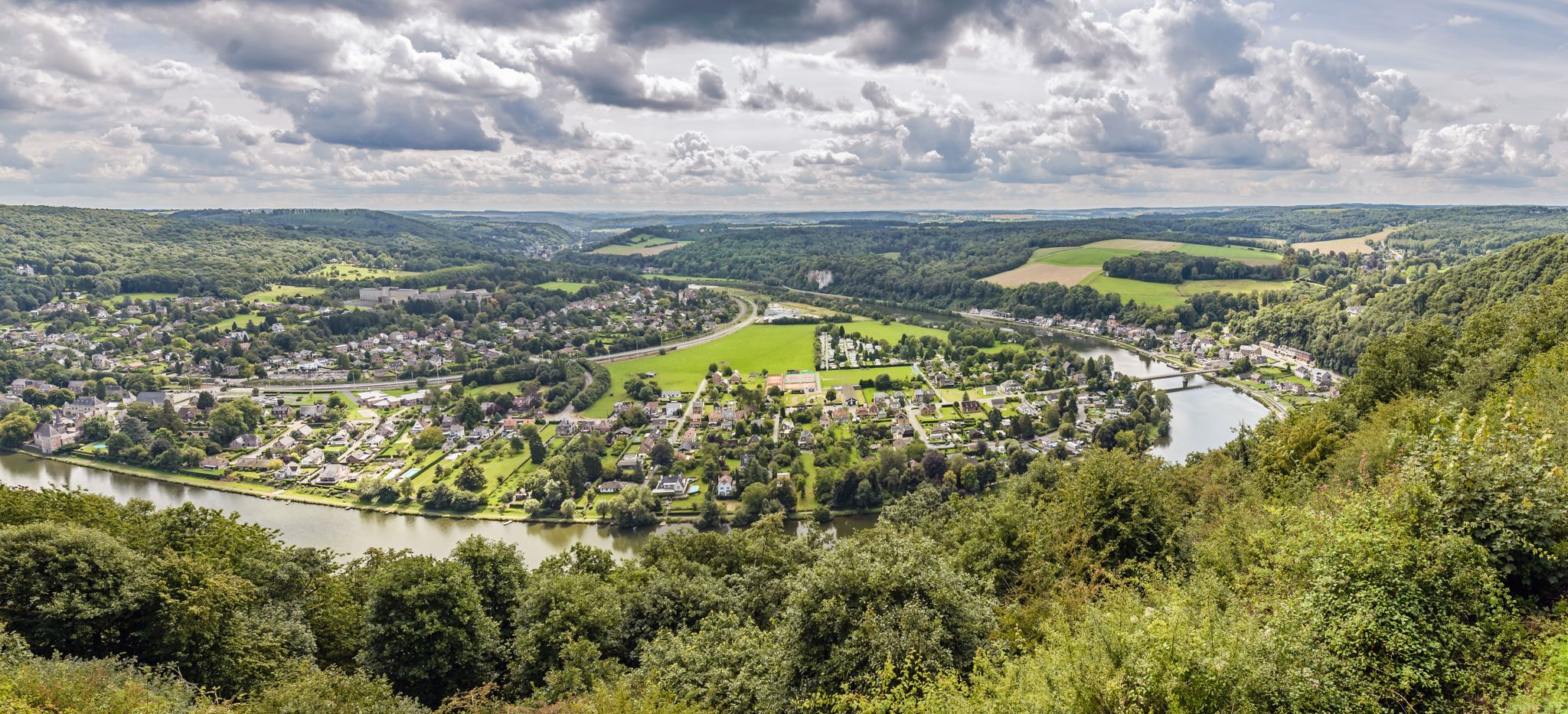
Yes, several natural monuments offer excellent viewpoints. Modave Castle provides commanding views over the Hoyoux valley. Moha Castle, perched on a rock, offers beautiful views of the Mehaigne and Fosseroule rivers. The Seron Tumuli are located on a plateau, offering a distant view of the Hesbaye Namur landscapes.
Most popular routes around Andenne

Get inspired with the komoot mobile app


Explore more
Extend your search for the best caves by checking out these guides of the top ones around Andenne:
