Top 20 Huts and Cabins in Erzgebirgskreis
Best huts in Erzgebirgskreis are situated in a region characterized by its mountainous landscape, offering diverse natural features and historical sites. The area provides opportunities for outdoor activities, with elevations reaching up to 1,215 meters at Fichtelberg. Basalt formations are visible in locations like Bärenstein, adding to the geological interest. Visitors can explore a network of trails and enjoy views across the Ore Mountains and into the Bohemian Basin.
Best huts in Erzgebirgskreis
- The most popular huts is Auersberg Summit…
Last updated: July 20, 2026
Fichtelberghaus Restaurant & Hotel
Highlight • Restaurant
Translated by Google •
Tip by

Fichtelberg Peace Bell
Highlight • Monument
Translated by Google •
Tip by

Sign up now to discover places like this
Get recommendations on the best single tracks, peaks, & plenty of other exciting outdoor places.
Sign up for free
Auersberg Summit and Observation Tower
Highlight • Summit
Translated by Google •
Tip by

Bärenstein Summit and Observation Tower
Highlight • Summit
Translated by Google •
Tip by

Neunzehnhain II Dam
Highlight • Lake
Translated by Google •
Tip by

Auersberghaus and Stoneman Miriquidi checkpoint
Highlight • Mountain Hut
Translated by Google •
Tip by

Ottomar Zahm Trail
Highlight (Segment) • Trail
Translated by Google •
Tip by

Hotel Sachsenbaude
Highlight • Rest Area
sachsenbaude.de/de/hotel-sachsenbaude-willkommen.html
Translated by Google •
Tip by

View of the Eibenstock Reservoir and Dam
Highlight • Viewpoint
Description
The Eibenstock Dam is the largest dam in the Free State of Saxony, both in terms of capacity and the height of the dam structure. The water …
Translated by Google •
Tip by

Henneberg Inn
Highlight • Restaurant
Translated by Google •
Tip by
Sign up for free to discover even more huts and cabins in Erzgebirgskreis.
Sign up for free
Already have an account?
Start today with a free account
Your next adventure awaits.
Login or Signup
Popular around Erzgebirgskreis

Let it flow! Cross-country skiing in the Ore Mountains
Triathlon around Germany
Kammweg Erzgebirge – Border adventure along the Ridgeway

The Stoneman Trail in the Ore Mountains
Ore Mountains — between forests and elevation
The National Natural Landscapes in Saxony
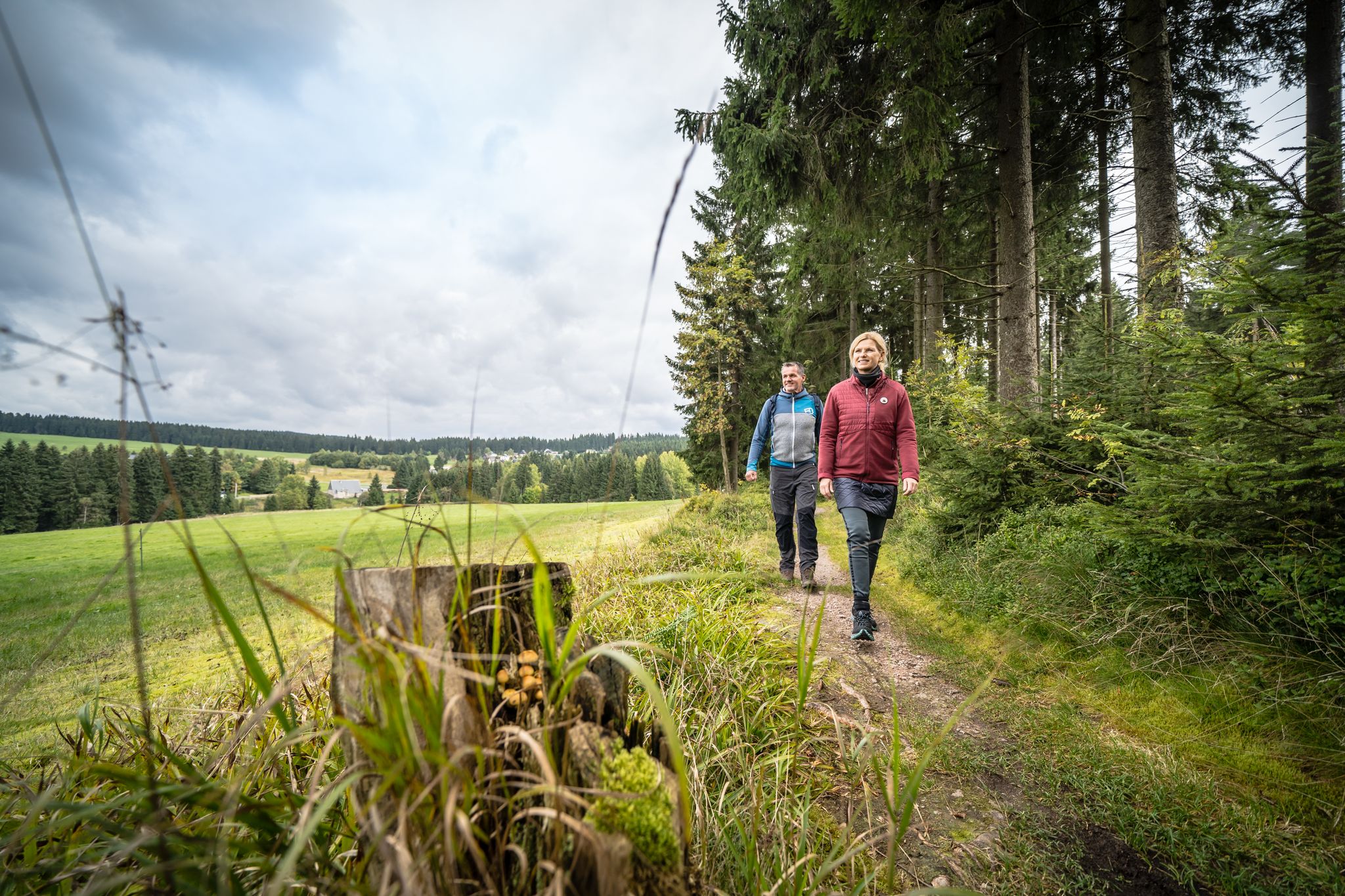
Hiking with heart in the Ore Mountains
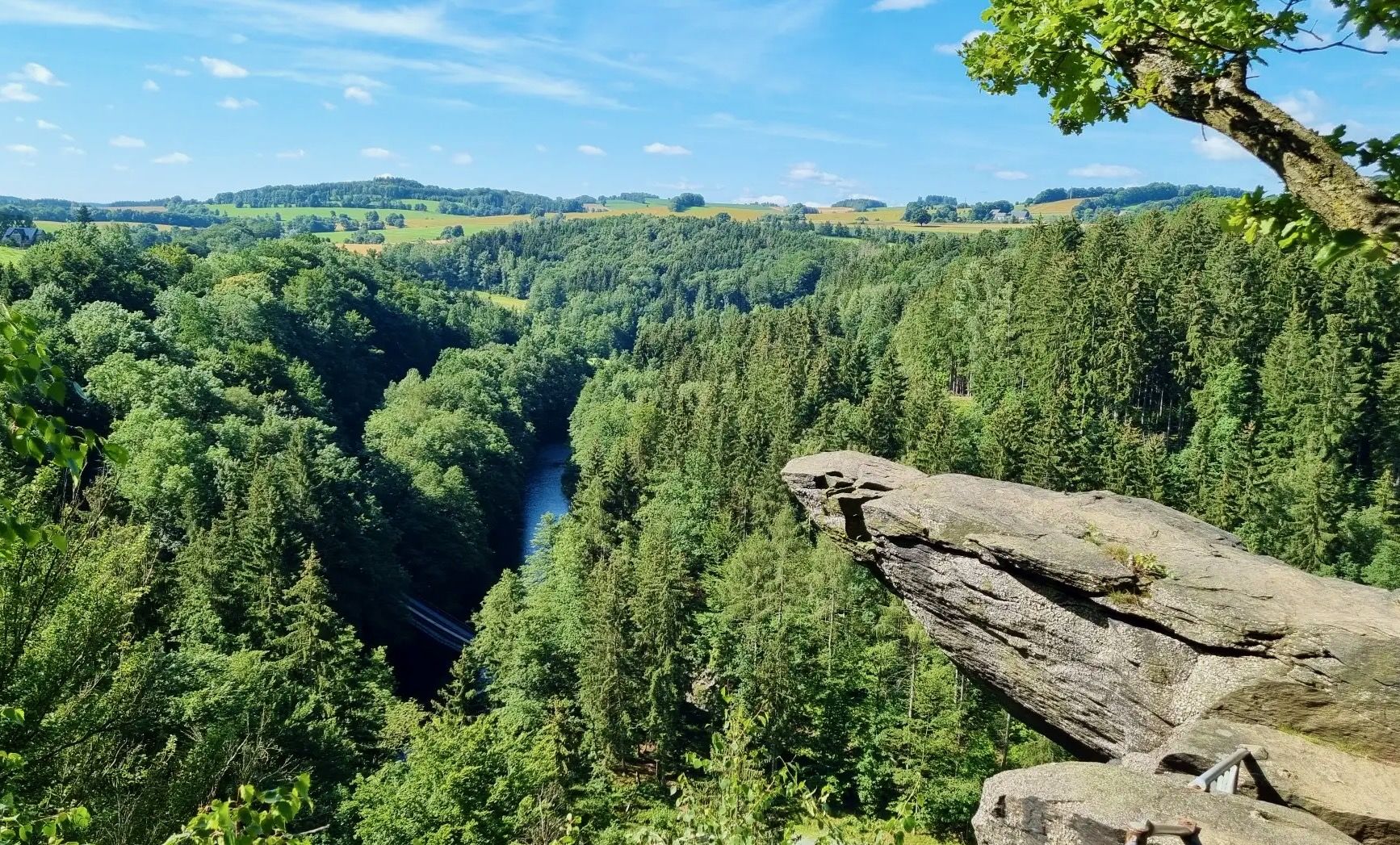
From Fichtelberg to Mulde - The Zschopautal Hiking Trail
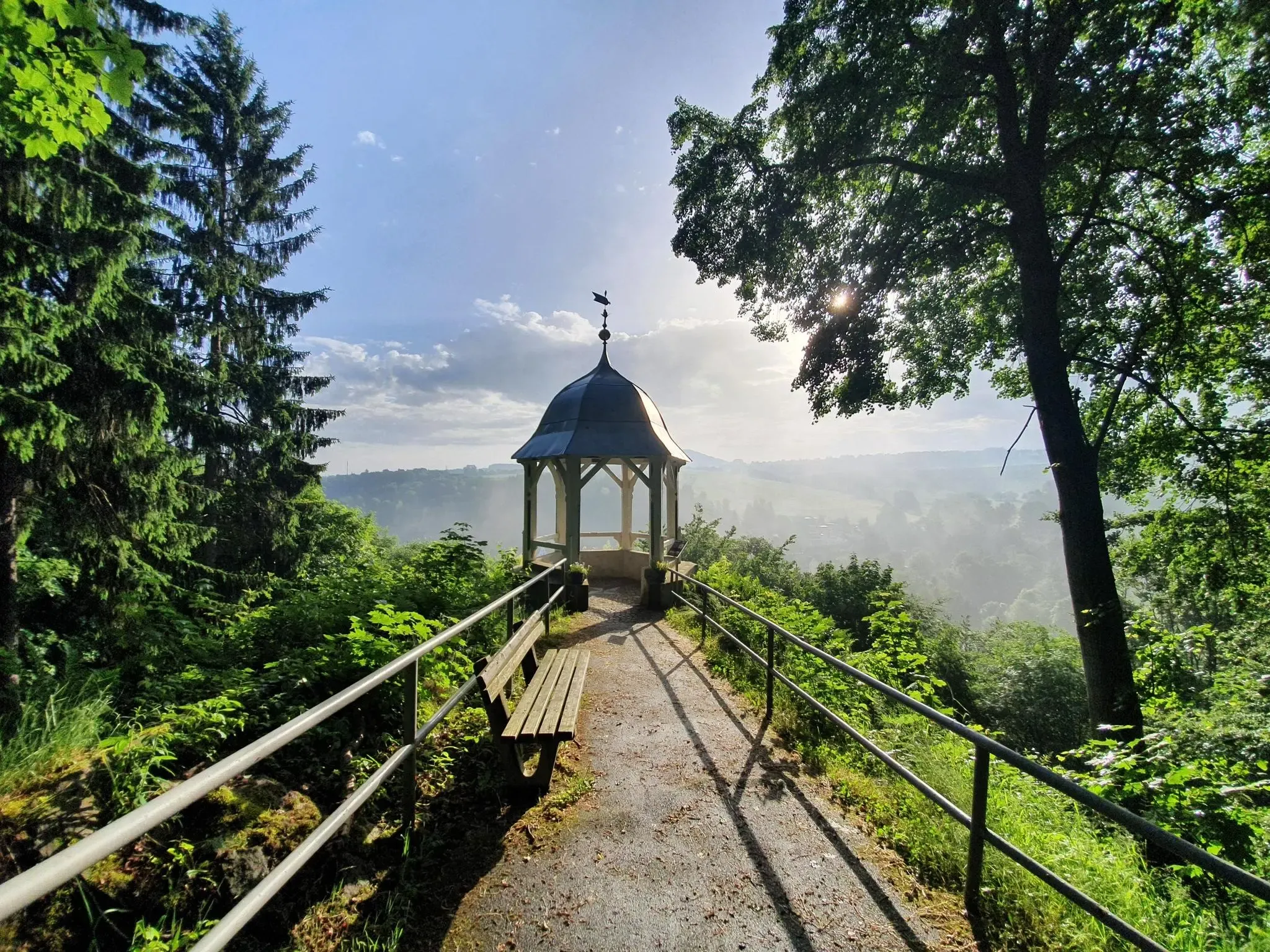
#GoFurther – discover the views of Germany!
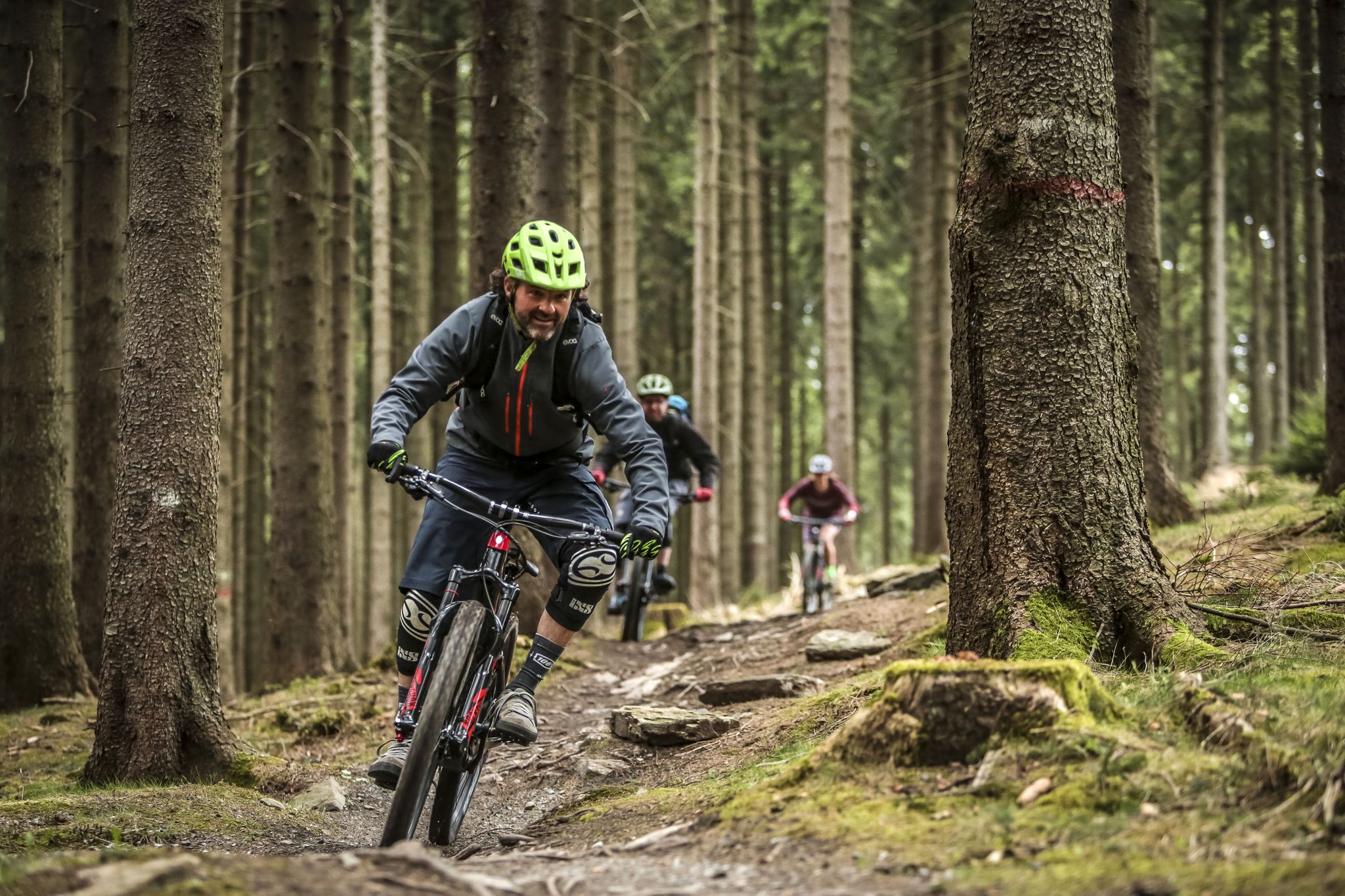
MTB adventures in Saxony
Other adventures in Erzgebirgskreis


Tips from the Community

In 1903, a mountain hut belonging to the Erzgebirge Association on the summit of Bärenstein formed the nucleus of today's guesthouse and hotel with an observation tower. Ten years later, the hut was expanded into a lodging house. After reunification, the mountain house, now run again as a family business, was reconstructed and reopened in 1992, and renovated again in 2021. The mountain hotel, located at an altitude of 898 meters, offers 22 rustic rooms and, as a special attraction, a 27-meter-high observation tower. On September 11, 1944, the tower was damaged during the air battle over the Ore Mountains ("Black Monday"). Bullet holes can still be seen in the spiral staircase.
15
0
The large peace bell on the Fichtelberg had to remain silent for six months in 2024. Stone throwing in May 2022 had so badly damaged the bell that its sound suffered. It was decided to stop ringing it and replace it with a new one. The old bell rang for the last time on Easter Monday 2024. Just in time for the mountain service on German Unity Day on October 3, the new bell was officially rung for the first time in the fall of 2024. The idea of using a peace bell to commemorate the peaceful revolution of 1989 in the GDR and German reunification in 1990 came from watchman Gerd Schlesinger and night watchman Jörg Eller from the Ore Mountains town of Schwarzenberg. The bell was also intended to be heard in neighboring Czechia and thus ring for a united Europe. The cast steel bell, already ninety years old at the time, was rung for the first time in 2010. The new bell was cast in Innsbruck by the Grassmayr company. At 2,700 kilograms, it is about 1,100 kilograms heavier than the old bell.
17
1

Worthwhile hike to the two dams Neunzehnhain 1 and 2
2
0

The Neunzehnhain Dam was built between 1911 and 1914 in the Bornwald near Pockau-Lengefeld in the Ore Mountains. It was put into operation shortly before the outbreak of the First World War. Due to the rapid industrialization of the Chemnitz area at the end of the 19th century and the enormous population growth of that time, water consumption rose rapidly. The Neunzehnhain Dam, which was only inaugurated in 1908, could no longer meet the water demand just three years later - and was therefore given a larger sister to accompany it.
3
0
At the foot of this path, which winds along the steep mountainside over uneven basalt steps, there is a memorial plaque commemorating the builder of this path and also showing him and his daughter in a photo.
11
1

Schlettau circular hiking trail »On the steps of Ottomar Zahm« The circular hiking trail leads from Schlettau to the nearby Scheibenberg. The ascent takes place via several steps made of basalt stones that Ottomahr Zahm created over 100 years ago. The hike leads centrally from Schlettau with good parking options towards Waltherdorf via the so-called Kirchsteig. From Walthersdorf it initially goes gradually uphill to the foot of the Scheibenberg. On the circular trail you can decide whether you want to tackle the summit or whether you want to take a leisurely hike around the Scheibenberg. The ascent via the so-called Ottomahr-Zahm-Steig is definitely recommended. A wonderful view and a shelter halfway invite you to do so. Once you have reached the top, you go back down the opposite side and over beautiful field paths and through the Schlettau city forest back to the starting point.
5
2

There is also a new, great hut to rest up here 👌.
3
0

☆ The oldest stone observation tower in the Ore Mountains. More information can be found at the tower.
10
0
Frequently Asked Questions
Which huts in Erzgebirgskreis offer the best panoramic views?
For breathtaking panoramic views, visit the Fichtelberghaus, situated at 1,215 meters on Fichtelberg. It offers expansive vistas across the Ore Mountains into the Bohemian Basin. Another excellent spot is the Bärenstein Summit and Observation Tower, where climbing the 27-meter-high tower provides impressive views down to the Cranzahl dam, and on clear days, you can see Fichtelberg and Klínovec in the Czech Republic.
Are there family-friendly huts or facilities in Erzgebirgskreis?
Yes, several huts and areas are well-suited for families. The Auersberg Summit and Observation Tower features a small playground for children and pleasant seating areas for adults. Many highlights, including the Fichtelberg Peace Bell and Neunzehnhain II Dam, are categorized as family-friendly, offering amenities and easy access.
What kind of natural features can I expect to see around the huts?
The region is characterized by its mountainous landscape. Near the Bärenstein Summit and Observation Tower, you can observe basalt formations in an old quarry on the north side. The Neunzehnhain II Dam offers a wonderfully quiet and romantic setting by the lake. Many trails, like the Ottomar Zahm Trail, wind through forests and feature unique geological formations like basalt columns.
Are there historical sites or monuments near the huts?
Yes, the Erzgebirgskreis region has a rich history reflected in its huts and surroundings. The Bärenstein Summit and Observation Tower originated as a mountain hut in 1903 and has been continuously operated and renovated, with bullet holes from WWII still visible in its spiral staircase. The Fichtelberg Peace Bell is another notable man-made monument with historical significance.
What outdoor activities can I do near the huts in Erzgebirgskreis?
The region offers diverse outdoor activities. You can find numerous mountain biking opportunities, with trails like 'Black Raven' and 'Border Trail' detailed in the MTB Trails in Erzgebirgskreis guide. For hikers, there are mountain hikes, including routes around Fichtelberg, as well as easy hikes like the 'Sosa Reservoir loop', which you can explore further in the Mountain Hikes in Erzgebirgskreis and Easy hikes in Erzgebirgskreis guides.
Which huts offer dining options or restaurants?
Many huts in Erzgebirgskreis provide dining facilities. The Fichtelberghaus, Auersberg Summit and Observation Tower, and Bärenstein Summit and Observation Tower all have restaurants. The Hotel Sachsenbaude and Henneberg Inn are also popular spots for food and refreshments.
What do visitors enjoy most about the huts in Erzgebirgskreis?
Visitors frequently praise the stunning panoramic views, especially from high-altitude huts like the Fichtelberghaus. The peaceful and romantic atmosphere, such as around the Neunzehnhain II Dam, is also highly appreciated. Many enjoy the well-maintained trails and the opportunity to combine hiking with visits to historical sites and observation towers.
Are there huts suitable for overnight stays in Erzgebirgskreis?
Yes, some huts and mountain houses offer accommodation. The Bärenstein Summit and Observation Tower, for example, operates as a mountain hotel with 22 rustic rooms, making it an excellent choice for an overnight stay. The Hotel Sachsenbaude also provides facilities for longer visits.
What is the best season to visit the huts in Erzgebirgskreis?
The Erzgebirgskreis region is beautiful year-round. While summer and autumn offer ideal conditions for hiking and enjoying the panoramic views, winter also provides unique experiences. Many huts remain open, and the snow-covered landscape creates a picturesque setting for winter walks and stays. Always check local conditions before your visit.
Are there any shelters or rest stops along hiking trails?
Yes, you'll find various shelters and rest stops. The Großer Stern Junction and Shelter is a notable example, offering a convenient spot to rest during your hikes. Additionally, many huts themselves, like the Auersberg Summit and Observation Tower, provide seating areas for relaxation.
How accessible are the huts in Erzgebirgskreis by public transport or car?
Accessibility varies by location. While some huts, especially those on prominent summits like Fichtelberg, might require a hike to reach, many are accessible by car with nearby parking options. For specific public transport routes, it's best to check local bus schedules to the nearest towns or trailheads, as direct access to every hut might not be available.
Most popular routes in Erzgebirgskreis
Most popular attractions in Erzgebirgskreis

Get inspired with the komoot mobile app


Didn’t find what you were looking for?
See even more amazing huts in Erzgebirgskreis with these guides per region:
Explore more
Find more beautiful huts and cabins in Erzgebirgskreis by checking out the top ones in these nearby places:
