The best MTB trails around gmina Pułtusk
4.0
(4)
17
riders
6
rides
Mountain biking around gmina Pułtusk offers diverse terrain across east-central Poland's Masovian Voivodeship. The region is characterized by the Narew River and its valley, featuring oxbow lakes and wetlands, alongside the extensive pine forests of Puszcza Biała. Riders can explore varied landscapes, from riverine paths to rural areas with field roads winding through meadows and grain fields. This mix of natural features provides a range of surfaces and challenges for mountain bike enthusiasts.
Best mountain bike trails around gmina Pułtusk
…Last updated: October 30, 2026
4.0
(2)
4
riders
Easy mountain bike ride.
2
riders
37.2km
02:21
100m
100m
Moderate mountain bike ride. Good fitness required.

2
riders
34.2km
02:10
130m
130m
Moderate mountain bike ride. Good fitness required.
3
riders
Easy mountain bike ride.
4.0
(2)
3
riders
Moderate mountain bike ride. Good fitness required. Advanced riding skills necessary.
Our route recommendations are based on thousands of hikes, rides, and runs completed by other people on komoot.
Start today with a free account
Your next adventure awaits.
Tips from the Community

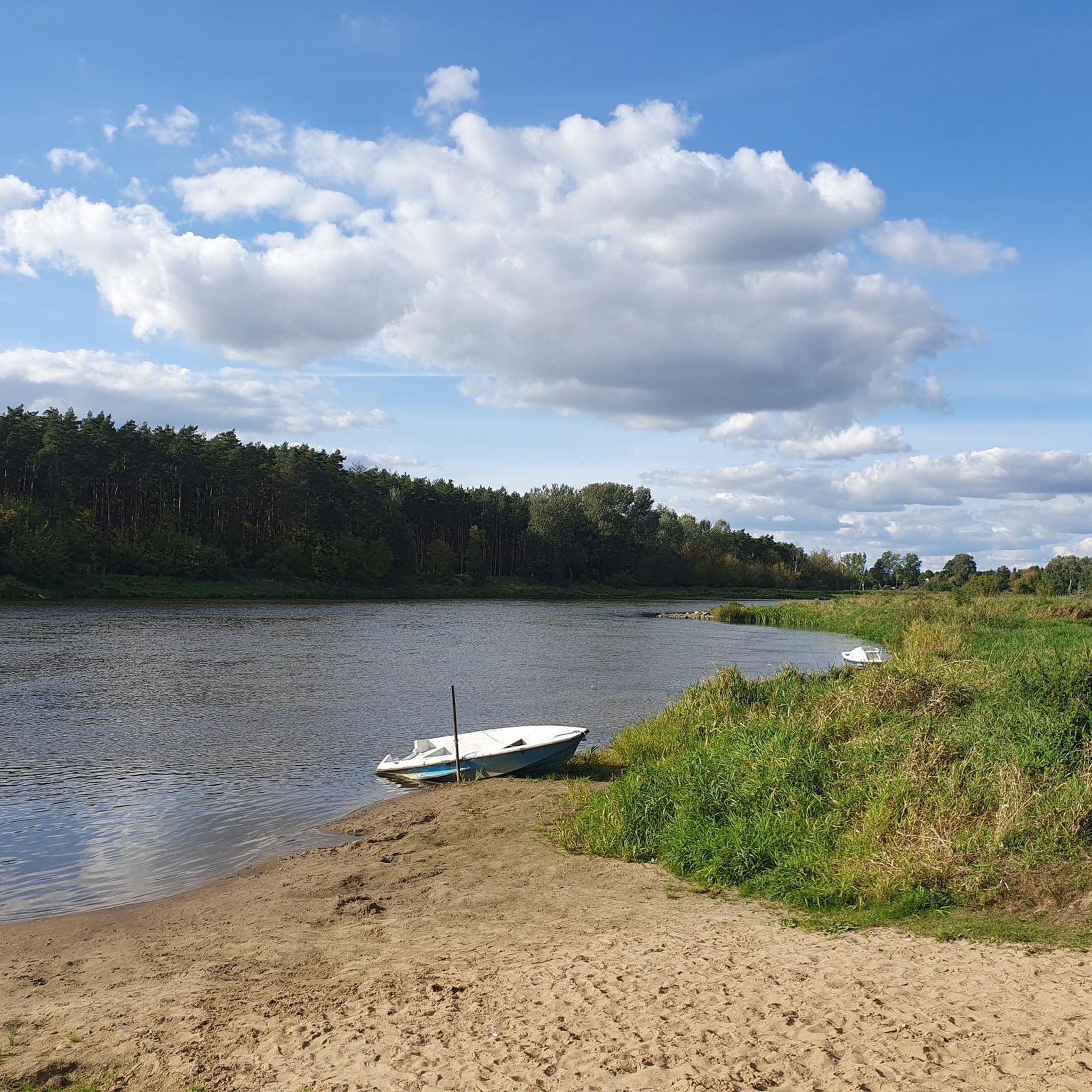
The shelter is already very rotten, but it can still fulfill its function. However, it is surrounded by bushes, and the shelter is almost hidden from the road along the embankment.
0
0
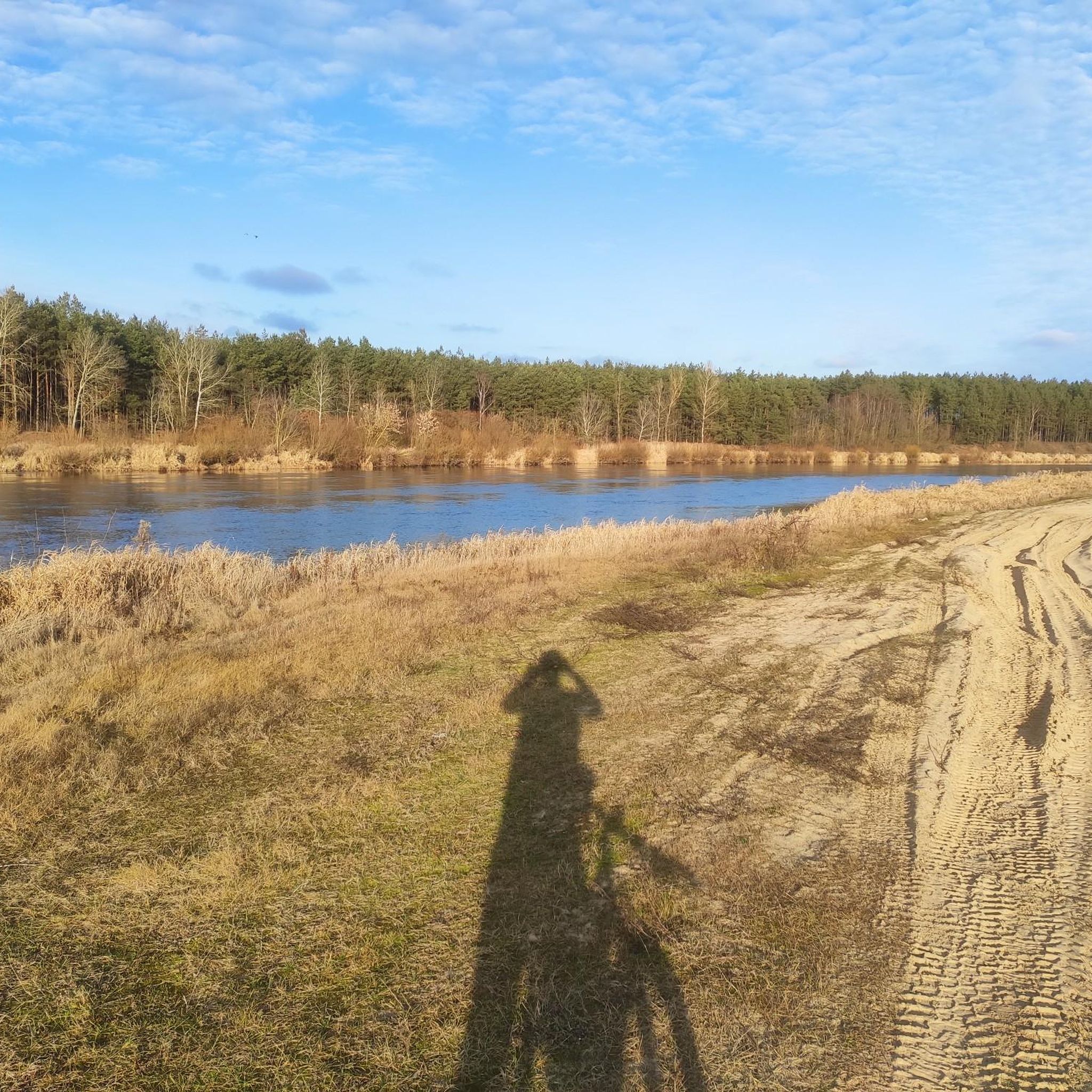
The route is far from traffic. The gravel is uneven and drains your energy quite quickly. Be careful on sunny days - a few kilometers without a bit of shade can be tough...
0
0

The current parish church of St. Wojciech was built in the years 1896–1900 according to the design of the architect Feliks Nowicki. This temple was destroyed in 1915 and 1939–1944 (tower and vaults). Rebuilt until 1958. It is an oriented, neoclassical church, built of brick and plastered. It has a three-nave, four-bay body with a built-in square tower at the front. The presbytery is two-bay, closed on three sides, on its sides there are rectangular: sacristy and chapel with lodges on the first floor, open to the presbytery. Elevations are divided by Tuscan pilasters on high plinths and topped with entablature. Windows in rich plaster frames with horizontal, triangular and segmental pediments. The façade is three-axis, two-storey, divided by pilasters in the grand order. The tower is clasped with pilasters in the Tuscan style. The gable roofs are covered with sheet metal, and the tower has a pyramidal tin dome Source: https://pl.wikipedia.org/wiki/Parafia_%C5%9Bw._Wojciecha_w_Zambskach_Ko%C5%9Bcielnych
2
0
An exceptionally bearable shortcut of coarse sand and gravel. As for these areas, exceptionally passable 😜. Nice views.
2
0
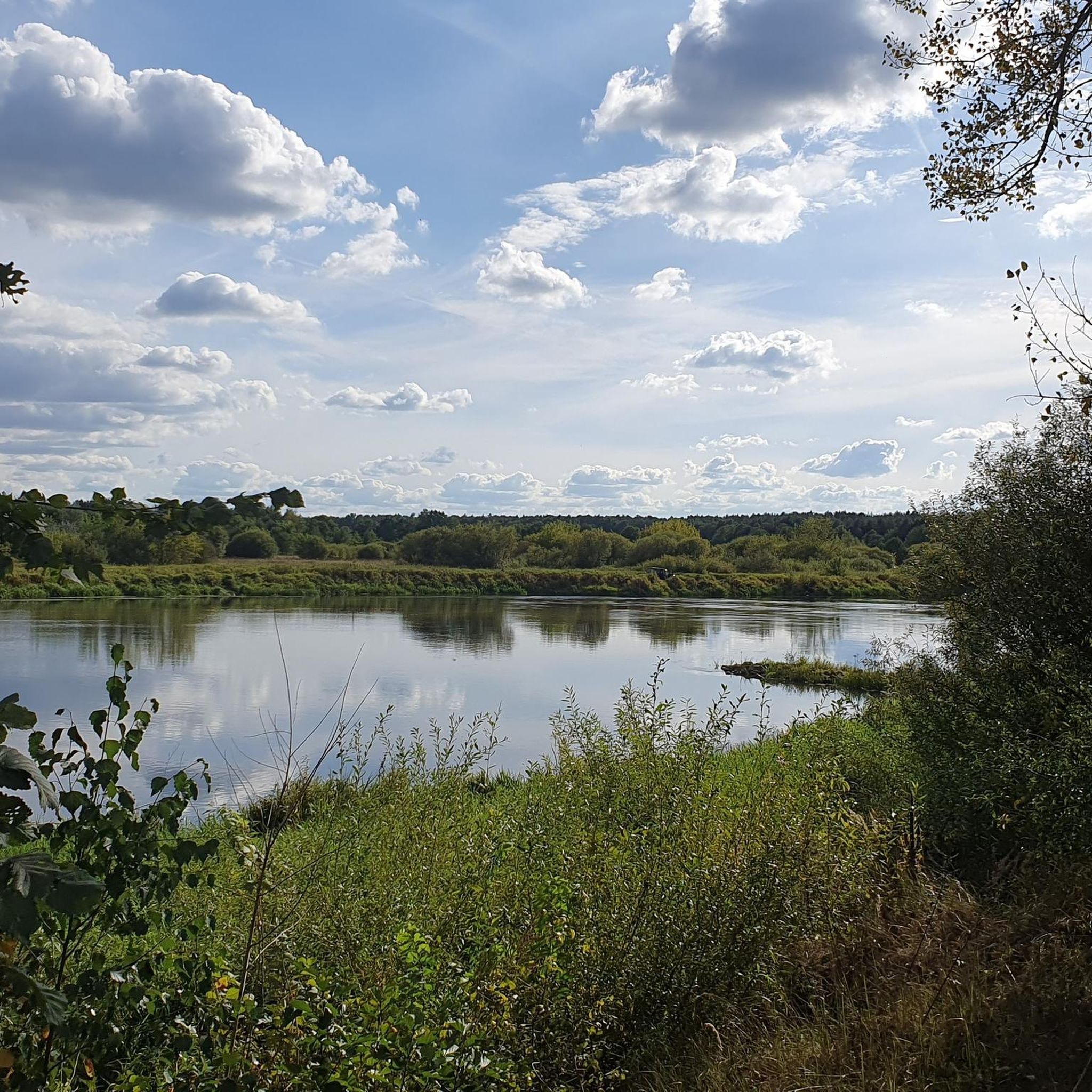
A very nice investment, the pedestrian and bicycle bridge allows you to freely get to the other side of the Narew.
1
0
Very nice renovated square with a fountain and benches. Unfortunately the photo didn't come out, but I'm sure someone will help with a nice photo
2
0
"The history of the town hall dates back to the early 15th century. Bishop Jakub of Płock is said to have funded the seat of the town authorities in 1405. The Gothic tower added to the town hall fulfilled both judicial and penitentiary functions as well as defense. Initially, it reached a height of 15 m and was built on a rectangular plan. During the 15th and 16th centuries, it was gradually raised, with additional storeys built on an octagonal plan. A new town hall was also built - lower, more modern - in the Renaissance style, topped with a crested attic. The 30-meter tower at that time gained a domed spire with a lantern, and a clock was also ordered for it. During the wars in the 17th and 18th centuries, the town hall burned down several times. In 1728, it was rebuilt with funds from Bishop Andrzej Stanisław Kostka Załuski. The two-bay building surrounded the tower in a horseshoe shape from the east. The entrance was located on the north and covered with a wooden arcade. The tower roof was changed to an octagonal one, and the clock was abandoned. In this form, the town hall survived until the end of the 19th century. At that time, in addition to the city authorities, the army was quartered here, and there was a prison and even warehouses for Pułtusk merchants. At the end of the 19th century, a shelter was organized in the ruined building, and from 1880, the ground floor and the tower were put into use by the Volunteer Fire Department. After 1902, a new, smaller building was erected on the site of the former building, in the neo-Gothic style, only for the use of the fire department. The tower was deprived of its roof, replacing it with an uncovered platform. It turned out to be completely non-functional and the original roof covering of the tower top was quickly restored. Also at that time, a clock was placed on the north side, on the seventh floor." Source: https://arch.pultusk.pl/wieza-dawnego-ratusza-gotycko-renesansowa/
1
0
The market square is 380 meters long, there is a flourishing trade and there is a historic town hall.
1
0
Frequently Asked Questions
What is the overall difficulty level of mountain biking in gmina Pułtusk?
Mountain biking in gmina Pułtusk offers a range of difficulties, primarily focusing on easy to moderate trails. There are 2 easy routes and 3 moderate routes available, making it accessible for various skill levels. While some sections along the Narew River can be narrow and overgrown, providing a more rugged experience, there are no routes categorized as difficult in the immediate area.
What kind of terrain can I expect on mountain bike trails in gmina Pułtusk?
You can expect diverse terrain, from riverine paths along the Narew River with oxbow lakes and wetlands to extensive pine forests within Puszcza Biała. The Masovian countryside also offers rural areas with field roads winding through meadows and grain fields. This mix provides varied riding surfaces, including both paved and unpaved sections.
Are there mountain bike trails suitable for beginners in gmina Pułtusk?
Yes, gmina Pułtusk has several beginner-friendly mountain bike trails. For instance, the Świętojański Bridge – Pedestrian and Bicycle Bridge loop from Pułtusk is an easy 14.8-mile (23.8 km) route offering scenic views along the Narew River. Another easy option is the Pułtusk Town Hall Tower – Statue of Jan Kochanowski loop from gmina Pułtusk, which is 20.5 miles (33.0 km) and leads through the Masovian countryside.
Are there any challenging mountain bike routes for experienced riders in gmina Pułtusk?
While there are no routes explicitly rated as 'difficult,' experienced riders can find moderate challenges. Routes like the Pułtusk Town Hall Tower – Statue of Jan Kochanowski loop from Pułtusk (23.1 miles / 37.2 km) or the Świętojański Bridge – Town Hall in Pułtusk loop from Pułtusk (33.9 miles / 33.9 km) offer varied terrain and longer distances. Some sections, particularly along the Narew River, are noted for being narrow, overgrown, and more rugged, providing a more demanding experience.
What natural features can I see while mountain biking in gmina Pułtusk?
You'll encounter the picturesque Narew River with its oxbow lakes and wetlands, especially along the 'Nadnarwiańska Amazonia' section. The extensive pine forests of Puszcza Biała offer tranquil natural surroundings. You can also explore nature reserves like Bartnia, known for its 150-year-old pine stand and grey heron nesting sites, providing untouched natural beauty.
Are there any interesting landmarks or attractions along the mountain bike trails?
Yes, several routes pass by or near notable attractions. You can explore historical sites such as the Pułtusk Town Hall Tower and Pułtusk Market Square. The Basilica of the Annunciation of the Blessed Virgin Mary is also a significant religious building. For scenic views, look for the View of the Pultusk Canal and the Narew Riverside Trail.
Is there parking available near the mountain bike trails in gmina Pułtusk?
While specific parking locations for each trail are not detailed, Pułtusk, as a regional center, offers various parking options within the town and near popular recreational areas. Many routes start and end in Pułtusk, suggesting convenient access points for vehicles.
Can I reach the mountain bike trails in gmina Pułtusk by public transport?
Pułtusk is accessible by public transport, primarily buses, connecting it to larger cities in the Masovian Voivodeship. Once in Pułtusk, many trails start directly from the town center or easily reachable points, making it feasible to access them without a car.
What is the best time of year to go mountain biking in gmina Pułtusk?
The spring, summer, and early autumn months are generally the best for mountain biking in gmina Pułtusk. During these seasons, the weather is most favorable, and the natural landscapes, including the Narew River valley and Puszcza Biała, are at their most vibrant. Be aware that some riverine paths can become overgrown in summer.
Are the mountain bike trails in gmina Pułtusk family-friendly?
Many of the easy and moderate routes, especially those with more paved sections or well-maintained paths, are suitable for families. The extensive network of over 100 kilometers of cycling paths includes options for casual rides, allowing families to explore the natural beauty at a comfortable pace. The Świętojański Bridge – Pedestrian and Bicycle Bridge loop from Pułtusk is an easy route that could be a good family option.
Are dogs allowed on the mountain bike trails in gmina Pułtusk?
Generally, dogs are permitted on public trails in Poland, especially in less restricted natural areas like forests and riverbanks, provided they are kept under control, preferably on a leash. However, specific rules may apply to nature reserves (like Bartnia, Popławy, Stawinoga), so it's advisable to check local regulations for those protected areas.
Where can I find cafes or places to eat near the mountain bike trails?
Pułtusk, being the main town in the gmina, offers various cafes, restaurants, and shops where you can refuel. Many routes start or pass through Pułtusk, making it convenient to find refreshments before or after your ride. Recreational parks in Pułtusk also feature amenities like barbecue sites.
What do other mountain bikers say about the trails in gmina Pułtusk?
The mountain bike trails in gmina Pułtusk are highly rated by the komoot community, with an average score of 5.0 stars. Riders often praise the varied terrain, from scenic river views to peaceful forest sections, and appreciate the options available for different ability levels.
Are there any mountain bike loop trails in gmina Pułtusk?
Yes, many of the mountain bike routes in gmina Pułtusk are designed as loops, offering convenient starting and ending points. Examples include the Świętojański Bridge – Pedestrian and Bicycle Bridge loop from Pułtusk and the Beach in Holendry – Pedestrian and Bicycle Bridge loop from Kania Nowa, allowing you to return to your starting point without retracing your steps.
Most popular routes around gmina Pułtusk
Most popular attractions around gmina Pułtusk

Get inspired with the komoot mobile app


Explore more
Browse the best MTB trails in other regions.
