Attractions and Places To See in Ruse Region - Top 17
Best attractions and places to see in Ruse Region offer a blend of historical significance, cultural richness, and natural beauty along the Danube River. The region is characterized by its 19th and 20th-century architecture in Ruse city, often called "Little Vienna," alongside ancient Roman ruins and medieval sites. Natural features include river valleys, rock formations, and caves, providing diverse landscapes for exploration. This area presents a variety of historical, cultural, and natural treasures.
Best attractions and places to see in Ruse Region
- The most popular attractions is Monument of Liberty, Ruse, a man-made monument located in Freedom Square. This iconic symbol commemorates Bulgaria's liberation from Ottoman rule and features a female figure breaking free from a lion.
- Another must-see spot is Freedom Square (Svoboda Square), Ruse, a man-made monument and historical site. This central square is known for its impressive Revival-era architecture, including the grand Dohodno Zdanie.
- Visitors also love Rock‑Hewn Churches of Ivanovo, a religious building and UNESCO World Heritage site. This complex of churches and monastic cells is carved into limestone cliffs and features remarkable medieval frescoes.
- Ruse Region is known for its historical sites, natural parks, and religious buildings. Visitors can explore ancient Roman fortresses, medieval towns, and unique rock monasteries.
- The attractions in Ruse Region are appreciated by the komoot community, with 26 upvotes and 35 photos shared across the highlights.
Last updated: July 6, 2026
Rock‑Hewn Churches of Ivanovo
Highlight • Religious Site
The monastery was founded in the 20s of the 13th century by the monk Yoakim, who later became a Bulgarian patriarch. The Bulgarian kings Yoan Asen II (1218-1241), Yoan Alexander (1331-1371) and other representatives of the royal court were among the patrons of the monastery and their donor portraits are still preserved.
The monastery combines several areas of rocky spaces. In six of the churches frescoes are conserved, which show features of the Bulgarian religious art of the 13th - 14th century. During the Second Bulgarian Empire (12th-14th c.), The monastery proved to be a great spiritual and literary center. Inscriptions on the walls of the cells provide information about important historical events.
The frescoes in the church "Sveta Bogoroditsa" are world famous. They are among the most representative representatives of paleological art in the Balkans. Their exceptional artistic quality is the reason for their inclusion in the UNESCO World Heritage List.
In the 14th century, the monastery became the center of Hesychasm - a mystical movement in Orthodox Christianity. The rock formation Ivanovo existed during the first centuries of Ottoman rule, but gradually disintegrated.
In 1978 it was declared a National Archaeological Reserve. Today the monastery is out of order.
Source: Google: Official Tourism Bureau Bulgaria
Translated by Google •
Tip by

Basarbovo Rock Monastery
Highlight • Religious Site
The monastery has about 300 rock rooms, 40 of which were churches. Hermit monks resided there until the 15 th century. The monastery was then abandoned. It was restored only in 1937 by the monk Hrisant. Nowadays, steps are hewn into the rocks ans a path winds up to the grave carved into the stone, where the relicts of St. Dimitar Basarbovski used to be.
Visitors can see the rock church, a wooden iconostasis inside, part of the monastery, and the saint's alcove. The church provides an idea of the look of old rock monastries and the cells surrounding them. At the foot of the rocks, there is a well dug by the venerable Father: It's believed that is water has curative properties.
Tip by
Sign up now to discover places like this
Get recommendations on the best single tracks, peaks, & plenty of other exciting outdoor places.
Sign up for free
Fountain at Svoboda Square, Ruse
Highlight • Monument
Translated by Google •
Tip by

Stefan Karadja Monument
Highlight • Monument
(Source: Wikipedia)
Translated by Google •
Tip by

Monument of Liberty, Ruse
Highlight • Monument
Translated by Google •
Tip by
Krushtalnyata Caves
Highlight • Cave
Tip by

Pantheon of National Revival Heroes
Highlight • Monument
Many Bulgarian personalities are honored here.
Translated by Google •
Tip by

Gramovets Rock Monastery and Shelter
Highlight • Religious Site
Nearby, along the river, to "Smesite", after passing a large collapse, you reach a cave Christian monastery with several floors. Steps carved into the rock lead to a church that is lower than the previous one and is also carefully designed.
Translated by Google •
Tip by

Rock-Hewn Monastery at the Confluence of the Cherni Lom and Beli Lom
Highlight • Religious Site
It shows human processing, which led to the design of its components. The greatest attention was paid to the church and especially to its altar space. The upper part of the steps cut into the rock, leading to a rock platform, has been preserved. Around it, in a tiered manner, with the presence of half-storeys, most of the premises are developed.
Translated by Google •
Tip by
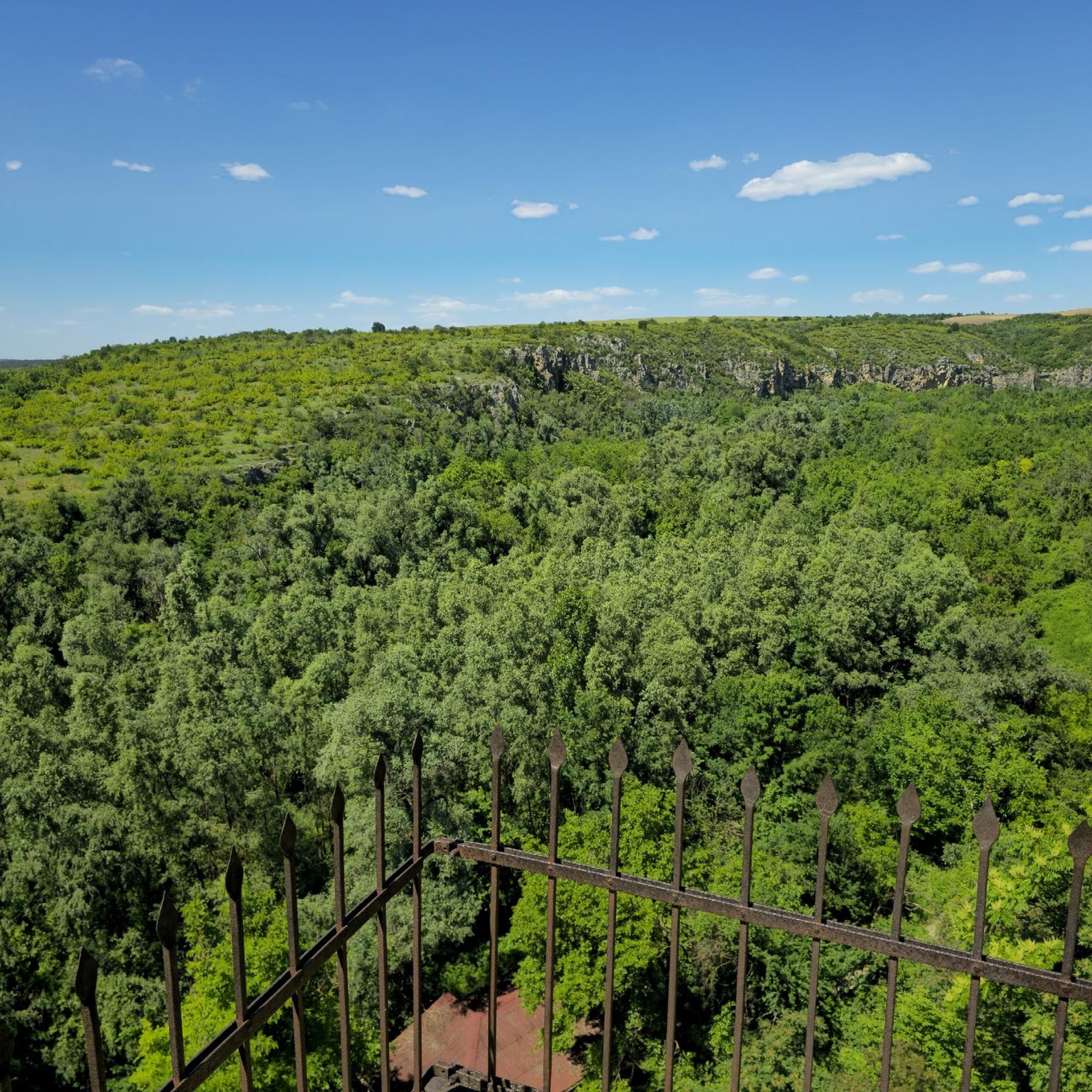
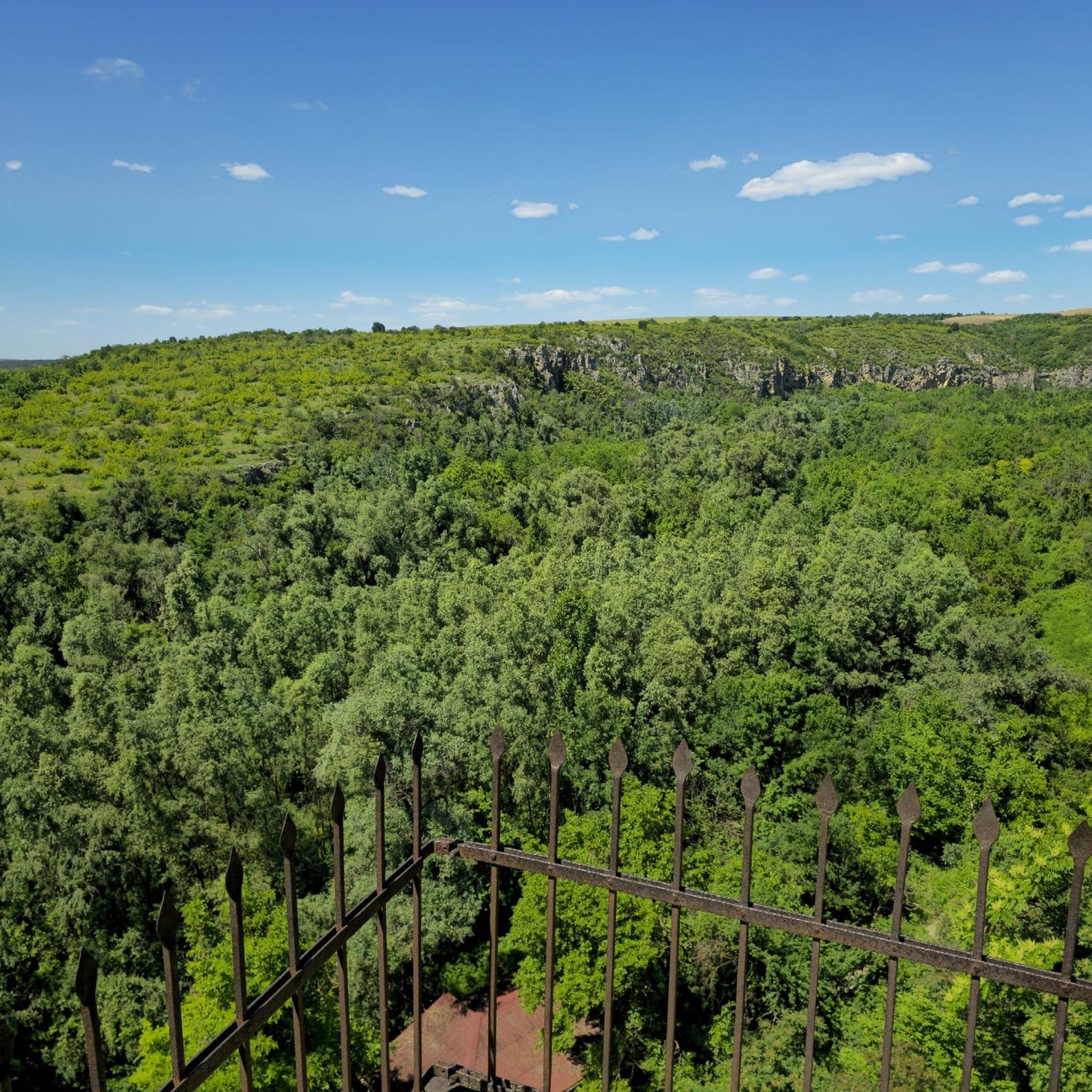
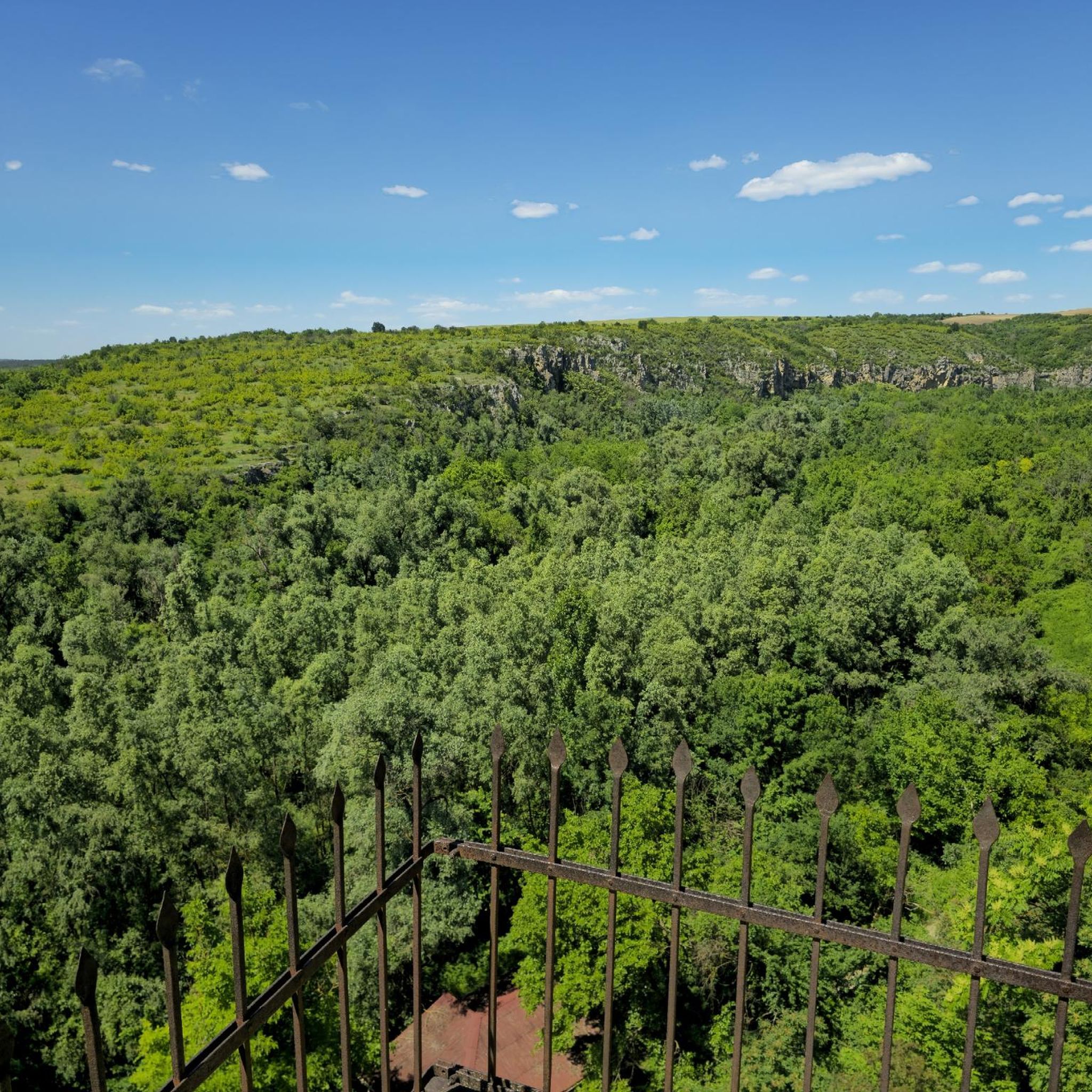
View of the Rusenski Lom Valley
Highlight • Viewpoint
Translated by Google •
Tip by

Sign up for free to discover even more attractions in Ruse Region.
Sign up for free
Already have an account?
Start today with a free account
Your next adventure awaits.
Login or Signup
Tips from the Community

The entire circular trail is very easy to walk. It has been cleared and is very well signposted.
0
0

Many bats can be observed in the caves
0
0

GERMAN Church: We are in the Church of St. Mary. It was part of the rock monastery of St. Michael the Archangel, which operated during the Second Bulgarian Empire from 1220 to around 1450. The church was carved into the rock and was painted around 1360. The entrance was where the balcony is today. The opening through which we now enter was drilled in 1936 by French scientists who were researching the wall paintings. To the left of the original entrance are depicted Tsar/King Ivan-Aleksander and his second wife, Tsaritsa/Queen Theodora, who donated funds for the carving and painting of the church. They are holding the rock in which the church is located and presenting it to St. Mary. This has been a UNESCO World Heritage Site since 1979. In the 1980s, the rock was impregnated to prevent moisture from seeping in and damaging the frescoes. The wall paintings themselves are coated with a special varnish that protects them from negative effects. Chapel: This is the chapel of Saint Gerasim Yordanski. According to legend, he healed a lion's paw. In gratitude, the lion allowed Saint Gerasim to ride it. On the west side of the chapel, the saint is depicted riding the lion among a group of worshipers on the way to Jerusalem.
2
0
In addition to the views, there are also some explanatory panels about the monasteries and nature along the route, also in English.
1
0

The rock monastery "Gramovets" was hewn near the "Smesite" area, where the Beli and Cherni Lom rivers merge and form the beginning of the Rusenski Lom river. Most of the monastery's rooms are vertically located in the central parts of the rock massif. They are connected to each other by a path. The church is very well designed. Its ceiling has a dome, which is a rare occurrence for cave temples. In places, plaster has been preserved, covered with very pale images from the mural decoration. In an inscription carved around a cross, letters from the Glagolitic and Cyrillic alphabets are intertwined. This dates the church from the time of the First Bulgarian Kingdom. Nearby, along the river, to "Smesite", after passing a large collapse, you reach a cave Christian monastery with several floors. Steps carved into the rock lead to a church that is lower than the previous one and is also carefully designed.
0
0
A narrow path and steps lead to the temple. It is elongated and relatively low, with a well-leveled ceiling and floor. The desire to resemble the temple layout of brick churches is visible, but as far as the presence of monolithic rock allows. To the south it is open to the river valley, there are cutouts in the floor for a wooden structure. There is a rock bench next to the north wall. The place where the altar partition was placed is visible. A shallow arched niche is carefully carved in the east wall. It performs the function of the vaulted niches in brick temples - apses.
0
0
The Christian monastery is the last among the rocks along the ancient riverbed of the Cherni Lom River. It is part of the largest concentration of rock monasteries in Bulgaria - the Lom Rock Holy Mountain. It shows human processing, which led to the design of its components. The greatest attention was paid to the church and especially to its altar space. The upper part of the steps cut into the rock, leading to a rock platform, has been preserved. Around it, in a tiered manner, with the presence of half-storeys, most of the premises are developed.
0
0

The pictures in the cave have been preserved. Not restored, meaning not recreated with paint. You can see the originals. The Last Supper fresco is around 200 years older than the more famous Last Supper painting by Leonardo da Vinci. Please do not use flashlights in the cave. The frescoes are intended to remain preserved for many hundreds of years.
0
0
Frequently Asked Questions
What historical sites can I explore in Ruse Region?
The Ruse Region is rich in history. You can visit the UNESCO World Heritage site of the Rock‑Hewn Churches of Ivanovo, a complex of churches carved into limestone cliffs featuring medieval frescoes. Another significant site is the Basarbovo Rock Monastery, the only active rock monastery in Bulgaria. In Ruse city, explore the iconic Monument of Liberty and the Pantheon of National Revival Heroes. Don't miss the ancient Roman fortress remains at Sexaginta Prista or the Medieval Town of Cherven, a former military and economic center of the Second Bulgarian Empire.
Are there any natural parks or caves to visit in the Ruse Region?
Yes, the Ruse Region offers beautiful natural attractions. The Rusenski Lom Nature Park, located about 20 km south of Ruse, features diverse landscapes with river terraces, vertical rocks, and caves, ideal for hiking and wildlife observation. You can also explore Orlova Chuka Cave, one of Bulgaria's longest cave systems with stunning formations, or the Krushtalnyata Caves. For recreation, Lipnik Forest Park is known as the 'green heart' of Ruse.
What cultural attractions does Ruse city offer?
Ruse city, often called 'Little Vienna,' is known for its 19th and 20th-century Neo-Baroque and Neo-Rococo architecture. Key cultural sites include the Freedom Square (Svoboda Square) with its impressive Revival-era buildings like the Dohodno Zdanie (Profit-Yielding Building), which now hosts the Sava Ognianov Drama Theater. You can also visit the Regional Historical Museum, the EcoMuseum & Aquarium, the Kaliopa House (Museum of Urban Life), and the Holy Trinity Cathedral, the oldest church in Ruse.
Can I find family-friendly attractions in the Ruse Region?
Many attractions in the Ruse Region are suitable for families. The Monument of Liberty, Ruse and the Pantheon of National Revival Heroes are historical sites that can engage older children. Lipnik Forest Park offers recreational opportunities for all ages. The EcoMuseum & Aquarium in Ruse provides interactive experiences focusing on Danube wildlife, which can be very engaging for younger visitors.
Are there opportunities for outdoor activities like hiking or cycling near these attractions?
Yes, the Ruse Region offers various outdoor activities. For hiking, you can explore trails in Rusenski Lom Nature Park, with routes like the 'Krushtalnyata Caves – Rock‑Hewn Churches of Ivanovo loop' or 'Rock Church Caves near Ivanovo loop'. Cycling enthusiasts can enjoy routes such as the 'Monument of Liberty, Ruse – Basarbovo Rock Monastery loop'. You can find more details on specific routes in the Hiking in Ruse Region and Cycling in Ruse Region guides.
What are some unique religious sites in the Ruse Region?
The region is home to several unique religious sites. The Rock‑Hewn Churches of Ivanovo are a UNESCO World Heritage site with churches and monastic cells carved into cliffs, featuring remarkable medieval frescoes. The Basarbovo Rock Monastery is the only active rock monastery in Bulgaria, offering a serene spiritual experience. Additionally, the Holy Trinity Cathedral in Ruse, built underground in 1632, is the oldest church in the city with a rich history.
Is the Ruse Region accessible for visitors with mobility challenges?
While many historical and natural sites may have varied terrain, some areas in Ruse city are more accessible. For instance, Fountain at Svoboda Square, Ruse and Freedom Square (Svoboda Square), Ruse are generally wheelchair accessible, allowing visitors to enjoy the city's central architecture. It's advisable to check specific accessibility details for individual sites before visiting.
What is the best time of year to visit the Ruse Region?
The Ruse Region can be enjoyed throughout the year, but the best time often depends on your preferred activities. Spring (April-May) and autumn (September-October) offer pleasant temperatures for exploring historical sites and hiking in Rusenski Lom Nature Park. Summer (June-August) is ideal for enjoying the Danube River and city life, though it can be warm. Winter (November-March) can be cold, but offers a different charm for cultural visits.
Where can I learn about the region's history and heritage?
To delve into the Ruse Region's history, visit the Regional Historical Museum, housed in the former Battenberg Palace. It contains over 130,000 artifacts from prehistoric times to the present, including the Borovo Thracian Treasure. The EcoMuseum & Aquarium also combines history with natural science, focusing on the Danube region. For a glimpse into 19th-century urban life, the Kaliopa House (Museum of Urban Life) showcases an authentic wealthy Ruse home.
Are there any ancient Roman ruins in the Ruse Region?
Yes, you can explore the remains of Sexaginta Prista, an ancient Roman fortress situated on a small hill near the Danube River in Ruse. These ruins offer a direct link to the city's past as a strategic Roman outpost and can be explored freely, providing insight into the region's ancient history.
What kind of architecture can I expect to see in Ruse city?
Ruse city is renowned for its elegant 19th and 20th-century Neo-Baroque and Neo-Rococo architecture, earning it the nickname 'Little Vienna.' You'll see grand buildings around Freedom Square (Svoboda Square), including the impressive Dohodno Zdanie. The city's historical center showcases a blend of architectural styles reflecting its past as an important port city on the Danube.
What do visitors enjoy most about the Ruse Region?
Visitors frequently appreciate the blend of historical significance, cultural richness, and natural beauty. The impressive architecture in Ruse city, particularly around Freedom Square, often receives praise. The unique rock-hewn churches and monasteries, like the Rock‑Hewn Churches of Ivanovo and Basarbovo Rock Monastery, are also highly valued for their historical and artistic significance. The natural landscapes of Rusenski Lom Nature Park provide opportunities for scenic exploration.
Most popular routes in Ruse Region
Most popular attractions in Ruse Region

Get inspired with the komoot mobile app


Didn’t find what you were looking for?
Are you keen on exploring more awesome places nearby? Browse our guides:
Explore more
Still not found the Highlight you’re looking for? See guides of the top attractions in other regions:
