Attractions and Places To See around Rilhac-Xaintrie - Top 7
Best attractions and places to see around Rilhac-Xaintrie include historical landmarks, natural landscapes, and cultural sites. This commune in the Corrèze department of France is part of the Xaintrie Blanche region, known for its preserved environment. Situated between the Corrèze and the Monts du Cantal, the area is also part of the UNESCO "Dordogne basin" world biosphere reserve, highlighting its functional ecosystems. Visitors can explore a blend of history and nature in this region.
Best attractions and places to see…
Last updated: July 5, 2026
The black rock viaduct
Highlight • Monument
Translated by Google •
Tip by

The Himalayan Gateway
Highlight (Segment) • Other
Translated by Google •
Tip by

Sign up now to discover places like this
Get recommendations on the best single tracks, peaks, & plenty of other exciting outdoor places.
Sign up for free
Chapelle Notre-Dame du Château
Highlight • Religious Site
Translated by Google •
Tip by

The Barrage de l'Aigle
Highlight • Structure
Translated by Google •
Tip by

Le Jardin de Firmin
Highlight • Natural
Translated by Google •
Tip by
Sign up for free to discover even more attractions around Rilhac-Xaintrie.
Sign up for free
Already have an account?
Start today with a free account
Your next adventure awaits.
Login or Signup


Tips from the Community

Luzeges Gorges Viaduct Construction began in 1911 and was completed two years later. The structure is composed of an impressive metal structure, a testament to the engineering of the time. It once provided a passageway for trains crossing the region. Today, it has become a popular tourist attraction.
0
0

Linking Lapleau to Soursac, downstream from the Himalayan-style Rochers Noirs viaduct, hikers, mountain bikers and simple walkers can take the entire Transcorrézien trails, a total of 114 linear kilometers between Tulle and Ussel.
0
0

Beautiful road and beautiful descent to reach the dam. Very steep and busy road to leave there
0
0

The Jardin de Firmin is the ideal place for anyone wishing to discover the local grape varieties and plants of Haute-Corrèze. An educational tour will also take you to discover the apiary.
0
0
This viaduct spans the Luzège Gorges at a height of 92 meters. Originally a railway viaduct, this structure was used for a long time by the Transcorrézien railway, which connected the Tulle countryside to Ussel. It has been renovated to serve as a greenway and allow the inauguration of cycling and hiking trails.
1
0

nice hike with magnificent views of the Black Rocks Viaduct
1
0

Super nice and somewhat hidden place to completely relax
0
0

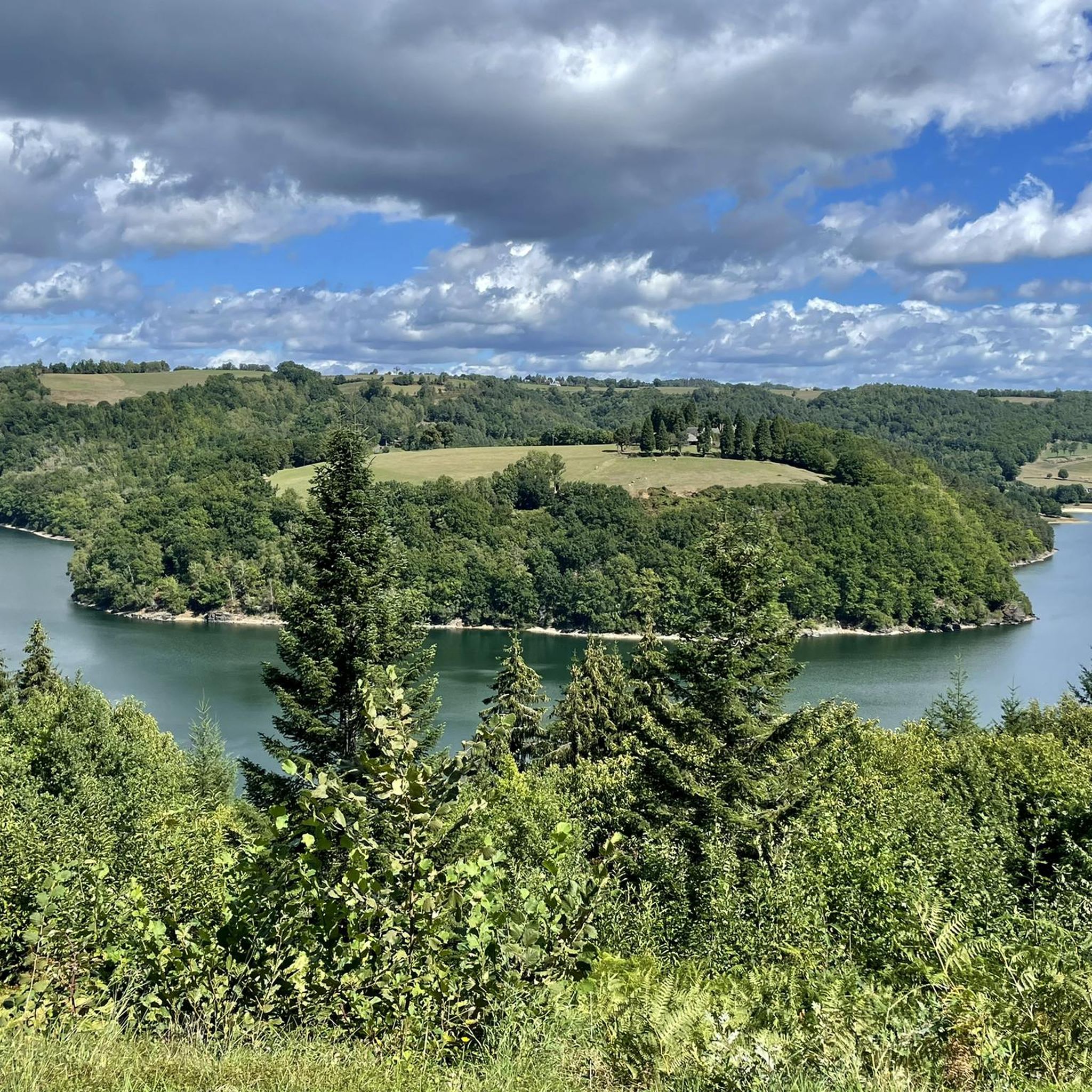
It is the most powerful dam in the Dordogne chain. With its 290 m long and 90 m high it offers a breathtaking view downstream and the small village of Aynes.
0
0
Frequently Asked Questions
What historical landmarks can I visit in Rilhac-Xaintrie?
The most significant historical landmark is the Château de Rilhac-Xaintrie, a 14th-century castle that has undergone extensive restoration. It features a spiral staircase tower, a terraced courtyard, and parklands. You can find more information about the château on tourismecorreze.com. Additionally, the Chapelle Notre-Dame du Château is an old religious building offering a quiet place to relax and a viewpoint.
What natural features and viewpoints can I explore in the Rilhac-Xaintrie area?
The region is rich in natural beauty, shaped by the Dordogne, Maronne, and Cère rivers. You can explore the Cère Valley with its waterfalls and cascades, or the vast green expanse of the Maronne Valley. Notable waterfalls nearby include the Cascades de Gimel and Cascade de Liadouze. For impressive natural vistas, consider visiting Puy Griou and Plomb du Cantal in the Cantal mountains. The Barrage de l'Aigle also offers breathtaking views downstream.
What outdoor activities are available around Rilhac-Xaintrie?
The Xaintrie region is ideal for nature lovers, offering a variety of activities. You can enjoy hiking, canyoning, canoeing, kayaking, stand-up paddleboarding, and tree climbing. There are also lakes and ponds suitable for swimming and pedal boating. For specific routes, you can find numerous options for hiking and cycling in the area.
Are there specific hiking trails recommended for different skill levels?
Yes, there are hiking trails for various skill levels. For an easy walk, consider the 'The black rock viaduct – The Himalayan Gateway loop from Soursac' (6.28 km). A moderate option is the 'Chapelle du Puy du Bassin loop from Le Mons' (9.14 km). For more challenging hikes, the 'The black rock viaduct – The Himalayan Gateway loop from le Collet' spans 25.13 km. You can find more details and other routes in the hiking guide for Rilhac-Xaintrie.
Can I find cycling routes suitable for touring or road cycling?
Absolutely. For touring, routes like the 'Scenic Countryside View loop from Saint-Julien-aux-Bois' (37.37 km, moderate) or the 'Argentat – The banks of the Dordogne loop from Saint-Privat' (63.76 km, difficult) are available. Road cyclists can explore routes such as the 'View Over the Dordogne – Barrage du Chastang loop from Auriac' (61.59 km, moderate) or the 'The Barrage de l'Aigle loop from Auriac' (57.79 km, difficult). Discover more options in the cycling guide and road cycling guide for the region.
Are there family-friendly attractions or activities in the Rilhac-Xaintrie region?
Families can enjoy various activities. The region offers lakes and ponds for swimming and pedal boating, as well as tree climbing and donkey rides. The Sothys Contemporary Botanical Garden in Auriac, with its collections of roses and Japanese-inspired ambiances, can also be a delightful visit for all ages. Many of the easier hiking trails are also suitable for families.
What cultural sites are worth visiting near Rilhac-Xaintrie?
Beyond the historical château, you can explore the Sothys Contemporary Botanical Garden in Auriac (5 km away). The Tours de Merle, a group of medieval castle ruins about 15 km away, offers a glimpse into medieval history. Nearby villages like Mauriac (12 km) feature religious monuments, while Salers (24 km) and Tournemire (26 km) are listed among France's 'most beautiful villages' with their picturesque charm and historic architecture.
What do visitors particularly appreciate about the attractions near Rilhac-Xaintrie?
Visitors frequently highlight the stunning views and the preserved natural environment. The black rock viaduct is praised for its magnificent views of the Luzège Gorges and its transformation into a greenway for hiking and cycling. The Chapelle Notre-Dame du Château is noted as a super nice and somewhat hidden place to completely relax, offering a quiet viewpoint.
When is the best time of year to visit Rilhac-Xaintrie for outdoor activities?
The best time to visit Rilhac-Xaintrie for outdoor activities is generally during spring, summer, and early autumn. These seasons offer pleasant weather conditions ideal for hiking, cycling, and exploring the natural landscapes and cultural sites. The region's natural beauty, including its valleys and waterfalls, is particularly vibrant during these months.
Are there any picturesque villages or 'hidden gems' to discover near Rilhac-Xaintrie?
Yes, the region is dotted with charming villages. Salers and Tournemire are officially recognized as two of France's 'most beautiful villages,' offering picturesque settings and historical architecture. Laroquebrou, a 'Petite Cité de Caractère,' is known for its views of the Cère river and a ruined castle. Additionally, Saint-Cirgues-la-Loutre is a pretty little village worth exploring.
Where can I find local markets near Rilhac-Xaintrie?
Several nearby towns host vibrant local markets. You can find markets in Mauriac on Tuesdays, Fridays, and Saturdays. Laroquebrou has a seasonal Friday market, and Aurillac hosts markets on Wednesdays and Saturdays. These markets are great places to experience local culture and find regional products.
Most popular routes around Rilhac-Xaintrie

Get inspired with the komoot mobile app


Explore more
Still not found the Highlight you’re looking for? See guides of the top attractions in other regions:
