Attractions and Places To See in Csongrád - Top 14
Best attractions and places to see in Csongrád, located in southeastern Hungary, offer a diverse range of experiences. The county is characterized by the flat and fertile landscape of the Great Hungarian Plain, bisected by the Tisza River. Visitors can explore historical landmarks, cultural institutions, and serene natural areas. Szeged, the county seat, is a prominent city within Csongrád, featuring many notable sites.
Best attractions and places to see in Csongrád
- The most popular attractions is Szeged Cathedral, a…
Last updated: June 24, 2026
World War I Memorial Archway (Szeged)
Highlight • Monument
Tip by

New Synagogue Szeged
Highlight • Religious Site
Translated by Google •
Tip by

Sign up now to discover places like this
Get recommendations on the best single tracks, peaks, & plenty of other exciting outdoor places.
Sign up for free
City Hall 🏛️ Szeged
Highlight • Monument
Translated by Google •
Tip by
Szent István Square Water Tower
Highlight • Monument
Translated by Google •
Tip by
Triplex Confinium Monument
Highlight • Monument
Tip by

Belvárosi Bridge (City Bridge)
Highlight • Bridge
Translated by Google •
Tip by
Szeged–Temesvár Railway Bridge Ruins
Highlight • Bridge
Tip by

Dorozsma Windmill
Highlight • Monument
Tip by
Árpád-házi Szent Erzsébet Church and Fountain
Highlight • Religious Site
Translated by Google •
Tip by

Statue of Saint John of Nepomuk on Kurca Bridge
Highlight • Monument
The sculpture stood in the basement of St.Anna Church …
Translated by Google •
Tip by

Sign up for free to discover even more attractions in Csongrád.
Sign up for free
Already have an account?
Start today with a free account
Your next adventure awaits.
Login or Signup
Tips from the Community

Many places and monuments that you come across along the way are a testimony to the horror of war and tyranny that is still significant and relevant today. They all have two essential functions, and this is the case for every generation: -1- To commemorate and remember the victims -2- To remind us of the need to keep the peace
1
0
“Looking back at the 20th century, we can say: The first half was characterized by the human catastrophes of the two world wars and by the night of fascism, which originated in Germany, swept across almost all of Europe, and found its terrible climax in the Holocaust,” said the long-serving Federal Foreign Minister Hans-Dietrich Genscher (1927 to 2016) in a speech in Zurich on September 20, 2006. Each of the extremely numerous war memorials / fallen soldiers' memorials has – in addition to the task of commemorating the victims of war and tyranny – the important function of a constant reminder to preserve peace.
0
0
The Jewish communities, whose synagogues were largely destroyed during the Nazi regime and which were often wiped out by the Shoah (Holocaust), were honored in May 2024 - especially in these difficult times for them with a rapidly growing, openly expressed anti-Semitism - by awarding the "International Charlemagne Prize of Aachen" to Chief Rabbi Pinchas Goldschmidt and the Jewish communities in Europe. "With this award, the Charlemagne Prize Board wants to send a signal that Jewish life is a natural part of Europe and that there must be no place for anti-Semitism in Europe. Jewish life is an important part of European history and present - now and in the future. (...) Together with the President of the Conference of European Rabbis, Chief Rabbi Pinchas Goldschmidt, and the Jewish communities in Europe, the Board of Directors ... in 2024 honors the outstanding representative of European Jewry and Jewish life in Europe, which has enriched our continent for centuries and will and must always have its place here."
0
0
Even before his election as the head of the Catholic Church, the then Archbishop of Buenos Aires had met several times with Rabbi Abraham Skorka for a joint book project. On the subject of the Holocaust, Jorge Bergoglio (later Pope Francis) said: "The Shoah is a genocide like the others of the 20th century, but with one particularity. I don't want to say that it is the most important and the others are secondary, but there is one particularity, an idolatrous construction against the Jewish people. The pure race, the superman, these are idols on the basis of which National Socialism developed (...) And every Jew killed was a slap in the face for the living God in the name of the idols." (Source: "About Heaven and Earth, Jorge Bergoglio in conversation with Rabbi Abraham Skorka", Goldmann-Verlag, Munich 2014)
0
0

The current town hall is the third building on the same site and with the same function. The first, simple town hall was built in 1728, the second was built at the end of the 18th century with the current layout. After the flood in 1879, the square was filled in, so the building appeared too low and cumbersome. Ödön Lechner and Gyula Pártos planned a new floor and a central tower on the old walls. The neo-baroque town hall was opened in 1883 by Franz Josef I, the central window in the staircase preserves the king's famous statement: "Szeged will be more beautiful than ever before". The phoenix bird on the facade commemorates the rebirth of the city after the flood disaster. Also worth noting is the Bridge of Sighs, which was originally built for the king and his entourage. Source: http://szegedtourism.hu/de/rathaus/
0
0

“Belvarosi Bridge: total length 678 meters; architect was Gustave Eiffel, who is normally associated with the symbol of Paris, the Eiffel Tower.
1
0

quiet place
0
1

The "connecting" bridge within Szeged. Can be used on both sides by bike and on foot.
1
0
Frequently Asked Questions
What historical landmarks can I visit in Csongrád County?
Csongrád County is rich in history. You can explore the significant World War I Memorial Archway (Szeged), which features drawings reflecting the suffering of the First World War. Another notable site is the Triplex Confinium Monument, marking the meeting point of the Hungarian, Romanian, and Serbian borders. Don't miss the neo-baroque City Hall 🏛️ Szeged, known for its historical significance and the phoenix bird on its facade symbolizing the city's rebirth. Further afield, the Ópusztaszer National Heritage Park commemorates the first council of the conquering Magyar tribes.
Are there significant religious sites to explore in the region?
Yes, Csongrád County features several impressive religious buildings. The Szeged Cathedral is one of the largest neo-Romanesque structures in Europe, known for its decorated altars and ceiling paintings. The New Synagogue Szeged is another magnificent building, though its opening hours can vary. In Csongrád town, you can find the Nagyboldogasszony (Holy Virgin) Church, built between 1762 and 1769.
What natural attractions are there in Csongrád County?
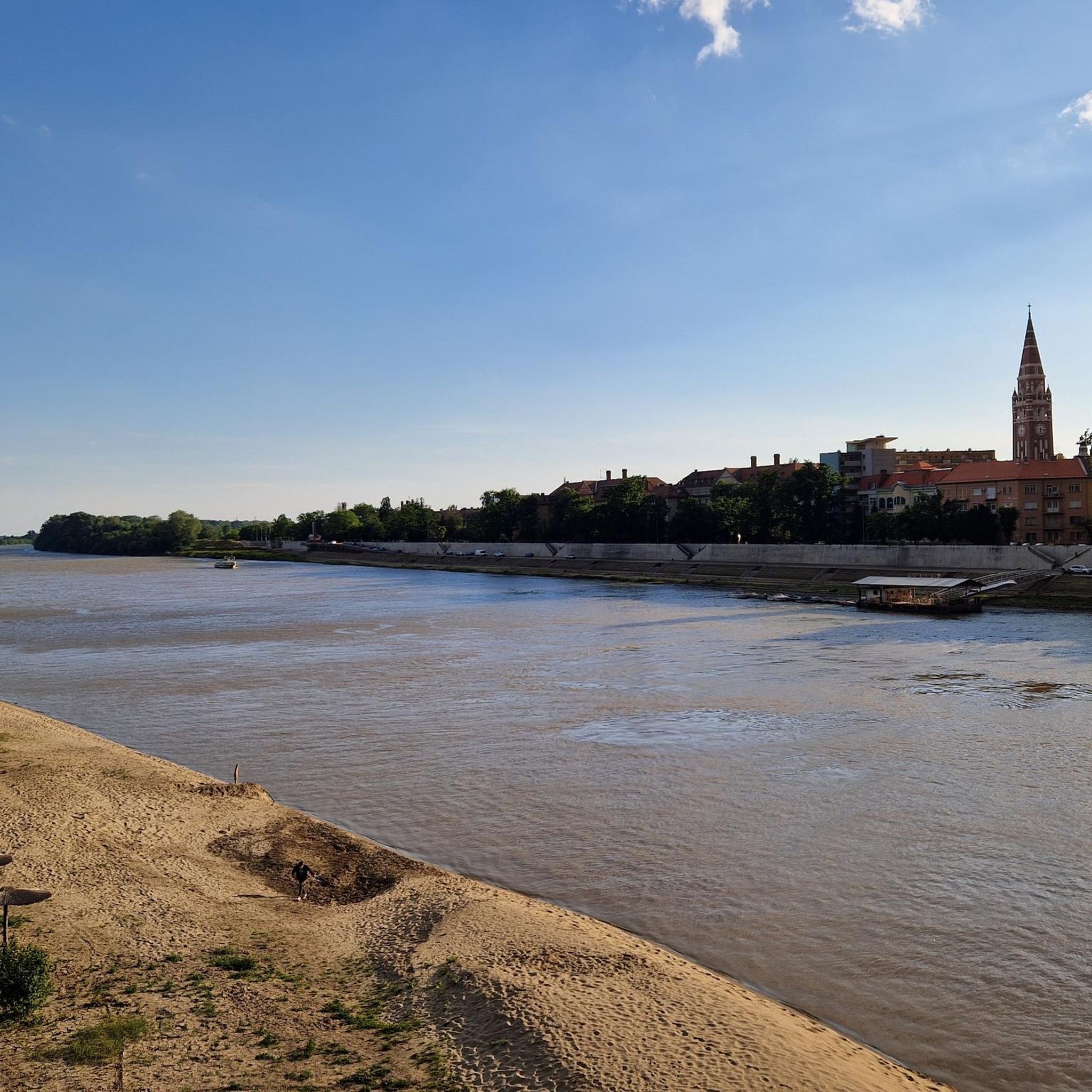
The Tisza River is a central natural attraction, offering a sandy beach popular for bathing during summer. The backwater of the Tisza River (Holt-Tisza) provides a habitat for various water birds. Another notable natural feature is the Körös-torok Sandy Beach, located where the Tisza and Körös Rivers meet, drawing many visitors in the summer. The flat and fertile landscape of the Great Hungarian Plain also characterizes much of the county.
Are there opportunities for outdoor activities like cycling or running?
Absolutely! Csongrád County offers numerous routes for outdoor enthusiasts. For cycling, you can find various routes, including those starting from Szeged-Rókus or Sándorfalva, with options ranging from easy to moderate difficulty. Explore more cycling routes in the region on the Cycling in Csongrád guide. If you prefer running, there are trails along the Tisza River near Csongrád and routes around Szeged, such as the Szeged Clock Tower loop. Discover more running trails in the Running Trails in Csongrád guide.
Are there family-friendly attractions in Csongrád?
Yes, Csongrád County has several attractions suitable for families. The City Hall 🏛️ Szeged is considered family-friendly. The Szeged Wildlife Park (Szeged Zoo) is an exciting attraction with both exotic and local animals, offering night visits in the summer. The Botanical Garden of Szeged is also a pleasant place for families. Additionally, the Dorozsma Windmill and Árpád-házi Szent Erzsébet Church and Fountain are also noted as family-friendly.
Can I observe wildlife in Csongrád County?
Yes, you can. The Morahalom Buffalo Reserve offers visitors the chance to observe buffalo herders from a lookout tower and get close to the animals. The backwater of the Tisza River (Holt-Tisza) is a habitat for various water birds. The Szeged Wildlife Park also provides an opportunity to see a wide range of exotic and local animals.
When is the best time to visit Csongrád for outdoor activities?
The summer months are particularly popular for outdoor activities in Csongrád County, especially for enjoying the sandy beaches along the Tisza River and at Körös-torok. The Szeged Open Air Festival also takes place during this season, adding to the vibrant atmosphere. Spring and autumn offer pleasant temperatures for cycling, running, and exploring historical sites without the peak summer heat.
What do visitors particularly enjoy about the attractions in Szeged?
Visitors frequently praise the architectural beauty and historical significance of Szeged's landmarks. The Szeged Cathedral is often highlighted as an absolute must-see, especially when beautifully lit at night. The World War I Memorial Archway is appreciated for its magnificent drawings reflecting the suffering of the war, serving as a powerful historical reminder. The City Hall 🏛️ Szeged is also noted for its impressive neo-baroque design and historical context.
Are there any wheelchair-accessible attractions in Csongrád?
Yes, several attractions in Csongrád County are noted as wheelchair accessible. These include the World War I Memorial Archway (Szeged), the City Hall 🏛️ Szeged, the Triplex Confinium Monument, and the Belvárosi Bridge (City Bridge).
Where can I learn about the history of the Magyar tribes in Csongrád County?
To delve into the history of the Magyar tribes, the Ópusztaszer National Heritage Park is the primary destination. This extensive open-air museum commemorates the first council of the seven conquering Magyar tribes that formed the Árpád dynasty in the late 9th century, offering a deep dive into Hungarian history.
What cultural institutions are notable in Szeged?
Szeged, as the county seat, boasts several significant cultural institutions. The Móra Ferenc Museum is a prominent cultural institution. The Reök Palace, an Art Nouveau building designed by Ede Magyar, is an architectural gem. The Botanical Garden of Szeged also offers a cultural and educational experience.

Get inspired with the komoot mobile app


Explore more
Still not found the Highlight you’re looking for? See guides of the top attractions in other regions:
